A Peptide Written Inside the Mitochondrion: A Complete Scientific Profile of MOTS-c
Reading Time: 9 mins
Science & Medicine Peptides Mitochondria Research
Investigative Science Report A Peptide Written Inside the Mitochondrion: A Complete Scientific Profile of MOTS-c MOTS-c is simultaneously an endogenous human peptide with measurable age-dependent plasma levels, an exercise-induced metabolic signal, and an injectable research compound with effects spanning insulin sensitivity, muscle function, physical endurance, and mitochondrial-to-nuclear gene regulation.
When Changhan Lee and colleagues in Pinchas Cohen's laboratory at the USC Davis School of Gerontology searched for unannotated open reading frames hidden inside the mitochondrial 12S ribosomal RNA gene in 2015, they found something the textbooks had ruled out. The mitochondrial genome was supposed to encode exactly 37 products — 13 electron-transport proteins, 22 tRNAs, and 2 rRNAs — a legacy of its bacterial ancestry. What Lee's group published in Cell Metabolism was a 16-amino-acid peptide encoded inside the rRNA gene itself, with potent effects on whole-body glucose homeostasis. They called it MOTS-c. In the decade since, it has accumulated one of the most biologically unusual profiles in peptide research. What It Is: Structure, Origin, and Endogenous Biology MOTS-c (Mitochondrial Open Reading Frame of the 12S rRNA Type-c) is a 16-amino-acid peptide with the sequence MRWQEMGYIFYPRKLR and a molecular weight of approximately 2174 Da. It is encoded within the MT-RNR1 gene — the mitochondrial 12S ribosomal RNA locus — and is one of a small but growing family of mitochondrial-derived peptides (MDPs) that includes humanin and the SHLP1–6 series. The discovery upended the long-held assumption that the mitochondrial genome was informationally exhausted. MOTS-c is naturally present in human plasma, skeletal muscle, and other metabolically active tissues. Circulating levels are highest in young adults, decline measurably with chronological age, and fall further in metabolic disease states including type 2 diabetes. This decline tracks closely with age-related metabolic deterioration: insulin resistance, loss of muscle mass, reduced exercise capacity, and impaired mitochondrial function. MOTS-c is also induced locally by exercise — particularly high-intensity interval training — and suppressed by prolonged fasting in skeletal muscle. It functions simultaneously as a circulating metabolic signal and as a locally regulated exercise-induced factor, placing it in a category that crosses the traditional hormone/myokine boundary. How It Works: Three Mechanisms in One Molecule
That gap — between the depth of its preclinical biology and the narrowness of its formal human evidence — is MOTS-c's defining tension. For understanding mitochondrial signaling, retrograde gene regulation, and exercise-induced metabolic adaptation: the research base is genuinely foundational. For translation into approved human therapy: the path is open but largely untraveled. The next two to three years of clinical development and regulatory rulemaking will substantially clarify which side of that gap MOTS-c settles on.
Folate–AICAR–AMPK Pathway Inhibits the folate–methionine cycle and de novo purine synthesis, causing intracellular AICAR to accumulate. AICAR is phosphorylated to ZMP, an AMP mimetic that activates AMPK — without requiring ATP depletion.
Downstream Metabolic Switch AMPK activation triggers GLUT4 translocation, fatty acid oxidation via ACC inhibition, PGC-1α activation and mitochondrial biogenesis, suppression of hepatic gluconeogenesis, and FOXO-driven autophagy.
Retrograde Nuclear Signaling Under metabolic stress, MOTS-c translocates from mitochondrion to nucleus and binds chromatin to regulate antioxidant response element (ARE) genes — one of the first molecularly characterized mitochondrion-to-nucleus signaling pathways.
MOTS-c engages exercise-like metabolic programming without requiring exercise-like energy depletion. That mechanistic property — AMPK activation through endogenous AICAR accumulation — is what made the "exercise mimetic" label defensible at the molecular level.
What the Evidence Shows
Metabolic Homeostasis — Original and Strongest Evidence Lee et al. (Cell Metabolism, 2015) demonstrated in mouse models that systemic MOTS-c administration prevented both diet-induced and age-dependent insulin resistance, improved glucose tolerance, and reversed age-related skeletal muscle insulin resistance. Hyperinsulinemic–euglycemic clamp data — the gold-standard measure of insulin sensitivity — showed the effects are driven primarily by skeletal muscle glucose clearance rather than hepatic gluconeogenesis suppression. Translational context: MOTS-c's metabolic signature overlaps substantially with AMPK activators already in clinical use (metformin), but through a mechanistically distinct upstream pathway.
Exercise Capacity in Aged Animals Reynolds et al. (Nature Communications, 2021): 24-month-old mice — an age equivalent to elderly humans — treated with MOTS-c approximately doubled treadmill running time versus vehicle controls and outperformed untreated middle-aged (14-month) mice on several physical-performance metrics. Grip strength improved. Inflammatory markers (IL-6, TNF-α) fell. The same paper also demonstrated MOTS-c rises acutely in human plasma after HIIT exercise.
Human Data — Limited but Directional CohBar Inc. developed CB4211, a modified MOTS-c analog, through Phase I/II clinical trials in obesity and NASH. The compound was well tolerated with early metabolic and body-composition signals. A 2024 clinical pilot reported improved exercise capacity in sedentary adults given MOTS-c. No Phase III outcome trial has been completed for native MOTS-c or any analog in any indication.
Japanese Centenarian Variant Fuku et al. (Aging Cell, 2015) identified the mitochondrial variant m.1382A>C disproportionately present in Japanese centenarians. The variant produces a more active MOTS-c isoform and is associated with protection from metabolic disease and exceptional longevity — one of the few population-genetic findings directly linking a mitochondrial-derived peptide to human healthspan.
Additional Preclinical Models MOTS-c has been studied in diabetic cardiomyopathy, ovariectomy-induced metabolic dysfunction, osteoporosis, cold-induced thermogenesis, and inflammation models. Across contexts, effects consistently track with AMPK activation and mitochondrial biogenesis. Anti-inflammatory effects have been documented in the mouse formalin test via AMPK-dependent pathways.
The Translation Gap MOTS-c carries a tension characteristic of many mitochondrial-derived peptides: preclinical breadth, clinical narrowness. The rodent evidence base is robust across metabolic, muscle, and inflammatory readouts. The human evidence base consists of a modified analog (CB4211), an exercise-observation arm of a mouse paper, and one small pilot trial. Nothing approaching a registrational package exists. Part of the gap is structural. Native peptide sequences are difficult to patent, which has pushed pharmaceutical developers toward analog development rather than native-MOTS-c trials. Part is financial — CohBar, the primary pharmaceutical developer of MDP therapeutics, has faced funding constraints. And part is the novelty of the category: mitochondrial-derived peptides were only recognized as a functional class after 2003, and regulatory pathways for them are still forming. Safety Profile In animal models and the limited human data available, MOTS-c has shown a favorable acute safety profile. The CB4211 Phase I trials reported no dose-limiting toxicity at tested ranges. Reported adverse effects in off-label human use are generally mild: injection-site reactions, occasional headache or transient fatigue, and sleep changes reported inconsistently across users. Long-term human safety data across months to years of administration does not exist. Two specific considerations warrant flagging. First, MOTS-c increases insulin-independent glucose uptake via GLUT4 translocation, which creates meaningful hypoglycemia risk in type 1 diabetics or anyone on hypoglycemic medications. Second, AMPK activation has context-dependent effects on cancer biology — inhibitory in some contexts, permissive in others — and MOTS-c's effects across human cancer cell types remain incompletely characterized.
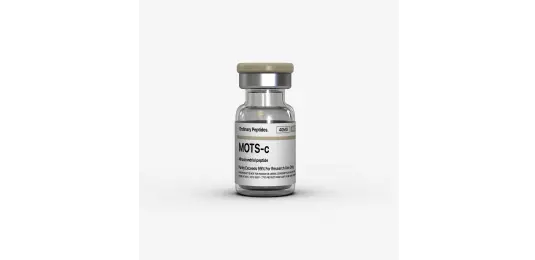
Regulatory Position MOTS-c is on the WADA Prohibited List under S4.4.1 (AMPK Activators), alongside AICAR and BAM15, effective January 2024 — prohibited both in- and out-of-competition with no TUE pathway. The FDA placed MOTS-c on the 503A Category 2 list in February 2024 (updated May 2024), restricting compounding pharmacy production. The February 2026 HHS announcement and July 2026 PCAC review are the next scheduled regulatory milestones. Research-chemical sale under standard "not for human consumption" terms continues; Ordinary Peptides supplies research-grade MOTS-c at 99% purity for laboratory use only.
Open Questions Human pharmacokinetics by injection. MOTS-c is used by subcutaneous injection in research and off-label contexts, but human PK parameters — half-life, volume of distribution, tissue penetration, dose-response — have not been formally characterized in peer-reviewed publications. Optimal dosing. Rodent effective doses do not translate directly to humans on mg/kg or surface-area bases. The dose range producing exercise-mimetic effects in humans without off-target AMPK consequences is undefined. Long-term administration. Decades of safe human exposure through endogenous production do not establish safety of chronic exogenous dosing at supraphysiological levels. The long-term effects of sustained pharmacological AMPK engagement in otherwise healthy adults are unmapped. Human indications. No completed Phase 2 or 3 trial exists for native MOTS-c in metabolic syndrome, sarcopenia, type 2 diabetes, frailty, or any other plausible indication — only CB4211 analog data and one small pilot. MOTS-c in Context
What it has Endogenous origin with measurable age-dependent plasma decline. A mechanistically distinctive AMPK activation pathway. Striking aged-animal data on insulin sensitivity and physical performance. A population-genetic longevity association. One modified-analog Phase I/II safety package. An active pharmaceutical development pipeline.
What it lacks Completed Phase 3 trial for any indication. FDA pharmaceutical approval. Characterized human pharmacokinetics by injection route. Long-term safety data for chronic administration. WADA-compliant status for competitive athletes.
Sources
- Lee C, Zeng J, Drew BG, et al. MOTS-c discovery & metabolic homeostasis. Cell Metabolism, 2015;21(3):443–454. pubmed.ncbi.nlm.nih.gov/25738459
- Kim KH, Son JM, Benayoun BA, Lee C. MOTS-c nuclear translocation. Cell Metabolism, 2018;28(3):516–524. pubmed.ncbi.nlm.nih.gov/29983246
- Reynolds JC et al. MOTS-c, exercise, and age-dependent physical decline. Nature Communications, 2021;12:470.
- Fuku N et al. MOTS-c m.1382A>C and Japanese centenarian longevity. Aging Cell, 2015;14(6):921–923.
- D'Souza RF et al. MOTS-c and skeletal muscle in aging men. Aging, 2020;12(6):5244–5258.
- Mohtashami Z et al. MOTS-c in human aging and age-related diseases. Int J Mol Sci, 2022;23(19):11991.
- Merry TL et al. Mitochondrial-derived peptides in energy metabolism. Am J Physiol Endocrinol Metab, 2020;319(4):E659–E666.
- Zempo H et al. Pro-diabetogenic mtDNA polymorphism in MOTS-c. Aging, 2021;13(2):1692–1717.
- Cataldo LR et al. Plasma MOTS-c and insulin sensitivity in lean vs obese. J Investig Med, 2018;66(6):1019–1022.
- Ramanjaneya M et al. Mitochondrial-derived peptides are downregulated in diabetes. Front Endocrinol, 2019;10:331.
- Lu H et al. MOTS-c and adipose thermogenic activation. Int J Mol Sci, 2019;20(10):2456.
- Lu H et al. MOTS-c in ovariectomy-induced metabolic dysfunction. J Mol Med, 2019;97(4):473–485.
- Yin X et al. MOTS-c antinociceptive and anti-inflammatory effects. Eur J Pharmacol, 2020;870:172909.
- Kim SJ et al. Mitochondrial peptides in cellular senescence. Aging, 2018;10(6):1239–1256.
- Miller B et al. Peptides from small mitochondrial ORFs. Exp Cell Res, 2020;393(2):112056.
- CohBar Inc. CB4211 Phase I/II clinical trials. ClinicalTrials.gov and company disclosures.
- U.S. FDA. 503A Bulks List Category 2, February 2024 (revised May 2024). fda.gov
- World Anti-Doping Agency. Prohibited List 2024 & 2025; S4.4.1 entry for MOTS-c. wada-ama.org/en/prohibited-list
- USADA. Key Changes on the 2024 WADA Prohibited List. usada.org