Mapping Compounds to the Twelve Hallmarks of Aging.
Aging research peptides become easier to read against the 2023 López-Otín Cell paper, which expanded the hallmarks of aging to twelve and gave the field a shared map. FOXO4-DRI sits on cellular senescence: a D-retro-inverso peptide that disrupts the FOXO4-p53 interaction so freed p53 triggers apoptosis in senescent cells, with healthy cells largely spared. Epitalon maps to telomere attrition through reported telomerase activation, though most of that literature comes from a single Khavinson-group lineage. The mitochondrial-derived peptides MOTS-c and Humanin sit on mitochondrial dysfunction. The catalog sorts by hallmark below.
Aging Research
Showing 1–43 of 43 results
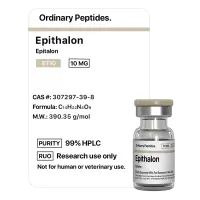
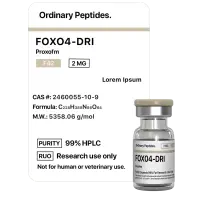
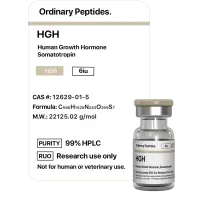

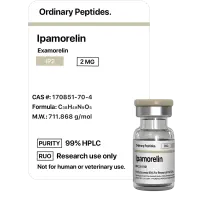
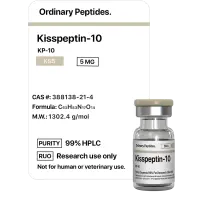

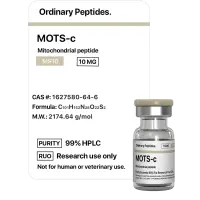
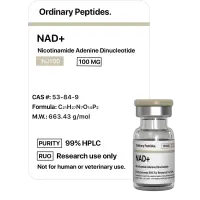



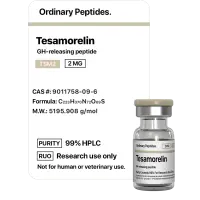
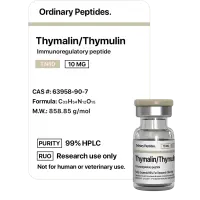
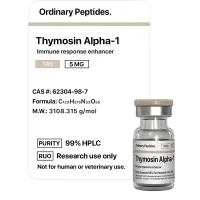
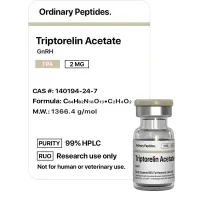
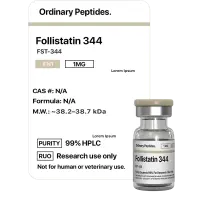
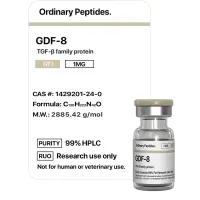
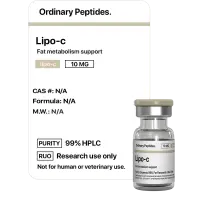


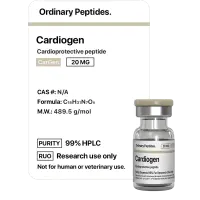


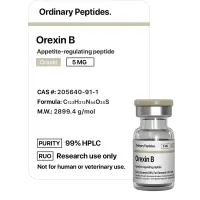

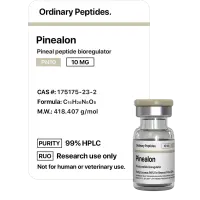
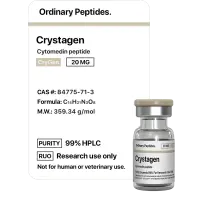








The 2013 López-Otín paper proposed nine hallmarks. The 2023 update added three — disabled macroautophagy, chronic inflammation, and dysbiosis — bringing the framework to twelve. The expansion wasn't arbitrary. Each new hallmark satisfied three criteria the authors made explicit: age-associated manifestation, experimental acceleration of aging when accentuated, and decelerable aging when therapeutically intervened upon. Most aging research peptides in current catalogs map onto only three or four of the twelve hallmarks. The rest of the framework — proteostasis, autophagy, intercellular communication, dysbiosis — remains thinly covered by available compounds, which itself tells you something about where peptide chemistry has and hasn't intersected with aging biology yet.
Cellular Senescence: The FOXO4-DRI Story
Senescence is one of the better-mapped hallmarks. FOXO4-DRI is a designed D-retro-inverso peptide that disrupts the FOXO4-p53 interaction at the protein-protein interface. The mechanism, established by the Peeper lab at the Netherlands Cancer Institute (Baar et al., Cell 2017), exploits a vulnerability specific to senescent cells: they express high levels of FOXO4, which binds and sequesters p53 to prevent apoptosis. Disrupting this interaction releases p53, which then triggers selective apoptosis in senescent cells while healthy cells remain largely unaffected. The original work showed restoration of fitness, hair density, and renal function in aged and progeroid mice. Translation to humans has been slower than the mouse data suggested it might be, and the compound remains preclinical.
A structural caveat: FOXO4-DRI activates p53-mediated apoptosis. Because telomerase and p53 dysregulation are central to most cancers, any compound that modulates these pathways requires careful consideration in any research context. The risk profile of senolytic peptides is not the same as standard small-molecule senolytics like dasatinib + quercetin, and head-to-head selectivity data is still developing.
Telomere Attrition: The Epitalon Question
Epitalon (Ala-Glu-Asp-Gly, AEDG) sits on telomere attrition as its primary mapped hallmark. The Khavinson group reported in 2003 that the peptide induces hTERT expression in telomerase-negative human fibroblasts and extends telomeres past the Hayflick limit (Khavinson et al., Bulletin of Experimental Biology and Medicine). A 2025 independent study by Al-Dulaimi et al. (Biogerontology) replicated key findings in additional cell lines and confirmed telomere elongation, marking the first significant Western laboratory replication. Most of the broader Epitalon literature still originates from the St. Petersburg Institute of Bioregulation and Gerontology — a structural asymmetry that the field acknowledges. The telomerase-cancer relationship is itself unresolved: roughly 85–90% of human cancers express telomerase, which is one reason telomerase activation in any research context carries unresolved long-term questions.
Mitochondrial Dysfunction: MOTS-c, Humanin, SS-31
Three peptides cluster around mitochondrial dysfunction, with different origins. MOTS-c is encoded within the 12S rRNA of mitochondrial DNA — a mitochondrial-derived peptide (MDP) in the literal sense — discovered by Pinchas Cohen's lab at USC in 2015. It signals through AMPK to regulate metabolic homeostasis under stress. Humanin, also mitochondrial-derived, acts through formyl peptide receptor-like 1 (FPRL1) and IGFBP-3 binding pathways, with roles in cytoprotection and apoptosis modulation. SS-31 (Elamipretide) is synthetic, not mitochondrial-derived — it's a Szeto-Schiller peptide that binds cardiolipin on the inner mitochondrial membrane to stabilize membrane potential and cristae structure. The three compounds occupy the same hallmark but address it through distinct molecular mechanisms.
Where Peptide Research Doesn't Reach
Several hallmarks remain thinly covered by available research peptides. Loss of proteostasis is dominated by small-molecule chaperone inducers, not peptide-based interventions. Disabled macroautophagy is most often studied through pharmacological autophagy inducers (rapamycin, spermidine), not peptides. Dysbiosis belongs to the microbiome research field rather than the peptide field. Stem cell exhaustion is approached primarily through cell-based therapies. This isn't a gap to apologize for — it's a description of where the chemistry currently sits. Peptide research engages aging biology unevenly across the twelve hallmarks, and the catalog reflects that.
Research Models Commonly Used
Standard aging research models include senescence-accelerated mouse prone (SAMP) strains, naturally aged C57BL/6 mice (typically 20–24 months), progeroid models (Zmpste24 knockout, BubR1 hypomorphic, Ercc1 mutants), and worm/fly models (C. elegans, Drosophila) for high-throughput longevity screens. For cellular work, replicative senescence in human dermal fibroblasts (passage-induced) and induced senescence (irradiation, oncogene activation, oxidative stress) are the workhorse in vitro systems. Biomarker endpoints have expanded substantially since 2020 — DNA methylation clocks (Horvath, GrimAge, PhenoAge), epigenetic age estimators, and SASP (senescence-associated secretory phenotype) profiling are increasingly standard.
Frequently Asked Questions
What are the twelve hallmarks of aging?
The twelve hallmarks proposed by López-Otín et al. in their 2023 Cell paper are: genomic instability, telomere attrition, epigenetic alterations, loss of proteostasis, disabled macroautophagy, deregulated nutrient-sensing, mitochondrial dysfunction, cellular senescence, stem cell exhaustion, altered intercellular communication, chronic inflammation, and dysbiosis. The framework expanded from nine hallmarks (2013) to twelve (2023) as the field accumulated evidence for three additional categories.
What is the difference between MOTS-c and Epitalon?
MOTS-c and Epitalon target different hallmarks. MOTS-c is a mitochondrial-derived peptide encoded within mitochondrial DNA, studied primarily for its role in mitochondrial dysfunction and metabolic homeostasis through AMPK signaling. Epitalon (AEDG) is a synthetic tetrapeptide developed by the Khavinson group, studied for its proposed effects on telomerase activation and telomere attrition. They address distinct aging hallmarks and have different evidence bases — MOTS-c has independent replication across multiple Western labs, while Epitalon literature remains largely concentrated in one research lineage.
How does FOXO4-DRI selectively target senescent cells?
Senescent cells express elevated levels of FOXO4, which binds p53 and sequesters it, preventing the apoptotic signal that would normally clear damaged cells. FOXO4-DRI is a D-retro-inverso peptide designed to disrupt the FOXO4-p53 protein-protein interaction at the binding interface. When the interaction is broken, p53 is released and can trigger apoptosis. Healthy cells have lower FOXO4 expression and rely less on this sequestration mechanism, which is the basis for the reported selectivity — though selectivity is not absolute and remains an active research question.
Why is Khavinson peptide literature considered asymmetric?
The majority of Khavinson bioregulator publications (Epitalon, Cortagen, Pinealon, Vilon, and related short peptides) originate from the St. Petersburg Institute of Bioregulation and Gerontology and affiliated Russian research groups. The volume of literature is substantial — hundreds of papers across decades — but independent replication outside this research lineage was historically limited. This pattern has begun to shift since 2019, with European and US laboratories publishing independent work on Epitalon's telomere biology in particular. The asymmetry is a structural feature of the evidence base rather than a judgment on the underlying biology.
What are epigenetic aging clocks?
Epigenetic aging clocks are DNA methylation-based predictors of biological age, developed primarily by Steve Horvath (UCLA) and subsequent groups. The original Horvath clock (2013) uses methylation at 353 CpG sites to estimate age. Subsequent clocks (GrimAge, PhenoAge, DunedinPACE) incorporate biomarkers beyond methylation to predict mortality and morbidity risk. In aging research, these clocks are used as endpoints to assess whether interventions affect biological aging rate, providing a quantitative readout beyond chronological age.
How does telomerase activation relate to cancer risk?
Telomerase is normally repressed in adult somatic cells and active in stem cells and germ cells. Approximately 85–90% of human cancers reactivate telomerase as part of their immortalization. This creates an inherent tension in telomerase activation research: extending telomere length in aged somatic cells may have geroprotective effects, but the same mechanism overlaps with one of the defining features of malignancy. The long-term consequences of pharmacological telomerase activation in human research contexts remain incompletely characterized — this is part of why compounds in this space require careful research protocols.
What is the SASP?
SASP stands for senescence-associated secretory phenotype — the pattern of inflammatory cytokines, chemokines, growth factors, and proteases that senescent cells secrete. SASP is the mechanism by which senescent cells affect neighboring tissue and drive chronic inflammation in aging. SASP profiling (measuring SASP-associated cytokines like IL-6, IL-8, MMP-3) is a standard endpoint in senescence research and one of the ways senolytic compound effects are measured.
Reference Points for Further Reading
López-Otín et al.'s 2023 Cell paper on hallmarks of aging is the standard framework reference. The 2022 Copenhagen meeting summary (Schmauck-Medina et al., Aging) proposes additional hallmarks (mechanical properties, splicing dysregulation) for those interested in framework evolution. For senolytics specifically, the Kirkland group at Mayo Clinic publishes the most-cited clinical translation work. For mitochondrial-derived peptides, the Cohen lab at USC is the foundational source on MOTS-c and Humanin. For Epitalon and Khavinson peptide chemistry, the 2025 Al-Dulaimi paper in Biogerontology represents the most recent independent Western replication work. For epigenetic clocks, Horvath's original 2013 Genome Biology paper remains the entry point.
All compounds in this catalog are intended for in vitro and preclinical research use only. None are approved by the FDA or any other regulatory authority for therapeutic use in humans. The aging biology framework discussed on this page is provided as scientific context for the research field, not as claims for the compounds offered here. Compounds affecting cellular senescence, telomere biology, or related pathways have unresolved long-term safety questions that remain active areas of research.