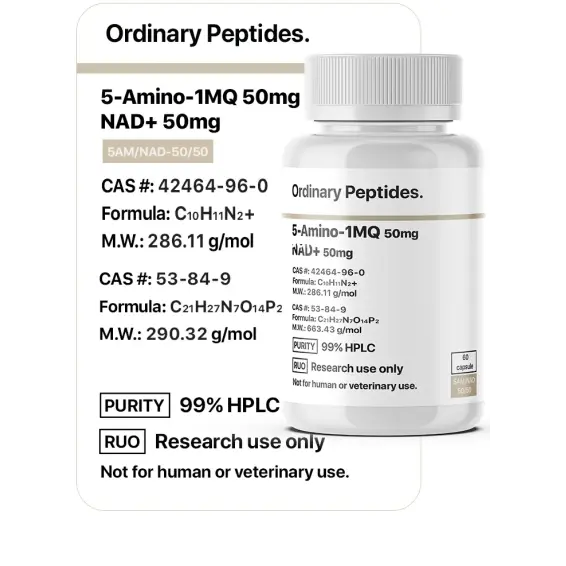
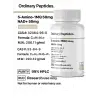
DUO 5-Amino 1MQ and NAD+
For in vitro testing and laboratory use only. Not for human or animal consumption. Bodily introduction is illegal. Handle only by licensed professionals. Not a drug, food, or cosmetic. Educational use only.
5-Amino-1MQ / NAD+ Duo: Two Molecules at the Crossroads of NAD+ Biology, NNMT Inhibition, and Mitochondrial Longevity Research
The 5-Amino-1MQ / NAD+ duo brings together two compounds best known in the field of longevity and metabolic research, where they have been studied as a selective inhibitor of nicotinamide N-methyltransferase (NNMT) and a direct substrate of cellular energy metabolism, respectively, and linked to the biology of mitochondrial function. In the research context, the main interest in this pairing grew out of studies reporting that NNMT inhibition preserves NAD+ and SAM pools while NAD+ supplementation directly replenishes the substrate for sirtuins, PARPs, and oxidative phosphorylation. That sounds dramatic — and that is precisely why it attracts so much attention.
Published reports have also discussed their relationship with SIRT1 signaling, fat oxidation, and skeletal muscle endurance, while preclinical data have connected the combination to a broader supply-and-preservation framework for the NAD+ pool — with one compound providing raw material and the other limiting its wasteful methylation. Still, a sober filter is essential here: a compelling mechanistic story is not yet a ready-made anti-aging solution in a vial. If only biology were that cooperative.
What makes the 5-Amino-1MQ / NAD+ duo genuinely interesting is that it sits at the crossroads of longevity hypotheses, methyl-donor metabolism, and the broader tradition of NAD-centric pharmacology. For readers who care not just about bold promises but about the actual scientific grounds for interest, this is exactly the kind of compound combination worth examining carefully — and without illusions.
5-Amino-1MQ + NAD⁺ Precursors (NR/NMN): The Scientific Basis of a Two-Strategy NAD⁺ Concept
Based on peer-reviewed literature — see References. Last updated: May 2026.
Why This Combination Gets Discussed
In the longevity space, NAD⁺ has become one of the most heavily marketed cellular variables — partly because it's measurable, partly because its age-related decline is well-documented, and partly because there are now multiple ways to raise it. NR, NMN, NAD⁺ injections, IV drips, niacin, niacinamide, and most recently NNMT inhibitors like 5-Amino-1MQ all sit on the same wall in supplement stores or peptide vendor catalogs.
The question of whether to combine 5-Amino-1MQ with an NAD⁺ precursor doesn't come from nowhere. It comes from the simplest possible reading of the biology: if NR/NMN add substrate to the NAD⁺ salvage pathway, and 5-Amino-1MQ prevents nicotinamide from being lost to methylation, then in theory they address different bottlenecks in the same system.
This article looks at whether that theoretical complementarity holds up to careful examination of the actual mechanisms — not "how to combine them," but what the science actually says about the intersection point. For the broader landscape of compounds investigated for metabolic regulation and aging, see the Metabolic Research category.
Two Different Solutions to the Same Equation
Before discussing the intersection, the basic setup. Cellular NAD⁺ levels are determined by a simple flux equation: rate of synthesis minus rate of consumption minus rate of irreversible loss. When NAD⁺ falls in aging tissues, it's because that balance has shifted — some combination of reduced synthesis, increased consumption (by CD38, PARPs, sirtuins), and increased loss through NNMT-mediated methylation of nicotinamide.
Different interventions target different terms of the equation.
NR/NMN: increasing the synthesis input
NR and NMN are precursors that feed into the NAD⁺ salvage pathway:
Nicotinamide → NMN → NAD⁺
↑
NR enters here (after phosphorylation by NRK1/2)
When you swallow either compound, it gets absorbed and ultimately funneled into this pathway, raising NAD⁺ output. Multiple human RCTs have now confirmed that NR or NMN supplementation roughly doubles circulating NAD⁺ over 14 days.[10] This isn't theoretical — it's measured.
The strategy: push more substrate in at the front of the salvage pathway.
5-Amino-1MQ: closing a leak
NNMT (nicotinamide N-methyltransferase) is an enzyme that consumes nicotinamide and SAM (S-adenosylmethionine) to produce 1-methylnicotinamide (1-MNA) and SAH (S-adenosylhomocysteine). 1-MNA is excreted — it doesn't come back. So every NNMT reaction permanently removes a molecule of nicotinamide from the pool that could otherwise be reconverted to NAD⁺.
In healthy tissue, NNMT is regulated and serves a normal function. In obese adipose tissue and many cancers, NNMT is dramatically upregulated, draining nicotinamide and SAM at rates that compromise NAD⁺ and methylation pools simultaneously.[5][6]
5-Amino-1MQ blocks NNMT. Less nicotinamide is methylated away. More remains available for NAD⁺ regeneration. SAM is also preserved.
The strategy: close one of the loss pathways at the back end of the system.
The intersection: substrate-in + drain-out
Side by side:
- NR/NMN → adds substrate at the input
- 5-Amino-1MQ → blocks loss at one specific output
These don't act on the same enzymes. They don't compete for the same binding sites. They don't share the same target tissues equally. In principle, they address different rate-limiting steps of the same overall flux equation.
This is the structural argument for theoretical complementarity. Whether the math actually works out in practice — whether adding substrate to a partially-plugged drain produces more NAD⁺ elevation than either alone, and whether that elevation has biological consequences distinct from each compound's individual effect — is a question that hasn't been studied.
What Each Component Does to NAD⁺, Measured
Important to be precise here, because "raises NAD⁺" can mean different things in different compartments.
NR/NMN in humans (measured)
Christen et al., Nature Metabolism, 2025 — direct head-to-head of NR, NMN, and nicotinamide. Both NR and NMN approximately doubled whole-blood NAD⁺ over 14 days of supplementation. Nicotinamide alone did not produce sustained NAD⁺ elevation despite producing a larger acute (4-hour) spike.[10]
Multiple meta-analyses of NMN trials (Wen 2024 and others) show consistent blood NAD⁺ elevation across 9+ RCTs with 400+ total participants. Effect sizes on functional outcomes (gait speed, HOMA-IR, ALT) are smaller but statistically detectable in some populations.
The takeaway: in humans, NR and NMN reliably raise circulating NAD⁺. Whether this translates to NAD⁺ elevation in specific target tissues (brain, heart, skeletal muscle) is more variable and less directly measured.
5-Amino-1MQ in humans (not measured)
No human data. None.
In mice (Neelakantan 2018), 5-Amino-1MQ at 20 mg/kg SC three times daily for 11 days produced measurable increases in NAD⁺ levels in white adipose tissue, alongside decreased adipocyte size, decreased body fat, and decreased plasma cholesterol — all without changes in food intake.[6] The NAD⁺ elevation was tissue-specific to adipose, where NNMT is most upregulated in obesity.
So the comparison is asymmetric: NR/NMN have documented systemic NAD⁺ elevation in humans. 5-Amino-1MQ has documented tissue-specific NAD⁺ elevation in mice and no human data at all.
What this asymmetry means for the combination concept
If both compounds raise NAD⁺ — one in measured humans, the other in inferred extrapolation — combining them theoretically targets two flux terms simultaneously. But "theoretically" is doing real work in that sentence. The combination's actual effect on NAD⁺ in any tissue, in any species, has not been measured.
Other Theoretical Points of Intersection
Beyond NAD⁺ levels per se, the two strategies have additional points of mechanistic intersection — some genuinely complementary, others potentially redundant, one or two potentially problematic.
SAM and methylation: a 5-Amino-1MQ-only effect
NR and NMN don't substantially affect cellular SAM pools. 5-Amino-1MQ does — preserving SAM by preventing NNMT from consuming it is one of its core mechanisms.
This means combination produces a different pharmacological signature than either alone:
- NR/NMN alone: NAD⁺ effects, minimal methylation impact
- 5-Amino-1MQ alone: NAD⁺ effects in NNMT-relevant tissues + methylation effects systemically
- Combination: systemic NAD⁺ elevation (from precursors) + NNMT-tissue NAD⁺ preservation + SAM/methylation preservation (from 5-Amino-1MQ)
Whether the methylation effects are beneficial in healthy tissue is unknown. Methylation is highly context-dependent — DNA methylation, histone methylation, neurotransmitter methylation all use SAM, and shifts in any direction have biological consequences. The relevant point for combination thinking is just that 5-Amino-1MQ brings methylation effects that NR/NMN don't.
Sirtuin signaling: shared downstream
NAD⁺ is the obligate substrate for the sirtuin family (SIRT1-7). Raising NAD⁺ in any way — by adding substrate or by preventing loss — should support sirtuin activity. Both strategies converge here.
In principle this is the major payoff of raising NAD⁺: increased sirtuin-mediated deacetylation of metabolic and stress-response targets, which is associated with most of the longevity-related phenotypes attributed to NAD⁺ supplementation.
In practice, whether the convergent NAD⁺ elevation from combined strategies produces more sirtuin signaling than either alone is unmeasured. Sirtuin activity is regulated by many factors beyond substrate availability, including specific deacetylation partners, subcellular localization, and post-translational modifications.
PARP activity: also shared
PARPs use NAD⁺ for DNA damage response. Higher NAD⁺ from any strategy supports PARP-mediated repair. This is generally considered beneficial in the context of accumulated DNA damage from aging.
A caveat: PARP activity is also a major NAD⁺ consumer. If both strategies are operating and PARP activity is upregulated in response, the consumption side of the flux equation rises along with the supply side. Net NAD⁺ elevation depends on the balance.
Polyamine pathway: a 5-Amino-1MQ-specific downstream
The proposed mechanism for 5-Amino-1MQ's adipose effects involves SAM-dependent methylation of histones regulating polyamine biosynthesis genes. Less NNMT activity means more SAM, which means altered methylation marks on those promoters, which means changes in polyamine biosynthesis-degradation flux. The polyamine "futile cycle" consumes ATP and produces heat, which is the proposed driver of energy expenditure in NNMT-inhibited adipose tissue. This is also the same AMPK-adjacent metabolic territory occupied by the mitochondrial-derived peptide MOTS-c, though through an entirely different upstream mechanism.
NR and NMN don't directly engage this pathway. So combination produces this 5-Amino-1MQ-specific downstream alongside the shared NAD⁺ elevation.
Where the Evidence Ends
The hard limits on what's known:
- No combination studies in any species. Not mice, not cells, not humans.
- No human PK or safety data for 5-Amino-1MQ alone. The compound has never been formally tested in humans.
- NR/NMN human trials cover short-to-medium term exposure. Most are weeks to a few months. Long-term effects, including theoretical interaction with NNMT-inhibited backgrounds, are uncharacterized.
- No long-term outcomes data for either strategy. Lifespan, healthspan, age-related disease incidence — none of this has been measured in adequately powered trials.
So when someone argues that 5-Amino-1MQ + NR/NMN is "obviously" synergistic, what they're doing is taking individual-compound mechanisms, drawing arrows between them, and concluding the system will behave the way the arrows suggest. That can be reasonable scientific inference, but it isn't measurement, and the difference between inference and measurement is where pharmacology accumulates surprises.
The Cancer Biology Asymmetry
One area where the combination thinking needs particular care: the safety profiles of the two strategies are not symmetrical with respect to oncology.
NR/NMN have modest, mostly theoretical cancer concerns. Rapidly proliferating cancer cells need NAD⁺ too, and some preclinical work has raised questions about whether NAD⁺ precursor supplementation could support tumor metabolism. The mainstream view from completed human trials is that this concern is small for short-to-medium-term supplementation in healthy adults. Meta-analyses haven't shown cancer-related safety signals. The concern doesn't disappear; it's just modest.
5-Amino-1MQ has a more direct and concerning cancer biology context. NNMT is overexpressed in many cancers — glioma, colorectal, ovarian, renal, pancreatic, hepatocellular — where high expression correlates with worse prognosis.[7][8] The biology of NNMT inhibition in cancer is complex and bidirectional: it's being pursued as an anti-cancer strategy in some contexts and is the central unresolved safety question for its use in healthy adults. For broader context, see the oncology research category.
Combining the two compounds doesn't eliminate either concern. It adds them. From a cancer biology standpoint, the combination retains the strong NNMT-related uncertainty of 5-Amino-1MQ plus whatever modest concern NR/NMN carry.
What an Honest Mechanistic Summary Looks Like
The one-paragraph version a researcher writing a perspective piece in Trends in Endocrinology & Metabolism might offer:
"NR and NMN are precursor supplementation strategies that have been shown in multiple human RCTs to approximately double circulating NAD⁺ over 14 days (Christen et al., Nature Metabolism 2025). 5-Amino-1MQ is a small-molecule inhibitor of NNMT, an enzyme that depletes nicotinamide and SAM through methylation, with anti-obesity effects in mouse models (Neelakantan et al., Biochem Pharmacol 2018) but no human clinical data. The two strategies address distinct nodes of the NAD⁺ flux equation — substrate supplementation versus loss prevention — and are theoretically complementary, with the additional consideration that 5-Amino-1MQ uniquely preserves SAM and affects methylation biology beyond NAD⁺ alone. No combination study has been published in any species. The combination retains the NNMT-cancer biology concern characteristic of 5-Amino-1MQ alone, regardless of the precursor partner. Empirical risk-benefit assessment for the combination cannot be performed from available data."
That's the honest position.
Key Takeaways
- NR/NMN and 5-Amino-1MQ are not equivalent NAD⁺-boosting tools. They are two structurally different strategies addressing different terms of the same flux equation — substrate input (NR/NMN) versus loss prevention (5-Amino-1MQ).
- In principle, the strategies are mechanistically complementary. They don't compete for the same binding sites, don't target the same enzymes, and don't share the same tissue distribution profile. Adding substrate to a partially-plugged drain is theoretically more effective than either intervention alone.
- ⚠️ No combination study of 5-Amino-1MQ with NR or NMN has been published in any species or system. The complementarity argument is mechanistic inference from individual-compound biology, not measured combination pharmacology.
- NR and NMN have substantial human evidence (multiple completed RCTs, documented ~2× blood NAD⁺ elevation over 14 days). 5-Amino-1MQ has none — all evidence is preclinical mouse work, primarily from one foundational paper.
- 5-Amino-1MQ uniquely affects SAM and methylation biology, which NR/NMN don't. Combination therefore produces a different pharmacological signature than either alone, including effects on methylation networks beyond NAD⁺.
- Both strategies converge on sirtuin signaling and PARP activity (NAD⁺-dependent enzymes), but the combination's effect on these downstream consumers hasn't been measured.
- ⚠️ The cancer biology asymmetry matters. NR/NMN have modest, mostly theoretical cancer concerns. 5-Amino-1MQ has a more direct and unresolved cancer biology context (NNMT overexpression in many human cancers). The combination retains the 5-Amino-1MQ-specific concern.
- Regulatory status differs substantially across the three compounds. NR has FDA GRAS affirmation; NMN's US regulatory status is contested but it's widely available internationally; 5-Amino-1MQ is unapproved and available only through grey-market research-chemical channels.
- Honest scientific position: the combination's theoretical complementarity is interesting biology, the empirical foundation for combination use is essentially absent, and the safety profile of any combination including 5-Amino-1MQ inherits 5-Amino-1MQ's unresolved cancer biology concern.
Related Compounds
For the NAD⁺ precursor side of this combination concept, see the dedicated product page for NAD+. For the broader metabolic landscape including alternative weight-management approaches that don't engage the NAD⁺/NNMT axis directly, see cagrilintide (amylin analog, appetite-based mechanism) or the Metabolic Research category.
References
5-Amino-1MQ
- Kraus D, Yang Q, Kong D, et al. Nicotinamide N-methyltransferase knockdown protects against diet-induced obesity. Nature. 2014;508(7495):258-262.
- Neelakantan H, Vance V, Wetzel MD, et al. Selective and membrane-permeable small molecule inhibitors of nicotinamide N-methyltransferase reverse high fat diet-induced obesity in mice. Biochem Pharmacol. 2018.
NNMT in cancer
- Overexpression of NNMT in Glioma Aggravates Tumor Cell Progression: An Emerging Therapeutic Target. Cancers. 2022;14(14):3538.
- Li XY, Pi YN, Chen Y, Zhu Q, Xia BR. Nicotinamide N-methyltransferase: a promising biomarker and target for human cancer therapy. Front Oncol. 2022;12:894744.
NR/NMN human evidence
- Christen S, Cuenoud B, et al. Direct head-to-head comparison of NR, NMN, and nicotinamide in human subjects. Nat Metab. 2025.
- Guzman-Velez E, et al. Effects of nicotinamide riboside on NAD+ levels, cognition, and symptom recovery in long-COVID: a randomized controlled trial. eClinicalMedicine. 2025;89:103633.
- Yang X, Lu A, Guan X, et al. An Updated Review on the Mechanisms, Pre-Clinical and Clinical Comparisons of Nicotinamide Mononucleotide (NMN) and Nicotinamide Riboside (NR). Food Frontiers. 2025;6:630-643.
- Wen Y, et al. Improved Physical Performance Parameters in Patients Taking Nicotinamide Mononucleotide (NMN): A Systematic Review of Randomized Control Trials. Cureus. 2024.
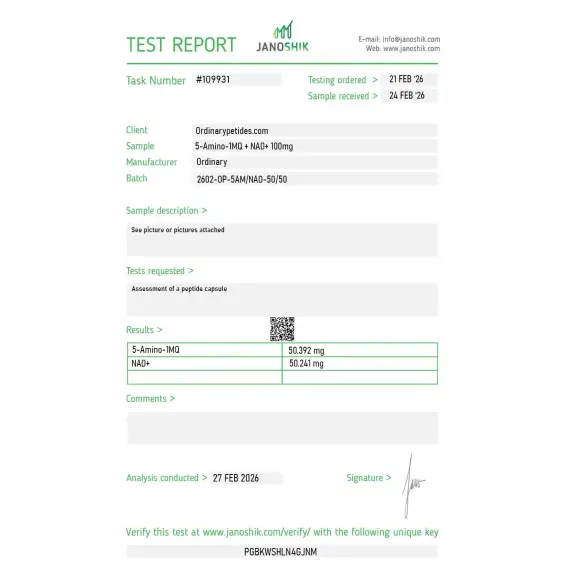
Certificate of Analysis
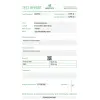
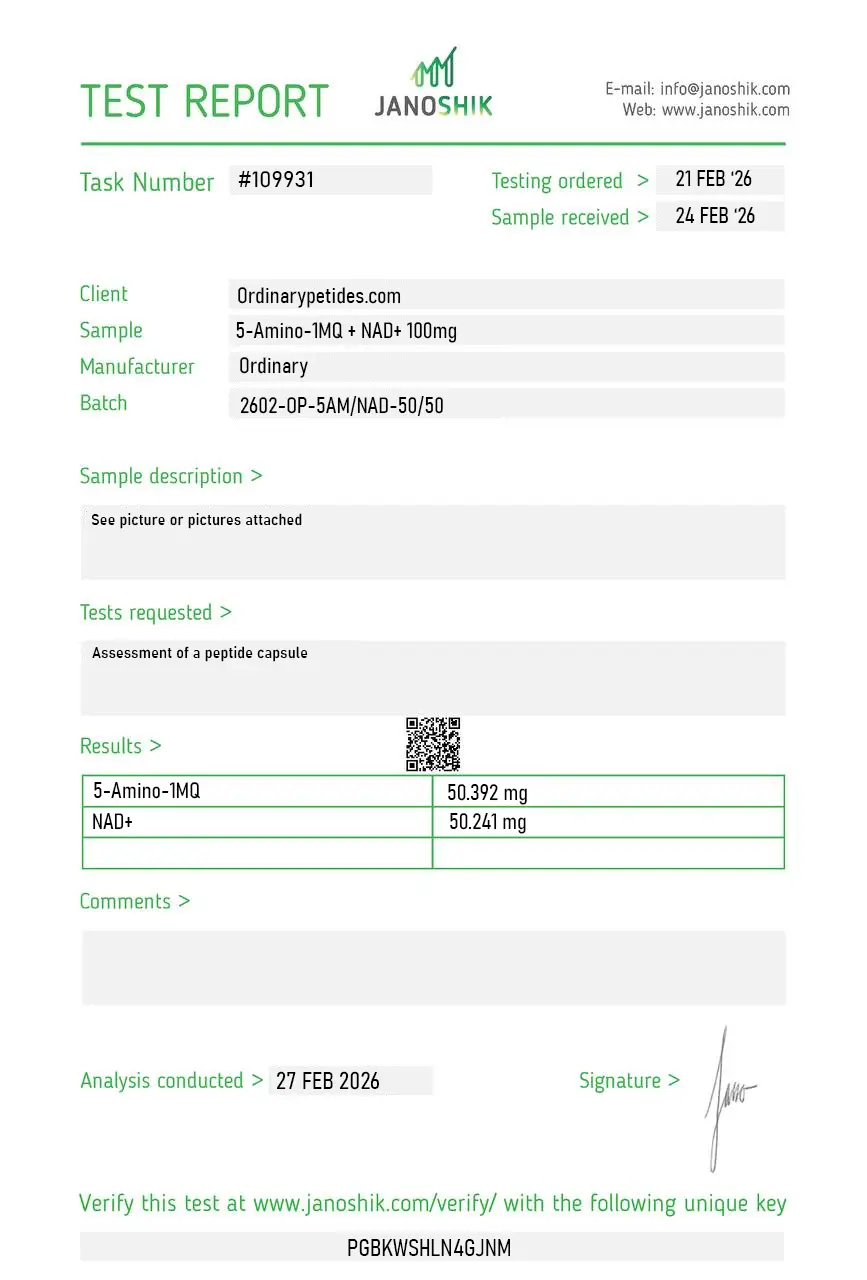
An independent test report is available for 5-Amino-1MQ / NAD+ 100mg. This report provides batch-level documentation and analytical verification information for research reference.
The 5-Amino-1MQ + NAD+ stack refers to the research combination of 5-Amino-1MQ — a selective NNMT (nicotinamide N-methyltransferase) inhibitor — with one or more NAD+ precursors, most commonly nicotinamide mononucleotide (NMN) or nicotinamide riboside (NR). The scientific rationale is grounded in their complementary positions within the same metabolic axis. NNMT is an enzyme that consumes nicotinamide — the direct upstream substrate of the NAD+ salvage pathway — by methylating it into 1-methylnicotinamide (1-MNA), effectively draining the raw material available for NAD+ synthesis. 5-Amino-1MQ blocks this drain. NMN and NR directly supply additional substrate into the salvage pathway. Conceptually, the combination attacks NAD+ depletion from two sides simultaneously: reducing wasteful diversion of the precursor pool while increasing supply into that same pool.
NMN (nicotinamide mononucleotide) and NR (nicotinamide riboside) are the two most studied direct NAD+ precursors and both increase circulating NAD+ in humans, but their biochemical routes and pharmacokinetics differ. NR is phosphorylated by NRK1/2 enzymes to generate NMN intracellularly, then converted to NAD+ by NMNATs. NMN enters cells via the Slc12a8 transporter in some tissues and is converted directly to NAD+. A landmark 2025 human trial published in Nature Metabolism (Christen et al.) found that oral supplementation with either NR or NMN sustainably doubled circulating NAD+ over 14 days — both performing equivalently on this primary metric. In the context of the 5-Amino-1MQ stack, the mechanistic logic applies equally to both, as the relevant upstream bottleneck NNMT depletes is nicotinamide — a metabolite that both NR and NMN are converted through before reaching NAD+. Neither NR nor NMN has been directly studied in combination with 5-Amino-1MQ in any published research.
No. As of mid-2026, no peer-reviewed publication has examined 5-Amino-1MQ in combination with NMN, NR, or direct NAD+ in any experimental model. The combination rationale is mechanistic extrapolation from the individual compound literature. The closest published research to this question comes from a University of Texas Medical Branch study (2024) examining 5-Amino-1MQ in aged female mice for muscle strength and endurance — which found NNMT inhibition improved grip strength better than exercise alone. The researchers themselves explicitly proposed in the paper's discussion that future studies should examine whether adding NAD+ precursors such as NMN further improves the muscle-enhancing effects of 5-Amino-1MQ, and noted this would also help confirm whether NNMT inhibition operates through NAD+ elevation specifically. This represents the closest thing to an institutional scientific endorsement of the combination hypothesis — framed appropriately as a research question, not a proven outcome.
Beyond NAD+, NNMT's enzymatic activity consumes SAM — S-adenosylmethionine — the universal methyl donor for DNA methylation, histone methylation, and polyamine synthesis. When NNMT is overactive, as it is in aging adipose tissue and cancer-associated fibroblasts, the SAM/SAH ratio drops, reducing the thermodynamic drive for methylation reactions throughout the cell and globally remodeling chromatin toward pro-metabolic-dysfunction or pro-tumor gene expression patterns. 5-Amino-1MQ, by blocking NNMT, preserves both nicotinamide for NAD+ synthesis and SAM for methylation reactions simultaneously. NAD+ precursors do not address this SAM dimension at all — they operate entirely within the nicotinamide-to-NAD+ axis. This distinction means the combination stack may have complementary epigenetic relevance that goes beyond simple NAD+ additivism, though this has not been directly investigated in any published combination study.
The 2025 Nature Metabolism study by Christen et al. is the most rigorous human comparison of NAD+ precursors to date. It found that oral NR and NMN both sustainably doubled circulating NAD+ over 14 days of supplementation, while plain nicotinamide (Nam) did not produce the same sustained effect. The study also found that both NR and NMN are converted to nicotinamide and then to nicotinic acid by gut microbiota before entering circulation, modulating the gut microbiome and increasing short-chain fatty acids in the process. For the 5-Amino-1MQ stack context, this finding is relevant for two reasons. First, it confirms that oral NMN and NR are genuinely effective NAD+ precursors in humans — validating the "supply side" of the combination hypothesis. Second, the gut microbiome conversion dynamics add a layer of complexity: if a significant fraction of NMN/NR is converted to nicotinamide peripherally before reaching target tissues, NNMT activity in those tissues becomes directly relevant to how much of that nicotinamide is captured for NAD+ synthesis versus lost to 1-MNA — precisely the bottleneck 5-Amino-1MQ targets.
Both 5-Amino-1MQ and NAD+ precursors converge on sirtuin activation through elevated intracellular NAD+. Sirtuins — particularly SIRT1 and SIRT3 — are NAD+-dependent deacetylases that regulate PGC-1α (mitochondrial biogenesis), FOXO transcription factors (stress resistance and longevity pathways), p53 (DNA damage response), and NF-κB (inflammatory gene programs). The proposed logic of the combination stack is that 5-Amino-1MQ raises NAD+ by reducing its depletion upstream, while NMN/NR raises NAD+ by increasing supply — and both mechanisms feed the same sirtuin-dependent regulatory network downstream. A 2025 systematic review and meta-analysis published in the Journal of Cachexia, Sarcopenia and Muscle found that NMN and NR supplementation in older adults improved muscle function through SIRT1/PGC-1α pathway activation, though the evidence remained inconclusive for mass endpoints. Whether NNMT inhibition plus precursor supplementation produces synergistic sirtuin activation greater than either approach alone has not been tested.
NAD+ decline with age is a well-established phenomenon across species, with multiple contributing mechanisms identified: decreased NAMPT expression (the rate-limiting enzyme in the salvage pathway), increased CD38 ectoenzyme activity (which hydrolyzes NAD+), and — critically for this stack — increased NNMT expression in aging tissues diverting nicotinamide away from the salvage pathway. These represent parallel, independent causes of the same deficit. Research framing suggests that addressing only one contributor to NAD+ decline leaves the others unaddressed. In this context, the 5-Amino-1MQ + NAD+ precursor combination is sometimes described by longevity researchers as a more comprehensive approach than either strategy alone — NNMT inhibition addresses one source of NAD+ depletion, while NMN/NR addresses substrate supply. However, no published study has tested whether this multi-pronged approach produces greater NAD+ restoration than precursor supplementation alone in any tissue or species.
The individual research gaps for 5-Amino-1MQ are already substantial — no completed human clinical trials, all evidence from in vitro and rodent studies, limited independent replication. For NMN and NR, human evidence is more developed — multiple randomized controlled trials confirm circulating NAD+ elevation — but tissue-specific effects on metabolism and muscle remain inconsistent in the human literature. The combination-specific gaps are entirely foundational: no in vitro combination dose-response study exists to establish whether the NAD+ elevation is additive, synergistic, or subject to ceiling effects in any cell type; no animal pharmacokinetic interaction data establishes whether 5-Amino-1MQ alters NMN/NR absorption, conversion, or tissue distribution; no study has characterized whether NNMT inhibition changes the gut microbiome conversion dynamics of NMN/NR that the 2025 Nature Metabolism trial documented; and no long-term combined safety data exists in any species. Sex-specific analysis is also notably absent — the 2024 UTMB muscle study used only aged female mice, and the combination's effects across sexes are unknown.
5-Amino-1MQ is classified as a Research Use Only (RUO) experimental compound with no FDA approval and no IND filing for human trials as of mid-2026. NMN and NR occupy a different regulatory category — both are commercially available as dietary supplements in the US under DSHEA (Dietary Supplement Health and Education Act), though NMN's supplement status was temporarily contested by the FDA following an IND filing by Metro International Biotech before being resolved. As a combination, no regulatory framework governs the stack as a defined entity — it has no IND, no NDA, and no formal regulatory filing in any jurisdiction. The gap between the individual compound regulatory statuses is itself scientifically significant: NMN/NR have completed multiple human safety and pharmacokinetic trials, while 5-Amino-1MQ has zero published human data. This asymmetry means the two components of the stack are at fundamentally different stages of translational readiness, and any combination study would need to establish 5-Amino-1MQ's human safety profile independently before a combination investigation could proceed responsibly.