

MOTS-c
For in vitro testing and laboratory use only. Not for human or animal consumption. Bodily introduction is illegal. Handle only by licensed professionals. Not a drug, food, or cosmetic. Educational use only.
MOTS-c: Small Peptide, Big Mitochondrial Buzz
MOTS-c is not just another trendy "metabolic peptide," but a mitochondrially encoded micromolecule that drew attention because it literally changes the usual view of what mitochondria do. In published data and experimental models, it has been linked to the regulation of energy metabolism, stress adaptation, AMPK signaling, the response to physical exercise, and metabolic flexibility.
What makes it especially compelling is that, within the research context, MOTS-c has been considered part of mitonuclear communication — in other words, a signal that does not merely "exist," but actively participates in tuning the cell's response to stress. In early studies and in cell and animal models, it showed striking biological activity, while in human data it still appears more as a biomarker and an object of early scientific interest than as a confirmed therapeutic tool.
That is why MOTS-c is interesting not because of promises from the world of "anti-aging in a syringe," but because it sits at the intersection of modern mitochondrial biology, metabolism, and adaptation to physical stress. For the client, this makes it at the very least one of the most intriguing peptides to study — intelligent, unusual, and, for now, clearly more scientific than market-ready.
MOTS-c (Mitochondrial Open Reading Frame of the 12S rRNA Type-c): A Scientific Review
Based on peer-reviewed literature — see References. Last updated: April 2026.
The Short Version
MOTS-c represents something genuinely new in biology: a peptide hormone encoded not in the nuclear genome, where essentially all other peptides in this series originate, but in the mitochondrial genome. Its discovery in 2015 by Changhan Lee, Pinchas Cohen, and colleagues at the USC Davis School of Gerontology overturned decades of assumption that the mitochondrial genome could not produce bioactive signalling peptides. It can.[1]
MOTS-c is only 16 amino acids, encoded by a short open reading frame within the 12S rRNA gene — a region previously classified as non-coding structural RNA. It is detectable in circulation, declines with age, increases with exercise, and functionally modulates the same metabolic pathways targeted by metformin. Its mechanism is elaborate: in resting cells, MOTS-c sits predominantly outside the nucleus. Under metabolic stress, it translocates into the nucleus in an AMPK-dependent manner and directly regulates genes containing antioxidant response elements. This makes MOTS-c a retrograde signalling molecule — a message sent from the mitochondria to the nucleus, communicating the organelle’s metabolic status to the cell’s master regulator of gene expression.
What MOTS-c does not yet have is a single completed human clinical trial. The human evidence is correlational (lower in obese children, type 2 diabetic adults, and older individuals) and genetic (a loss-of-function polymorphism K14Q is associated with increased T2D risk in Asian men across a cohort of 27,527 people).[3] These are meaningful findings. They are not the same as a randomised controlled trial.
| At a glance | |
|---|---|
| Full name | Mitochondrial Open Reading Frame of the 12S rRNA type-c |
| Gene location | 12S rRNA gene (MT-RNR1), mitochondrial DNA |
| Sequence | MRWQEMGYIFYKEFLK (16 amino acids) |
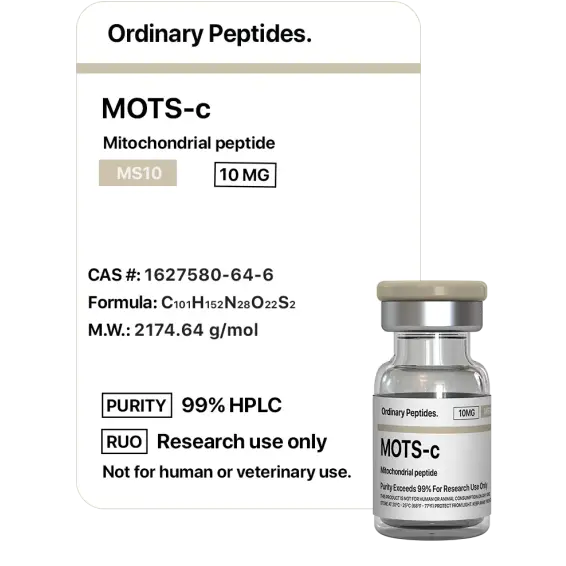
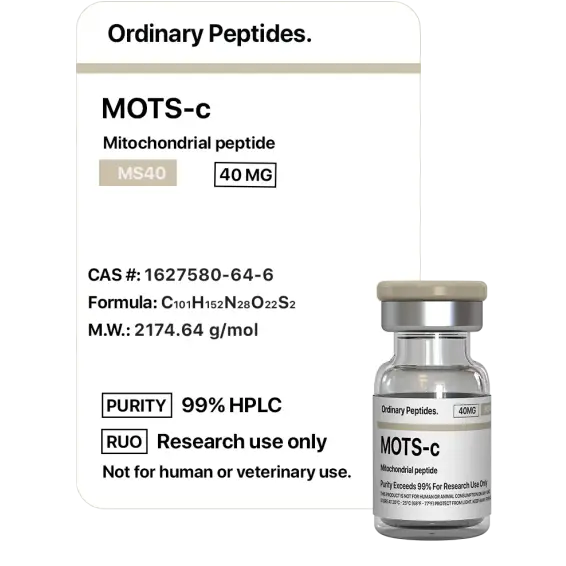
| Molecular weight | ~2,174 Da |
| Discovery | 2015 — Lee C, Cohen P, and colleagues; USC Davis School of Gerontology |
| Genome of origin | Mitochondrial (not nuclear) — one of only ~37 mitochondria-encoded genes |
| MDP family | Mitochondrial-derived peptide; sibling of humanin and SHLPs 1–6 |
| Primary mechanism | Folate cycle inhibition → AICAR accumulation → AMPK activation; stress-induced nuclear translocation |
| Key animal finding | Late-life MOTS-c in geriatric mice (23.5 months) increased physical capacity and healthspan [2] |
| Human clinical trials | ❌ None completed |
| WADA / USADA | ❌ Prohibited (USADA listed January 2024) |
The Mitochondrial Genome: Why This Is Unusual
The mitochondrial genome is a circular DNA molecule of approximately 16,569 base pairs encoding only 13 proteins, 22 transfer RNAs, and 2 ribosomal RNAs. For decades, the totality of mitochondrial protein-coding capacity was thought to be those 13 proteins. The rRNA genes (12S and 16S) were classified as structural non-coding RNA. The discovery of humanin in 2001 first suggested that short open reading frames (sORFs) might exist within the mitochondrial genome encoding bioactive peptides. MOTS-c confirmed and extended this: a sORF within the mitochondrial 12S rRNA encoding a 16-amino-acid peptide that regulates insulin sensitivity and metabolic homeostasis — produced by a gene previously thought to be non-coding. The mitochondrial genome’s information content was systematically underestimated for 34 years.[1]
Because MOTS-c is produced by mitochondria, detectable in circulation, and acts on distant tissues including skeletal muscle, it has been termed a “mitokine” — a mitochondria-derived signalling molecule communicating the organelle’s metabolic status to the rest of the cell and to the whole organism. This positions MOTS-c within a novel class of endocrine communication: mitochondria are not merely energy factories; they are signalling organelles that communicate through peptide hormones.
Comparison with humanin
| Feature | Humanin | MOTS-c |
|---|---|---|
| Source gene | 16S rRNA sORF | 12S rRNA sORF |
| Length | 21 amino acids | 16 amino acids |
| Discovery | 2001 (Nishimoto lab, Keio University) | 2015 (Lee/Cohen lab, USC) |
| Primary actions | Neuroprotection, anti-apoptotic, metabolic | Metabolic, exercise mimetic, anti-aging |
| Primary target tissues | Brain, heart, gonads | Skeletal muscle, nucleus |
| AMPK activation | Yes | Yes (central mechanism) |
Mechanism: Retrograde Signalling from Mitochondria to Nucleus
The folate–AICAR–AMPK pathway
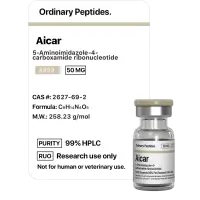
MOTS-c’s primary intracellular mechanism is specific and unusual. Rather than acting through a classical membrane receptor, MOTS-c enters cells and inhibits a key step in the folate cycle. The sequence of events: MOTS-c inhibits 5-methyltetrahydrofolate (5Me-THF) flux through the folate/methionine cycle → reduces de novo purine biosynthesis → AICAR (5-aminoimidazole-4-carboxamide ribonucleotide) accumulates as the penultimate intermediate → elevated AICAR activates AMPK independently of the canonical AMP/ATP ratio mechanism. MOTS-c’s cellular actions inhibit the folate cycle and its tethered de novo purine biosynthesis, leading to AMPK activation despite lower AMP levels and higher ADP and ATP levels — similar to that achieved by salicylate, leptin, and metformin. Notably, the folate cycle, specifically 5Me-THF, has recently been shown to be a target of the AMPK-activating drug metformin.[1]
AMPK activation then drives: GLUT4 translocation to plasma membrane (enhanced skeletal muscle glucose uptake); fatty acid oxidation (ACC phosphorylation, CPT-1 upregulation); mitochondrial biogenesis (PGC-1α); and suppression of anabolic pathways (mTOR inhibition).
Nuclear translocation: the stress-response dimension
Under metabolic stress (glucose restriction, serum deprivation, or oxidative stress), MOTS-c rapidly translocates into the nucleus as early as 30 minutes after stress induction — and returns to its basic extranuclear state within 24 hours. Nuclear MOTS-c interacts with chromatin and binds transcription factors regulated by antioxidant response elements (AREs), activating NRF2 and ATF1 targets — genes encoding antioxidant defences, stress adaptation proteins, and metabolic enzymes.[7]
Structurally, the nuclear translocation requires MOTS-c’s hydrophobic domain (residues 8–11: YIFY) — substituting these residues with alanine abolishes nuclear entry and eliminates the metabolic effects. This means MOTS-c has two pharmacological modes: a basal/cytoplasmic mode (folate cycle inhibition → AICAR → AMPK → metabolic effects) and a stress/nuclear mode (AMPK-dependent nuclear translocation → ARE gene regulation → antioxidant response and stress adaptation).
Age-Dependent Decline and Exercise Induction
MOTS-c levels in skeletal muscle and blood circulation in both humans and mice decrease with age. In a human cohort of 75 subjects divided into three age groups (18–30, 45–55, and 70–81 years), plasma MOTS-c levels declined progressively (young vs. middle p<0.01; young vs. older p<0.001). Blood MOTS-c levels in young people are 11% and 21% higher than those in middle- and old-aged people, respectively.[6] MOTS-c expression is also lower in senescent human fibroblast cells and in type 2 diabetes patients compared with healthy controls.
In humans, exercise induces endogenous MOTS-c expression in skeletal muscle and in circulation.[2] This positions MOTS-c as a mechanistic link between the metabolic benefits of exercise and the downstream cellular adaptations those benefits produce — and as a candidate “exercise mimetic” for individuals who cannot exercise due to age, disease, or disability.
Preclinical Evidence
Metabolic rescue
The foundational 2015 Cell Metabolism paper demonstrated: MOTS-c treatment prevented diet-induced obesity in mice on high-fat diet (through increased metabolic rate, not appetite suppression); reversed age-dependent insulin resistance in aged mice, restoring insulin sensitivity to levels comparable to young animals; and the primary site of action was skeletal muscle glucose uptake via GLUT4 translocation.[1]
Late-life healthspan extension (Reynolds et al., 2021)
Old mice (22 months) and geriatric mice (23.5 months, equivalent to approximately 80+ human years) were treated with MOTS-c. MOTS-c significantly enhanced physical performance in young, middle-age, and old mice. Critically, late-life (23.5-month) initiated intermittent MOTS-c treatment (3×/week) increased physical capacity and healthspan in mice.[2] The finding that treatment initiated at the geriatric equivalent of 80 human years produced meaningful improvements in physical capacity is clinically relevant — most longevity interventions are considered for people already well into the second half of their lives.
Diabetes protection and beta cell senescence
Multiple rodent models demonstrate MOTS-c’s protective effects: it reduced autoimmune pancreatic islet infiltration in NOD (Type 1 diabetes) mice; reversed high-fat diet-induced insulin resistance; and reduced pancreatic islet senescence in aged mouse islet cells by modulating nuclear gene expression and metabolites involved in beta-cell senescence.[5]
Other preclinical applications
Cardioprotective effects in ischaemia-reperfusion models; restored cardiac function in diabetic rats via NRG1-ErbB signalling; improved bone mineral density in postmenopausal osteoporosis models; preclinical cognitive protection in Alzheimer’s disease models; anti-inflammatory effects through NF-κB suppression and SASP component reduction.
Human Evidence: Correlational and Genetic
Circulating levels as disease biomarker
| Population | Finding |
|---|---|
| T2D adults (n=45) vs. healthy controls (n=19) | MOTS-c significantly lower in T2D (p<0.0001) |
| Obese male children/adolescents 5–14 years | Circulating MOTS-c 20.3% lower; inversely correlated with insulin resistance |
| Age cohort study (young/middle/older, n=25/group) | Progressive plasma MOTS-c decline with age; 11–21% reduction across groups |
| Coronary artery disease | MOTS-c levels correlated with endothelial dysfunction markers |
The K14Q polymorphism: natural experiment in humans
An Asian-specific mitochondrial DNA variation m.1382A>C (rs111033358) leads to a K14Q amino acid replacement in MOTS-c. Meta-analysis of three cohorts (n=27,527) shows that males but not females with the C-allele exhibit a higher prevalence of T2D. K14Q MOTS-c has reduced activity in cellular and animal models, compatible with this version of the peptide being partially bioinactive. The effect is sex-specific and modified by physical activity (only low-activity men with the K14Q variant showed elevated T2D risk), providing a dose-response relationship consistent with causality.[3]
The K14Q variant also provides a mechanistic hypothesis for part of the elevated T2D risk observed in East Asian populations at lower BMI than Western populations — reduced MOTS-c activity from this mitochondrial polymorphism may impair skeletal muscle insulin sensitivity in a body-composition-independent manner.
The longevity genetics question
Initial studies linked MOTS-c mitochondrial variants to exceptional longevity in Japanese centenarians, but this finding was subsequently not replicated in larger cohorts. The association between MOTS-c variants and longevity remains scientifically interesting but not definitively established.[4]
Evidence Summary
| Domain | Model | Finding | Evidence quality |
|---|---|---|---|
| Insulin resistance reversal | Rodent (aged/HFD) | Prevented and reversed | Strong preclinical |
| Anti-obesity | Rodent (HFD) | Prevented weight gain; no appetite effect | Strong preclinical |
| Late-life healthspan | Geriatric mice (23.5 mo.) | Increased with 3×/week regimen [2] | Moderate-strong preclinical |
| Beta cell protection | Rodent (T1D, T2D, aging) | Reduced senescence, improved glucose tolerance | Moderate preclinical |
| Exercise induction | Human in vivo | MOTS-c rises in muscle and plasma post-exercise | Moderate; observational |
| T2D biomarker | Human cohorts | Lower in T2D; lower in obesity; age-decline | Moderate correlational |
| K14Q and T2D risk | Human genetics (n=27,527) [3] | K14Q associated with T2D in men; sex/activity modified | Strong human genetics |
| Therapeutic trials | None | — | ❌ No data |
Regulatory and WADA Status
MOTS-c has no FDA or EMA approval, and no human clinical trial has been initiated as of April 2026. USADA classified MOTS-c as prohibited in January 2024, placing it under the WADA Prohibited List’s S2 category (Peptide Hormones, Growth Factors, Related Substances and Mimetics). WADA’s prohibition reflects the performance-enhancing potential of a compound that increases physical capacity, improves skeletal muscle insulin sensitivity, and mimics the metabolic effects of exercise.
The anti-doping detection challenge is substantial: MOTS-c is endogenous, present at low nanomolar concentrations, increases naturally with exercise, and declines with age. Distinguishing exogenous administration from normal physiological variation requires highly sensitive mass spectrometry methods with established reference ranges — technically demanding, analogous to the detection challenge with endogenous GH and IGF-1.
Comparison with Key Peers
| Feature | MOTS-c | Humanin | Metformin |
|---|---|---|---|
| Origin | Mitochondrial genome (12S rRNA sORF) | Mitochondrial genome (16S rRNA sORF) | Synthetic biguanide drug |
| Primary target | Skeletal muscle, nucleus | Brain, heart, gonads | Liver (primary); also muscle |
| AMPK activation | Yes (via folate/AICAR) | Yes | Yes (via complex I inhibition and possibly folate) |
| Human trials | ❌ None | ❌ None | ✅ Decades of clinical use |
| Exercise induction | Strong | Moderate | N/A |
| Age-related decline | Yes — documented | Yes | N/A |
| WADA | ❌ Prohibited 2024 | Not specifically listed | Not prohibited |
Common Misconceptions
“Because MOTS-c declines with age, supplementing it will reverse aging.”
The age-related decline is consistent with a causal role in metabolic aging but does not prove it. Lower MOTS-c in older individuals could be a consequence of mitochondrial dysfunction rather than a cause. Human randomised trials are required to establish whether supplementing MOTS-c produces functional improvements, and such trials have not been conducted.
“The K14Q finding proves MOTS-c is protective in humans.”
The K14Q data is the best human evidence for a causal role — a natural experiment in 27,527 people showing that a partially bioinactive MOTS-c variant increases T2D risk in men with low physical activity. This is strongly suggestive but not equivalent to a clinical trial of exogenous MOTS-c administration.[3]
“MOTS-c is safe because it’s ‘natural’ and the body makes it.”
The body regulates MOTS-c production tightly — stress-induced, exercise-induced, precise temporal patterns, specific localisation. Exogenous administration at supraphysiological doses without the physiological context of exercise/stress has not been studied for long-term safety in humans. The fact that the body produces something does not mean exogenous administration at uncharacterised doses is safe.
Frequently Asked Questions
Is MOTS-c similar to metformin?
Mechanistically, both target the folate cycle and activate AMPK — which the foundational Lee et al. 2015 Cell Metabolism paper explicitly noted. Key differences: metformin acts primarily on the liver; MOTS-c appears to act primarily on skeletal muscle. Metformin has 70+ years of clinical evidence; MOTS-c has no human trial data. Whether MOTS-c might have better muscle-specificity with less gastrointestinal adverse effect than metformin is an untested hypothesis.[1]
Why hasn’t a clinical trial been initiated?
MOTS-c was first described in 2015 — a decade ago. Preclinical characterisation has been extensive but the translational pipeline takes years to advance to IND filing. The USC Cohen/Lee group is the most active academic group and has been conducting the preclinical work necessary before clinical application. As of April 2026, no IND for MOTS-c has been filed.
Does exercise increase MOTS-c enough to produce therapeutic effects?
Exercise does measurably increase both skeletal muscle and circulating MOTS-c in humans.[2] Whether natural exercise-induced elevation reaches therapeutically sufficient concentrations is not known — the MOTS-c injection doses used in mouse studies are substantially higher than typical circulating levels. MOTS-c’s role as an exercise-induced signal does not mean all of exercise’s metabolic benefits are MOTS-c-mediated.
Key Takeaways
- MOTS-c is encoded by the mitochondrial genome — a 16-amino acid peptide from a short open reading frame within the 12S rRNA gene. Its 2015 discovery overturned the assumption that mitochondrial rRNA genes are non-coding and established that the mitochondrial genome encodes a family of signalling peptides with broad physiological roles.[1]
- The mechanism is specific and pharmacologically tractable. MOTS-c inhibits the folate cycle, accumulates AICAR, and activates AMPK — the same pathway targeted by metformin but in skeletal muscle rather than liver. Under metabolic stress, MOTS-c translocates to the nucleus and regulates ARE-containing genes. These are detailed, verified, mechanism-based findings.
- The mouse evidence is genuinely impressive. Reversal of diet-induced obesity, age-related insulin resistance, and late-life physical decline initiated at the geriatric mouse equivalent of 80+ human years — these are the kinds of findings that justify enthusiasm. They are also mouse findings.[2]
- The human correlational and genetic data is unusually strong for a peptide without human trials. The K14Q polymorphism study (n=27,527) provides a natural human experiment consistent with MOTS-c being causally involved in metabolic health. The age-dependent decline in multiple independent human cohorts is consistently replicated.[3]
- ⚠️ No human clinical trials have been completed. Every therapeutic claim about MOTS-c in humans is extrapolated from animal data and human correlational/genetic observations. The translation from mouse to human is a genuine unknown, not a formality to be assumed.
- MOTS-c is prohibited by WADA (USADA listed January 2024) because its exercise-mimicking and metabolic-enhancing effects provide a clear performance advantage rationale, even in the absence of human trial data confirming that advantage in athletes.
References
Discovery and Foundational Mechanism
- Lee C, Zeng J, Drew BG, Sallam T, Martin-Montalvo A, Wan J, Kim SJ, Mehta H, Hevener AL, de Cabo R, Cohen P. The mitochondrial-derived peptide MOTS-c promotes metabolic homeostasis and reduces obesity and insulin resistance. Cell Metabolism. 2015;21(3):443–454. PMID: 25738459
Exercise and Aging
- Reynolds JC, Lai RW, Woodhead JST, Joly JH, Mitchell CJ, Cameron-Smith D, et al. MOTS-c is an exercise-induced mitochondrial-encoded regulator of age-dependent physical decline and muscle homeostasis. Nature Communications. 2021;12:470. doi: 10.1038/s41467-020-20790-0
Genetics and T2D
- Zempo H, Kim SJ, Fuku N, Nishida Y, Higaki Y, Wan J, et al. A pro-diabetogenic mtDNA polymorphism in the mitochondrial-derived peptide, MOTS-c. Aging. 2021;13:1692–1717. PMC7880332
- Fuku N, Pareja-Galeano H, Zempo H, Alis R, Arai Y, Lucia A, et al. The mitochondrial-derived peptide MOTS-c: a player in exceptional longevity? Aging Cell. 2015;14:921–923. PMID: 26289118
Diabetes and Senescence
- Kong BS, Min SH, Lee C, Cho YM. Mitochondrial-encoded MOTS-c prevents pancreatic islet cell senescence to delay diabetes. Experimental and Molecular Medicine. 2025. PMC12411631
Reviews
- Lee C, Kim KH, Cohen P. MOTS-c: A novel mitochondrial-derived peptide regulating muscle and fat metabolism. Free Radical Biology and Medicine. 2016;100:182–187.
- Wan W, et al. Mitochondria-derived peptide MOTS-c: effects and mechanisms related to stress, metabolism and aging. Journal of Translational Medicine. 2023. PMC9854231
Key Investigators
- Changhan Lee, PhD — USC Davis School of Gerontology; first author on the 2015 Cell Metabolism discovery paper; primary investigator of MOTS-c mechanisms and functions.
- Pinchas Cohen, MD — Dean, USC Davis School of Gerontology; senior author on the foundational MOTS-c discovery; leads the broader mitochondrial-derived peptide research programme including humanin and SHLPs.
Certificate of Analysis
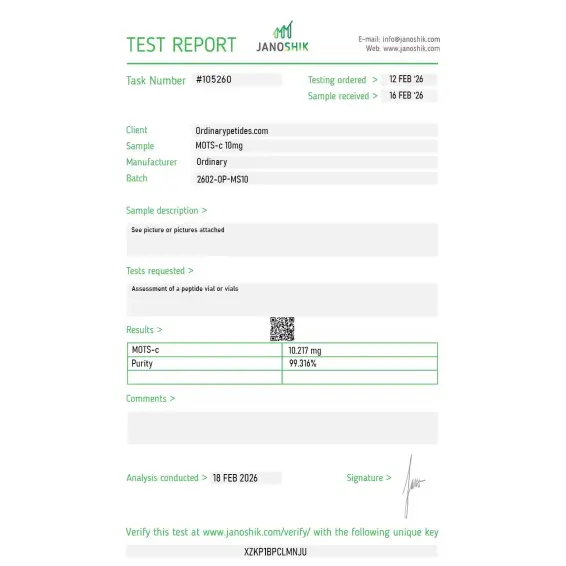
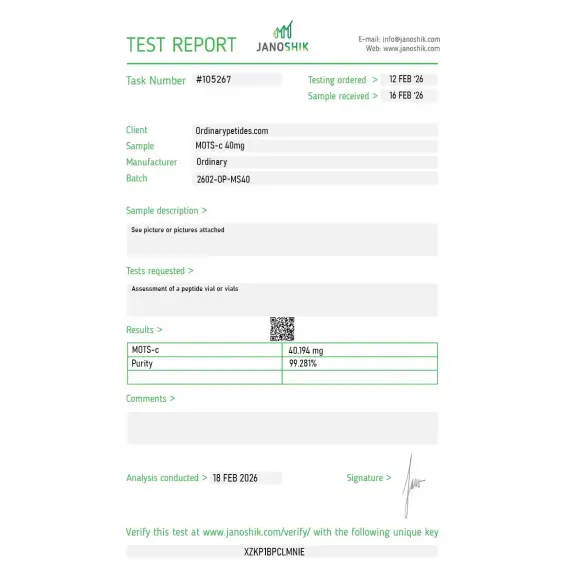
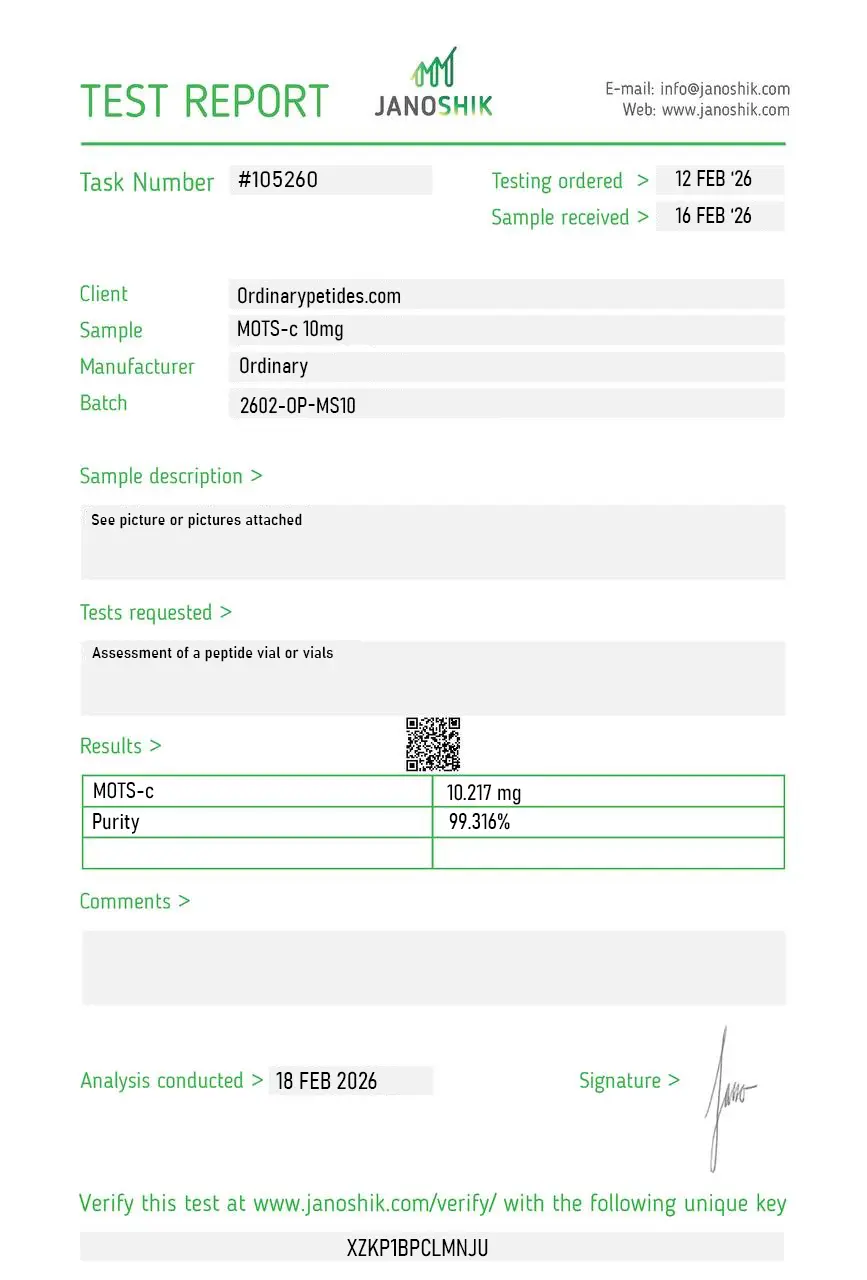
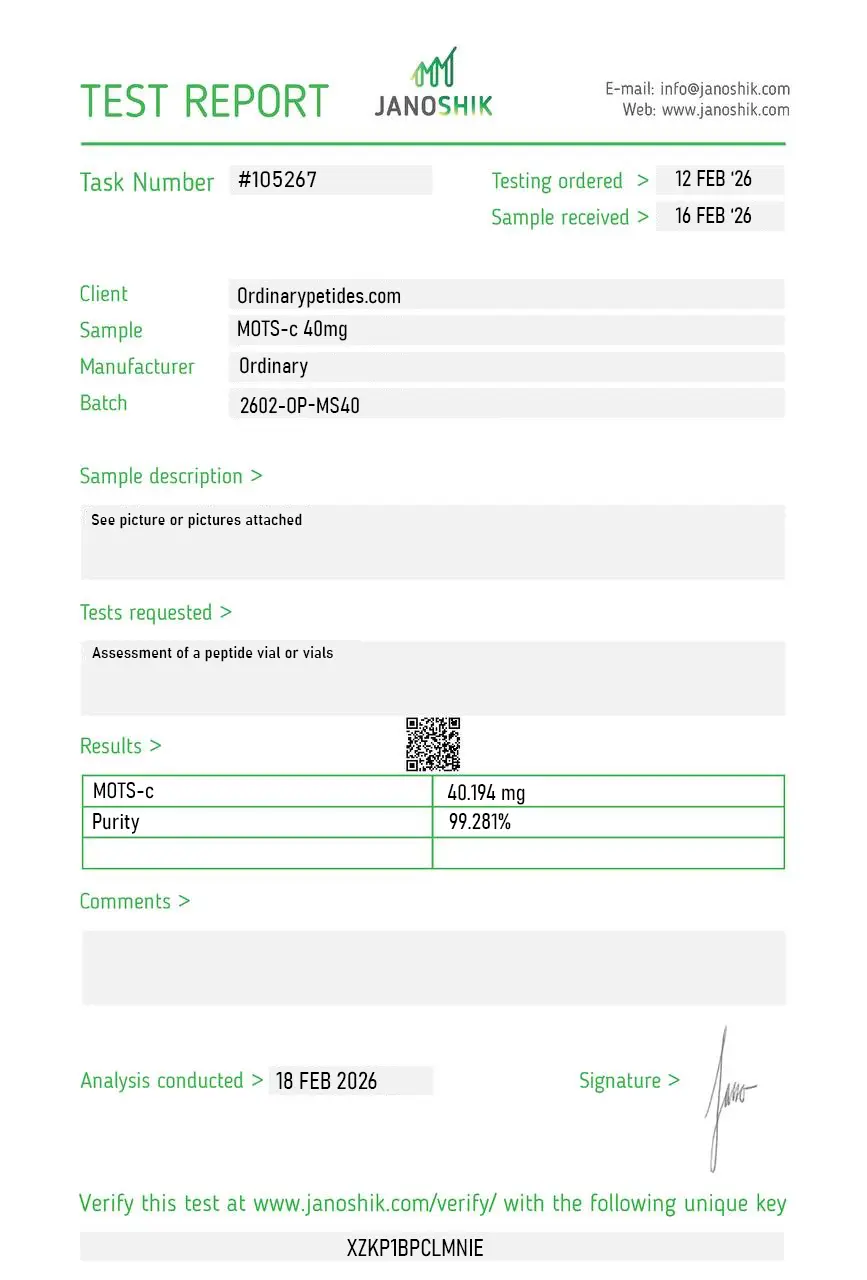
Independent test reports are available for MOTS-c 10mg and MOTS-c 40mg. These reports provide batch-level documentation and analytical verification information for research reference.
Based on 3 reviews
4.7
-
2
-
1
We use MOTS-c in the AMPK-activator panel alongside AICAR and metformin — three mechanistically distinct ways to engage the same pathway, MOTS-c through the folate-cycle inhibition feeding into AICAR-like AMPK activation, AICAR directly via ZMP-mimicking-AMP, metformin through complex I inhibition. That convergent-pathway-divergent-mechanism comparison is the experiment. The material activated AMPK consistently across the conditions, slotting into the panel as the MDP arm
The mitochondrial-to-nuclear translocation is what we actually study — MOTS-c is one of the rare peptides that moves between organelles in response to metabolic stress, accumulating in the nucleus under conditions that compromise mitochondrial function. For probing organelle-to-organelle peptide signaling and the broader "mitochondria-as-signaling-hub" framing, MOTS-c is the canonical translocating MDP. The material gave the expected stress-induced nuclear accumulation in our fluorescent-labeling imaging assays.
For a 16-residue peptide encoded in mitochondrial 12S rRNA the certificate should note that the published sequence has known length ambiguity in the literature — some sources report 16 residues, others report the same sequence with N- or C-terminal adjustments, and the active form versus the reported gene-encoded form aren't always identical. The listing reported the 16-mer but didn't address that ambiguity. Material performed as expected, but for a peptide where the exact endogenous form is still being characterized, sequence-version specification matters.
Not in the usual everyday sense. It is more accurate to describe it as a mitochondrial-derived signaling peptide that may act as a systemic regulator of metabolic and stress-adaptive processes.
At this point, what has been shown primarily is that endogenous MOTS-c responds to physical exercise, while convincing therapeutic efficacy of exogenous MOTS-c in humans has not been established.
Early clinical programs are associated mainly with the analog CB4211, not with native MOTS-c as an approved therapy.
At present, there is no basis for saying that confidently. Safety has been insufficiently studied.
No. USADA states that it is prohibited in sport.
MOTS-c is an interesting molecule of major fundamental importance, but not yet a proven universal peptide for weight, sport, or anti-aging.
MOTS-c (Mitochondrial Open Reading Frame of the 12S rRNA type-c) is a 16-amino acid mitochondrial-derived peptide (MDP) encoded within the 12S ribosomal RNA gene of mitochondrial DNA — making it, like Humanin, one of a small and biologically remarkable class of peptides encoded directly by mitochondrial rather than nuclear DNA. It was first identified and characterized in 2015 by Pinchas Cohen and colleagues at the University of Southern California. Its sequence is MRWQEMGYIFYPRKLR. MOTS-c is produced in response to metabolic and cellular stress, is released from mitochondria into the cytoplasm, and can translocate to the nucleus — an unusual property that fundamentally distinguishes it from most peptides in this series. It declines with age, a pattern mirrored across multiple species, which has generated strong interest in its role in the biology of aging and metabolic decline.
MOTS-c's mechanism operates through several interconnected pathways. Its primary and best-documented action is activation of AMPK — the cellular energy sensor and metabolic master switch also targeted by AICAR covered earlier in this series — but through a distinct upstream mechanism. Within the cytoplasm MOTS-c inhibits the folate cycle and the methionine cycle, leading to accumulation of AICAR (5-aminoimidazole-4-carboxamide ribonucleotide) — the same AMPK-activating intermediate produced by exogenous AICAR. This means MOTS-c effectively generates endogenous AICAR as a downstream signal, activating AMPK and all of its metabolic consequences — enhanced fatty acid oxidation, improved glucose uptake, mitochondrial biogenesis, and suppression of mTORC1. Its nuclear translocation under stress conditions adds a further layer — in the nucleus MOTS-c regulates gene expression through interactions with the ARE (antioxidant response element) and influences the nuclear stress response directly, a capability no short-chain peripheral peptide possesses. It also activates Nrf2 and antioxidant defense pathways, and modulates inflammatory signaling.
Preclinical evidence is genuinely striking across several domains. In diet-induced obese mice MOTS-c administration prevented and reversed obesity and insulin resistance without changes in food intake. In aged mice it restored physical capacity, improved metabolic flexibility, and extended healthspan — with effects comparable to exercise-induced adaptations. Exercise itself significantly upregulates plasma MOTS-c levels in humans, and MOTS-c has been proposed as part of the molecular basis for exercise-induced metabolic benefits. In skeletal muscle models it improves glucose utilization, enhances mitochondrial function, and increases oxidative capacity. In cardiovascular models it reduces ischemia-reperfusion injury. In inflammatory models it suppresses cytokine production and reduces systemic inflammation. In aging models MOTS-c plasma levels decline in older humans relative to younger adults, and higher MOTS-c levels in centenarian studies correlate with longevity phenotypes — suggesting endogenous MOTS-c is a biomarker of biological aging and metabolic resilience.
Human evidence is preliminary but directionally consistent with the animal data. Circulating MOTS-c levels in humans increase acutely with exercise — particularly resistance training — and higher baseline MOTS-c correlates with better insulin sensitivity, healthier metabolic profiles, and longevity in cohort studies. A 2021 human study documented that MOTS-c injections were well tolerated in healthy adults with no serious adverse events, establishing basic human safety at research doses. Its role as a circulating biomarker of mitochondrial health and metabolic stress adaptation is increasingly supported. However no phase 2 or 3 clinical trials have been completed and it has no approved therapeutic indication anywhere.
Both are mitochondrial-derived peptides encoded by the MT-RNR2 genomic region and share the broad theme of cytoprotection and stress resilience. Their mechanistic emphases differ meaningfully. MOTS-c focuses primarily on metabolic regulation — AMPK activation, glucose and fatty acid metabolism, insulin sensitivity, mitochondrial biogenesis, and the nuclear stress response. Humanin focuses more on direct cytoprotection — inhibiting apoptosis through Bcl-2 family interactions, neuroprotection, and anti-inflammatory signaling. Their combined use has been proposed as complementary — MOTS-c for metabolic optimization and Humanin for cellular survival under stress — though no combination human trials exist. Unlike Humanin, MOTS-c does not carry the same documented pro-tumor signals in specific cancer models, though the cancer question for any cell-proliferation-adjacent compound warrants ongoing attention.
As a research compound MOTS-c is given by subcutaneous injection. Research protocols and wellness clinic protocols typically cite doses of 5 to 10 mg per week divided across two to three injections. It is available as a lyophilized research peptide reconstituted with bacteriostatic water. Its short plasma half-life in vivo means frequent dosing is needed to maintain sustained circulating levels. It is not FDA-approved, has no standardized human therapeutic dosing protocol, and cannot be legally compounded in the United States.
MOTS-c has a favorable early safety profile based on available data — consistent with its endogenous nature as a mitochondrially produced stress signal. The 2021 human safety study reported no serious adverse events. Commonly reported effects in research and wellness contexts are mild injection site reactions, occasional transient fatigue, and mild dizziness or lightheadedness — possibly related to enhanced glucose utilization and mild metabolic shifts. Because it activates AMPK and improves glucose uptake, people with existing hypoglycemia risk should be monitored. Long-term safety data is absent.
People with active cancer or cancer history should exercise caution — while MOTS-c does not carry Humanin's directly documented tumor-promotion signals, its mitogenic signaling properties and influence on cell proliferation pathways warrant the same precautionary approach applied to all compounds that modulate cell growth and metabolism. Those with diabetes on insulin or other glucose-lowering agents should be monitored for hypoglycemia given MOTS-c's insulin-sensitizing effects. Pregnant or breastfeeding women should not use it. It is not FDA-approved and should only be used under qualified medical supervision within a research context.