

Epithalon
For in vitro testing and laboratory use only. Not for human or animal consumption. Bodily introduction is illegal. Handle only by licensed professionals. Not a drug, food, or cosmetic. Educational use only.
Epithalon (Epitalon): A Tetrapeptide at the Crossroads of Longevity Hypotheses, Cell Biology, and Peptide Bioregulator Research
Epithalon, also known as Epitalon, is a short tetrapeptide (AEDG) best known in the field of gerontology, where it has been studied as a possible active fragment of epitalamin and linked to the biology of aging. In the research context, the main interest in this peptide grew out of studies reporting telomerase activation, telomere elongation, and additional cell divisions in cellular models. That sounds dramatic — and that is precisely why it attracts so much attention.
Published reports have also discussed its relationship with melatonin, circadian rhythms, and age-related physiological changes, while preclinical data have connected it to a broader geroprotective framework. Still, a sober filter is essential here: a compelling molecular story is not yet ready-made anti-aging magic in a vial. If only biology were that cooperative.
What makes Epithalon genuinely interesting is that it sits at the crossroads of longevity hypotheses, cell biology, and the older tradition of peptide bioregulators. For readers who care not just about bold promises but about the actual scientific grounds for interest, this is exactly the kind of peptide worth examining carefully — and without illusions.
Epithalon (Epitalon): A Scientific Review of the Longevity Tetrapeptide
Based on peer-reviewed literature — see References. Last updated: April 2026.
The Short Version
Epithalon — also written Epitalon, Epithalone, or by its amino acid sequence designation AEDG — is a synthetic tetrapeptide that has attracted more attention in the longevity and biohacking community than perhaps any other compound in this series. The reason is the mechanism: Epithalon activates telomerase, the enzyme responsible for maintaining and extending the protective telomere caps at the ends of chromosomes, and it has been shown to elongate telomeres in human somatic cells in vitro — cells that normally cannot perform this function.
The research behind Epithalon has a legitimate scientific foundation, but understanding it honestly requires three pieces of context routinely omitted in wellness marketing. First: the overwhelming majority of published studies originate from a single institution — the St. Petersburg Institute of Bioregulation and Gerontology, led by Professor Vladimir Khavinson. Second: the human evidence consists almost entirely of small Russian clinical series without modern placebo-controlled methodology. Third: activating telomerase is not straightforwardly beneficial — telomerase is active in ~90% of human cancers and is one of the mechanisms by which cancer cells achieve immortality.
| At a glance | |
|---|---|
| Also known as | Epitalon, Epithalone, AEDG, Epithalamin derivative |
| Sequence | Ala-Glu-Asp-Gly (4 amino acids) |
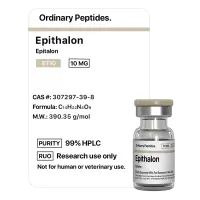
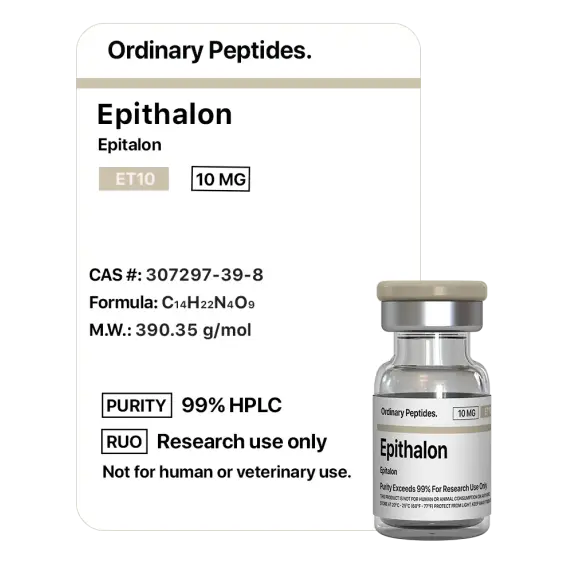
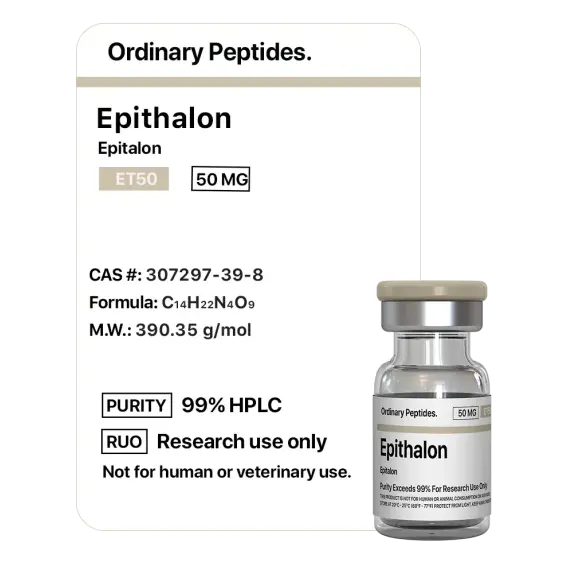
| Molecular formula | C&sub1;&sub4;H&sub2;&sub2;N&sub4;O&sub9; |
| Molecular weight | ~390 Da |
| Origin | Synthetic tetrapeptide; derived from the amino acid composition of Epithalamin (bovine pineal gland extract) |
| Primary researcher | Vladimir Khavinson, St. Petersburg Institute of Bioregulation and Gerontology |
| Primary proposed mechanism | Telomerase activation → telomere elongation; epigenetic regulation |
| FDA status | ⚠️ Category 2 — significant safety risks; cannot be legally compounded |
| WADA status | Not specifically listed; verify current list |
| Human evidence | Small Russian clinical series (1980s–2010s); no modern Western RCTs |
| Key unresolved question | Does telomerase activation promote or protect against cancer? |
The Biological Foundation: Telomeres, Telomerase, and Aging
Why telomeres matter
At the ends of each chromosome sit telomeres — repetitive DNA sequences (TTAGGG repeated thousands of times) that act as protective caps preventing chromosome ends from being mistakenly recognised as DNA damage. With each cell division, telomeres shorten slightly. After enough divisions, telomeres become critically short, triggering the cell to enter replicative senescence or apoptosis. The maximum number of times a normal human somatic cell can divide before this happens is approximately 50 — the Hayflick limit, described by Leonard Hayflick in 1961. Telomere shortening is considered one of the established hallmarks of cellular aging.
Telomerase: the enzyme that rebuilds telomeres
Telomerase is a reverse transcriptase enzyme that adds TTAGGG repeats back onto chromosome ends, counteracting the shortening effect of cell division. It has two essential components: hTERT (the catalytic subunit) and hTERC (the RNA template). In embryonic cells, germline cells, and stem cells, telomerase is active. In most adult somatic cells, telomerase is transcriptionally silenced — the hTERT gene is present but its promoter is epigenetically repressed. Epithalon has been reported to reactivate hTERT expression in previously telomerase-negative somatic cells, effectively reopening this pathway.[1]
The telomerase-cancer connection
⚠️ This is the scientific tension at the heart of Epithalon’s risk profile. Telomerase is active in approximately 85–90% of human cancers. Blocking telomerase is actually a cancer therapy target; conversely, activating telomerase in somatic cells is a recognised potential carcinogenic mechanism. Mendelian randomisation studies have found that genetically longer telomeres are associated with increased risk of several cancers, including lung cancer, melanoma, and glioma, while being associated with decreased risk of cardiovascular disease. This means that the primary mechanism through which Epithalon is proposed to work is simultaneously the primary mechanism of concern for its potential cancer risk.[11]
Chemistry and Structure
Epithalon is a minimalist peptide: four amino acids, Ala-Glu-Asp-Gly, molecular weight ~390 Da. No unusual modifications, no lipidation, no disulphide bridges. The parent compound is Epithalamin — a polypeptide extract from bovine pineal glands. Epithalon was synthesised by identifying the minimal active sequence within that extract. At four amino acids, it is one of the smallest research peptides in active use.[2]
| Property | Detail |
|---|---|
| Length | 4 amino acids |
| Molecular weight | ~390 Da |
| Sequence abbreviation | AEDG |
| Parent compound | Epithalamin (bovine pineal gland polypeptide extract) |
| Synthesis | Solid-phase peptide synthesis (straightforward) |
| Blood-brain barrier | Not well-characterised |
Origin: The Khavinson Research Programme
Vladimir Khavinson, working at the St. Petersburg Institute of Bioregulation and Gerontology since the 1970s, developed the “peptide bioregulation” theory of aging — a framework proposing that short peptides derived from specific organs act as tissue-specific epigenetic regulators that maintain functional integrity. Epithalamin (the pineal gland polypeptide extract) was the primary compound in this programme, and Epithalon emerged as its synthetic tetrapeptide equivalent. Most studies on Epithalon and Epithalamin have been conducted by the St. Petersburg Institute, primarily overseen by Khavinson, though in recent years research has started to be conducted elsewhere, focusing mainly on telomere length.[9] The concentration of research in one institution is a genuine limitation that must be factored into evidence assessment.
Proposed Mechanisms of Action
1. Telomerase activation and telomere elongation (primary mechanism)
Addition of Epithalon peptide to telomerase-negative human fetal fibroblast culture induced expression of the catalytical subunit, enzymatic activity of telomerase, and telomere elongation, which can be due to reactivation of the telomerase gene in somatic cells.[1] The proposed mechanism involves epigenetic modification of the hTERT promoter — Epithalon appears to bind methylated cytosine in DNA and interact with linker histone proteins (H1.3 and H1.6), loosening chromatin structure at the hTERT locus.[8]
A 2025 study from an independent group (Al-Dulaimi et al., Biogerontology) confirmed and extended these findings, showing hTERT upregulation, telomerase activation, and a possible alternative lengthening of telomeres (ALT) mechanism in cancer cell lines — the first quantitative, independently conducted telomere study with Epithalon in multiple cell types.[3] Elongation of telomeres by Epithalon was sufficient to surpass the Hayflick limit in human fetal fibroblasts, extending proliferative potential from termination at the 34th passage to beyond the 44th passage.
2. Epigenetic gene regulation (chromatin remodelling)
Beyond telomerase, Epithalon’s binding to methylated cytosine and histone H1 suggests a broader epigenetic action. Khavinson has proposed that Epithalon functions as a “geroprotective peptide epigenetic regulator” — a molecule that can reset or preserve youthful gene expression patterns by modulating chromatin accessibility across multiple loci, not just the hTERT promoter. This is a broad claim that, if true, would explain the diverse phenotypic effects reported in animal studies.[7]
3. Melatonin pathway and circadian regulation
Epithalon and Epithalamin appear to restore melatonin secretion by the pineal gland in both aged monkeys and humans. Age-related decline in melatonin production is well-documented and associated with disrupted sleep, reduced antioxidant capacity, and immune dysregulation. If Epithalon restores pineal melatonin output, this provides an additional mechanistic pathway for some of its reported benefits in sleep quality and immune function — mechanisms that don’t require invoking telomerase.[10]
4. Antioxidant enzyme upregulation
In aged rat studies, Epithalon increased activity of superoxide dismutase, glutathione peroxidase, and glutathione-S-transferase — the primary enzymatic antioxidant defences against reactive oxygen species. These effects, if real, would reduce oxidative stress-driven cellular damage — another hallmark of aging.
| Proposed mechanism | Evidence type | Independence |
|---|---|---|
| Telomerase activation / hTERT upregulation | In vitro human cells; 2025 independent study confirms | Partially independent (2025) [3] |
| Telomere elongation | In vitro; 2025 independent study | Partially independent |
| Hayflick limit extension | In vitro (Khavinson group) | ❌ Not independently replicated |
| Chromatin remodelling / DNA binding | In vitro; biophysical studies | Largely Khavinson group |
| Melatonin restoration | Animal + small human series | Largely Khavinson group |
| Antioxidant enzyme upregulation | Animal studies | Largely Khavinson group |
| Confirmed primary receptor | — | ❌ Not identified |
Preclinical Evidence
Animal lifespan studies — mixed and important nuances
The longevity claims for Epithalon frequently reference animal lifespan extension data as if it were consistent and unambiguous. The actual published data is more nuanced. The key study — the SHR mouse study (Anisimov et al. 2003, Biogerontology) — found that treatment with Epitalon did not influence mean life span of mice. However, it did increase by 13.3% the life span of the last 10% of the survivors (P<0.01), and increased maximum life span by 12.3% compared to controls. It also decreased the frequency of chromosome aberrations in bone marrow cells by 17.1%.[5]
The oncological paradox
In a model of spontaneous mammary carcinogenesis (HER-2/neu transgenic mice), Epithalon reduced mammary tumour incidence and extended lifespan[6] — a finding that is counterintuitive for a telomerase activator. This is the core of the “Epitalon paradox.” The 2025 Al-Dulaimi study found evidence that Epithalon may actually suppress telomerase in cancer cells while activating it in normal cells — through a proposed H19/histone H1 mechanism. None of these explanations has been definitively established. The paradox remains open.
Human Evidence
Telomere length in elderly humans
In human clinical studies, Epitalon and Epithalamin both significantly increased telomere lengths in the blood cells of patients aged 60–65 and 75–80. The specific study involved peripheral blood lymphocytes measured before and after treatment. Sample sizes were small (single-digit to low double-digit participants), methodology details are not fully available in Western literature, and no placebo-controlled comparison was conducted.[4]
Melatonin restoration
Small human series showed that Epithalon and Epithalamin restored more normal melatonin secretion patterns in elderly individuals. This is one of the more plausible and biologically coherent findings given the compound’s pineal origin.[10]
The mortality reduction cohort study
A prospective cohort study conducted on 266 people over age 60 demonstrated that treatment with Epithalamin produced a 1.6–1.8-fold reduction in mortality during the following 6 years, and a 2.5-fold reduction in mortality when combined with thymalin.[9]
Human evidence summary
| Study | Design | N | Finding | Confidence |
|---|---|---|---|---|
| Telomere length (elderly) [4] | Uncontrolled series | Small | ↑ telomere length in lymphocytes | Very low |
| Melatonin restoration [10] | Uncontrolled | Small | ↑ melatonin in aged subjects | Low |
| Retinitis pigmentosa | Clinical series | Not specified | 90% positive response | Very low |
| TB chromosomal protection | Clinical observation | Not specified | Prevented new aberrations | Very low |
| Mortality cohort (Epithalamin) [9] | Prospective cohort (non-randomised) | 266 | 1.6–1.8× mortality reduction | ❌ Very low — confounding uncontrolled |
No modern, adequately powered, double-blind, placebo-controlled trial of Epithalon for any indication has been published in any major peer-reviewed Western journal.
Regulatory Status
| Jurisdiction | Status |
|---|---|
| FDA (USA) | ⚠️ Category 2 — significant safety risks; cannot be legally compounded under 503A [12] |
| EMA (Europe) | ❌ Not approved |
| Russia | Used clinically at the St. Petersburg Institute; no equivalent of Western regulatory approval |
| WADA | Not specifically listed as of April 2026; verify current prohibited list |
Safety: The Telomerase Question and Beyond
The core safety concern: telomerase and cancer
⚠️ This cannot be stated too plainly. Epithalon’s primary mechanism of action — telomerase reactivation in somatic cells — is also one of the primary mechanisms by which cancer cells achieve immortality. Anyone using Epithalon is deliberately activating a pathway that, in a different cellular context, is a defining feature of malignancy. The available evidence does not establish that Epithalon causes cancer — in fact, animal oncology data suggests the opposite. But:
- The animal studies were conducted in specific cancer-prone mouse strains and may not generalise to cancer risk in healthy humans
- The Mendelian randomisation literature suggests that genetically longer telomeres are associated with increased cancer risk in humans[11]
- No long-term prospective human study has followed Epithalon users for cancer outcomes
- The paradox of telomerase activation with apparent anti-tumour effects remains mechanistically unexplained
The appropriate conclusion is that the cancer risk of Epithalon in humans is uncharacterised — not established, but not excluded.
Other safety considerations
| Safety concern | Status |
|---|---|
| Long-term effects of repeated cycles | ❌ Not formally characterised |
| Immunogenicity | ⚠️ General concern for synthetic peptides; not specifically assessed |
| Drug interactions | ❌ Not characterised |
| Cancer risk from telomerase activation | ⚠️ Uncharacterised — paradoxical animal data; no human oncological surveillance |
| Product quality from unregulated vendors | ⚠️ Variable; purity and sterility cannot be assumed |
| Contraindications | Active cancer, pregnancy, children — near-universal contraindications for telomerase-activating agents |
Common Misconceptions
“The telomere research proves Epithalon extends human lifespan.”
Telomere elongation in cell culture does not prove lifespan extension in organisms. The key animal lifespan study showed no effect on mean lifespan while extending maximum lifespan of only the longest-lived survivors.[5]
“Because Epithalon reduces tumours in animal studies, it’s safe for cancer risk.”
⚠️ The animal cancer results are counterintuitive and scientifically interesting — but they cannot override the fundamental concern about telomerase activation in unknown cancer-predisposing contexts. Specific anti-tumour effects in specific cancer-prone mouse strains do not generalise to all cancer types or to the diverse human population using this compound.
“It’s been used clinically in Russia for decades, so we know it’s safe.”
Russian clinical use under Khavinson’s programme occurred in a different regulatory and methodological environment. “Used clinically” is not the same as “shown safe and effective in controlled trials.” Decades of use in one specialist setting have not generated the controlled human safety and efficacy data required by Western regulatory standards.
“It’s just four amino acids — it can’t do much.”
Four amino acids is enough to produce potent, specific biological effects. The most biologically active peptides in pharmacology include dipeptides and tripeptides. Molecular size does not constrain biological activity.
Frequently Asked Questions
Why hasn’t Epithalon been developed into a pharmaceutical drug?
The Khavinson group has operated primarily within the Russian research system without pursuing FDA-compliant Phase 1–3 development in Western markets. The unresolved cancer risk question and the challenge of demonstrating anti-ageing benefit (requiring very long follow-up and contested surrogate endpoints) present significant barriers to drug development.
How does Epithalon differ from Epithalamin?
Epithalamin is the polypeptide extract from bovine pineal glands used in the original research. Epithalon is the synthetic tetrapeptide (AEDG) derived by identifying the minimal active sequence within Epithalamin. Epithalon is more potent by weight — active at 1,000–5,000 times lower concentrations — because it represents the pure active sequence without the non-active peptide fraction.[9]
Can Epithalon be legally compounded in the US?
No. It is on the FDA’s Category 2 list, meaning it cannot be legally compounded under the 503A framework.[12]
Is there an ongoing clinical trial?
No registered Phase 2 or Phase 3 Western clinical trial of Epithalon for any indication is currently listed in major databases as of April 2026. The 2025 Al-Dulaimi study (published in Biogerontology) represents the first significant independent Western laboratory work on Epithalon’s telomere biology.[3]
Key Takeaways
- Epithalon has a genuinely compelling mechanistic story — telomerase activation and telomere elongation in human somatic cells, confirmed in vitro and recently by an independent laboratory, connected to a scientifically coherent theory of cellular aging.[1][3]
- The research base has a critical structural limitation — the overwhelming majority of published studies, including the key human clinical data, originate from one research group at one institution in Russia. Independent replication is only just beginning.
- ⚠️ The telomerase-cancer paradox is real and unresolved. Epithalon activates the enzyme that defines cancer cell immortality, yet animal oncology data suggests anti-tumour effects. This contradiction has not been satisfactorily explained, and the long-term human oncological implications are uncharacterised.
- Human clinical evidence is fragmentary, uncontrolled, and decades old. No modern RCT exists. The dramatic mortality reduction claim comes from a non-randomised cohort study without adequate controls.[9]
- The FDA’s Category 2 designation reflects the state of uncertainty, not a finding of known harm. But “we don’t know” is a meaningful safety assessment when the primary mechanism of action is shared with malignant cell immortalisation.[12]
- ⚠️ For anyone with personal or family history of cancer, Epithalon should be discussed with a qualified oncologist before any consideration of use — not because harm is established, but because the risk-benefit calculation is genuinely uncertain in cancer-predisposed individuals.
References
Structure and Chemistry
- Khavinson VK, Bondarev IE, Butyugov AA. Epithalon peptide induces telomerase activity and telomere elongation in human somatic cells. Bulletin of Experimental Biology and Medicine. 2003;135(6):590–592. PMID: 12937682
- Araj SK, Brzezik J, Mądra-Gackowska K, Szeleszczuk Ł. Overview of Epitalon — highly bioactive pineal tetrapeptide with promising properties. International Journal of Molecular Sciences. 2025;26(6):2691. doi: 10.3390/ijms26062691
Telomere Biology and Independent Replication
- Al-Dulaimi S, Thomas R, Matta S, Roberts T. Epitalon increases telomere length in human cell lines through telomerase upregulation or ALT activity. Biogerontology. 2025. PMC12411320
- Khavinson VKh, Pendina AA, Efimova OA, et al. Effect of Peptide AEDG on Telomere Length and Mitotic Index of PHA-Stimulated Human Blood Lymphocytes. Bulletin of Experimental Biology and Medicine. 2019;168:141–144.
Animal Lifespan and Oncology Studies
- Anisimov VN, Khavinson VK, Popovich IG, et al. Effect of Epitalon on biomarkers of aging, life span and spontaneous tumor incidence in female Swiss-derived SHR mice. Biogerontology. 2003;4(4):193–202. PMID: 14501183
- Anisimov VN, Khavinson VKh, Provinciali M, et al. Inhibitory effect of the peptide epitalon on the development of spontaneous mammary tumors in HER-2/neu transgenic mice. International Journal of Cancer. 2002;101(1):7–10.
Epigenetic Mechanisms
- Khavinson V, Diomede F, Mironova E, et al. AEDG peptide (Epitalon) stimulates gene expression and protein synthesis during neurogenesis: possible epigenetic mechanism. Molecules. 2020;25(3):609.
- Fedoreyeva LI, Kireev II, Khavinson VKh, et al. Penetration of short fluorescence-labeled peptides into the nucleus in HeLa cells and in vitro binding of the peptides to deoxyribooligonucleotides and polynucleotides. Biochemistry. 2011;76(11):1210–1219.
Reviews
- Anisimov VN, Khavinson VK. Peptide bioregulation of aging: results and prospects. Biogerontology. 2010;11(2):139–149.
- Khavinson VK, Morozov VG. Peptides of pineal gland and thymus prolong human life. Neuro Endocrinology Letters. 2003;24(3–4):233–240.
Telomere-Cancer Relationship
- Mendelian randomisation analyses of telomere length and cancer risk. Multiple sources; see discussion at intelligentliving.co
Regulatory
- FDA. Certain Bulk Drug Substances for Use in Compounding that May Present Significant Safety Risks — Category 2 (includes Epitalon). fda.gov
Key Investigators
- Vladimir Khavinson, MD, PhD, ScD — Corresponding Member of the Russian Academy of Sciences; Director, St. Petersburg Institute of Bioregulation and Gerontology; principal developer of Epithalon and the peptide bioregulation theory of aging.
- Vladimir N. Anisimov, MD, PhD — N.N. Petrov Research Institute of Oncology, St. Petersburg; key collaborator on animal lifespan and oncology studies.
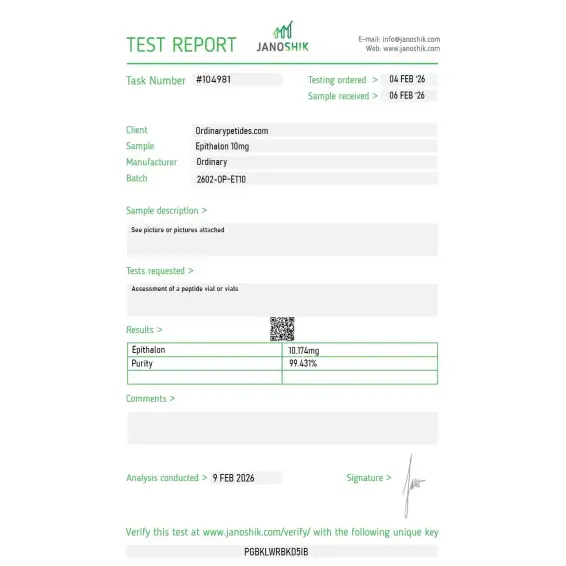
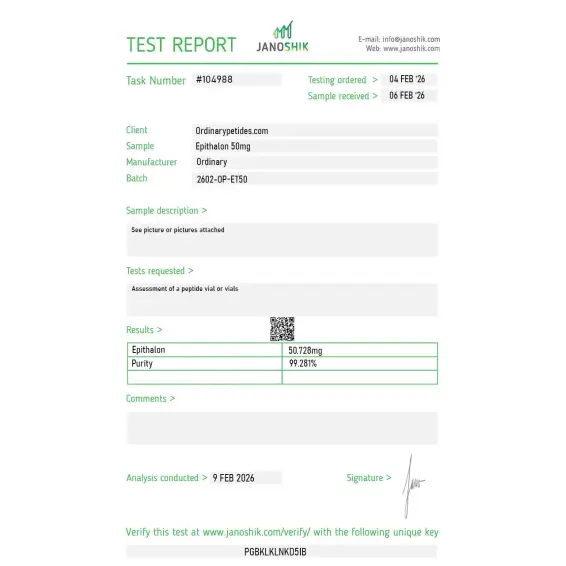
Certificate of Analysis
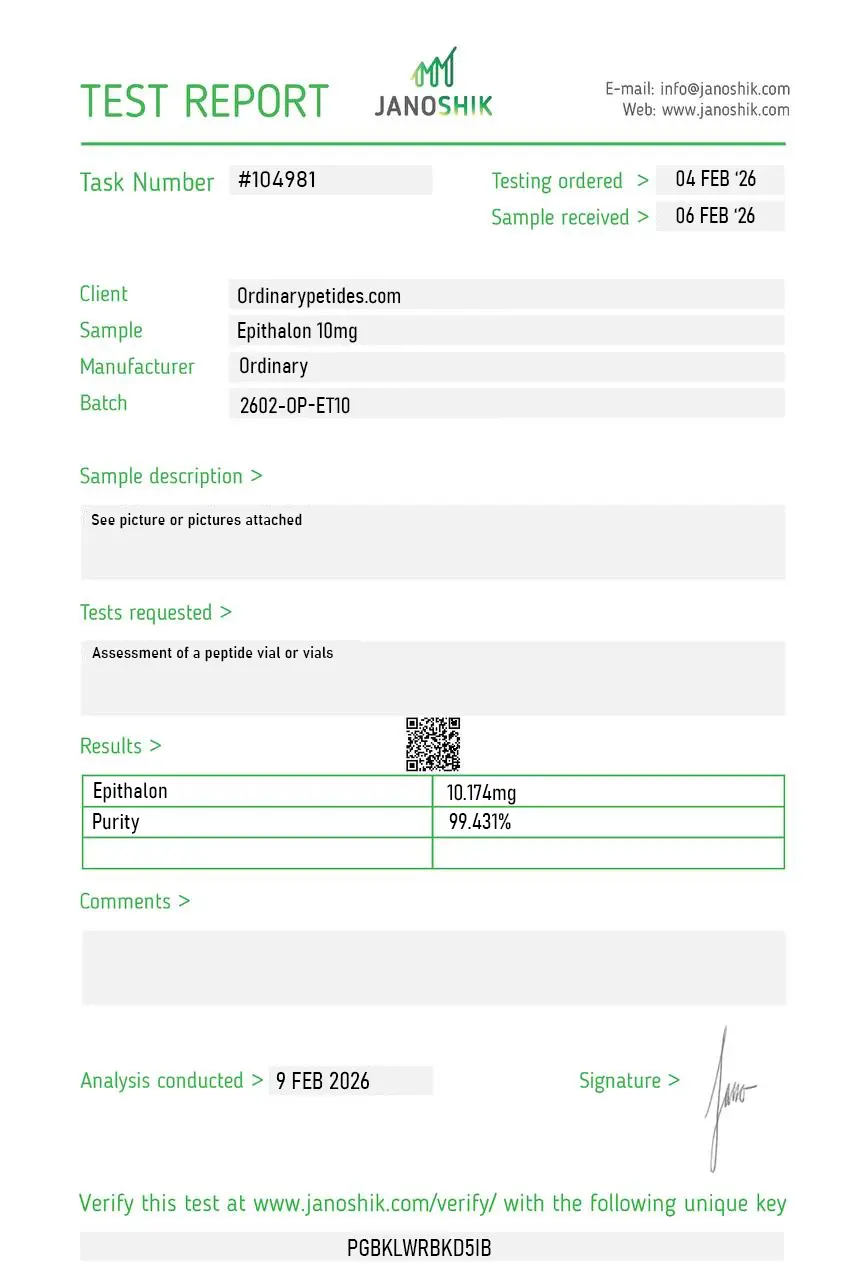
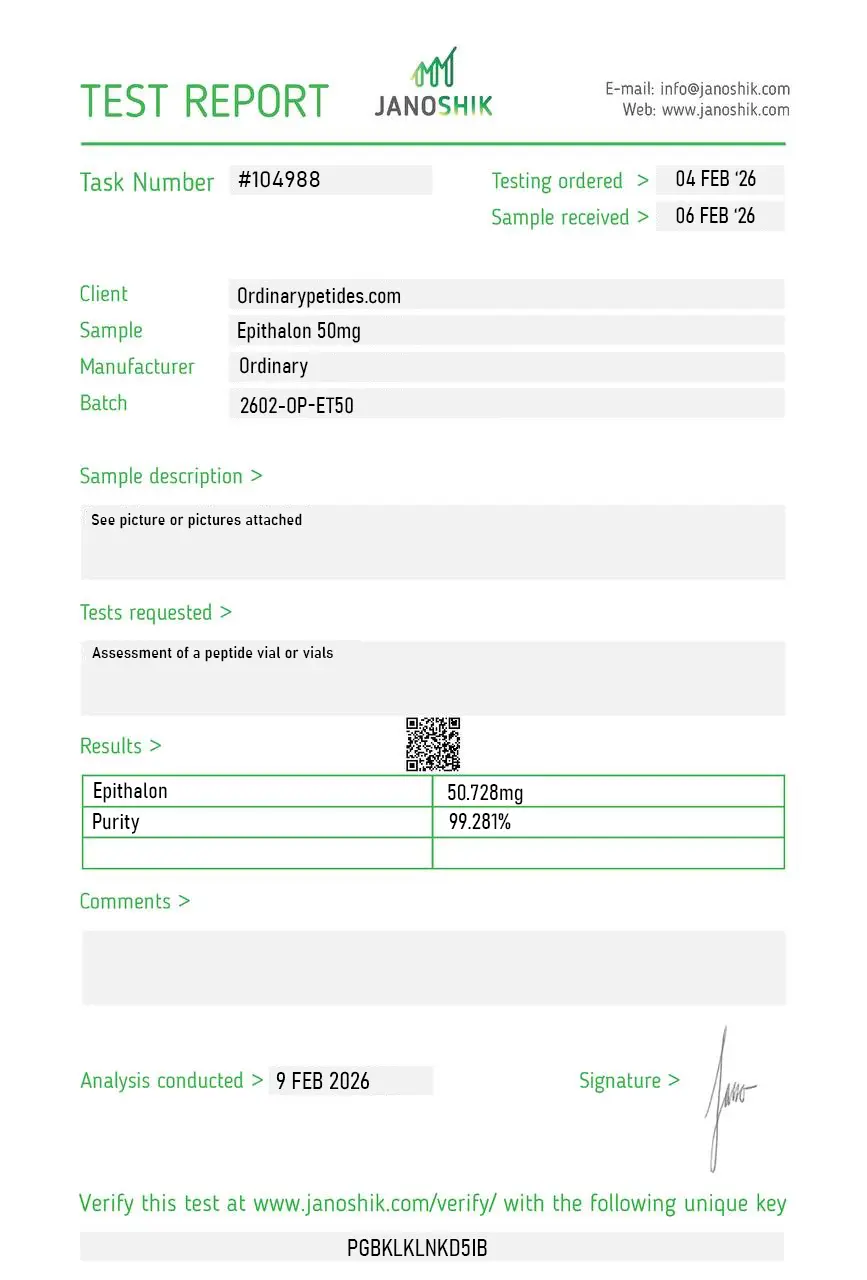
Independent test reports are available for Epithalon 10mg and 50mg batches. These reports provide batch-level documentation and analytical verification information for research reference.
Based on 3 reviews
4.7
-
2
-
1
What sold me over other sources was that they carry the whole Khavinson set — Epitalon, Thymalin, the bioregulator family — with consistent handling, so a comparative project across the peptide-bioregulator concept doesn't fragment across vendors. The theoretical framework is unorthodox by Western pharmacology standards, but if you're going to engage it seriously you want the compounds sourced coherently. These have been steady.
For a tetrapeptide the synthesis is trivial, so my scrutiny goes entirely to identity rather than purity — with four residues a single wrong amino acid is a different molecule, and there's no folding or modification to hide behind. I'd have liked the listing to show the AEDG sequence confirmed by MS rather than just a mass figure, since for something this short the exact sequence is the only thing worth verifying. Material was right when we checked it ourselves.
We came to Epitalon sideways — through a chromatin-organization project, not the telomerase angle everyone fixates on. The proposed effects on heterochromatin structure are a separate strand of the Khavinson work that gets almost no attention in the West, and that's precisely the part we're probing. The AEDG material performed consistently in our nuclear-architecture assays, which is all the compound needs to do for us.
Epithalon (also spelled Epitalon or Epithalone, also referred to by its amino acid sequence AEDG) is a synthetic tetrapeptide consisting of four amino acids — alanine, glutamic acid, aspartic acid, and glycine. It was developed by Professor Vladimir Khavinson at the St. Petersburg Institute of Bioregulation and Gerontology in Russia, synthesized from the amino acid composition of Epithalamin — a bovine pineal gland extract used in Russian clinical medicine for decades. In 2017 it was confirmed to exist naturally in small quantities within human pineal gland tissue. It is the most studied of the Khavinson bioregulator peptides and the one with the most extensive anti-aging and telomere-related research base.
Research literature suggests Epitalon may influence telomerase expression and cellular longevity markers in experimental models. However, outcomes depend on study design, dosing protocols, and research conditions, and findings should be interpreted within controlled scientific contexts.
Epitalon is not approved by the FDA for medical treatment or general therapeutic use. It is supplied for research purposes and is not classified as an approved pharmaceutical product.
In research settings, reported effects may include mild fatigue, headache, or injection-site irritation. Observations vary depending on dosing and study conditions.
Epitalon can be purchased from specialized research peptide suppliers that provide high-purity, laboratory-grade compounds with proper quality control standards.
Yes. These are spelling variants of the same peptide; in English-language scientific literature, Epitalon is more common, whereas Russian-language texts more often use Epitalon
That is how it is usually described in literature from the Khavinson school: Epitalon is regarded as a synthetic analogue or active fragment of epithalamin.
Yes. Cellular work reported telomerase stimulation and telomere elongation. But that is not proof of clinical rejuvenation in humans.
No. Based on current evidence, that would be too strong a claim.
Epithalon's most documented mechanism is telomerase activation — it upregulates expression of hTERT, the catalytic subunit of telomerase, allowing cells to rebuild telomeres and continue dividing beyond their normal Hayflick limit. In human fetal fibroblast studies this allowed cell proliferation to extend from the 34th cell passage significantly further. It also binds to histone H1 proteins causing chromatin remodeling — loosening DNA structure and restoring more youthful gene expression patterns through epigenetic modification. Additionally it activates Nrf2 to boost endogenous antioxidant enzymes including superoxide dismutase, glutathione peroxidase, and glutathione-S-transferase, restores melatonin production from the pineal gland in aged animals and humans, modulates IL-2 mRNA expression affecting immune function, and appears to cross the blood-brain barrier where it stimulates cortical neurons and increases phospho-CREB — a protein involved in learning and memory.
Animal research has shown lifespan extension in flies, mice, and rats — including a 24.1% increase in maximum lifespan in one rodent study — alongside reduced spontaneous tumor formation and decreased metastasis rates in cancer-prone strains. In human clinical studies conducted by Khavinson's group, Epithalon and Epithalamin both significantly increased telomere lengths in blood cells of patients aged 60 to 80. A trial in retinitis pigmentosa patients found positive clinical effects in 90% of treated cases. A prospective cohort study of 266 people over age 60 showed that Epithalamin treatment produced a 1.6 to 1.8-fold reduction in six-year mortality, rising to 2.5-fold when combined with Thymalin, and 4.1-fold when combined with Thymalin and administered annually. A 2025 study in human breast cancer and normal epithelial cell lines confirmed telomere lengthening through telomerase upregulation or alternative lengthening of telomeres (ALT) pathways. The critical caveat — noted repeatedly in independent analyses — is that virtually all clinical and much of the preclinical research originates from a single research group in Russia, with no independent replication of lifespan or mortality results by external laboratories.
Epithalon is given by subcutaneous or intramuscular injection, or sometimes intranasally. Common research and wellness protocols follow a cyclical pattern — typically 10 to 20 mg per day for 10 to 20 consecutive days, repeated two to three times per year. Some practitioners use lower doses of 5 to 10 mg per course. It is not taken continuously. It is also available in oral and nasal spray formulations, though injectable forms are considered more bioavailable by most researchers in this space.
Epithalon has a notably favorable safety profile across available studies. Two three-year clinical trials with up to 12-year follow-up reported no serious adverse events. The most commonly reported effects are mild injection site reactions, occasional mild headache or dizziness, and transient fatigue or nausea. The primary theoretical concern is shared with any telomerase activator — that reactivating telomerase in cells where it is naturally suppressed could theoretically promote abnormal cell proliferation. Preclinical evidence actually suggests the opposite — anti-tumor and anti-metastatic effects in animal models — and the in vitro research on cancer cell lines suggests Epithalon may downregulate telomerase in malignant cells while activating it in normal cells. However this distinction has not been confirmed in human cancer safety studies.
People with active cancer or a history of cancer should consult an oncologist before use given the theoretical and biologically plausible concern around telomerase activation in malignant cells, despite the preclinical anti-tumor signals. Pregnant or breastfeeding women should not use it. It is not FDA-approved and is not available through any regulated pharmaceutical channel in the United States. Anyone considering it should understand the research base — while substantial in volume — comes almost entirely from one Russian research network without independent replication of its most dramatic findings.