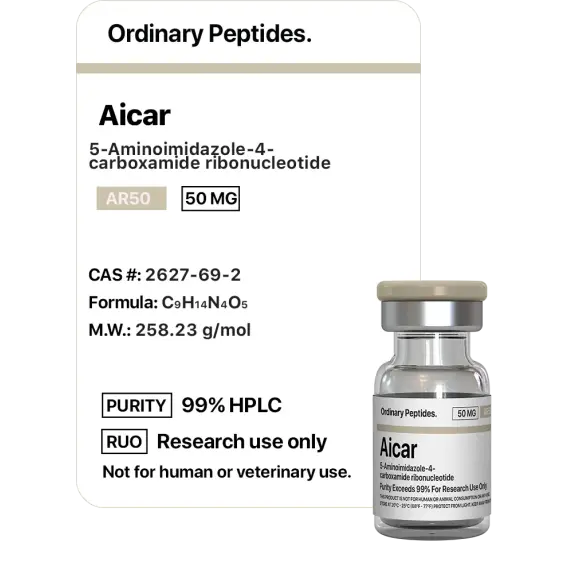



AICAR
For in vitro testing and laboratory use only. Not for human or animal consumption. Bodily introduction is illegal. Handle only by licensed professionals. Not a drug, food, or cosmetic. Educational use only.
AICAR: An AMPK-Activating Research Molecule With a Strong Scientific Biography Beyond the Hype
AICAR is not an "endurance peptide," but a well-known research nucleoside analogue that attracted attention because of its connection to AMPK, one of the cell's key sensors of energy deficit. It was precisely in the research setting that AICAR became a notable molecule: in preclinical models, it was associated with metabolic adaptations and increased endurance in mice, which is what created the special interest around it.
At the same time, its value lies not in loud promises, but in a strong scientific biography. AICAR was studied not only in fundamental metabolic science, but also in clinical programs under the name acadesine. That makes it especially interesting for those who evaluate compounds not through marketing labels, but through their real research weight and study history.
It is also important that many oversimplifications have accumulated around AICAR, which is why a careful and sober view is particularly valuable here. If what you want is not a myth about a "replacement for training," but a genuinely important molecule with a vivid scientific footprint, AICAR is certainly worth closer attention.
AICAR (Acadesine): The Exercise Mimetic That Science Took Seriously
Based on peer-reviewed literature — see References. Last updated: April 2026.
The Short Version
AICAR — full name 5-aminoimidazole-4-carboxamide riboside, also known as acadesine — is one of the most scientifically studied AMPK activators in existence. AMPK (AMP-activated protein kinase) is the body’s master energy sensor: the switch that gets flipped during exercise, fasting, or any state of metabolic stress, triggering fat burning, glucose uptake, and mitochondrial biogenesis.
The idea that you could flip that switch pharmacologically — without exercising — is what turned AICAR from a niche cardiac surgery agent into one of the most discussed compounds in sports science and metabolic research. In 2008, a study showed that sedentary mice given AICAR for four weeks increased their running endurance by 44% without training a single day.[2] The nickname “exercise in a pill” was born, and WADA banned it within a year.[10] The reality is more nuanced — and that complexity is what makes AICAR genuinely fascinating to understand.
| At a glance | |
|---|---|
| Full name | 5-Aminoimidazole-4-carboxamide riboside |
| Also known as | Acadesine, AICA-riboside, ZMP precursor |
| Chemical class | Purine nucleoside analogue / adenosine analogue |
| Primary mechanism | AMPK activation via ZMP (intracellular metabolite) + significant AMPK-independent effects |
| Molecular weight | 338.3 Da |
| Human clinical use | Intravenous use in cardiac surgery (CABG); oncology trials (CLL, MDS/AML) |
| Bioavailability (oral) | Very poor — major pharmacokinetic limitation |
| WADA status | Prohibited at all times (in and out of competition), since 2009 |
| FDA/EMA status | Not approved for performance, metabolic, or anti-aging indications |
Where It Came From
AICAR is not a newly invented compound. It’s actually a natural intermediate in the purine nucleotide synthesis pathway — a molecule your cells produce endogenously during normal metabolism. What scientists discovered was that when you administer it exogenously in sufficient quantities, it accumulates inside cells and produces effects far beyond its normal physiological role.
The first published studies exploring AICAR’s cardiovascular properties appeared in the 1980s, when researchers noticed that infusing it into ischemic heart tissue helped protect the myocardium. This led to a decades-long clinical programme exploring AICAR (under the name acadesine) as a cardioprotective agent during coronary artery bypass graft (CABG) surgery — the most substantive human trial experience the compound has.[4][5]
The AMPK connection came later. When AMPK was identified as a central energy-sensing kinase in the 1990s, researchers discovered that AICAR’s intracellular metabolite ZMP mimics AMP — the molecule that activates AMPK during low-energy states. This opened an entirely new research chapter, transitioning AICAR from cardiac medicine to metabolism, exercise biology, diabetes research, and eventually oncology.
Chemistry and How It Gets Into Cells
AICAR is a cell-permeable nucleoside — it enters cells through the same adenosine transporter channels that your body uses for the natural molecule adenosine. Once inside the cell, adenosine kinase phosphorylates AICAR to produce ZMP (AICAR monophosphate). ZMP is the active intracellular form. It mimics AMP — the cellular “low energy” signal — and binds to the gamma subunit of AMPK, activating it. Crucially, ZMP achieves this without actually depleting cellular ATP or changing the ADP:ATP ratio, which is how most other AMPK activators (including actual exercise) work.[1]
The Mechanism: AMPK and Beyond
What AMPK actually does
AMPK is the cell’s master energy sensor. When the AMP:ATP ratio rises (signalling low energy — as during exercise, fasting, or hypoxia), AMPK gets activated and orchestrates a sweeping metabolic response:
| AMPK activation → | Effect |
|---|---|
| Increased fatty acid oxidation | Burns stored fat for energy |
| GLUT4 translocation | More glucose uptake from bloodstream |
| Inhibition of mTORC1 | Slows protein synthesis; reduces cell growth |
| PGC-1α activation | Promotes mitochondrial biogenesis |
| Inhibition of fatty acid synthesis | Reduces lipid storage |
| Autophagy induction | Cellular housekeeping |
| Glycogen synthesis inhibition | Preserves glucose for immediate use |
The AMPK-independent problem
Here is where the science gets more complicated — and more honest. There is an increasing number of studies showing that numerous AICAr effects, previously attributed to AMPK activation, are in fact AMPK-independent.[1] Decades of research used AICAR as the standard tool to study AMPK. Now it turns out that some of what was attributed to AMPK was actually caused by other mechanisms — including ZMP’s actions on other AMP-dependent enzymes, effects on nucleotide synthesis pathways, adenosine-related signalling, and direct effects on cell cycle regulation. This doesn’t mean the AMPK-mediated effects aren’t real; it means the picture is more complex than originally assumed.
The 2008 Salk Institute Study: The Moment Everything Changed
In 2008, Narkar et al. reported that, even in sedentary mice, four weeks of AICAr treatment alone enhanced running endurance by 44% and induced genes linked to oxidative metabolism in muscle cells.[2] AICAr induced fatigue-resistant type I (slow-twitch) fibre specification, and AMPK activation by AICAr was sufficient to increase running endurance without additional exercise signals. As would be expected, AICAr was immediately set into the limelight of not only the scientific but sports and wider community as a new exercise mimetic. In less than a year, the French anti-doping agency raised concerns, and AICAr appeared on the WADA Prohibited List.[10] The British Medical Journal reported in 2009 that WADA had found evidence that acadesine was used by cyclists in the 2009 Tour de France.
Clinical Research: What Happened in Humans
AICAR has accumulated more genuine human clinical data than most compounds in the research chemical space. That data spans three distinct areas.
1. Cardiac surgery (CABG protection) — the largest human dataset
Acadesine has proven intravenous efficacy in the amelioration of ischaemic reperfusion injury associated with coronary artery bypass graft surgery in Phase III clinical trials. Acadesine is active only in metabolically stressed tissues in the presence of ATP catabolism and therefore has fewer unwanted peripheral side effects than systemic administration of adenosine.[7]
| Trial | Patients | Key finding |
|---|---|---|
| McSPI Research Group (JAMA, 1994) [4] | 633 CABG patients | No significant reduction in primary MI endpoint; post-hoc analysis suggested benefit in Q-wave MI at high dose |
| Multinational Acadesine Study (1995) [5] | 821 CABG patients | Significant reduction in Q-wave MI in high-risk patients; similar overall mortality |
| RED-CABG (JAMA, 2012) [3] | Large Phase III | Terminated early by interim futility analysis; no meaningful morbidity or mortality benefit vs. placebo |
The conclusion of the cardiac programme: despite being demonstrated to be safe, acadesine has not shown clinical benefits in large Phase III trials and is not used in cardiac surgery.[3] AICAR was generally well tolerated in thousands of patients. The main adverse effect was a transient rise in serum uric acid, which was clinically benign.
2. Metabolic effects — early human data
Systemic AICAr administration in humans exerted beneficial effects by reducing hepatic glucose output and increasing glucose uptake in skeletal muscle. However, AICAr has shown very poor oral bioavailability.[8] Short-term intravenous infusion studies showed reductions in hepatic glucose output and improvements in peripheral insulin sensitivity — consistent with the animal data. But the oral bioavailability problem is a fundamental barrier: when taken orally, AICAR is poorly absorbed and rapidly metabolised before reaching target tissues in meaningful concentrations.
3. Oncology — hematological malignancies
In azacytidine-resistant MDS and AML cell lines and primary samples, AICAr blocked proliferation, and these initial findings led to a Phase I/II clinical trial in 12 patients with azacytidine-refractory MDS/AML patients. AICAr caused serious renal side effects in patients with severe comorbidities.[9] The oncology programme is scientifically interesting — AICAR appears to induce apoptosis in certain blood cancer cell lines through both AMPK-dependent and AMPK-independent mechanisms — but the renal side effects in vulnerable patients represent an important safety signal.
What Is Confirmed and What Remains Uncertain
| Confirmed by published data | Not established or uncertain |
|---|---|
| AMPK activation via ZMP in vitro and in vivo [1] | Long-term safety with repeated oral dosing in healthy people |
| 44% endurance increase in sedentary mice [2] | Whether this effect translates to humans at any dose |
| Hepatic glucose output reduction in human IV studies [8] | Whether oral AICAR produces meaningful metabolic effects in humans |
| Generally safe short-term IV use in CABG patients [3][4] | Effects of chronic systemic AMPK activation in healthy individuals |
| Antiproliferative effects in some cancer cell lines [9] | Clinical anticancer efficacy in humans |
| Significant AMPK-independent effects exist [1] | Full characterisation of AMPK-independent mechanisms |
| Poor oral bioavailability [8] | Whether formulation improvements can overcome this limitation |
Safety Profile
AICAR’s safety picture is genuinely context-dependent.
In the cardiac surgery context (short-term IV): Thousands of patients received intravenous AICAR during CABG surgery in controlled trials.[3][4][5] The safety profile was good. The main finding was a transient, clinically benign rise in serum uric acid at high doses. No serious adverse events were attributed to the drug.
In the oncology context (higher doses, sicker patients): Serious renal adverse effects were observed in MDS/AML patients with severe comorbidities.[9]
In healthy people taking oral AICAR: Nearly all human safety data comes from short-term intravenous administration in hospital settings. There is very little data on what happens with repeated oral dosing in healthy people, which is the context most relevant to anyone encountering AICAR in the fitness or biohacking world.
| Adverse effect | Context | Notes |
|---|---|---|
| Transient uric acid elevation | IV use in CABG trials | Clinically benign; resolved after treatment |
| Renal toxicity | Oncology trials; patients with comorbidities | Serious signal; context-specific |
| Hypoglycaemia | Animal models; some human IV data | Risk in diabetics or fasted state |
| Theoretical mTORC1 suppression with chronic use | Mechanistic concern | Could impair protein synthesis, recovery, muscle growth |
| Unknown long-term effects of chronic AMPK activation | No human long-term data | Includes potential effects on cell growth, autophagy regulation |
The Oral Bioavailability Problem
This deserves its own section because it is often glossed over in online discussions. The poor oral bioavailability of acadesine precludes application in conditions such as impaired glucose tolerance, insulin resistance, and diabetes.[8] When you take AICAR orally, most of it is degraded before it reaches systemic circulation in active form. The doses that produced effects in rodent studies were delivered intraperitoneally or intravenously — routes that bypass first-pass metabolism entirely. This means that the impressive rodent data cannot be straightforwardly applied to oral supplementation in humans, and that users of oral AICAR products may be largely consuming a molecule that doesn’t reach target tissues in meaningful concentrations.
Regulatory and Legal Status
| Jurisdiction / Authority | Status |
|---|---|
| FDA (USA) | Not approved for any metabolic, performance, or anti-aging indication |
| EMA (Europe) | Not approved |
| Cardiac surgery clinical use | Studied; not adopted into standard practice (RED-CABG failure) |
| WADA | Prohibited at all times, in and out of competition, under Hormone and Metabolic Modulators (S4) since 2009 [10] |
| Research chemical market | Sold widely under “not for human consumption” label |
Comparison with Related Compounds
| Compound | Mechanism | Key difference from AICAR |
|---|---|---|
| AICAR | AMPK activation via ZMP + AMPK-independent effects | Broad; poor oral bioavailability; most clinical data |
| Metformin | Indirect AMPK activation (complex I inhibition) | FDA-approved (diabetes); good oral bioavailability; used in millions of patients |
| GW501516 (GW1516) | PPARδ agonist | Different target; often combined with AICAR in research; also WADA-prohibited; carcinogenic in animal studies |
| Berberine | Indirect AMPK activation | Natural compound; some clinical data; lower potency |
| MK-8722 / direct AMPK activators | Direct allosteric AMPK activation | More selective; still research stage |
| Rapamycin | mTOR inhibitor (downstream of AMPK) | Approved (immunosuppression); complex metabolic effects; not an AMPK activator |
Potential Research Areas
Metabolic disease: Insulin resistance, type 2 diabetes, fatty liver disease — based on the hepatic and peripheral glucose metabolism effects seen in animal models and early human infusion studies.[8]
Mitochondrial disease and myopathies: AICAR treatment improved motor phenotype and COX activity in skeletal muscle of mouse models of mitochondrial myopathy. AICAR has been used in clinical trials for diabetes and ischaemic reperfusion injury following coronary artery bypass surgery.[7]
Oncology: Antiproliferative effects in haematological malignancies (CLL, AML, MDS) — some through AMPK, some through independent mechanisms — represent an active research direction.[9]
Neuroprotection: Some animal data suggests AMPK activation may be protective in models of neurodegeneration, though this remains early-stage.
Ageing biology: AMPK activity declines with age; pharmacological restoration is a theoretical target for age-related metabolic decline.[8]
Common Misconceptions
“AICAR is basically exercise in a pill.”
The 2008 mouse study was real, but it involved intraperitoneal dosing in rodents at doses that have no equivalent in human oral supplementation.[2] Human endurance enhancement has not been demonstrated in controlled trials. The “exercise in a pill” label is a media simplification of one animal study.
“Since it activates AMPK, more is always better.”
AMPK is a master regulator — not simply a switch to maximise. Chronic, excessive AMPK activation suppresses mTORC1, which impairs muscle protein synthesis and tissue repair. The relationship between AMPK activation and long-term health outcomes is dose-, timing-, and context-dependent.
“It was safe in cardiac surgery, so it’s safe to take regularly.”
The cardiac surgery data involved short-term intravenous infusion in a hospital setting.[3] Repeated oral dosing in healthy individuals over weeks or months is an entirely different scenario with essentially no published safety data.
“Most of AICAR’s effects are from AMPK.”
There is an increasing number of studies showing that numerous AICAr effects, previously attributed to AMPK activation, are in fact AMPK-independent.[1] This is an evolving area of the science, not a settled question.
Frequently Asked Questions
Is AICAR legal to buy?
In most jurisdictions it occupies a legal grey area — not a scheduled narcotic, but sold as a research chemical marked “not for human consumption.” It is unambiguously prohibited in competitive sports under WADA rules.[10]
Does it actually work for endurance in humans?
No controlled human study has demonstrated the endurance enhancement seen in the 2008 mouse study.[2] The oral bioavailability problem is a major barrier between animal results and human application.
Is it the same as acadesine?
Yes — AICAR, acadesine, and AICA-riboside all refer to the same compound.[11]
Why is metformin considered a better AMPK activator for practical use?
Metformin is orally bioavailable, FDA-approved, has decades of safety data in millions of diabetic patients, and has an emerging research record in metabolic health and longevity. Its AMPK activation is indirect but clinically validated. AICAR has none of these properties for systemic metabolic use.
What happened to the cardiac surgery programme?
The RED-CABG trial — the large definitive Phase III study — was terminated based on an interim futility analysis showing no meaningful benefit over placebo, effectively ending the cardiac surgery indication.[3]
Key Takeaways
- AICAR has genuine scientific credibility — not as a performance supplement, but as a tool for understanding AMPK biology and metabolic signalling. It has been studied in thousands of human patients in cardiac surgery settings and in multiple oncology trials.[1][3]
- The “exercise in a pill” narrative is an overreach.[2] The 2008 endurance study in mice was real and important. Human translation has not been demonstrated, and the oral bioavailability problem is a fundamental barrier.
- Many of AICAR’s effects are not from AMPK.[1] A growing body of research shows significant AMPK-independent actions. Results from AICAR studies cannot be used as simple evidence for AMPK pathway effects.
- It failed its largest human clinical test.[3] The RED-CABG cardiac surgery trial was stopped for futility — no benefit over placebo.
- Human safety data for oral, repeated dosing essentially does not exist. The cardiac surgery safety record covers short-term intravenous use — a very different context from what most people in the fitness or biohacking world would encounter.
- WADA prohibition reflects real concern.[10] The prohibition is based on the documented potential for performance enhancement through metabolic reprogramming — which is mechanistically plausible even if not yet proven in controlled human trials.
References
Key Scientific Articles
- Višnjić D, Lalić H, Dembitz V, Tomić B, Smoljo T. AICAr, a Widely Used AMPK Activator with Important AMPK-Independent Effects: A Systematic Review. Cells. 2021;10(5):1095. doi: 10.3390/cells10051095. PMID: 34064363. PMC8147799
- Narkar VA, Downes M, Yu RT, et al. AMPK and PPARδ agonists are exercise mimetics. Cell. 2008;134(3):405–415. PMID: 18674809
- Newman MF, Ferguson TB, White JA, et al. Effect of adenosine-regulating agent acadesine on morbidity and mortality associated with coronary artery bypass grafting: the RED-CABG randomized controlled trial. JAMA. 2012;308(2):157–164. PMID: 22782417
- Multicenter Study of Perioperative Ischemia (McSPI) Research Group. Effects of acadesine on the incidence of myocardial infarction and adverse cardiac outcomes after coronary artery bypass graft surgery. PMID: 7574044
- Multinational Acadesine Study Group. Acadesine: a new drug that may improve myocardial protection in coronary artery bypass grafting. PMID: 7475138
- Aronson S, et al. An initial multicenter, randomized controlled trial on the safety and efficacy of acadesine in patients undergoing coronary artery bypass graft surgery. Anesthesia & Analgesia. 1994. PMID: 7818622
Reviews
- Neste EV, Berghe GV, Bontemps F. AICA-riboside (acadesine), an activator of AMP-activated protein kinase with potential for application in hematologic malignancies. Expert Opinion on Investigational Drugs. 2010;19(5):571–578. PMID: 18671468
- Ha J, et al. AMPK activators: mechanisms of action and physiological activities. Experimental & Molecular Medicine. 2016;48(4):e224. doi: 10.1038/emm.2016.16
- Campas C, et al. AICAR induces apoptosis independently of AMPK and p53 through up-regulation of the BH3-only proteins Bim and Noxa in chronic lymphocytic leukemia cells. Blood. 2003;101(9):3674–3680.
Official Sources
- World Anti-Doping Agency. WADA Prohibited List — Section S4: Hormone and Metabolic Modulators. Acadesine prohibited since 2009. wada-ama.org
- Wikipedia. Acadesine. en.wikipedia.org/wiki/Acadesine
- ClinicalTrials.gov — RED-CABG trial records and related CABG acadesine studies. clinicaltrials.gov
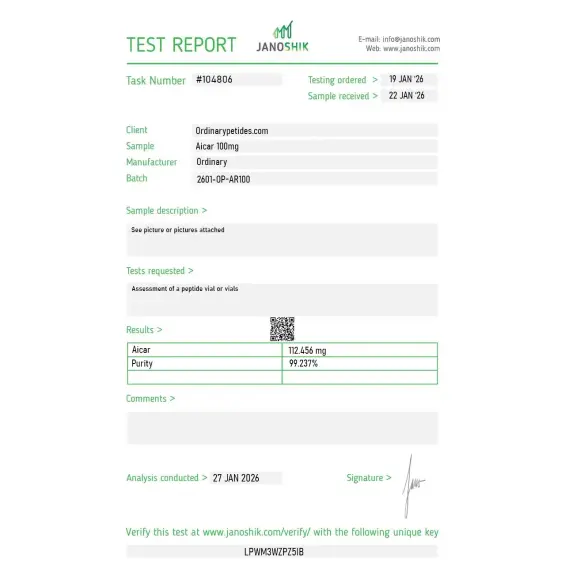
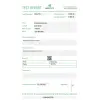
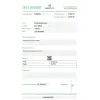
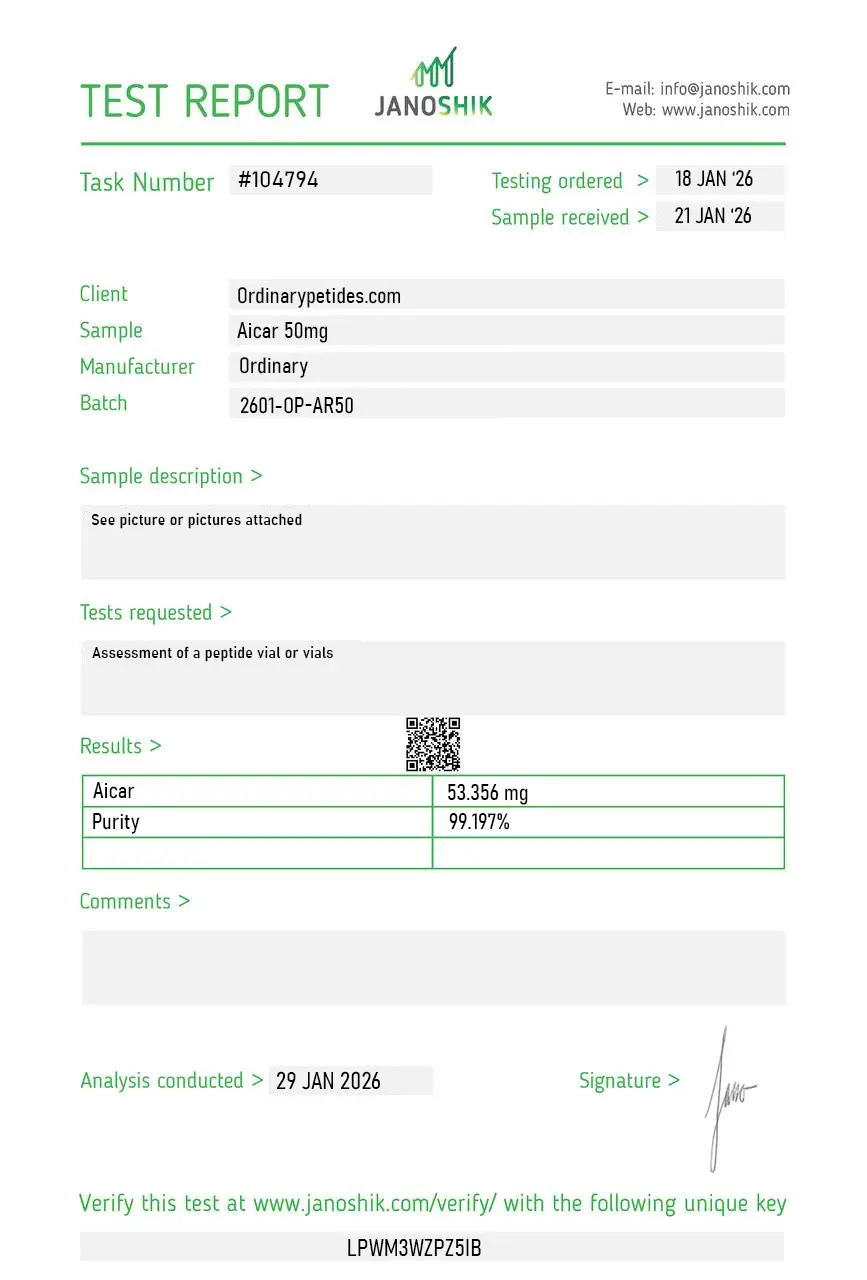
Certificate of Analysis
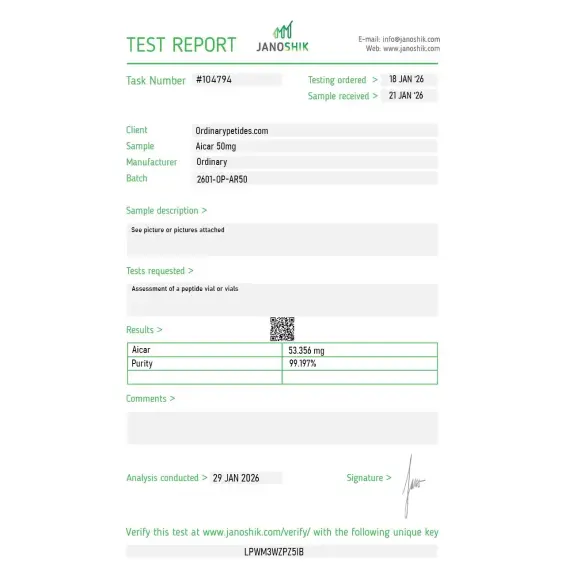
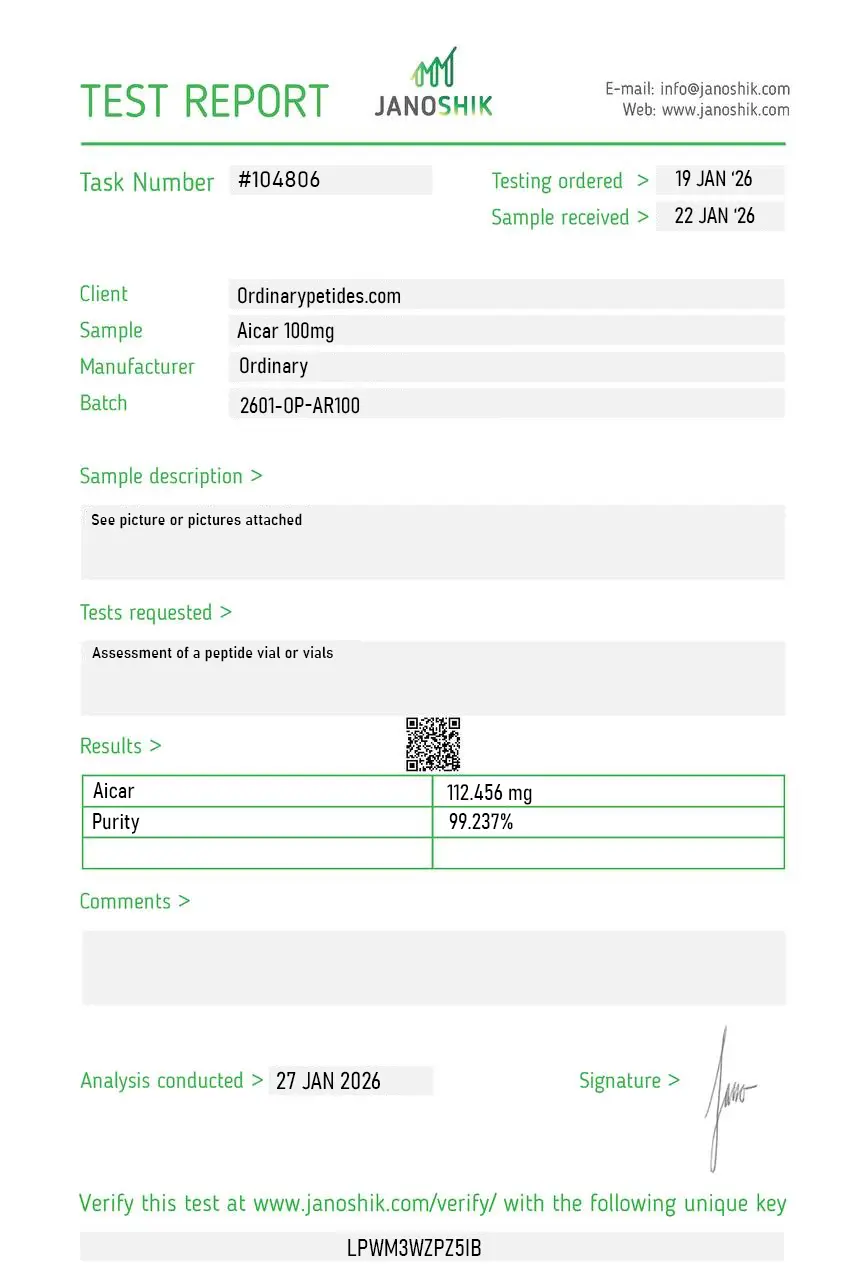
Independent test reports are available for AICAR 50mg and 100mg batches. These reports provide batch-level documentation and analytical verification information for research reference.
Based on 2 reviews
4.5
-
1
-
1
The endogenous-intermediate angle is what we exploit — AICAR's phosphorylated form, ZMP, is a genuine node in de novo purine biosynthesis, so beyond the AMPK story it's a real metabolic intermediate we can use to probe the purine pathway directly. Most people only know it as the AMPK switch and miss that it sits in actual nucleotide metabolism. The material ran clean in our purine-flux work, which is a use case the AMPK-centric framing overlooks entirely.
Since the catalog is otherwise peptides, the one thing I'd push on is that the QC paperwork should look like small-molecule QC and not get shoehorned into a peptide template — I want the NMR and an HPLC trace against a reference standard, not a "purity %" that reads like it came off a peptide synthesizer report. The material was fine and dissolved as the sodium salt should, but the documentation format felt borrowed from the wrong compound class.
AICAR (Acadesine) is an AMP analog and AMPK activator studied in metabolic and cellular energy research. It is a nucleotide derivative rather than a traditional peptide hormone.
It is used in laboratory research to investigate AMPK activation, fatty acid oxidation, glucose metabolism, and mitochondrial biogenesis mechanisms.
In research settings, AICAR is administered according to controlled laboratory protocols. It is not approved for unsupervised human administration.
AICAR activates AMPK signaling, promoting shifts in cellular metabolism toward increased fatty acid oxidation and improved energy regulation in experimental models.
No. It is a nucleoside analogue, not a peptide.
After conversion to ZMP, it mimics an energy-deficit signal and can activate AMPK-related metabolic pathways.
Because in mouse experiments it induced some training-like adaptations, including improved endurance and activation of metabolic genes.
Yes. It was studied as acadesine in cardiology and in chronic lymphocytic leukemia.
That cannot be stated confidently. Its clinical history includes signals of serious adverse effects, including renal problems in some programs.
No. It is prohibited by WADA as an AMPK activator.
Inside cells, AICAR is phosphorylated to form ZMP (AICAR monophosphate), which structurally mimics AMP. This triggers AMPK activation — the same response the body generates naturally during exercise, fasting, or oxygen deprivation when ATP is depleted and AMP levels rise. Activated AMPK shifts cellular metabolism dramatically: it increases fatty acid oxidation, suppresses fat synthesis, enhances glucose uptake via GLUT4 translocation, promotes mitochondrial biogenesis, inhibits mTORC1 protein synthesis pathways, and activates energy-producing processes while shutting down energy-consuming ones. Critically, research has established that many of AICAR's effects are also AMPK-independent — operating through purine synthesis interference, p53 pathway modulation, and direct effects on nucleotide metabolism — making its full pharmacology more complex than originally understood.
In research settings AICAR is administered by subcutaneous or intravenous injection. It is available as a lyophilized powder reconstituted with bacteriostatic water. No standardized human therapeutic dosing protocol has been established as it has not received FDA approval for human use. In animal studies doses have varied widely — from under 100 mg/kg to over 500 mg/kg — with effects being dose, tissue, and species dependent.
The most commonly reported side effect in research contexts is mild hypoglycemia — because AICAR increases cellular glucose uptake and reduces blood sugar levels, particularly if administered in a fasted state. Other reported effects include injection site reactions and fatigue. A significant concern from the scientific literature is that excessive or non-targeted AMPK activation can suppress anabolic mTORC1 signaling necessary for muscle protein synthesis, potentially impairing muscle growth and normal tissue development. Neurological risks from inappropriate AMPK activation in brain tissue have also been raised. Long-term human safety data does not exist.
People with diabetes or blood sugar instability should be particularly cautious given the hypoglycemic effect. Those with cancer should avoid it without oncologist guidance despite — or perhaps because of — its complex dual effects on cancer cell pathways. Pregnant or breastfeeding women should not use it. Competitive athletes should be aware it is banned by WADA under the Hormone and Metabolic Modulators category and is prohibited at all times. As it has no approved human therapeutic use, it should only be handled by qualified researchers in formal laboratory settings.