Where Eastern and Western Neuroscience Research Diverge
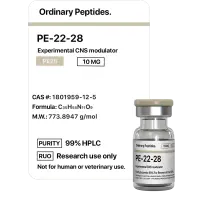
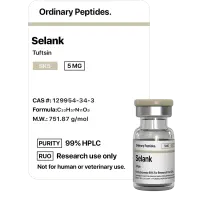
Neuroscience research peptides have one of the field's strangest evidence profiles: the most-studied compounds in this catalog, Semax and Selank, are registered pharmaceuticals in Russia with decades of clinical use, yet remain experimental in the West. Semax is an ACTH(4-10) analog that triples hippocampal BDNF mRNA and increases TrkB phosphorylation after a single intranasal dose. A 2025 Acta Naturae paper extended that into APPswe/PS1dE9 Alzheimer's-model mice. Selank derives from tuftsin and acts on the GABAergic system. PE-22-28 sits on the other side, a Western-designed apoE-mimetic studied in MCAO stroke models.
Neuroscience Research
Showing 1–39 of 39 results
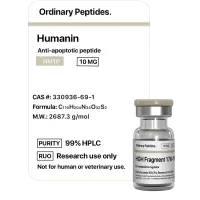
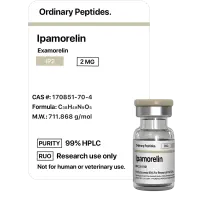
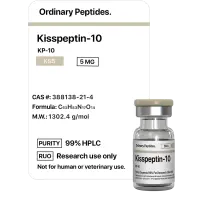
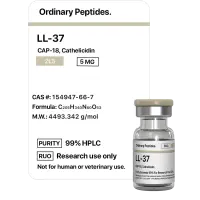
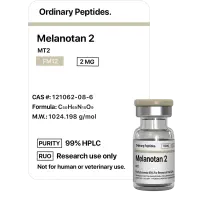
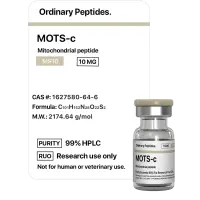
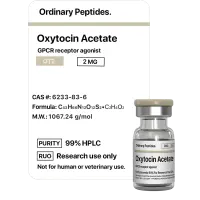
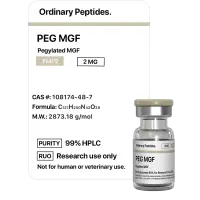
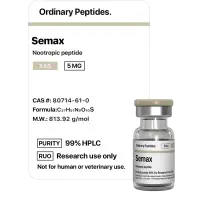
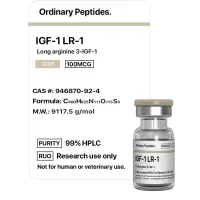
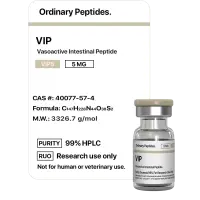
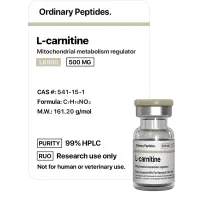
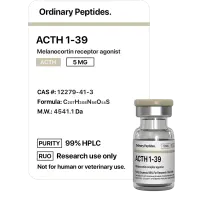
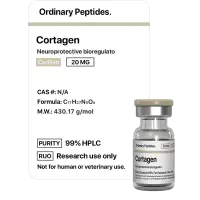
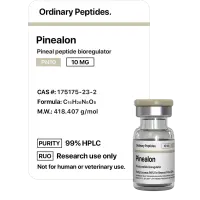




The East-West regulatory split is unusual enough to deserve closer examination. Semax was developed at the Institute of Molecular Genetics (Russian Academy of Sciences) in the 1980s, derived from ACTH(4-10) — a hormone fragment that retains the behavioral and neurotropic activity of full-length ACTH without its corticotropic effects. The compound entered Russian clinical use in 1996 as a nasal drop preparation for stroke, traumatic brain injury, and cognitive disorders. Selank, developed in parallel by the same group, is a synthetic analog of tuftsin (a tetrapeptide cleaved from IgG Fc) and was registered in Russia in 2009 as an anxiolytic. Both compounds have decades of Russian clinical and preclinical literature but remain investigational outside that regulatory framework. This is the unusual case where the research peptide field intersects with actual approved pharmaceutical use in one jurisdiction while remaining experimental elsewhere.
Semax: ACTH Fragment Without the Corticotropic Effects
The original observation behind Semax was that small fragments of ACTH retained neurotropic activity — memory enhancement, attention, neuroprotection — without driving cortisol release. Semax is the heptapeptide MEHFPGP, corresponding to ACTH(4-10) with proline-glycine-proline added at the C-terminus to confer resistance to proteolytic degradation. The compound's most-cited effect is on BDNF signaling: a single intranasal dose triples hippocampal BDNF mRNA expression within hours, with downstream increases in TrkB phosphorylation and CREB activation. The mechanism extends beyond BDNF — Semax modulates dopaminergic and serotonergic systems, affects expression of immediate-early genes (c-fos, c-jun), and shows neuroprotective effects in cerebral ischemia and oxidative stress models. The 2025 study in Acta Naturae extended this work into the APPswe/PS1dE9 Alzheimer's-model mouse line, examining cognitive endpoints and amyloid pathology — representative of the continued mechanistic exploration of the compound.
Selank: Tuftsin Analog and GABAergic Anxiolytic
Selank is the heptapeptide TKPRPGP, with the first four residues corresponding to tuftsin (TKPR) — a tetrapeptide derived from the Fc fragment of IgG and originally characterized for its immunomodulatory activity. Selank retains some immunomodulatory effects but is primarily studied for anxiolytic and nootropic properties. The mechanism involves modulation of the GABAergic system — Selank increases expression of GABA-A receptor subunits in stress-relevant brain regions and shows benzodiazepine-like behavioral effects without the sedation, tolerance, or dependence typically associated with benzodiazepines. Effects on serotonergic, dopaminergic, and noradrenergic systems have also been characterized. The compound is studied in elevated plus maze, light-dark box, and chronic mild stress models for anxiety endpoints, and in passive avoidance and Morris water maze tasks for memory effects.
PE-22-28: TREK-1 Modulation and BDNF Pathway
PE-22-28 is a peptide derived from spadin, a 17-amino acid peptide originally identified as a fragment of sortilin. Spadin and its shorter analog PE-22-28 act as selective blockers of TREK-1, a two-pore-domain potassium channel (K2P) involved in resting membrane potential and neuronal excitability. TREK-1 knockout mice show resistance to depression-like behaviors, which provided the rationale for developing TREK-1 inhibitors as research tools for antidepressant biology. PE-22-28 produces antidepressant-like effects in standard rodent models (forced swim test, tail suspension test, chronic unpredictable stress) and shows neuroprotective signal in cellular and animal models. Downstream effects include increased BDNF expression and TrkB activation — which is why the compound is sometimes described as having "BDNF-like" functional effects despite acting through a potassium channel mechanism rather than directly binding TrkB. The compound was characterized by Djillani and colleagues in the 2010s and remains in active preclinical investigation.
Cerebrolysin and the Broader Russian Neuropeptide Tradition
Beyond Semax and Selank, the broader Eastern European neuropeptide research tradition includes Cerebrolysin (a porcine brain-derived peptide preparation used clinically in many countries for stroke and Alzheimer's), Cortexin (another brain-derived preparation), and various Khavinson short peptides (Cortagen, Pinealon) with neuroactive applications. The structural feature uniting much of this research is short peptide chemistry derived from natural biological sources, often with empirical clinical development preceding mechanistic characterization — a different research model than the Western biotech approach of target identification followed by rational drug design.
Research Models Commonly Used
Standard in vivo neuroscience peptide research uses MCAO (middle cerebral artery occlusion) for ischemic stroke, photothrombotic stroke models for focal cortical injury, TBI models (controlled cortical impact, weight-drop), Aβ injection or APPswe/PS1dE9 transgenic lines for Alzheimer's research, and 6-OHDA or MPTP lesions for Parkinson's models. Behavioral endpoints include Morris water maze and Barnes maze (spatial learning), novel object recognition (recognition memory), elevated plus maze and open field (anxiety), forced swim test and tail suspension (depression-like behavior), and rotarod and beam walking (motor function). In vitro work uses primary hippocampal and cortical neurons for survival and plasticity studies, SH-SY5Y and Neuro2a cell lines for screening, and oxygen-glucose deprivation models for ischemia-reperfusion biology.
Frequently Asked Questions
What is the relationship between Semax and ACTH?
Semax is a synthetic heptapeptide based on residues 4-10 of adrenocorticotropic hormone (ACTH), with additional residues at the C-terminus to confer proteolytic stability. The ACTH(4-10) fragment was identified in early peptide research as retaining the behavioral and neurotropic effects of full-length ACTH — memory enhancement, attention, neuroprotection — without driving adrenal cortisol release. Semax is thus a structural derivative of ACTH but does not function as a corticotropic hormone. Its effects are mediated through BDNF/TrkB signaling and modulation of monoaminergic systems, not through the HPA axis.
How does Selank produce anxiolytic effects without benzodiazepine side effects?
Benzodiazepines are positive allosteric modulators of GABA-A receptors at the benzodiazepine binding site, producing rapid GABA potentiation that drives anxiolysis but also sedation, tolerance, and dependence. Selank modulates the GABAergic system differently — it increases expression of GABA-A receptor subunits in stress-relevant brain regions and modulates additional neurotransmitter systems (serotonergic, dopaminergic). The slower onset and different mechanism are why Selank produces anxiolytic effects in behavioral models without the characteristic benzodiazepine-class side effects in preclinical studies. The full mechanistic understanding is still developing.
What is TREK-1 and why is it studied for depression research?
TREK-1 is a two-pore-domain potassium channel (K2P family) expressed in many brain regions, where it contributes to resting membrane potential and modulates neuronal excitability. TREK-1 knockout mice show resistance to depression-like behaviors in standard rodent models, suggesting that TREK-1 inhibition may have antidepressant effects. This finding has driven interest in TREK-1 blockers like spadin and PE-22-28 as research tools for antidepressant mechanisms. Downstream effects include increased BDNF expression and serotonergic facilitation, which connects TREK-1 modulation to established antidepressant pathways.
Why aren't Semax and Selank approved in the US?
The compounds were developed within the Russian pharmaceutical research framework and approved under Russian regulatory processes. Western pharmaceutical development requires a different sequence of clinical trial design, regulatory submissions, and post-marketing surveillance. Bridging Russian clinical data into FDA or EMA approval pathways requires substantial additional investment that has not been pursued for these compounds. The result is asymmetric availability — clinically used in Russia, available only as research compounds elsewhere — without any specific safety or efficacy signal driving the regulatory divergence.
How does BDNF signaling relate to peptide neuroscience research?
BDNF (brain-derived neurotrophic factor) binds the TrkB receptor and activates downstream PI3K/Akt, MAPK/ERK, and PLCγ signaling cascades. The pathway supports neuronal survival, synaptic plasticity, and adult neurogenesis. BDNF expression is reduced in depression, neurodegenerative disease, and chronic stress, and antidepressant treatments converge on increasing BDNF/TrkB signaling. Peptides that increase BDNF expression (Semax, PE-22-28 indirectly through TREK-1) or directly mimic BDNF (7,8-dihydroxyflavone, BDNF mimetic peptides) are studied as research tools for this pathway. The mechanistic centrality of BDNF makes it a recurring endpoint in neuroscience peptide research across compound classes.
What is the APPswe/PS1dE9 Alzheimer's mouse model?
The APPswe/PS1dE9 transgenic mouse line carries the human APP gene with the Swedish mutation (KM670/671NL) and presenilin-1 with deletion of exon 9 — two mutations associated with familial Alzheimer's disease. The mice develop amyloid plaques in cortex and hippocampus by 6 months of age and show cognitive deficits in spatial learning tasks. The line is one of the most widely used models in Alzheimer's research and provides a standardized platform for testing candidate compounds. It does not recapitulate all features of human Alzheimer's (tau pathology is mild, neuronal loss is limited), but it captures the amyloid pathology component well.
Reference Points for Further Reading
For Semax, the foundational mechanistic work comes from the Myasoedov, Levitskaya, and Ashmarin groups at the Institute of Molecular Genetics, Russian Academy of Sciences — the original characterization papers from the 1990s-2010s are concentrated in Russian-language sources but also published in Bulletin of Experimental Biology and Medicine and Acta Naturae. For Selank, the same institute's publications on tuftsin analog development cover the mechanism foundation. For TREK-1 modulation and PE-22-28, the Djillani, Mazella, and Borsotto papers (multiple, 2014-2017) characterize the spadin-derived compound class. For broader neuropeptide research, the Sapolsky review series on stress neurobiology and the Duman and Aghajanian publications on synaptic plasticity in depression provide context for how peptide effects connect to broader neuroscience frameworks.
All compounds in this catalog are intended for in vitro and preclinical research use only. None are approved by the FDA or EMA for therapeutic use in humans, though Semax and Selank hold pharmaceutical registration in the Russian Federation for specified clinical indications. Clinical and regulatory information referenced on this page describes research and regulatory status in jurisdictions outside the US/EU and is provided as scientific context, not as claims for the research compounds offered here. Compounds affecting CNS function require careful research protocols, as effects can be context-dependent and vary with neurological state.