IGF-1 LR3
For in vitro testing and laboratory use only. Not for human or animal consumption. Bodily introduction is illegal. Handle only by licensed professionals. Not a drug, food, or cosmetic. Educational use only.
IGF-1 LR3: A High-Impact Research Analogue Built for Long Signaling
IGF-1 LR3 is a synthetic analogue of insulin-like growth factor 1, engineered with two structural changes that let it bind the IGF-1 receptor while barely interacting with IGF-binding proteins — and that is exactly why it keeps showing up in serious research conversations.
In laboratory settings, it has been used as a tool for studying cell proliferation, glucose and amino acid uptake, protein synthesis, myogenesis, and long-duration IGF-1 signaling without the stop-start pattern of native free IGF-1. Its appeal is simple: an extended half-life of roughly 20–30 hours and about threefold higher biological activity compared with native IGF-1 make it a very different experimental instrument — not just "IGF-1, but louder."
It is especially interesting for investigators who want to explore what happens when the usual IGFBP control system is largely bypassed and signaling stays active much longer than normal physiology allows. At the same time, this is a research compound, not an approved medicine, and the same pathways that make it powerful in models — PI3K/Akt/mTOR and MAPK/ERK — are also the reason the risk discussion gets very serious, very fast.
So the real hook with IGF-1 LR3 is not hype, but the chance to look at amplified IGF biology under conditions nature normally does not permit.
IGF-1 LR3 (Long R3 Insulin-Like Growth Factor-1): A Scientific Review
Based on peer-reviewed literature — see References. Last updated: April 2026.
The Short Version
IGF-1 LR3 is a synthetic analogue of IGF-1 engineered for a specific and legitimate purpose: as a cell culture reagent. In tissue culture, native IGF-1 is rapidly inactivated by IGF-binding proteins (IGFBPs) secreted by the cells themselves. IGF-1 LR3 was designed to resist IGFBP sequestration, staying biologically active for the full duration of an experiment. Every major pharmaceutical and biotechnology manufacturer that produces biologics uses it in their fermentation and cell culture media. It has no equivalent therapeutic history.
The compound migrated into the performance enhancement community because its pharmacological properties — prolonged half-life, high receptor potency, resistance to the normal regulatory buffering system — are precisely the properties that make it attractive for anabolic purposes. The problem is the evidence base: there is none for human therapeutic or performance use. Zero published human clinical trials. The safety data that exists for IGF-1 in humans comes entirely from mecasermin (Increlex) — a different molecule that retains full IGFBP binding. IGF-1 LR3 bypasses the IGFBP regulatory buffer, meaning the mecasermin adverse effect profile may apply in amplified form, with no controlled clinical safety data to quantify it.
| At a glance | |
|---|---|
| Full name | Long arginine 3-IGF-1; IGF-1 LR3; LR3-IGF-1 |
| Type | Synthetic 83-amino acid analogue of human IGF-1 |
| Key modifications | 13-amino acid N-terminal extension (MFPAMPLLSLFVN) + Glu³→Arg³ substitution |
| MW | ~9,111 Da |
| Native IGF-1 | 70 amino acids, ~7,649 Da |
| Half-life | ~20–30 hours (vs. ~15 minutes for free native IGF-1) |
| IGFBP binding | >100-fold lower affinity vs. native IGF-1 |
| Potency vs. native IGF-1 | Approximately 2–3× more potent in vivo |
| Primary legitimate use | Cell culture reagent; research tool |
| FDA status | ❌ Not approved; no IND filed; not in clinical development |
| WADA | ❌ Prohibited at all times — S2, non-specified substance |
| Human clinical trials | ❌ None published |
The IGF-1 Axis: Essential Biology
Insulin-like growth factor 1 (IGF-1) is a 70-amino acid single-chain peptide produced primarily by the liver in response to growth hormone (GH) stimulation and is structurally homologous to insulin (~50% sequence identity). Key biological roles include: driving postnatal longitudinal bone growth; promoting myofibrillar protein synthesis, satellite cell activation, and protein catabolism inhibition in skeletal muscle; stimulating osteoblast differentiation; neuroprotection; and anti-aging effects (endogenous IGF-1 declines with age in parallel with GH).
The IGFBP system: the critical regulatory context
Bioavailability of IGF-1 is affected by insulin-like growth factor binding proteins (IGFBPs) which bind IGF-1 in circulation with an affinity equal to or greater than that of the IGF-1 receptor, sequestering approximately 98% of all circulating IGF-1.[2] This 98% sequestration is not an inefficiency — it is a regulatory mechanism: it extends IGF-1’s effective plasma half-life; creates a stable circulating reservoir; regulates tissue-specific IGF-1 availability; and limits supraphysiological IGF-1R stimulation, serving a tumour-suppressive function. The IGFBP system is the safety buffer that prevents runaway IGF-1 receptor activation.
IGF-1 acts predominantly via the IGF-1R, a transmembrane receptor tyrosine kinase consisting of two extracellular α-subunits containing the IGF-1 binding site, and two transmembrane β-subunits whose tyrosine residues undergo phosphorylation upon IGF-1 binding, mediating canonical signalling pathways for cell survival and growth. IGF-1R is expressed on almost every cell in the body — which is why pharmacological IGF-1R stimulation carries broad risks beyond any single tissue.
Structure of IGF-1 LR3: The Engineering Strategy
Two modifications from native IGF-1 (70 amino acids) produce IGF-1 LR3 (83 amino acids):
Modification 1 — N-terminal extension (the “Long”): An additional 13 amino acids (MFPAMPLLSLFVN) are appended to the N-terminus of native IGF-1. The N-terminal region of IGF-1 is a primary IGFBP contact surface; extending it with a hydrophobic leader sequence sterically interferes with IGFBP binding without disrupting the receptor-binding domains in the B and C domains of IGF-1.
Modification 2 — Glu³→Arg³ (the “R3”): The glutamic acid at position 3 is replaced with arginine, providing additional disruption to IGFBP-3 binding through the altered electrostatic interaction surface at this region.
The combined effect: IGF-1 LR3 retains the pharmacological activity of IGF-1 as an agonist of the IGF-1 receptor, has very low affinity for IGFBPs, and has improved metabolic stability. As a result, it is approximately three times more potent than IGF-1, and possesses a significantly longer half-life of about 20–30 hours. Where native IGF-1 in circulation is 98% bound and sequestered, IGF-1 LR3 is predominantly free and immediately bioactive — precisely what makes it valuable for cell culture, and precisely what makes it pharmacologically unpredictable in human use.[8]
Comparison: The Three IGF-1 Research Forms
| Feature | Native IGF-1 (mecasermin) | IGF-1 LR3 | Des(1-3) IGF-1 |
|---|---|---|---|
| Length | 70 AA | 83 AA | 67 AA (N-terminal truncation) |
| IGFBP binding | Full (98% bound in circulation) | >100-fold reduced | ~10-fold reduced |
| IGF-1R affinity | Normal (reference) | Similar to native | ~10-fold higher than native |
| Potency in vivo | 1× (reference) | ~2–3× | ~10× (instantaneous) |
| Half-life | 15 min (free); 12–16 h (complexed) | ~20–30 h | ~20–30 min |
| Human data | ✅ Mecasermin clinical trials (Laron syndrome) | ❌ None | ❌ None |
Mechanism of Action
PI3K/Akt/mTOR pathway (anabolic/anti-catabolic)
IGF-1R activation promotes muscle anabolism by activating PI3K/Akt. The canonical anabolic cascade: IGF-1R activation → IRS-1 phosphorylation → PI3K activation → PIP3 generation → Akt activation → mTOR complex 1 → 4E-BP1 and S6K1 phosphorylation → increased protein synthesis. Simultaneously: Akt → FOXO transcription factor phosphorylation → FOXO nuclear exclusion → reduced MuRF1 and MAFbx expression → decreased proteasomal protein degradation (anti-catabolic). Note: muscle requires IRS-1 for IGF-1-mediated hypertrophy — partial IRS-1 deficiency impairs IGF-1-induced muscle growth even at normal IGF-1 levels.[3]
MAPK/ERK pathway (proliferative), satellite cell activation, and glucose metabolism
IGF-1R → Grb2/Sos → Ras → Raf → MEK → ERK1/2 activation drives cell proliferation (particularly satellite cells) and myoblast differentiation. IGF-1 LR3, like native IGF-1, activates muscle satellite cells — the skeletal muscle stem cells responsible for myonuclear accretion and repair. The community claim that IGF-1 LR3 drives hyperplasia (new muscle fibres) in humans is based on this mechanism but has not been demonstrated in any human study. IGF-1R activation also promotes GLUT4 translocation to the cell membrane (the same mechanism as insulin), increasing glucose uptake and explaining the hypoglycemia risk.
The FDA-Approved Reference Point: Mecasermin (Increlex)
Because IGF-1 LR3 has no human clinical data, the mecasermin (Increlex) experience provides the closest available human safety reference. Mecasermin is recombinant native IGF-1 — FDA-approved since 2005 for severe primary IGF-1 deficiency (Laron syndrome) in children — retaining full IGFBP binding and activating the same IGF-1R.[6]
IGF-1 LR3 bypasses the IGFBP buffer. Where mecasermin’s free fraction is ~1–2%, virtually all IGF-1 LR3 is free and immediately bioactive. For equivalent nominal doses, IGF-1 LR3 delivers 50–100× more free IGF-1 receptor stimulation than mecasermin. The mecasermin adverse effects are expected to apply — potentially with greater intensity — and there is no human pharmacokinetic or safety study quantifying what IGF-1 LR3 doses produce what circulating free concentrations, what the dose-response curve for adverse effects looks like, or what the long-term tissue effects are.
The Cancer Risk: The IGF-1/IGF-1R Carcinogenesis Literature
Multiple large prospective studies and the landmark Renehan et al. meta-analysis (Lancet, 2004) found that higher circulating endogenous IGF-1 levels are associated with increased risk of prostate, breast, colorectal, and lung cancers across data from over 100 studies.[1] This association reflects IGF-1R biology: IGF-1R activation promotes cell proliferation and inhibits apoptosis. In premalignant or early malignant cells, sustained IGF-1R stimulation can accelerate progression. The IGFBP system, by limiting free IGF-1, acts as a partial brake on this mitogenic drive — and functions in part as a tumour-suppressive mechanism.
⚠️ IGF-1 LR3 is specifically engineered to maximise free IGF-1R stimulation by eliminating IGFBP buffering. The epidemiological data for endogenous IGF-1 is for normal physiological ranges, not supraphysiological sustained free IGF-1 exposure. The cancer risk from IGF-1 LR3 use in humans has not been quantified — because the compound has never been studied in humans — but the mechanistic basis for concern is well-founded. The drug development graveyard is populated with anti-cancer drugs that targeted the IGF-1R axis precisely because IGF-1R activation is so pro-tumourigenic; the corollary is that sustained exogenous IGF-1R activation is a real carcinogenic concern.
The Legitimate Use: Cell Culture Reagent
Every major pharmaceutical company, biotechnology firm, and academic laboratory that grows mammalian cells in culture encounters the IGFBP problem: cells secrete IGFBPs that inactivate supplemented native IGF-1. IGF-1 LR3 solves this by remaining active in conditioned media throughout the culture period. Standard cell culture use: 20–100 ng/mL in serum-free or low-serum media; supports proliferation and viability of IGF-1R-dependent cells; used in hybridoma culture, CHO cell fermentation (for monoclonal antibody production), primary cell culture, and organoid systems. IGF-1 LR3 is manufactured and sold by legitimate life sciences reagent companies (Repligen, Sigma-Aldrich, R&D Systems) for this purpose. The same molecules available from these vendors are also available from grey-market peptide vendors; the molecules are chemically identical but the quality assurance is not.
Regulatory and Anti-Doping Status
The WADA Prohibited List bans exogenous IGF-1 at all times, both in-competition and out-of-competition. All forms of exogenous IGF-1 are prohibited, including IGF-1 LR3. LC-MS/MS-based detection methods have been validated for identifying LR3-IGF-1 in urine and serum samples. As a non-specified substance, the standard four-year sanction applies to first violations — career-ending consequences for athletes. The US Department of Defense has adopted these same WADA prohibited categories. In the US, IGF-1 LR3 is sold legally as a research reagent; sale for human consumption is not legal.
Safety Profile
⚠️ Hypoglycemia (primary acute risk): IGF-1 LR3 stimulates GLUT4 translocation → increased glucose uptake → blood glucose fall. At the free concentrations achieved with IGF-1 LR3 (with no IGFBP buffering), hypoglycemia can be severe and rapid. Community protocols typically recommend injecting with or immediately after a meal.
Subacute risks (weeks to months): Insulin resistance (paradoxically, chronic sustained IGF-1R stimulation can impair normal insulin signalling through receptor cross-talk); fluid retention; joint discomfort and soft tissue swelling; potential visceral organomegaly with prolonged high-dose use; acromegalic features (jaw/facial changes, hand/foot enlargement) — potentially only partially reversible.
⚠️ Long-term risks: The theoretical oncogenic concern based on epidemiological IGF-1/cancer associations and the compound’s specific design to maximise free IGF-1R stimulation. Not quantified in humans; cannot be dismissed. The long-term safety profile is entirely unknown because the compound has never been studied in any human clinical trial.
Common Misconceptions
“IGF-1 is natural so IGF-1 LR3 is natural and safe.”
Native IGF-1 is natural. IGF-1 LR3 is an engineered synthetic analogue with a 13-amino acid N-terminal extension and a point substitution specifically designed to evade the body’s own IGF-1 regulatory system. The compound does not naturally exist. “Natural = safe” reasoning is pharmacologically incorrect.
“Cell culture doses apply to human use.”
Cell culture uses 20–100 ng/mL in media. Human blood volume is approximately 5 litres; human body fluid volume approximately 40 litres. There is no validated formula converting cell culture concentrations to human therapeutic doses. These are entirely different experimental systems with different pharmacokinetics, distribution volumes, and feedback systems.
“It’s banned by WADA because it works, so it must be safe.”
WADA prohibition reflects a compound’s potential to enhance performance — it has no bearing on safety. The compound’s potency and the absence of safety data make it more concerning, not more validated.
Frequently Asked Questions
What is the legitimate research use of IGF-1 LR3?
Cell culture media supplementation to maintain IGF-1-dependent cell growth in serum-free conditions, particularly during extended culture or high-density fermentation (e.g., monoclonal antibody production in CHO cells). It is a genuine, widely used laboratory reagent for this purpose.
How does IGF-1 LR3 compare to using growth hormone?
GH stimulates endogenous IGF-1 production, has direct metabolic effects (lipolysis, insulin resistance, water retention), and the GH → liver → IGF-1 axis is subject to full feedback regulation and IGFBP buffering. IGF-1 LR3 bypasses all upstream regulation and acts directly at the IGF-1R with no IGFBP buffering. They are complementary but not equivalent — neither has been studied for performance enhancement in controlled human trials.
Key Takeaways
- IGF-1 LR3 is an engineered research reagent, not a therapeutic drug. It was designed to resist IGFBP inactivation in cell culture. This is its legitimate commercial purpose; all other uses are extrapolation without clinical evidence.[8]
- The mechanism is well-characterised but the human pharmacology is unknown. PI3K/Akt/mTOR and MAPK/ERK signalling downstream of IGF-1R are well understood. What IGF-1 LR3 does in vivo in a human being — at what doses, with what kinetics, producing what tissue concentrations — has never been studied.
- ⚠️ The absence of IGFBP buffering is both the defining feature and the primary risk amplifier. The property that makes IGF-1 LR3 potent in culture removes the safety buffer that normally prevents sustained supraphysiological IGF-1R stimulation. Hypoglycemia and theoretically amplified mitogenic risks are direct consequences.
- ⚠️ The cancer risk is theoretically grounded and cannot be dismissed. Epidemiological evidence links higher endogenous IGF-1 to increased cancer incidence.[1] IGF-1 LR3 is specifically designed to maximise free IGF-1R stimulation by eliminating the IGFBP buffer. Long-term human safety data: none.
- ⚠️ No human clinical trial data exists for any use of IGF-1 LR3. This is a fundamental evidentiary gap that cannot be bridged by preclinical data or community anecdote.
References
Native IGF-1 Biology and IGFBP System
- Renehan AG, Zwahlen M, Minder C, et al. Insulin-like growth factor (IGF)-I, IGF binding protein-3, and cancer risk: systematic review and meta-regression analysis. Lancet. 2004;363:1346–1353.
- Insulin-like growth factor-1 (IGF-1) and its monitoring in medical diagnostic and in sports. PMC7913862. 2021.
IGF-1 Receptor and Skeletal Muscle
- Optimising IGF-I for skeletal muscle therapeutics. PMC4665094.
- Use of growth hormone, IGF-I, and insulin for anabolic purpose: pharmacological basis, methods of detection, and adverse effects. PMC5723243.
FDA-Approved Reference: Mecasermin
- Chernausek SD, Backeljauw PF, Frane J, et al. Long-term treatment with recombinant insulin-like growth factor (IGF)-I in children with severe IGF-I deficiency due to growth hormone insensitivity. Journal of Clinical Endocrinology and Metabolism. 2007.
- FDA Full Prescribing Information: Increlex (mecasermin). Ipsen Biopharmaceuticals. 2014. (Boxed warning for hypoglycemia; safety profile of IGF-1 in humans)
Original IGF-1 LR3 Characterisation
- Tomas FM, Knowles SE, Owens PC, et al. Insulin-like growth factor-I (IGF-I) and especially IGF-I variants are anabolic in dwarf rats. Biochemical Journal. 1993;291(Pt 3):781–786.
- Ballard FJ, Francis GL, Ross M, Bhaumick B, Wells JRE. Novel forms of recombinant IGF-I with reduced affinity for IGF-binding proteins. Growth Regulation. 1991;1(2):64–72.
Certificate of Analysis
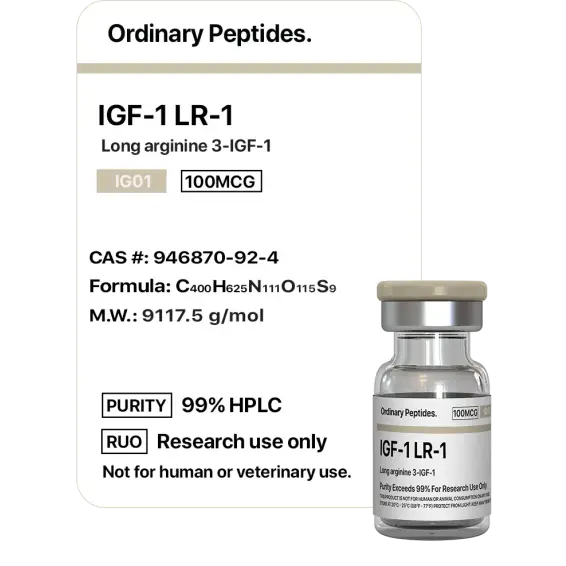
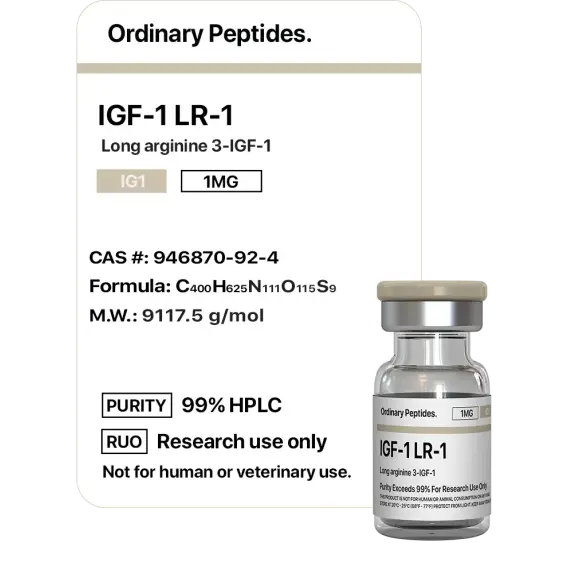
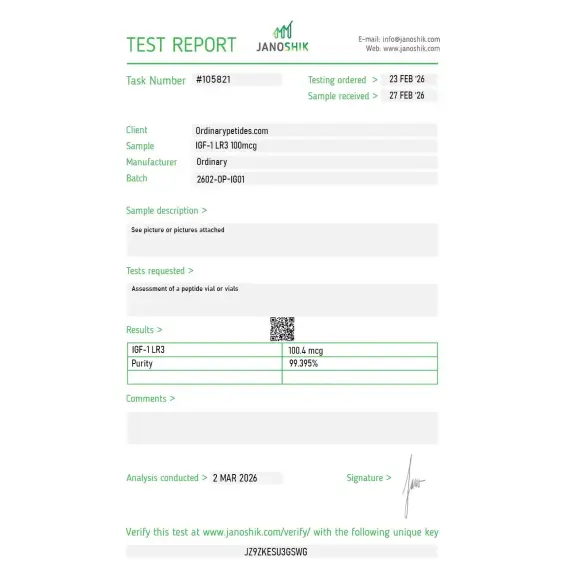
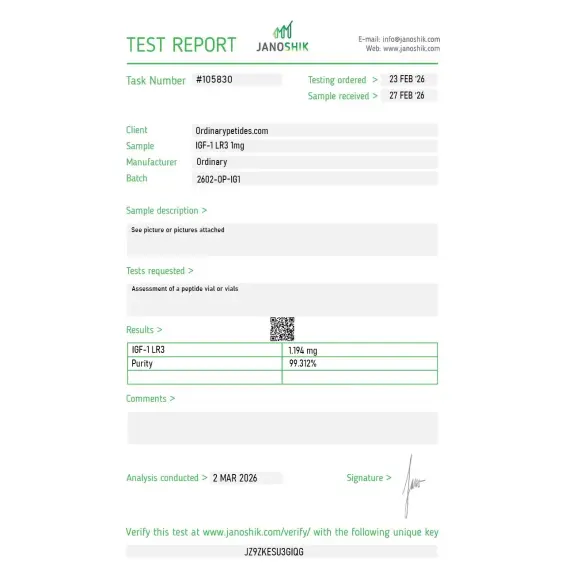
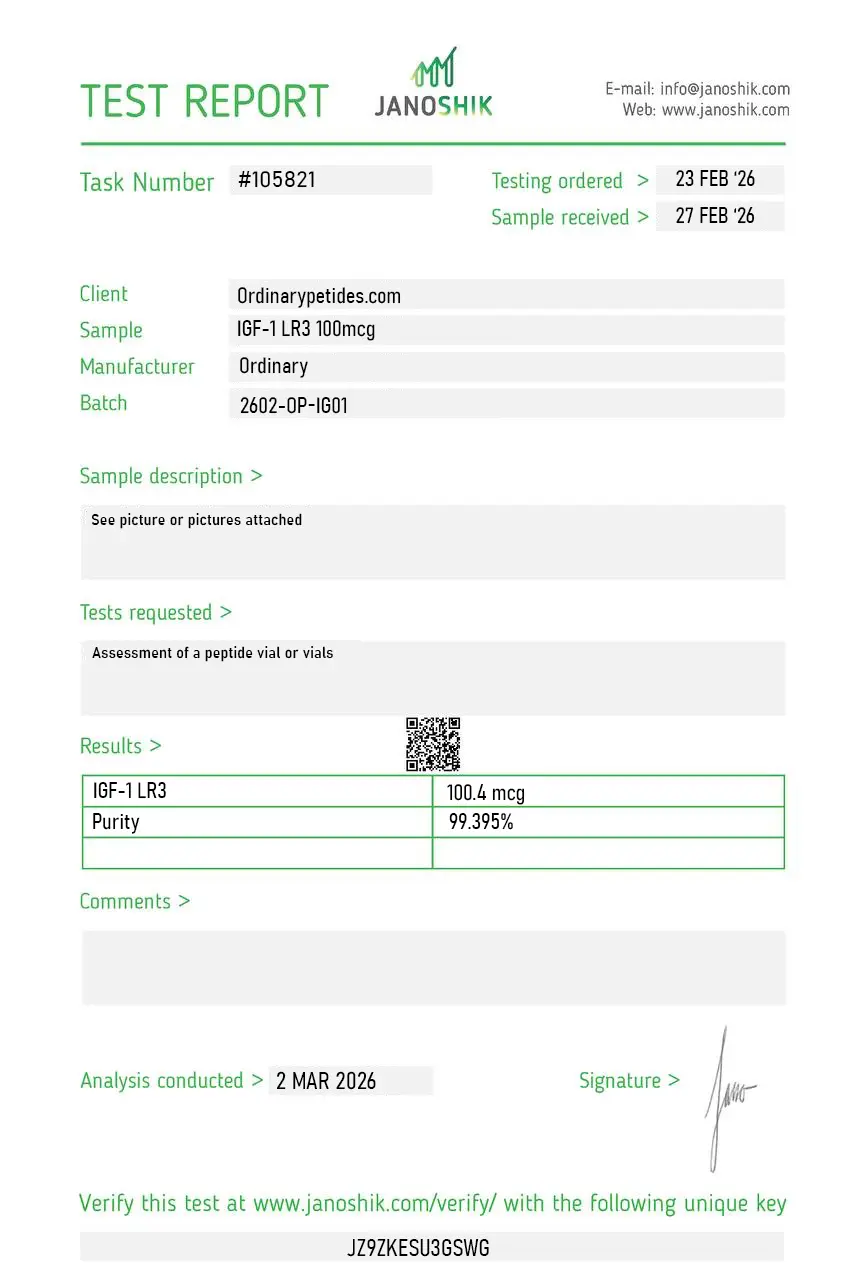
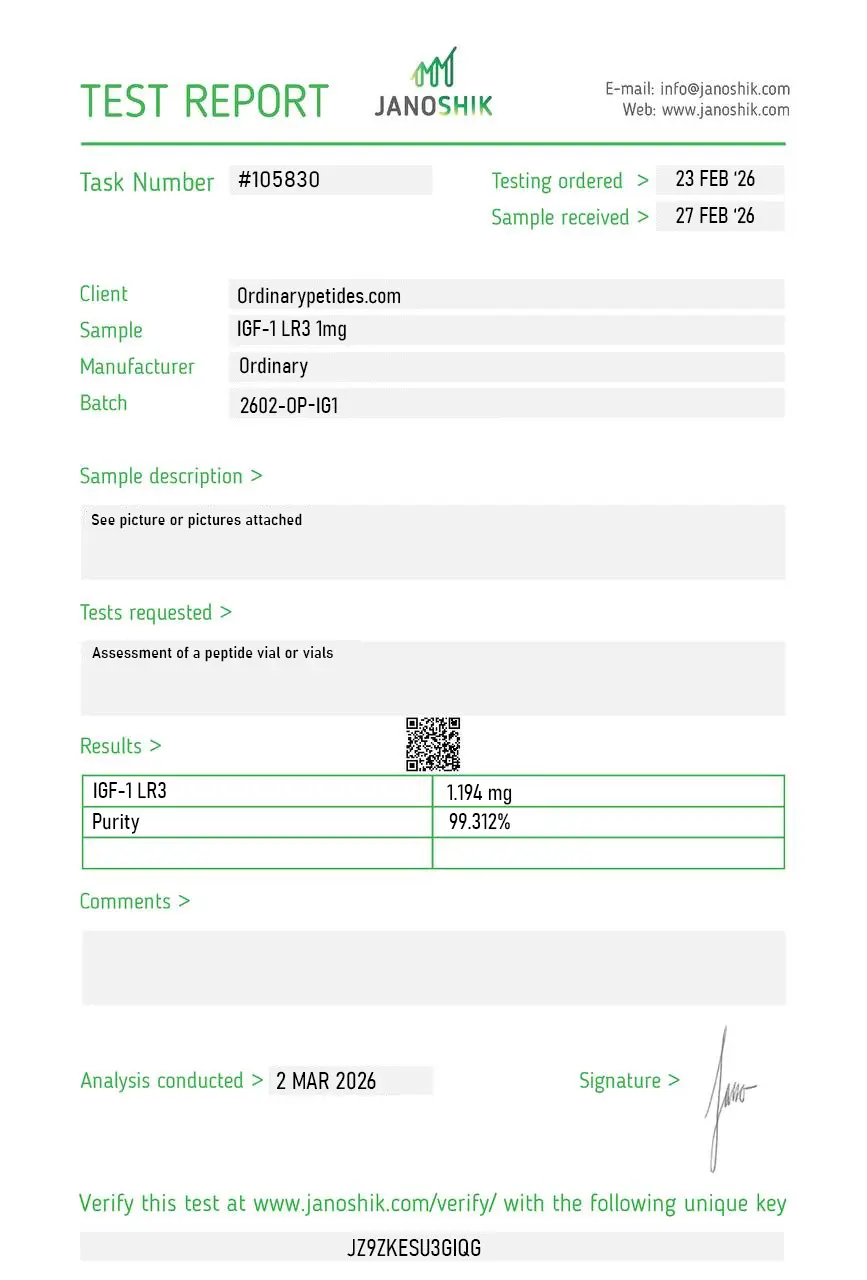
Independent test reports are available for IGF-1 LR3 100mcg and IGF-1 LR3 1mg. These reports provide batch-level documentation and analytical verification information for research reference.
Based on 2 reviews
5.0
-
2
Fine.
The first time I worked with LR3 I made a stupid mistake — calculated my working concentration using the molecular weight of native IGF-1 instead of LR3, which is meaningfully larger because of the 13-residue N-terminal extension plus the Arg substitution. Off by enough to confuse my results for two days. Not the supplier's fault, but a note on the listing explicitly stating "MW differs from native IGF-1 — use LR3-specific MW for concentration calculations" would prevent the same mistake from newer researchers.
IGF-1 LR3 (Insulin-Like Growth Factor-1 Long Arg3) is a synthetic 83-amino acid analog of the naturally occurring IGF-1 hormone. It differs from native IGF-1 in two key ways — an extra 13 amino acids are added at the N-terminus and one amino acid is substituted with arginine at position 3. These modifications make it significantly more stable, more bioavailable, and much longer-lasting in the body.
It binds to IGF-1 receptors on muscle and tissue cells, activating the PI3K/Akt/mTOR signaling pathway. This triggers muscle hypertrophy through two mechanisms — hyperplasia (creating new muscle fibers) and mitogenesis (developing existing fibers). It also enhances glucose uptake in muscle cells, improves insulin sensitivity, promotes fat breakdown, and stimulates protein synthesis. Unlike native IGF-1 which is active for only minutes, IGF-1 LR3 stays active in the body for 20 to 30 hours.
The primary benefits are muscle growth and accelerated recovery. Beyond that it supports fat loss by improving glucose metabolism and nutrient utilization, promotes tissue repair and regeneration, and may offer cognitive benefits — particularly in individuals with low growth hormone levels who experience memory issues or poor concentration. Anti-aging and skin health applications are also being explored in aesthetic medicine.
It is given as a subcutaneous or intramuscular injection, most commonly post-workout when insulin sensitivity is at its peak. Cycles are generally recommended to last no longer than 3 to 6 months to avoid receptor desensitization and longer-term metabolic consequences. Dosing protocols vary and should only be followed under medical supervision.
The most significant risk is hypoglycemia — because it strongly mimics insulin, blood sugar can drop rapidly especially when injected in a fasted state. Other reported side effects include water retention, headaches, joint stiffness, muscle soreness, and injection site reactions. With prolonged or high-dose use, more serious concerns include insulin resistance, potential enlargement of internal organs, and theoretically increased risk of abnormal cell growth due to its potent mitogenic effects.
Anyone with active cancer or a history of cancer should avoid it entirely, as its cell-growth signaling does not discriminate between healthy and malignant cells. It is also not suitable for people with diabetes or blood sugar disorders, those on immunosuppressive therapy, pregnant or breastfeeding women, and anyone without close medical supervision given the significant metabolic risks involved.