The Compounds Behind the Renewed Interest
Musculoskeletal research peptides spent a decade as a sports-science footnote until the 2025 SEMALEAN study reported that up to a quarter of the weight lost on semaglutide came from fat-free mass, reviving an older question: how to selectively spare or rebuild skeletal muscle. Compounds here cluster around the myostatin and activin pathway through FST-344 and ACE-031, the GH–IGF-1 axis via GHSR1a agonists and PI3K/Akt/mTOR signaling, plus tendon-repair peptides such as BPC-157 and thymosin β4. Each is studied in preclinical models, with active 2025 literature on most.
Musculoskeletal Research
Showing 1–38 of 38 results
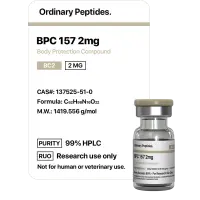
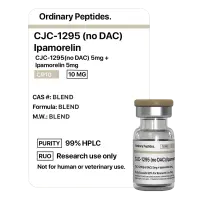
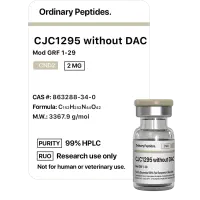
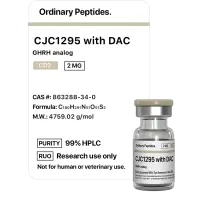
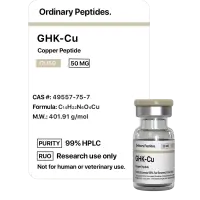
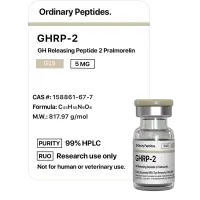
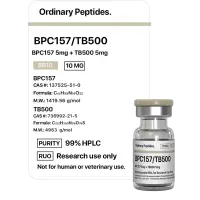
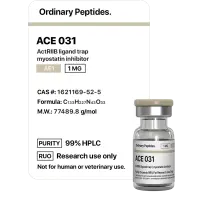
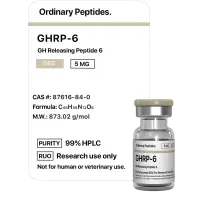
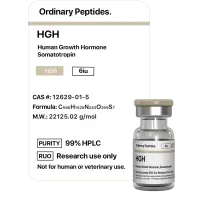
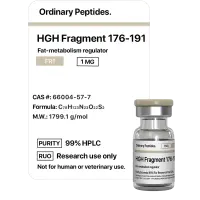
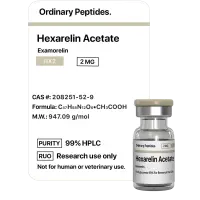
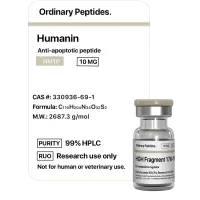
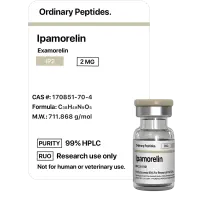
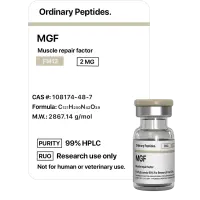
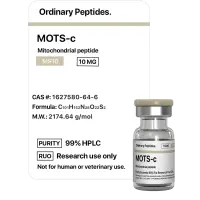
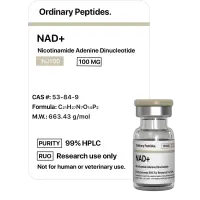
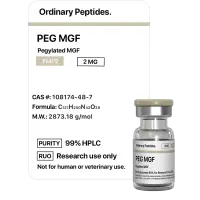
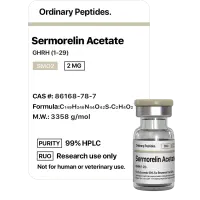
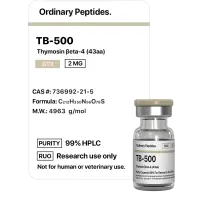
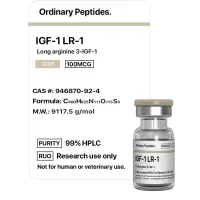
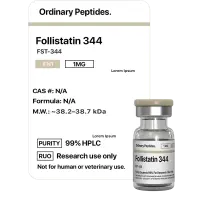
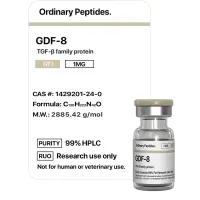
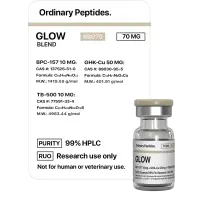
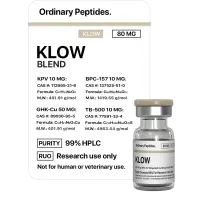
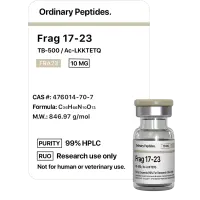
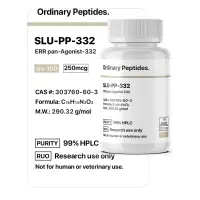
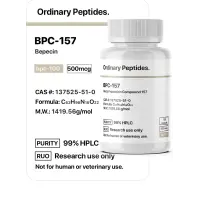
The renewed interest in musculoskeletal peptide research didn't emerge from a single trial. It emerged from a pattern. Multiple GLP-1 body composition analyses published between 2024 and 2025 — including the SEMALEAN cohort (Alissou et al., 2025), secondary analyses of STEP-1 data, and the SLIM LIVER substudy in PWH — converged on a finding the field couldn't ignore: when patients lose 15–20% of body weight on GLP-1 agonists, a meaningful fraction of that loss is lean tissue. Estimates vary by study and methodology, but a range of 20–40% of total weight lost as fat-free mass is now widely cited in the literature. This isn't a controversial claim. The controversy is what to do about it — and that's where the catalog below becomes relevant.
Three Pathway Clusters Researchers Study
Musculoskeletal peptide research divides cleanly along three molecular axes, each addressing a different part of the muscle-tendon-bone system.
The myostatin/activin pathway is the most direct route to skeletal muscle hypertrophy in preclinical models. Myostatin (GDF-8) and activin A both signal through ActRIIB receptors to suppress muscle growth; blocking that suppression is the rationale behind compounds like follistatin 344 (an endogenous myostatin/activin antagonist) and ACE-031 (a soluble ActRIIB decoy receptor). The pathway has produced striking phenotypes in rodent models — myostatin knockout mice show roughly doubled muscle mass — but translating that to humans has been mechanistically and clinically harder than the mouse data suggested.
The GH–IGF-1 axis represents the older approach. Compounds in this group act either as GHRH analogs (Sermorelin, Tesamorelin, CJC-1295) that signal at the pituitary, or as ghrelin mimetics (GHRP-2, GHRP-6, Ipamorelin, Hexarelin) that act on GHS-R1a through a parallel circuit. Both ultimately drive pulsatile GH release, which then acts on IGF-1 production in liver and muscle. Downstream, the PI3K/Akt/mTOR pathway is the canonical anabolic signaling module — well-characterized in skeletal muscle protein synthesis research since the early 2000s.
Tendon and connective tissue repair sits on a different mechanistic foundation. BPC-157 is studied primarily for its effects on the VEGFR2-Akt-eNOS angiogenesis axis and fibroblast migration in tendon injury models. Thymosin β4 acts on G-actin sequestration and tissue repair signaling. Neither compound has been shown to influence muscle hypertrophy directly — they belong to the connective tissue side of the musculoskeletal system, not the contractile side.
Research Models Commonly Used
The standard in vivo models cluster around three setups. Disuse atrophy models (hindlimb suspension, denervation, cast immobilization in rodents) test whether a compound preserves muscle mass under wasting conditions. Aging sarcopenia models (aged C57BL/6 mice, 20–24 months) examine effects on age-related muscle loss. Injury repair models (Achilles tendon transection, muscle laceration, MCL injury) cover the connective tissue side. In vitro work typically uses C2C12 myoblasts for muscle differentiation studies, primary tenocytes for tendon work, and immortalized osteoblast lines (MC3T3-E1) for bone-related questions.
Current State of Evidence
The evidence base in this category is uneven. BPC-157 has the largest preclinical literature — the Vasireddi 2024 systematic review in AJSM identified 36 musculoskeletal studies between 1993 and 2024, with consistent healing signal in animal models. Human evidence remains limited to one retrospective cohort. Follistatin and ActRIIB-targeting compounds have substantial preclinical data and several discontinued clinical programs (the activin/myostatin pathway has been pharmacologically attempted multiple times, with mixed translational outcomes). GH-axis compounds are the best-characterized clinically — Sermorelin and Tesamorelin both have regulatory history, though approved indications are narrow.
Frequently Asked Questions
Why has GLP-1-related muscle loss revived interest in musculoskeletal peptides?
GLP-1 receptor agonists like semaglutide produce significant weight loss, but body composition analyses consistently show that 20–40% of the lost weight is fat-free mass rather than fat tissue. This has shifted research attention back to compounds that may selectively spare or rebuild skeletal muscle — particularly myostatin pathway inhibitors and GH-axis modulators — as potential adjuncts in metabolic research models.
What is the difference between myostatin inhibition and GH-axis stimulation?
Myostatin inhibition removes a negative regulator of muscle growth — it blocks a brake. GH-axis stimulation adds a positive anabolic signal — it presses an accelerator. The two approaches are mechanistically distinct and have been studied as potentially complementary in preclinical work. Myostatin pathway compounds (follistatin 344, ACE-031) act locally on satellite cell biology, while GH-axis compounds (GHRH analogs, ghrelin mimetics) work systemically through pituitary and IGF-1 signaling.
Is BPC-157 useful for muscle building research?
The published preclinical literature on BPC-157 focuses on connective tissue repair — tendon, ligament, bone, and gastric mucosa healing models — not skeletal muscle hypertrophy. BPC-157 is not studied as a hypertrophy compound in the same way myostatin-pathway peptides are. Its musculoskeletal applications in research are oriented toward injury and repair endpoints rather than muscle building.
How do GHRH analogs and ghrelin mimetics differ?
GHRH analogs (Sermorelin, Tesamorelin, CJC-1295) bind the GHRH receptor on pituitary somatotrophs and stimulate growth hormone release through the canonical GHRH-cAMP-PKA pathway. Ghrelin mimetics (GHRP-2, GHRP-6, Ipamorelin, Hexarelin) bind GHS-R1a, a separate receptor expressed both in pituitary and hypothalamus, and act through a parallel signaling pathway. Both ultimately increase GH pulses, but they engage different receptors and have different selectivity profiles — Ipamorelin in particular is studied for its lack of effect on cortisol and prolactin, unlike GHRP-2.
What is the PI3K/Akt/mTOR pathway in muscle research?
PI3K/Akt/mTOR is the canonical anabolic signaling cascade in skeletal muscle. IGF-1 (downstream of GH) binds the IGF-1 receptor, activates PI3K, which phosphorylates Akt, which then activates mTORC1. mTORC1 is the central regulator of muscle protein synthesis through downstream effectors S6K1 and 4E-BP1. This pathway is studied in both hypertrophy models (loading, mechanical stretch, anabolic stimuli) and atrophy models (disuse, fasting, glucocorticoid exposure).
Why did follistatin and ActRIIB clinical programs face translation difficulties?
Several pharmaceutical programs targeting myostatin/activin pathway (including landogrozumab, domagrozumab, bimagrumab, and stamulumab) reached clinical stages but did not produce the magnitude of muscle mass increase seen in rodent models. Proposed explanations include species differences in myostatin pathway redundancy, compensatory upregulation of related TGF-β family ligands, and the fact that muscle mass gains in healthy adults are constrained by factors beyond pathway availability. The preclinical-to-clinical translation gap in this pathway is itself an active research topic.
Reference Points for Further Reading
The Vasireddi 2024 systematic review in the American Journal of Sports Medicine remains the standard reference for BPC-157 musculoskeletal literature. For GLP-1 body composition data, the SEMALEAN study (Alissou et al., 2025, Diabetes Obesity and Metabolism) and the 2026 JEHS systematic review on semaglutide and muscle function provide current overviews. The 2023 López-Otín review on hallmarks of aging in Cell covers sarcopenia in the broader context of age-related decline. For pathway-level reference, Glass DJ's 2010 review on signaling pathways perturbing muscle mass in Current Opinion in Clinical Nutrition and Metabolic Care remains a standard textbook entry point.
All compounds in this catalog are intended for in vitro and preclinical research use only. None are approved by the FDA or any other regulatory authority for therapeutic use in humans. The clinical trial data referenced on this page describe research conducted with approved or investigational pharmaceutical products and are provided as scientific context, not as claims for the research compounds offered here.