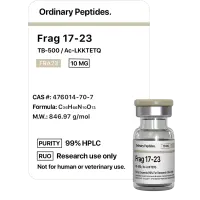
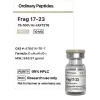
Frag 17-23
For in vitro testing and laboratory use only. Not for human or animal consumption. Bodily introduction is illegal. Handle only by licensed professionals. Not a drug, food, or cosmetic. Educational use only.
Frag 17-23 (TB-500): The Compact Actin-Binding Fragment Researchers Keep Coming Back To
Frag 17-23, also known as TB-500 or fequesetide, is a synthetic heptapeptide built from the central actin-binding domain of thymosin beta-4 and studied as a focused tool for cell migration and angiogenesis research.
In experimental models, this fragment showed near-identical activity to full-length thymosin beta-4 in endothelial migration and vessel sprouting assays, and in published wound-healing studies it replicated key repair-related effects in aged animal models.
What makes it especially interesting in the research context is its very specific mechanism: it binds G-actin and supports the cytoskeletal reorganization that cells need to move. In other words, it is not "everything at once" — it is a compact fragment with a very clear lane.
For anyone exploring tissue-repair signaling in a lab setting, that kind of precision is exactly what makes a peptide worth a closer look.
Thymosin β4 Fragment 17–23 (Frag 17-23 / LKKTETQ): A Scientific Review
Based on peer-reviewed literature — see References. Last updated: April 2026.
The Short Version
“Frag 17-23” is one of the most consequential naming situations in the research peptide world — because the compound being sold under this name is, in most formulations, structurally identical or very nearly identical to TB-500 itself. Understanding what it is, how it differs from TB-500, and what the evidence actually covers requires navigating three layers of naming.
Thymosin beta-4 (Tβ4): The full 43-amino acid parent protein, naturally occurring in virtually all human cells; the compound with the most developed clinical evidence, including Phase 2 trials (ophthalmic, cardiac, dermal). TB-500 (Ac-LKKTETQ): A synthetic heptapeptide — the 7 amino acids at positions 17–23 of Tβ4, with an artificial N-terminal acetylation. This is the doping-relevant compound that WADA specifically identified, characterised analytically, and prohibited. Frag 17-23 (LKKTETQ): The same seven amino acid sequence — without the N-terminal acetylation, or with it, depending on the vendor.[5]
| At a glance | |
|---|---|
| Primary names | Thymosin β4 Fragment 17-23; TB4 Frag 17-23; LKKTETQ; fequesetide |
| Alternate form | TB-500 (Ac-LKKTETQ) — N-terminally acetylated version of the same sequence |
| Parent protein | Thymosin beta-4 (Tβ4) — 43 amino acids |
| Sequence | Leu-Lys-Lys-Thr-Glu-Thr-Gln (LKKTETQ) |
| Molecular weight | ~847 Da (unacetylated); ~889 Da (acetylated / TB-500) |
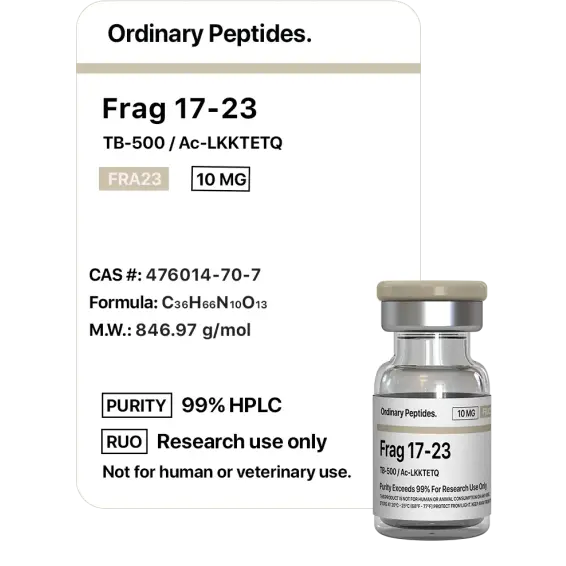
| CAS number | 476014-70-7 |
| INN (pharmaceutical name) | Fequesetide |
| Mechanism | Actin sequestration (G-actin binding) → cell migration, cytoskeletal regulation; VEGF upregulation; angiogenesis |
| FDA status | ❌ Not approved; research compound only |
| WADA status | ❌ Prohibited (S2 — Peptide Hormones, Growth Factors, Related Substances) |
| Human evidence | None specific to this fragment; Phase 1 safety data for full-length Tβ4; no human RCTs |
The Thymosin Beta-4 Family: Essential Context
Thymosin beta-4 (Tβ4) was originally isolated from calf thymus gland in the 1970s. The major reconceptualisation came in the early 1990s when researchers demonstrated that Tβ4 was not primarily a thymic hormone but the most abundant G-actin sequestering molecule in essentially all mammalian cells — present at intracellular concentrations exceeding 0.5 mM. This revised understanding was transformative: Tβ4 was a ubiquitous regulator of the actin cytoskeleton — the scaffolding system that determines cell shape, drives cell movement, and controls cell division in every eukaryotic cell type.
Functional domains of Tβ4
| Region | Residues | Primary activities |
|---|---|---|
| N-terminal fragment | 1–4 (SDKP) | Anti-inflammatory; anti-fibrotic; renal/hepatic protection |
| Intermediate fragment | 1–15 | Anti-apoptotic; cytoprotective; neuroprotective |
| Actin-binding domain | 17–23 (LKKTETQ) | Actin sequestration; cell migration; wound healing; angiogenesis; hair follicle activation |
| C-terminal | 40–43 | Less characterised; possible ECM interaction |
The 17-23 sequence contains the highly conserved LKKTE motif found in all members of the β-thymosin family across species. This conservation suggests it represents a functionally critical region under strong evolutionary selection pressure.[8]
Chemistry of the Fragment
Sequence and structure
The unacetylated fragment has the sequence: Leu-Lys-Lys-Thr-Glu-Thr-Gln. Molecular formula: C&sub3;&sub6;H&sub6;&sub6;N&sub1;&sub0;O&sub1;&sub3;. Molecular weight: ~847 Da. No disulphide bonds. Net positive charge at physiological pH (two lysine residues). Hydrophilic.
The acetylation question
TB-500, as formally characterised in the doping literature, is Ac-LKKTETQ — the same sequence with an acetyl group added to the N-terminal leucine.[5] The acetylation blocks N-terminal aminopeptidase cleavage (improving stability), modifies the electrostatic character of the N-terminus, and slightly increases molecular weight (~42 Da). The biological significance of this acetylation for the fragment’s therapeutic properties is not definitively established. The foundational wound healing studies used the unacetylated LKKTETQ sequence and found activity comparable to the full-length Tβ4 protein.[2]
A 2024 analytical study investigated TB-500’s metabolism in human serum and rat models, finding that Ac-LKKTETQ is rapidly degraded in serum and generates metabolites — some of which retain wound healing activity in fibroblast assays — suggesting that biological activity in vivo may partly derive from metabolites rather than the intact peptide.[7]
Mechanism of Action
Primary mechanism: G-actin sequestration
The central activity of the fragment is binding to G-actin (monomeric, unpolymerised actin) and preventing its incorporation into F-actin (filamentous actin). This maintains a pool of readily available actin monomers that can be rapidly mobilised when cells need to change shape, move, or divide. Cells treated with the LKKTETQ fragment or full Tβ4 show enhanced directed migration — they move faster and more efficiently toward chemical signals (chemotaxis) or across surfaces (haptotaxis).[4]
Downstream signalling effects
VEGF upregulation: TB-500 upregulates VEGF by 2.5 to 3.8-fold, promoting formation of new blood vessels necessary for healing.[8] Akt/PI3K survival signalling: The fragment has been reported to activate the Akt pathway, promoting cell survival and reducing apoptosis. Arp2/3 complex interaction: The fragment may interact with the Arp2/3 complex, which nucleates branched actin networks at the cell leading edge, directly promoting lamellipodia formation. BCL-xL upregulation: Anti-apoptotic protein BCL-xL has been reported to increase following LKKTETQ treatment in some models.
The “no receptor” issue
Like full-length Tβ4, the actin-binding fragment does not have a confirmed classical receptor. Purinergic signalling pathways have been reported, but given the number of activities, one would expect several receptors. This mechanistic gap is shared with the parent protein and does not invalidate the observed biological effects, but means the signalling cascade from fragment binding to final cellular response is not fully mapped.[9]
Evidence Base: What Research Establishes
The critical distinction: LKKTETQ vs. Tβ4 vs. Ac-LKKTETQ
When evaluating evidence for Frag 17-23, it’s essential to know which form was actually studied. Most of the foundational evidence comes from: (1) full-length Tβ4 — the 43-amino acid parent protein; (2) LKKTETQ (unacetylated) — the specific fragment; or (3) Ac-LKKTETQ (TB-500) — primarily characterised in the context of anti-doping analytical methods rather than therapeutic biology.
Key preclinical studies on the LKKTETQ fragment
Malinda et al. 1999 (FASEB Journal):[1] The most foundational study specifically on the fragment. LKKTETQ was shown to stimulate directional migration of human umbilical vein endothelial cells in Matrigel assays and promote angiogenesis in a chick chorioallantoic membrane model, demonstrating that the minimal actin-binding domain retains the full angiogenic activity of the parent Tβ4 molecule.
Philp et al. 2003 (Wound Repair and Regeneration):[2] The landmark study establishing that the fragment can reproduce the full-length protein’s wound healing effects in healthy, diabetic, and aged mice. Researchers specifically noted that the seven-amino acid synthetic peptide LKKTETQ (TB-500 without N-terminal acetylation) was able to promote repair in aged animals comparable to that observed with the parent molecule — a finding that validated the fragment as a simpler, more manufacturable research tool with comparable activity.
Huff et al. 2001 (Journal of Molecular Biology):[4] Characterised the molecular mechanism of G-actin binding by the LKKTETQ sequence, establishing the structural basis for actin sequestration.
Summary of evidence by effect
| Effect | Evidence level | Fragment specificity |
|---|---|---|
| G-actin sequestration and cell migration | Strong — multiple independent groups | ✅ Direct — LKKTETQ fragment studies |
| Wound healing acceleration | Moderate — animal models | ✅ Direct — Philp 2003 specifically tested LKKTETQ |
| Angiogenesis (VEGF, endothelial migration) | Moderate — Malinda 1999 and Tβ4 literature | ✅ Direct — Malinda 1999 used LKKTETQ |
| Hair follicle activation | Moderate — animal models | ✅ Direct — 17-23 region confirmed as mediating site |
| Cardiac protection | Moderate — animal models | Via full Tβ4; fragment-specific data limited |
| Neurological effects | Moderate — animal models | Via full Tβ4; fragment-specific data limited |
| Anti-inflammatory effects | Moderate — mostly attributed to 1-4 fragment | ❌ Not primarily this fragment |
| Anti-apoptotic effects | Moderate — mostly attributed to 1-15 fragment | ❌ Not primarily this fragment |
Human Clinical Evidence
No published controlled human trial has specifically studied LKKTETQ (unacetylated) or Ac-LKKTETQ (TB-500) for any clinical endpoint. The human evidence that exists is for full-length Tβ4:
- Phase 1 safety trial: Synthetic Tβ4 at doses up to 1,260 mg for 14 days showed no serious adverse events, establishing tolerability for the parent protein.[10]
- Phase 2 ophthalmic: RegeneRx’s RGN-259 (topical Tβ4) for neurotrophic keratopathy and dry eye disease — the most clinically advanced Tβ4 application with some efficacy signals.
- Phase 2 cardiac: Multiple trials examining Tβ4 in acute MI and heart failure. Results have been mixed; no Phase 3 has progressed.
- Phase 2 dermal wound: Venous leg ulcers — moderate efficacy signals.
Whether the safety profile and any efficacy signals from these full-length Tβ4 studies apply to the 17-23 fragment specifically is not established. The fragment lacks the other functional domains of Tβ4 and has different pharmacokinetics.
Regulatory and Legal Status
| Jurisdiction | Status |
|---|---|
| FDA (USA) | ❌ Not approved for any indication |
| EMA (Europe) | ❌ Not approved |
| WADA | ❌ Prohibited — TB-500 (Ac-LKKTETQ) explicitly on prohibited list; both acetylated and unacetylated forms covered under thymosin beta-4 derivative prohibition [11] |
| Equine racing | ❌ Prohibited in most jurisdictions; analytical methods developed specifically to detect it |
| Research chemical market | Widely available; unregulated |
The anti-doping science around this fragment is actually one of the more rigorous aspects of the literature. The Esposito et al. 2012 paper formally characterised Ac-LKKTETQ as the active compound in TB-500 formulations,[5] and the Ho et al. 2012 paper developed validated analytical methods for detecting it in equine urine and plasma.[6]
Comparison with Related Compounds
| Compound | Sequence/Type | Key distinction |
|---|---|---|
| Frag 17-23 / LKKTETQ | 7-AA fragment, unacetylated | Focus of this article; minimal independent human data |
| TB-500 (Ac-LKKTETQ) | Same 7-AA sequence, N-acetylated | Structurally very similar; the form characterised in doping literature |
| Full-length Tβ4 | 43-AA parent protein | Phase 2 human trials; most clinical evidence |
| Tβ4 fragment 1-4 (SDKP) | N-terminal tetrapeptide | Different mechanism (anti-inflammatory; ACE substrate) |
| Tβ4 fragment 1-15 | N-terminal 15-AA | Anti-apoptotic; no actin binding |
| RGN-259 | Full Tβ4 in ophthalmic formulation | Most clinically advanced Tβ4 product |
Safety: Known and Unknown
Short-term safety (from full-length Tβ4 data)
The Phase 1 safety trial of synthetic Tβ4 established that the full-length protein is well-tolerated at substantial doses in humans. This provides some safety context, but the fragment’s different size, stability, and pharmacokinetics mean the data cannot be directly transferred.
VEGF upregulation and cancer risk
⚠️ The fragment’s most prominent mechanism for angiogenesis is VEGF upregulation — the same concern raised for BPC-157 and other angiogenic peptides. VEGF drives tumour vascularisation. In healthy tissue under wound healing conditions, VEGF-driven angiogenesis is beneficial. In the presence of occult tumours or in individuals with cancer predisposition, exogenous VEGF stimulation could theoretically support tumour growth. This risk is theoretical and unquantified for this specific fragment but represents a class-level concern for any angiogenic peptide.
| Safety domain | Status |
|---|---|
| Long-term safety of repeated dosing | ❌ Not characterised |
| Pharmacokinetics in humans | ❌ Not published for fragment specifically |
| Drug interactions | ❌ Not characterised |
| Cancer risk | ⚠️ Theoretical VEGF concern; not quantified |
| Immunogenicity | ❌ Not formally assessed |
Common Misconceptions
“Frag 17-23 is the same as TB-500.”
Largely true but not quite. The sequence LKKTETQ is identical in both. TB-500 (Ac-LKKTETQ) has an additional N-terminal acetyl group which affects stability and possibly pharmacokinetics. In many vendor formulations, “Frag 17-23” is actually the acetylated form. Whether the acetylation matters for biological activity is not definitively established.[5]
“The evidence for Tβ4 proves Frag 17-23 works.”
Partially true. The Philp 2003 study[2] specifically tested LKKTETQ and found wound healing activity. The Malinda 1999 study[1] specifically tested LKKTETQ for endothelial migration and angiogenesis. However, the many other effects attributed to Tβ4 (cardiac, neurological, anti-inflammatory, anti-apoptotic) are mediated by other regions of the protein and cannot be assumed to transfer to this fragment.
“It’s less regulated than TB-500.”
⚠️ This assumption is incorrect and potentially dangerous. WADA’s prohibition covers thymosin beta-4 derivatives as a class.[11] The unacetylated form is not in a regulatory grey zone relative to the acetylated TB-500 — both are prohibited.
“No receptor means it can’t have real biological effects.”
The absence of a confirmed classical receptor does not prevent biological activity. The fragment binds directly to actin — a structural protein — and can modulate its dynamics without a GPCR or receptor tyrosine kinase. Many biologically active molecules work through direct protein-protein interactions rather than classical receptors.
Frequently Asked Questions
How does Frag 17-23 differ from TB-500?
The LKKTETQ sequence is identical in both. TB-500 (as characterised analytically) has an N-terminal acetyl group; many products sold as “Frag 17-23” may lack this. The biological significance of the acetylation is not definitively established.[5]
Can it be used in competitive sports?
No. Both the acetylated and unacetylated forms fall under the WADA prohibition on thymosin beta-4 derivatives as growth factors and related substances.[11] Athletes should not use either compound.
Is there a version of this fragment that is FDA-approved?
No. The closest FDA-reviewed Tβ4 product is RegeneRx’s RGN-259 (topical full-length Tβ4), which has been in Phase 2/3 ophthalmic trials but has not achieved approval.
Why is the fragment studied separately from full-length Tβ4?
Several reasons: it is shorter and cheaper to synthesise; it allows researchers to isolate the actin-binding mechanism from other Tβ4 activities; and the Philp 2003 data established that it reproduces relevant repair activities. For research focused specifically on actin dynamics and cell migration, the minimal fragment is a useful probe.[2]
Key Takeaways
- Frag 17-23 (LKKTETQ) is the actin-binding domain of Tβ4 — the seven amino acids most responsible for cell migration, wound healing, angiogenesis, and hair follicle activation. It is the minimal active sequence of a well-characterised parent protein.
- The distinction between Frag 17-23 and TB-500 is primarily the N-terminal acetylation. In many vendor products, the two are functionally interchangeable. The biological significance of the acetylation is modest and not definitively established.[5]
- Specific evidence for this fragment includes the Malinda 1999 angiogenesis study and the Philp 2003 wound healing study — both using LKKTETQ specifically.[1][2] These directly justify the fragment’s research applications.
- No human clinical trial data exists for this fragment specifically. Human safety and efficacy data comes from full-length Tβ4, which is a larger and pharmacologically more complex molecule.
- ⚠️ The VEGF upregulation mechanism is a real and relevant safety concern. Angiogenic activity in the presence of occult malignancy is a class-level risk for this fragment and for TB-500 alike.
- ⚠️ Both Frag 17-23 and TB-500 are prohibited in competitive sport under WADA. The fragment’s smaller size or marketing as a “purer” or “more minimal” compound does not change its regulatory status.[11]
References
Foundational Biological Studies on LKKTETQ
- Malinda KM, Goldstein AL, Kleinman HK. Thymosin beta 4 stimulates directional migration of human umbilical vein endothelial cells. FASEB Journal. 1999;13(14):2106–2114.
- Philp D, Badamchian M, Scheremeta B, Nguyen M, Goldstein AL, Kleinman HK. Thymosin beta 4 and a synthetic peptide containing its actin-binding domain promote dermal wound repair in db/db diabetic mice and in aged mice. Wound Repair and Regeneration. 2003;11(1):19–24.
- Huff T, Müller CS, Otto AM, Netzker R, Hannappel E. β-Thymosins, small acidic peptides with multiple functions. International Journal of Biochemistry & Cell Biology. 2001;33(3):205–220.
- Huff T, et al. Non-muscle cells: identification of a thymosin beta 4 binding site. Journal of Molecular Biology. 2001;312(3):593–606.
Analytical / Anti-Doping Characterisation
- Esposito S, Deventer K, Delbeke F. Synthesis and characterization of the N-terminal acetylated 17-23 fragment of thymosin beta 4 identified in TB-500, a product suspected to possess doping potential. Drug Testing and Analysis. 2012;4(9):733–738. doi: 10.1002/dta.1402. PMID: 22962027
- Ho EN, Kwok W, Lau M, et al. Doping control analysis of TB-500, a synthetic version of an active region of thymosin β4, in equine urine and plasma by liquid chromatography–mass spectrometry. Journal of Chromatography A. 2012;1265:57–69. PMID: 23084823
- UHPLC-Q-Exactive orbitrap characterisation of TB-500 and its metabolites in vitro and in rats. ScienceDirect. 2024. PMID: 38382158
Tβ4 Functional Domain Reviews
- Progress on the Function and Application of Thymosin β4. PMC. 2022. PMC8724243
- Primary Mechanisms of Thymosin β4 Repair Activity in Dry Eye Disorders and Other Tissue Injuries. Investigative Ophthalmology & Visual Science. 2015.
- Goldstein AL, Hannappel E, Sosne G, Kleinman HK. Thymosin β4: a multi-functional regenerative peptide. Basic properties and clinical applications. Expert Opinion on Biological Therapy. 2012;12(1):37–51.
Regulatory
- WADA. Prohibited List — S2 (Peptide Hormones, Growth Factors, Related Substances). TB-500 and thymosin beta-4 derivatives. wada-ama.org
Key Investigators
- Allan Goldstein, PhD — George Washington University; pioneer of thymosin research through identification of Tβ4’s actin-binding function and clinical development.
- Hynda Kleinman, PhD — National Institutes of Health (retired); key contributor to the Malinda 1999 and Philp 2003 studies establishing the fragment’s wound healing and angiogenic properties.
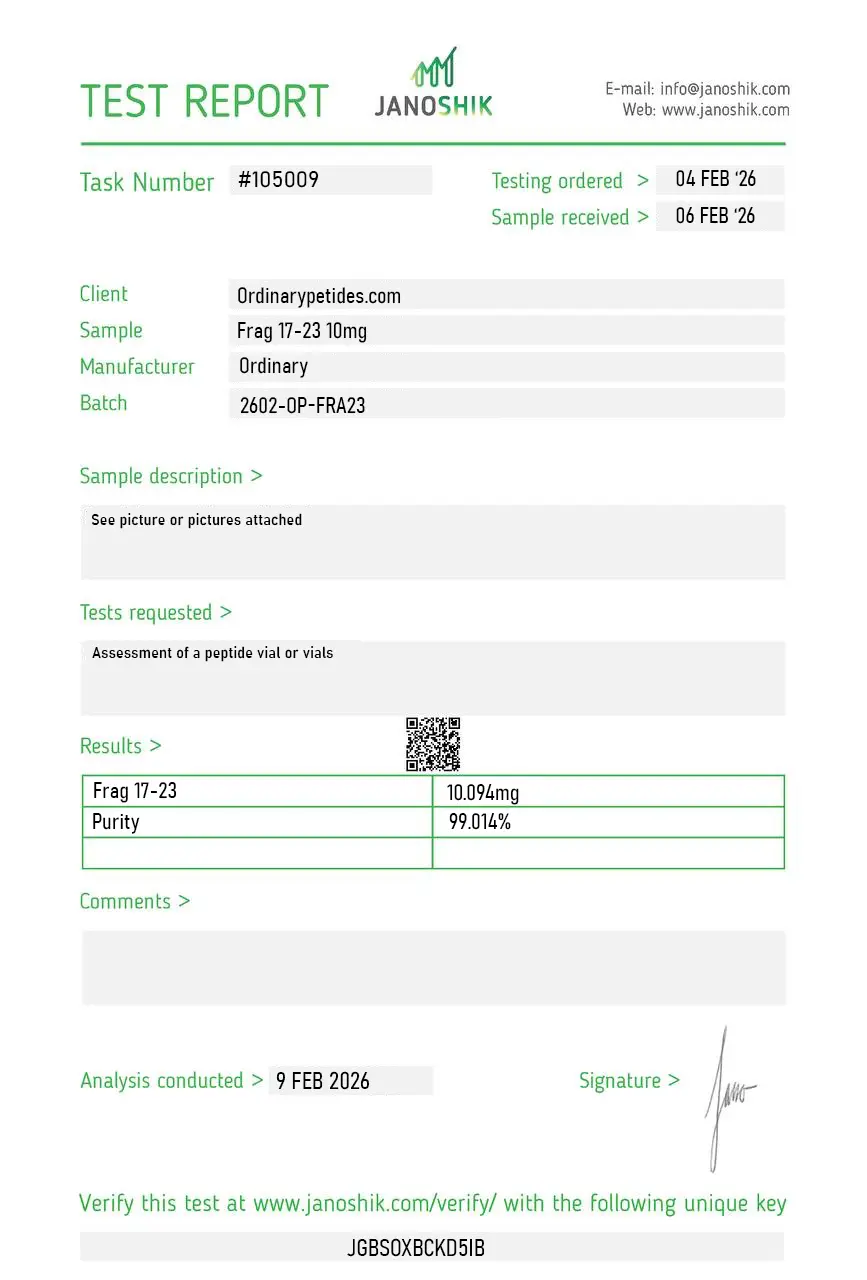
Certificate of Analysis
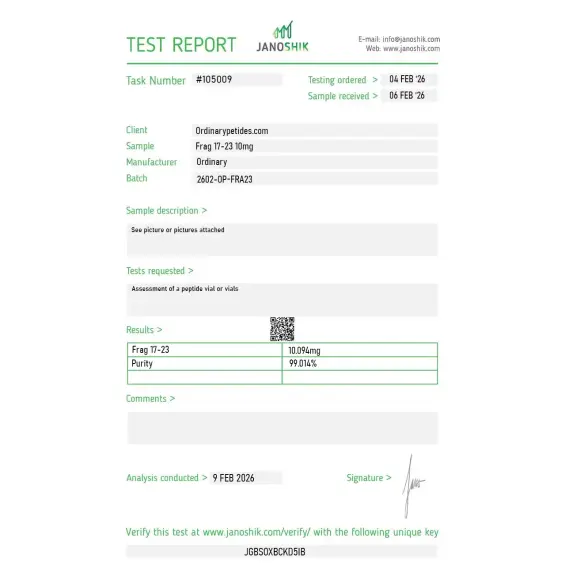
An independent test report is available for Frag 17-23. This report provides batch-level documentation and analytical verification information for research reference.
Based on 1 reviews
5.0
-
1
We work the structure-minimization question — the 176-191 fragment is essentially nature's answer to "what's the smallest piece of growth hormone that still carries the lipolytic signal," and studying it against the full hormone tells you which region of hGH does the metabolic work. For mapping structure-to-function across the parent hormone, the isolated C-terminal fragment is the reductionist tool. The material reproduced the expected lipolytic-pathway activity in our adipocyte assays, separated from the rest of the hormone's effects.
Yes. It is a genuinely described N-terminally acetylated 17–23 fragment of thymosin β4 (Ac-LKKTETQ), identified in TB-500 products and reflected in official FDA GSRS/UNII nomenclature.
Full thymosin β4 contains 43 amino acids and has broader biology. TB-500 Fragment (17–23) is a short derived fragment associated mainly with the actin-binding region and the functions of migration/angiogenesis.
No reliable human clinical base is visible specifically for Thymosin Beta-4, Fragment (LKKTETQ); the FDA explicitly states that it did not identify human exposure data.
Because the biology of thymosin β4 and its active domains fits neatly into the logic of wound healing, angiogenesis, and tissue repair. But biological logic is not the same thing as proven therapy.
No. WADA prohibits thymosin-β4 and its derivatives, e.g. TB-500.
The key point is that TB-500 Fragment (17–23) is not an approved or clinically proven regenerative drug, despite its attractive preclinical biolog
Fragment 17-23, also known as TB-500, fequesetide, or Ac-LKKTETQ, is a synthetic heptapeptide — seven amino acids — representing the N-terminally acetylated active binding domain of Thymosin Beta-4 (Tβ4), a naturally occurring 43-amino acid peptide produced predominantly by the thymus gland. Thymosin Beta-4 is a multifunctional protein with distinct biological activities encoded across different regions of its sequence — amino acids 1 to 15 exert anti-apoptotic effects, the first four amino acids drive anti-inflammatory and anti-fibrotic activity, and amino acids 17 to 23 are specifically responsible for actin binding, cell migration, and angiogenesis. Fragment 17-23 isolates this central actin-binding domain into a much smaller, more easily synthesized molecule. It is not FDA-approved and cannot be legally compounded in the United States following its 2023 Category 2 designation.
The core mechanism of Fragment 17-23 is sequestration of G-actin — the monomeric, soluble form of the cytoskeletal protein actin. By binding G-actin, the fragment regulates the equilibrium between G-actin and F-actin (filamentous actin), controlling the availability of actin monomers for cytoskeletal assembly. This modulation of actin dynamics drives several downstream effects — it promotes cell migration by allowing cells to reorganize their cytoskeleton and move into damaged tissue, stimulates endothelial cell migration and tubule formation to drive angiogenesis, activates downstream signaling through focal adhesion kinase-related cascades and PI3K/Akt pathways, and regulates the Arp2/3 complex involved in branched actin network formation essential for tissue remodeling. One pharmacologically notable difference from full-length Tβ4 is that Fragment 17-23 can cross the blood-brain barrier whereas the full-length molecule cannot, potentially enabling neurological effects beyond what Tβ4 itself achieves systemically.
This distinction is practically important. Full-length Tβ4 encompasses all functional domains — anti-inflammatory, anti-apoptotic, actin-binding, and hair follicle-stimulating activities. Fragment 17-23 retains only the actin-binding domain. It therefore does not share Tβ4's anti-apoptotic (amino acids 1-15) or anti-inflammatory (N-terminal tetrapeptide) activities independently. It also does not stimulate hair follicle growth — that activity, while sometimes attributed to TB-500 in marketing, belongs to a different region of the full-length molecule. A significant finding from 2024 research adds further complexity — a study reported that TB-500 (Ac-LKKTETQ) itself did not enhance wound healing activity in isolation, but its metabolite Ac-LKKTE did, suggesting that observed wound-healing effects may be mediated by downstream metabolic breakdown products rather than the parent fragment.
Preclinical research has explored Fragment 17-23 in the context of wound repair and tissue remodeling — fibroblast migration, endothelial cell organization, and collagen deposition — musculoskeletal recovery including muscle, tendon, and cartilage models, angiogenesis and vascular repair, anti-fibrotic effects in organ models, and neurological applications given its blood-brain barrier permeability. In chondrocyte models it was shown to selectively reduce senescent cells in expanded cultures at high passage numbers without affecting early-passage cells, supporting potential applications in regenerative orthopedic cell therapy.
The side effect profile based on available data is minimal. Mild injection site reactions including redness, irritation, and discomfort are the most commonly reported effects. Occasional headache, temporary fatigue, and mild nausea have been noted. No serious adverse events are documented in the limited human-relevant data. The primary theoretical concern — shared with all angiogenic compounds — is that promotion of new blood vessel formation could theoretically support tumor vasculature in individuals with occult or active malignancy. This risk has not been quantified for this specific fragment in humans.
Anyone with active cancer or a history of cancer should not use it given the angiogenic mechanism. Competitive athletes are prohibited from its use under WADA regulations — both Tβ4 and TB-500 are explicitly listed on the WADA Prohibited List. Pregnant or breastfeeding women should not use it. It cannot be legally obtained through compounding pharmacies in the United States following the FDA's 2023 Category 2 designation. Buyers should be aware that some vendors sell "TB-500" as full-length Thymosin Beta-4 and others as Fragment 17-23 specifically — these are chemically distinct products with different molecular weights and activity profiles, so confirming which compound is being purchased is essential.