GHK-Cu
For in vitro testing and laboratory use only. Not for human or animal consumption. Bodily introduction is illegal. Handle only by licensed professionals. Not a drug, food, or cosmetic. Educational use only.
GHK-Cu: A Copper Tripeptide With One of the Clearest Research Profiles in Skin Biology
GHK-Cu is a copper tripeptide that has long attracted the attention of researchers because of its association with skin, tissue remodeling, and local repair. In research and cosmetic contexts, it is most often discussed in relation to photoaging, skin elasticity, collagen, and wound healing, and in published reviews and limited human data, the topical direction appears to be the most convincing.
Additional interest in it is sustained by the fact that this is not merely a fashionable name, but a biologically active molecule with a real scientific history and a reasonably clear mechanistic logic grounded in copper-binding biology. At the same time, it is important to remain sober-minded: the strongest signals for GHK-Cu relate to the skin and to local use, not to injectable scenarios or loud promises of "systemic rejuvenation."
That is precisely why it is of interest to those who are looking not for a fairy tale about a peptide "for everything," but for a molecule with one of the clearest research profiles in skin care. Put briefly, GHK-Cu stands out not because of noise, but because in its best-defined domain — skin — it looks noticeably more convincing than many peptides to which marketing has pinned a medal well before science had a chance to vote.
GHK-Cu (Glycyl-L-Histidyl-L-Lysine-Copper): A Scientific Review
Based on peer-reviewed literature — see References. Last updated: April 2026.
The Short Version
GHK-Cu occupies a genuinely unusual position in the research peptide landscape. Unlike most compounds in this series, it is naturally occurring — present in human plasma, saliva, and urine at physiologically measurable concentrations. It has been studied for over 50 years, dating to Loren Pickart’s original 1973 isolation from human albumin.[1] It is in widespread, long-standing use as a topical ingredient in cosmetic products worldwide. It has real published human clinical trial data for topical applications. And it is endogenously present in wound fluid and connective tissue, released from collagen degradation during injury as part of normal repair biology.
What makes it more complex is that most of its research originates from one lab (Pickart and colleagues), the human evidence is almost exclusively topical, the injectable/systemic use is poorly characterised, and the remarkable gene regulation findings come primarily from computational database analysis rather than clinical trials in humans. The result is a compound with the most legitimate cosmetic evidence of anything covered in this series, and a significant gap between that topical evidence base and the more ambitious systemic claims increasingly being made for injectable use.
| At a glance | |
|---|---|
| Full name | Glycyl-L-histidyl-L-lysine:copper(II) |
| Abbreviation | GHK-Cu |
| Sequence | Gly-His-Lys (tripeptide) + Cu²+ |
| Molecular weight | ~404 Da (complex) |
| Origin | Isolated 1973 by Loren Pickart from human plasma albumin |
| Natural occurrence | Human plasma (~200 ng/mL at age 20; ~80 ng/mL by age 60), saliva, urine, wound fluid |
| Primary mechanism | Copper transport to cells; ECM remodelling via MMP/TIMP balance; collagen/elastin synthesis; gene regulation |
| FDA status — topical | ✅ Permitted as cosmetic ingredient; no drug approval required for cosmetic use |
| FDA status — injectable | ⚠️ Category 2 (significant safety risks; cannot be legally compounded for injection) |
| Human evidence — topical | Multiple small RCTs showing skin improvements |
| Human evidence — injectable | ❌ None published |
| Primary researcher | Loren Pickart (R&D Skin Biology); significant concentration of research in one investigator |
Discovery: An Unusual Origin Story
GHK was discovered during studies comparing the effect of human plasma from young persons (age 20–25) to plasma from older persons (age 50–70) on incubated slices of human hepatic tissue. The younger plasma more effectively induced a profile associated with youth by suppressing fibrinogen synthesis. Loren Pickart systematically fractionated human plasma to identify the active component, which he published in 1973 as the tripeptide glycyl-L-histidyl-L-lysine.[1] The copper connection came from subsequent structural analysis: GHK naturally chelates Cu²+ ions from albumin (the main plasma copper transporter) to form the biologically active GHK-Cu complex.[2]
The endogenous source was later clarified: GHK is present in the alpha 2(I) chain of type I collagen and can be liberated by proteases at the site of a wound. The protein SPARC — abundantly expressed in rapidly remodelling tissues and embryonic development — also contains the GHK sequence and releases it when cleaved by tissue proteases during injury.[6] This means GHK is not just an endogenous peptide circulating in plasma: it is a signal released at sites of tissue damage as part of the normal repair cascade.
Chemistry and Structure
| Property | Detail |
|---|---|
| Tripeptide sequence | Gly-His-Lys |
| Copper coordination | Cu²+ chelated via the histidine imidazole nitrogen and the N-terminal amino group of glycine; additional coordination from lysine side chain |
| Molecular weight of complex | ~404 Da |
| Charge | Cationic at physiological pH |
| Colour | Blue-violet (from the copper complex) |
| Stability | Sensitive to oxidation; requires appropriate formulation for stability in cosmetics |
The copper is not decorative — it is mechanistically essential. Studies across 39+ years have indicated that virtually all biological GHK effects require the presence of copper 2+ chelated to the tripeptide. Strong copper chelators such as bathocuproine abolish GHK actions.[5] The copper component serves as a cofactor for lysyl oxidase (essential for collagen cross-linking), superoxide dismutase (antioxidant defence), and ceruloplasmin (iron metabolism). By delivering Cu²+ specifically to sites of injury and active remodelling, GHK-Cu may amplify the activity of copper-dependent enzymes exactly where they are needed.
The Age-Related Decline
One of the more biologically coherent aspects of GHK-Cu’s profile is the documented age-related decline in plasma GHK concentrations. In plasma the level of GHK is about 200 ng/mL (10&sup-;&sup7; M) at age 20, but declines to 80 ng/mL by age 60 — a 60% reduction that coincides with the noticeable decrease in regenerative capacity of an organism.[5] Whether this decline is causally related to impaired healing and skin aging, or is simply correlated with it, has not been definitively established. The hypothesis is plausible, but proving causation would require restoration studies in humans.
Proposed Mechanisms of Action
1. ECM remodelling — the MMP/TIMP balance
GHK-Cu simultaneously upregulates both matrix metalloproteinases (MMPs, which degrade old and damaged ECM) and tissue inhibitors of metalloproteinases (TIMPs, which prevent excessive degradation). This balanced dual action — removing damaged old collagen while enabling synthesis of new collagen — is fundamentally different from simple collagen-stimulating approaches and more closely resembles the sophisticated remodelling biology of natural wound healing. GHK-Cu at 0.01–100 nM incubated with human adult dermal fibroblasts increased production of elastin and collagen, while also increasing TIMP1 at all concentrations tested.[6]
2. Collagen, elastin, and glycosaminoglycan synthesis
Multiple in vitro studies by the Maquart/Borel group (independent of Pickart) demonstrated that GHK-Cu at concentrations of 0.01–1 nM stimulates collagen synthesis in cultured fibroblasts with high specificity — collagen synthesis is upregulated while non-collagen proteins are not.[4] This extraordinary sensitivity at nanomolar concentrations supports the view that GHK-Cu is acting as a signal molecule rather than a simple substrate.
3. Copper delivery and copper-dependent enzymology
GHK’s high affinity for Cu²+ (Kd ~ 10&sup-;¹&sup5; M, comparable to albumin’s affinity for copper) allows it to compete for copper in the plasma. The resulting complex delivers copper preferentially to sites of tissue injury, where copper is needed by lysyl oxidase, superoxide dismutase, and other enzymes.[3]
4. SPARC-mediated release and injury signalling
When tissues are damaged, SPARC protein is cleaved by proteases, releasing an array of GHK and GHK-containing copper-binding peptides, which stimulate cell proliferation and new vessel growth. SPARC is abundant in all tissues that undergo rapid remodelling such as skin or embryonic tissues.[6]
5. Gene regulation — the Connectivity Map findings
Using the Broad Institute’s Connectivity Map, Pickart and colleagues found that GHK induces 50% or greater change in expression for 31.2% of human genes. GHK has been found to reset genes of diseased cells from patients with cancer or COPD to a more healthy state.[7]
6. Anti-inflammatory and antioxidant actions
GHK-Cu suppresses NFκB — the master transcription factor for inflammatory gene expression — and reduces production of pro-inflammatory cytokines including IL-6. Separately, the copper complex enhances activity of antioxidant enzymes. Both mechanisms are consistent with the clinical observation that GHK-Cu reduces post-procedure erythema and inflammatory responses in skin.[5]
The Research Concentration Issue
The vast majority of primary GHK-Cu research originates from Loren Pickart and colleagues. This is a less severe version of the BPC-157 problem — some important studies were conducted by independent groups (Maquart and Borel in France; cosmetic clinical trials by various groups) — but the mechanistic narrative, Connectivity Map interpretations, and systemic effect claims are predominantly from one research programme.
Importantly, several core findings have been independently replicated: Maquart et al. (France) independently confirmed collagen synthesis stimulation in fibroblasts at nanomolar concentrations;[4] cosmetic clinical trials used independent evaluators and placebo controls; and the 2024 fractional laser resurfacing study used an independent multicenter design. Where Pickart’s work stands largely alone is in the gene regulation (Connectivity Map) analysis and the more ambitious systemic claims.
Human Clinical Evidence
GHK-Cu has more genuine human clinical evidence than any other compound in this article series — but that evidence is almost entirely topical (applied to skin), and the studies are small.
Topical skin applications: The established evidence base
Wrinkle reduction and skin remodelling: A randomised, double-blind clinical trial found that GHK-Cu in a nano-lipid carrier, applied twice daily for 8 weeks, produced a 55.8% reduction of wrinkle volume versus control serum and a 31.6% reduction versus Matrixyl 3000.[10]
Collagen production (skin biopsy confirmed): The Abdulghani et al. (1999) human trial comparing topical GHK-Cu to vitamin C and retinoic acid found collagen increases in 70% of volunteers.[8] A 2023 IRB-approved clinical trial found a 28% average increase in collagen density after 3 months of daily application, with a 51% increase in the top quartile.
Post-procedure healing: A 2024 multicenter study of 0.05% GHK-Cu gel after fractional laser resurfacing found 25% faster epithelial recovery and reduced erythema within 72 hours versus standard care. Inflammatory markers IL-1β and TNF-α decreased by 30%.[11]
CO&sub2; laser (conflicting result): A randomised trial by Leyden et al. on CO&sub2; laser-resurfaced facial skin found no statistically significant difference between GHK-Cu and control for erythema resolution, though patient satisfaction was significantly higher in the GHK-Cu group.[9]
Human evidence summary
| Study type | N | Finding | Confidence |
|---|---|---|---|
| RCT, wrinkle reduction (nano-lipid) [10] | Small | −55.8% wrinkle volume vs. control | Low-moderate |
| RCT, CO&sub2; laser resurfacing [9] | 13 | No significant difference; higher patient satisfaction | Negative/neutral |
| Collagen production (biopsy confirmed) [8] | Small | 70% of subjects showed increase vs. vitamin C, retinol | Low-moderate |
| IRB trial, collagen density (Yuvan) | 21 women | +28% collagen density at 3 months | Low (small, industry-affiliated) |
| Multicenter, post-laser healing [11] | Not specified | 25% faster healing; 30% less inflammation | Moderate |
Regulatory Status
| Context | Status |
|---|---|
| Topical cosmetics (US, EU) | ✅ Permitted; no drug approval required for cosmetic labelling; must not make therapeutic claims |
| Injectable/compounded (US) | ⚠️ Category 2 — significant safety risks; cannot be legally compounded under 503A framework (since September 2023) [12] |
| FDA drug approval | ❌ Not approved for any indication |
| WADA | Not specifically listed (verify current list) |
The regulatory bifurcation is important. As a topical cosmetic ingredient, GHK-Cu has essentially no regulatory barrier — it is widely used, has a long safety history in cosmetics, and is available without prescription globally. Injectable GHK-Cu occupies a completely different regulatory space. The FDA’s Category 2 placement for injectable formulations reflects that while topical safety is well-established, systemic/injectable safety has not been characterised in humans.
Safety: A Tale of Two Routes
Topical safety: well-established
GHK-Cu has decades of topical use in cosmetics with an excellent safety record. The copper content is low, copper is an essential mineral, and the tripeptide is a naturally occurring endogenous sequence. Reported adverse effects from topical use are minimal — occasional mild skin irritation at high concentrations. The topical safety profile is genuinely strong.
Injectable safety: unknown
⚠️ No controlled human safety study of injectable GHK-Cu has been published. The FDA’s Category 2 designation for injectable forms reflects: absence of formal IV or subcutaneous pharmacokinetic data in humans; unknown immunogenicity profile with repeated injection; the possibility that systemically administered GHK-Cu at supraphysiological concentrations could produce unintended effects from gene regulation across multiple tissue types; and that copper, while an essential mineral, is toxic at excess.[12]
The cancer question
Unlike Epithalon or FOXO4-DRI, GHK-Cu’s cancer safety question actually leans positive based on preclinical data: in vitro studies found it reactivates apoptosis in cancer cell lines rather than promoting proliferation. However, the Connectivity Map analysis also reveals GHK induces expression changes in genes involved in angiogenesis and cell proliferation. Whether the net effect in a human with occult cancer would be beneficial or harmful is unknown. The in vitro anti-cancer data is preliminary cell culture work and cannot be taken as safety clearance.[7]
What Is Established and What Is Not
| ✅ Established | ❌ Not established |
|---|---|
| Stimulates collagen and elastin synthesis in fibroblasts at nanomolar concentrations (independent replication) [4] | Long-term safety of injectable GHK-Cu |
| Present endogenously in human plasma, wound fluid, ECM | Whether injectable doses produce supraphysiological exposures |
| Declines with age (200 → 80 ng/mL from age 20 to 60) [5] | Whether COPD gene reversal in vitro translates to clinical benefit |
| Topical use produces measurable skin improvements in small RCTs [8][10] | Whether cancer cell apoptosis reactivation is relevant in vivo |
| Released from SPARC and collagen type I during injury [6] | Whether systemic gene regulation produces net benefit |
| Copper-dependence of all major biological effects confirmed [5] | Optimal injectable dosing and pharmacokinetics in humans |
| Good topical safety record (decades of cosmetic use) | Safety under repeated injectable dosing |
Comparison with Other Skin/Regenerative Peptides
| Compound | Mechanism | Human topical evidence | Injectable evidence | Regulatory status |
|---|---|---|---|---|
| GHK-Cu | ECM remodelling; copper delivery; gene regulation | Multiple small RCTs ✅ | ❌ None | Topical: permitted cosmetic; Injectable: Category 2 |
| Matrixyl (Palmitoyl pentapeptide) | Collagen signalling | Comparable small RCTs | N/A | Topical cosmetic |
| Retinol/retinoids | RAR activation; collagen induction | Extensive | N/A | Topical OTC/Rx |
| BPC-157 | Multiple; unknown receptor | Minimal | ❌ None (Category 2) | Category 2 |
| Epithalon | Telomerase activation | Small Russian series | ❌ None | Category 2 |
Common Misconceptions
“GHK-Cu regulates 30% of the human genome, so it can treat almost any disease.”
The Connectivity Map analysis is a computational in silico tool that identifies gene expression similarity between drug-treated samples and disease signatures. This does not mean GHK-Cu will treat those diseases in patients. The in vitro findings for COPD gene reversal and cancer apoptosis reactivation are intriguing but unconfirmed in human clinical trials.[7]
“It’s natural and endogenous, so injectable GHK-Cu must be safe.”
⚠️ Endogenous at nanomolar concentrations in plasma does not mean safe at supraphysiological concentrations via injection. Many substances that are naturally present and beneficial at normal concentrations cause harm at elevated systemic doses. The topical safety record does not extend to injection safety.[12]
“Injectable GHK-Cu is just like topical GHK-Cu, only more effective.”
⚠️ Topical and injectable routes are fundamentally different — not only in dose and systemic exposure, but in regulatory status, safety characterisation, and risk profile. The injectable form is Category 2; the topical form is an unrestricted cosmetic ingredient. They should be treated as different products.
“The wrinkle reduction studies prove it works as a systemic anti-ageing treatment.”
The topical skin studies demonstrate measurable effects on collagen density and wrinkle appearance — this is genuine. But they establish efficacy for topical cosmetic use only. Retinoids have a much more extensive evidence base for anti-ageing skin benefits and remain the gold standard for comparison.
Frequently Asked Questions
Can GHK-Cu be legally prescribed by a doctor in the US?
For topical cosmetic use, no prescription is required. For injectable use, compounding pharmacies cannot legally prepare it under the 503A framework since the September 2023 Category 2 designation.[12]
Does GHK-Cu help with hair loss?
Animal studies and some clinical reports suggest GHK-Cu promotes hair growth, likely through stimulation of follicle cell proliferation and upregulation of growth factors. The evidence is more limited than for skin collagen stimulation but follows from the same fibroblast-stimulating mechanism. No large-scale controlled trial for hair loss has been published.
Is there evidence for COPD or lung disease benefits?
The COPD finding is based on a Connectivity Map computational analysis showing that GHK’s gene expression profile reverses the pathological gene expression pattern of COPD cells — confirmed in vitro in lung cells from COPD patients. There are no clinical trials in COPD patients.[7]
How does GHK-Cu compare to retinol for anti-ageing skin care?
Retinol has a far more extensive clinical evidence base (decades of Phase 2/3 trials), established mechanism (RAR-mediated collagen induction), and clear dosing protocols. GHK-Cu has small-scale evidence of comparable or superior collagen induction at low concentrations and with a better tolerability profile (retinol commonly causes irritation). GHK-Cu is a legitimate cosmeceutical ingredient with meaningful evidence but a thinner overall evidence base than retinoids.
Key Takeaways
- GHK-Cu is the most legitimately grounded compound in this series in terms of topical cosmetic use — it is naturally occurring, endogenous, has a 50-year research history, independently replicated in vitro findings for collagen synthesis,[4] multiple small human RCTs, and decades of safe topical use.
- The endogenous biology is genuine and coherent. GHK is released from ECM proteins during injury, declines measurably with age, and functions as part of the body’s natural wound healing and tissue maintenance system.[6]
- ⚠️ The Connectivity Map gene regulation findings are intriguing but speculative. Computational gene signature analysis is a hypothesis-generating tool. The COPD and cancer applications require clinical trial validation before therapeutic claims can be made.[7]
- ⚠️ The topical and injectable evidence bases are completely different. Topical: legitimate small RCTs, good safety record, reasonable cosmeceutical claims. Injectable: zero published human trials, Category 2 regulatory status, unknown systemic safety. Do not conflate them.
- The single-researcher concentration problem, while less severe than for BPC-157, is real. The most ambitious claims (gene regulation, systemic diseases, anti-cancer effects) come predominantly from Pickart’s laboratory. The core findings (collagen synthesis, wound healing acceleration) have been more widely replicated.[4]
- GHK-Cu is a legitimate, evidence-backed cosmeceutical ingredient for topical anti-ageing applications. It is an experimental compound of uncertain safety for injectable/systemic use.
References
Discovery and Early Characterisation
- Pickart L. A Tripeptide from Human Serum Which Enhances the Growth of Neoplastic Hepatocytes and the Survival of Normal Hepatocytes. PhD thesis. University of California, San Francisco, 1973.
- Pickart L, Thaler MM. Growth-modulating tripeptide (glycylhistidyllysine): Association with copper and iron in plasma. Nature. 1973;243:85–87.
- Pickart L, Freedman JH, Loker WJ, et al. Growth-modulating plasma tripeptide may function by facilitating copper uptake into cells. Nature. 1980;288:715–717.
Independent Replication — Collagen and ECM
- Maquart FX, Pickart L, Laurent M, et al. Stimulation of collagen synthesis in fibroblast cultures by the tripeptide-copper complex glycyl-L-histidyl-L-lysine-Cu²+. FEBS Letters. 1988.
Reviews (Pickart group)
- Pickart L, Margolina A. Regenerative and Protective Actions of the GHK-Cu Peptide in the Light of the New Gene Data. International Journal of Molecular Sciences. 2018;19(7):1987. PMC6073405
- Pickart L, Vasquez-Soltero JM, Margolina A. GHK Peptide as a Natural Modulator of Multiple Cellular Pathways in Skin Regeneration. BioMed Research International. 2015. PMC4508379
- Pickart L, Vasquez-Soltero JM, Margolina A. GHK and DNA: Resetting the Human Genome to Health. BioMed Research International. 2014. PMC4180391
Human Clinical Evidence
- Abdulghani AA, et al. Comparison of topical GHK-Cu to vitamin C and retinoic acid (collagen measurement by biopsy). 1999.
- Leyden JJ, et al. Effects of Topical Copper Tripeptide Complex on CO&sub2; Laser–Resurfaced Skin. Archives of Facial Plastic Surgery. 2006.
- Nanolipid carrier RCT — wrinkle volume reduction study. Referenced in PMC6073405
- 2024 multicenter fractional laser resurfacing study. Referenced at grandingredients.com
Regulatory
- FDA. Certain Bulk Drug Substances for Use in Compounding that May Present Significant Safety Risks — Category 2 (includes injectable GHK-Cu). September 2023. fda.gov
Key Investigators
- Loren Pickart, PhD — R&D Skin Biology, Bellevue, WA; discoverer of GHK (1973); principal investigator across five decades of GHK-Cu research.
- François-Xavier Maquart, MD, PhD — University of Reims (France); led key independent French group confirming collagen-stimulating effects.
Certificate of Analysis
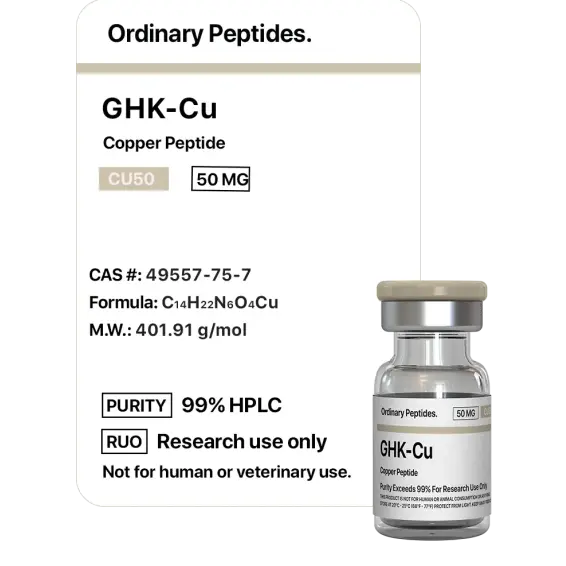
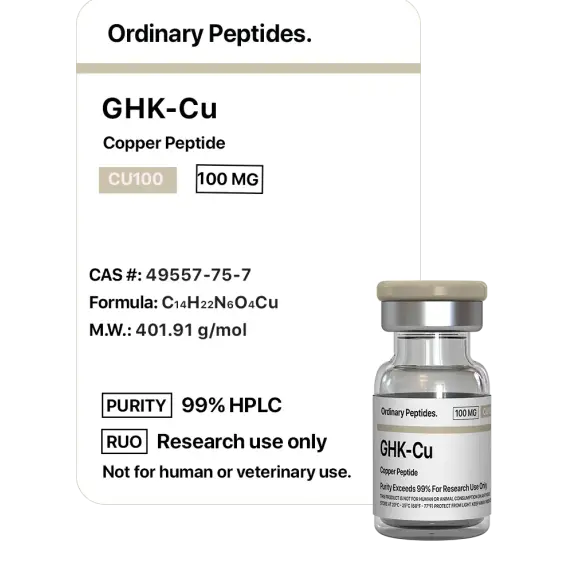
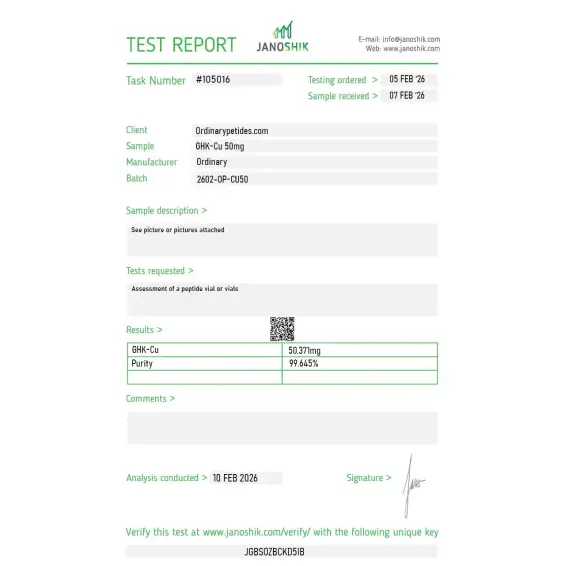
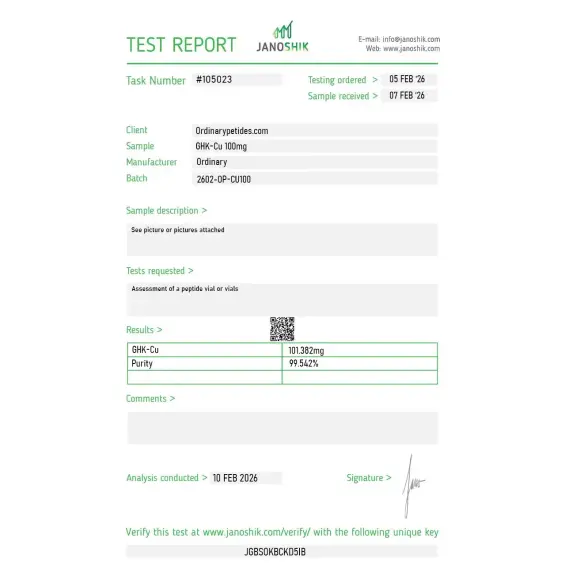
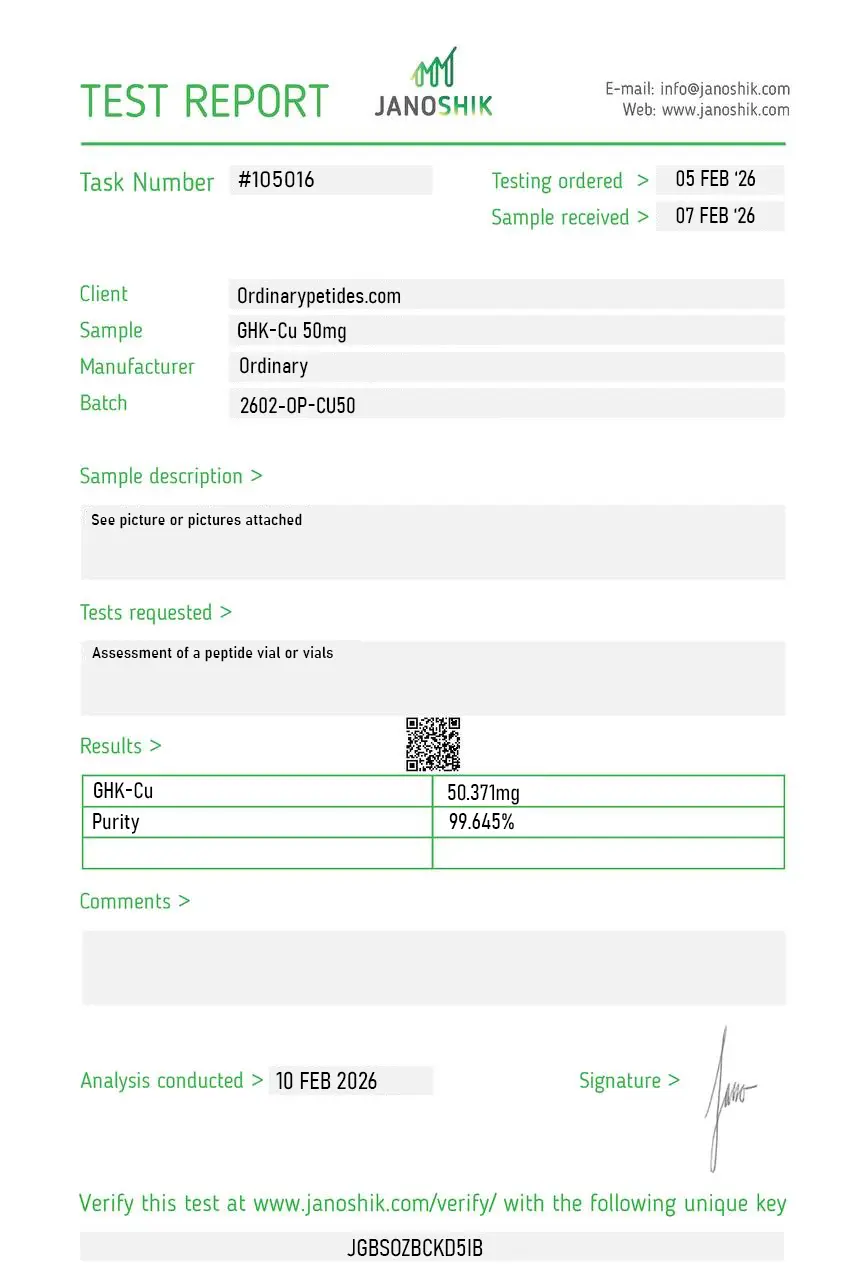
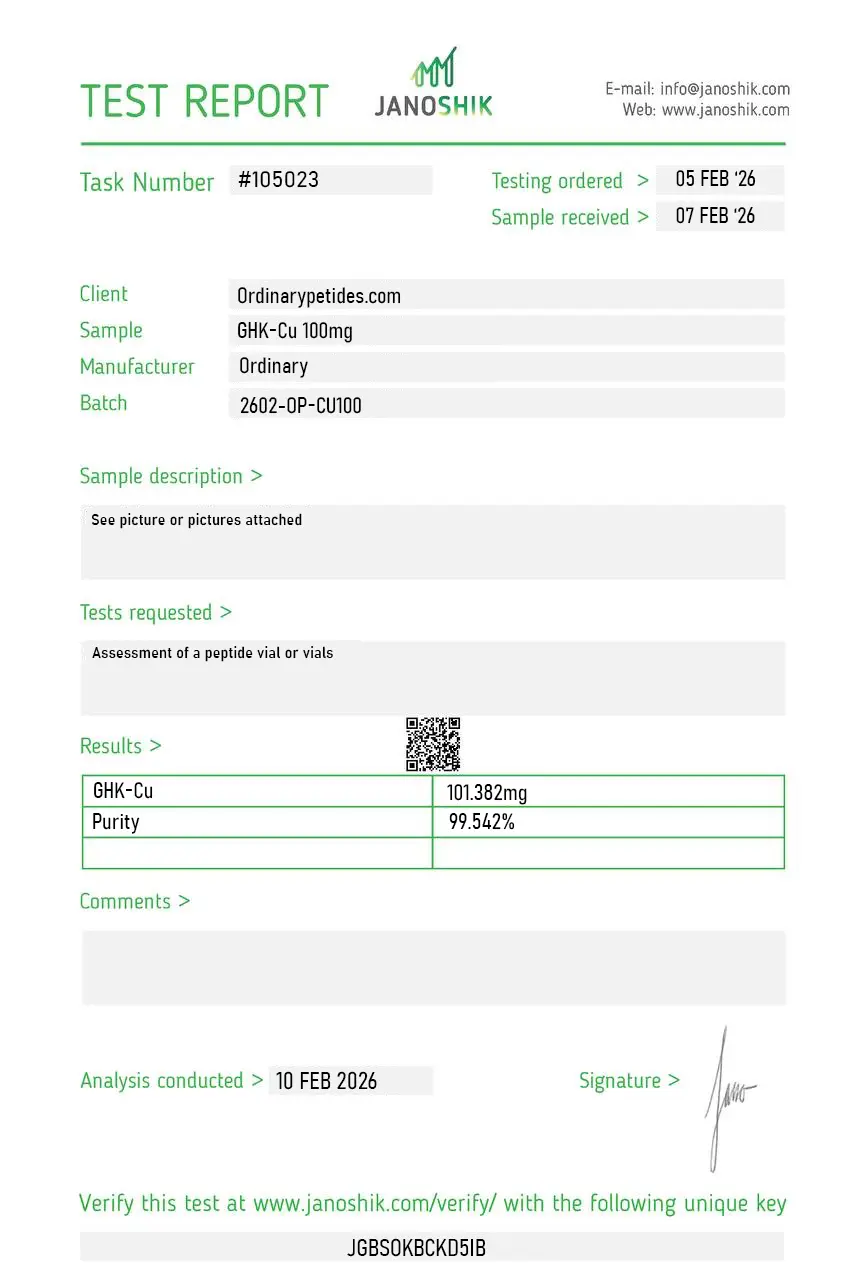
Independent test reports are available for GHK-Cu 50mg and 100mg batches. These reports provide batch-level documentation and analytical verification information for research reference.
Based on 4 reviews
4.8
-
3
-
1
What earned the order is that it frames GHK-Cu as the copper-peptide-complex research tool for ECM and collagen-gene studies, with the Pickart lineage stated, rather than leaning on cosmetic anti-aging claims. For matrix-biology work contrasting the copper complex against the apo-peptide, that framing precision is what made it worth sourcing here. Consistent across two orders.
What sets GHK-Cu apart from most of the catalog is the depth of independent literature — Pickart's original 1973 isolation plus decades of corroboration across dermatology and matrix biology from many groups, not a single program. For collagen and ECM gene-expression work that breadth means batch quality is essentially the only variable, since the mechanism itself is well-corroborated. The material held consistent activity in our fibroblast gene-modulation readouts.
For this compound the certificate needs to confirm the copper stoichiometry, and that's the part that fell short — a 1:1 GHK-to-Cu ratio is what defines the complex, and either free uncomplexed copper or under-loaded apo-peptide changes the chemistry entirely. A peptide purity figure says nothing about whether the copper is coordinated correctly. UV-Vis showing the characteristic copper-complex absorbance, or an explicit stoichiometry statement, is what I'd want. Material behaved as the complex should, but the coordination is the thing to verify.
The copper coordination is the entire molecule, not an additive — GHK chelates Cu²⁺ at a defined geometry through the histidine imidazole and the N-terminal amine, and that complex is the active species in the ECM-remodeling work, not the free tripeptide. We study copper-dependent gene modulation in fibroblast culture, and a supplier that ships it as the pre-formed copper complex rather than apo-peptide-plus-separate-copper saves the coordination step. The material gave the expected copper-complex behavior in our assays.
GHK-Cu, or Copper Tripeptide-1, is a naturally occurring copper-binding tripeptide studied for its role in collagen synthesis, tissue repair, and skin regeneration research.
Research dosing varies depending on experimental design and whether the peptide is used in topical formulations or laboratory models. It is supplied for research use only.
GHK-Cu is studied for anti-inflammatory and tissue-repair signaling pathways, which may be relevant in dermatological research models related to acne and skin healing.
GHK-Cu is not FDA-approved as an injectable therapeutic drug, though copper peptides are widely used in cosmetic formulations.
Topical research suggests favorable tolerability, but comprehensive long-term systemic safety data in humans are limited. It is supplied strictly for research purposes.
No. GHK is the tripeptide Gly-His-Lys. GHK-Cu is its complex with copper(II), which is usually considered the more biologically active form.
Yes. GHK is found in human plasma, saliva, and urine, and is also linked to matrix proteins and tissue remodeling.
Above all in cosmetic dermatology and in subjects related to skin healing and tissue remodeling.
No. Data regarding hair exist, but they are limited and do not justify strong clinical claims.
That cannot be stated with confidence. FDA points to limited human data and potential significant safety risks for injectable GHK-Cu.
No, there is no reliable confirmation of such a status. On the contrary, FDA highlights regulatory and safety issues for injectable/compounded use.
The main thing is that the most substantiated area for GHK-Cu is skin, while anything far beyond that requires much greater caution and currently does not have equally convincing clinical support.