The Four Classes of Skin Peptide Research
Dermatology research peptides have one feature cosmetic chemistry usually lacks — a clean four-class taxonomy. Signal peptides like Matrixyl mimic collagen breakdown fragments to push fibroblasts toward more synthesis. Carrier peptides such as GHK-Cu bind copper and deliver it to lysyl oxidase; antimicrobial peptides like LL-37 and KPV modulate cutaneous inflammation through melanocortin and NF-κB pathways. A 2023 split-face trial of 0.05% GHK-Cu reported 22% firmness gain and 16% fine-line reduction at 12 weeks, plateauing by week 10. Smaller effects than retinoids, but specific. Compounds below sit in those classes.
Dermatology Research
Showing 1–16 of 16 results
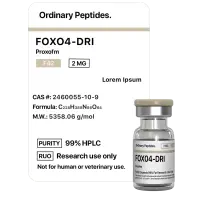
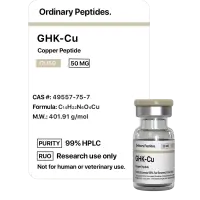
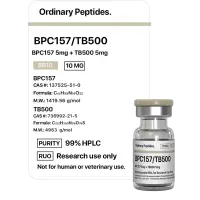
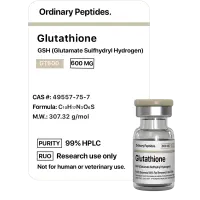
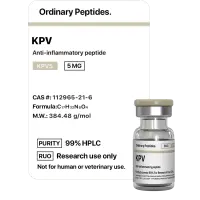
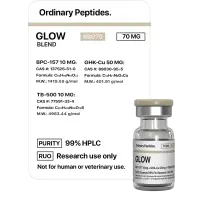
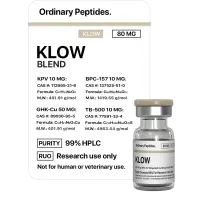
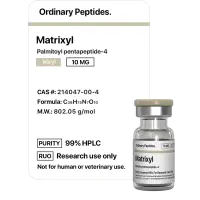
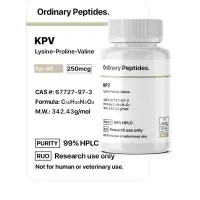
The four-class taxonomy that opens this page is not a marketing schema — it traces back to Lupo and Cole's framework in Dermatologic Therapy (2007) and has been refined in subsequent reviews. Each class addresses a different node of skin biology, and the underlying mechanisms differ enough that the compounds are not interchangeable. The 2023 split-face trial cited above used optical profilometry rather than subjective scoring, which is why the 22% and 16% numbers carry more weight than typical cosmetic ingredient marketing claims. The plateau by week 10 is also worth noting — it suggests receptor saturation or substrate-limited collagen synthesis rather than indefinite linear improvement. Most peptide effects in skin biology follow similar kinetics.
Signal Peptides: Mimicking Collagen Breakdown
The signal peptide concept rests on a counterintuitive observation: skin doesn't increase collagen production in response to "collagen is missing" — it responds to "collagen is being broken down." Specific peptide fragments released during collagen degradation (KTTKS, VGVAPG, and others) act as signaling molecules that tell fibroblasts to upregulate synthesis. Compounds like Matrixyl (palmitoyl pentapeptide-4, KTTKS with lipid tail for skin penetration) and Matrixyl 3000 (palmitoyl tetrapeptide-7 + palmitoyl tripeptide-1) exploit this mechanism — they mimic breakdown fragments without actual degradation. The pentapeptide signaling concept was first published by Procter & Gamble researchers in the late 1990s and has since become the most-studied class in cosmetic peptide biology.
Carrier Peptides: Copper Delivery and Beyond
Carrier peptides function as metal-binding shuttles. GHK-Cu (glycyl-L-histidyl-L-lysine bound to Cu²⁺) is the dominant compound in this class. The copper itself is the active cofactor — lysyl oxidase, the enzyme that crosslinks collagen and elastin fibrils, requires Cu²⁺ at its active site. GHK alone has measurable signaling effects on its own (Pickart's work identifies regulation of roughly 1,500 genes), but the Cu²⁺ complex is what delivers the cofactor where it's biochemically useful. Beyond collagen, GHK-Cu has been studied for decorin upregulation (a proteoglycan that regulates collagen fibril spacing) and TIMP/MMP balance modulation. The carrier concept itself is broader than copper — research into zinc, manganese, and other trace metal delivery peptides continues, though none have matched GHK-Cu's clinical evidence base.
Antimicrobial Peptides: Beyond Killing Bacteria
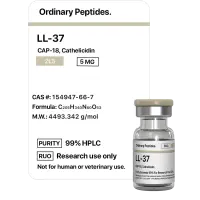
The antimicrobial peptide class has a misleading name. LL-37, the only human cathelicidin, was first characterized for its broad-spectrum antimicrobial activity, but the bulk of current research focuses on its immunomodulatory functions — chemotaxis of leukocytes, regulation of TLR signaling, and modulation of NF-κB and inflammasome activity in keratinocytes. KPV (lysine-proline-valine, the C-terminal tripeptide of α-MSH) acts through melanocortin pathways but also through PepT1 transport and direct NF-κB inhibition. Both compounds are studied in psoriasis models, rosacea-related inflammation, and atopic dermatitis biology rather than primarily as antimicrobials. The renaming of the class as "host defense peptides" has been proposed in the literature to reflect this functional breadth.
Enzyme-Inhibitor Peptides: The Fourth Class
The fourth class — sometimes called neurotransmitter-inhibitor peptides — addresses muscle-driven facial line formation. Argireline (acetyl hexapeptide-3) is the best-studied compound, designed to compete with SNAP-25 in the SNARE complex involved in acetylcholine release. The mechanism is biochemically related to botulinum toxin action but at orders of magnitude lower potency. Argireline studies typically show fine-line reduction in the 25–30% range over 28 days, smaller in absolute terms than retinoid effects but specific to expression-driven wrinkles rather than photoaging in general. The penetration question is the dominant methodological issue in this class — hexapeptides do not cross the stratum corneum efficiently without delivery systems.
Research Models Commonly Used
Standard in vitro work uses primary human dermal fibroblasts (HDFs) for collagen and matrix endpoints, HaCaT keratinocytes for epidermal differentiation studies, and 3D reconstructed skin models (EpiSkin, EpiDerm, Phenion full-thickness) for penetration and barrier function research. Ex vivo work increasingly uses human skin explants from elective surgery donors — surgical waste tissue maintained in culture for 5–7 days for short-term experiments. In vivo human work follows split-face or split-arm designs (the same protocol used in the 2023 GHK-Cu trial cited above), measured by optical profilometry, cutometer firmness testing, or high-resolution ultrasound for dermal density. Endpoint diversity across these models is substantial — different setups measure different aspects of "skin improvement."
Frequently Asked Questions
What is the difference between Matrixyl and GHK-Cu?
Matrixyl is a signal peptide — it mimics collagen breakdown fragments and tells fibroblasts to increase collagen synthesis through downstream signaling. GHK-Cu is a carrier peptide — it delivers copper to lysyl oxidase, the enzyme that physically crosslinks new collagen fibrils. The two compounds work on different steps of collagen biology and are sometimes studied in combination on the rationale that they may produce additive rather than overlapping effects.
How does LL-37 differ from synthetic antimicrobial peptides?
LL-37 is the only human cathelicidin — an endogenous antimicrobial peptide expressed in skin, neutrophils, and epithelial surfaces. Synthetic antimicrobial peptides used in research are typically designed analogs (often shorter or modified versions of natural peptides) optimized for specific properties like resistance to proteolysis or selectivity for bacterial membranes. LL-37 specifically is studied for its dual antimicrobial and immunomodulatory roles, particularly in psoriasis and rosacea research where LL-37 expression itself is dysregulated.
Why are peptide effects smaller than retinoid effects?
Retinoids act through nuclear retinoic acid receptors (RAR, RXR) that directly regulate gene transcription across hundreds of genes simultaneously, affecting keratinocyte differentiation, collagen synthesis, and pigmentation in parallel. Peptides typically work through more specific mechanisms — one pathway, one cofactor delivery, or one transcription factor modulation. The trade-off is that peptide effects are more targeted but smaller in absolute magnitude. Studies comparing 0.05% GHK-Cu to 0.025% tretinoin generally show smaller effects for the peptide but a markedly better tolerability profile.
What is the PepT1 transport mechanism for KPV?
PepT1 is a peptide transporter expressed on intestinal and epithelial cell membranes, responsible for uptake of di- and tripeptides from extracellular environments. KPV (a tripeptide) is taken into cells via PepT1 transport, where it then acts on intracellular targets including NF-κB pathway components. This route is distinct from α-MSH (the parent peptide of KPV), which acts on melanocortin receptors at the cell surface. The PepT1 pathway is one reason KPV has different mechanistic effects than full-length α-MSH despite the structural relationship.
What does the week-10 plateau in GHK-Cu studies mean?
The plateau pattern observed in the 2023 split-face study and other GHK-Cu clinical work suggests that effects are not linearly additive over time. Proposed explanations include receptor or transporter saturation, rate-limiting collagen synthesis capacity in dermal fibroblasts, or stabilization at a new homeostatic set point. The practical implication for research design is that 12-week studies likely capture most of the observable effect, and longer trials may not produce proportional additional improvement.
Are peptides effective without delivery systems?
Most peptides have poor stratum corneum penetration in their native form due to molecular size and hydrophilicity. This is why Matrixyl uses a palmitoyl lipid tail (palmitoyl pentapeptide-4 rather than just KTTKS), why GHK-Cu studies often use nano-lipid carriers, and why Argireline penetration is a documented methodological limitation. The peptide itself may have measurable activity in cell culture, but topical efficacy depends substantially on the delivery system. This is a frequent source of discrepancy between in vitro activity and observed clinical effects.
Reference Points for Further Reading
The Lupo and Cole 2007 review in Dermatologic Therapy remains the standard reference for the four-class peptide taxonomy. For GHK-Cu specifically, Pickart's reviews in Journal of Aging Research and Clinical Practice and BioMed Research International cover three decades of mechanistic work. The 2025 Mortazavi review in BioImpacts assesses the current state of topical GHK-Cu evidence. For LL-37 and host defense peptide biology, the Hancock group at UBC has published the most comprehensive mechanistic reviews. For Argireline and SNARE-competitive peptides, the Lipotec/Lubrizol research publications (despite their industry origin) remain the primary mechanistic references.
All compounds in this catalog are intended for in vitro and preclinical research use only. None are approved by the FDA or any other regulatory authority for therapeutic use in humans. Clinical study data referenced on this page describes research conducted in human subjects under cosmetic or dermatological study protocols and is provided as scientific context, not as claims for the research compounds offered here.