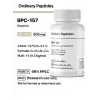
BPC-157
For in vitro testing and laboratory use only. Not for human or animal consumption. Bodily introduction is illegal. Handle only by licensed professionals. Not a drug, food, or cosmetic. Educational use only.
BPC-157: A Pentadecapeptide at the Crossroads of Tissue Repair Research, Angiogenesis, and Body Protection Compound Biology
BPC-157, also known as Body Protection Compound 157, is a synthetic pentadecapeptide (15 amino acids) best known in the field of regenerative research, where it has been studied as a partial sequence of a larger protective compound isolated from human gastric juice and linked to the biology of tissue repair. In the research context, the main interest in this peptide grew out of studies reporting accelerated tendon and ligament healing, enhanced angiogenesis, and gastric mucosal protection in preclinical models. That sounds dramatic — and that is precisely why it attracts so much attention.
Published reports have also discussed its relationship with collagen formation, fibroblast migration, and growth factor signaling, while preclinical data have connected it to a broader cytoprotective framework, including effects on the nitric oxide system and JAK2 pathway. Still, a sober filter is essential here: a compelling preclinical story is not yet a ready-made healing miracle in a vial. If only biology were that cooperative.
What makes BPC-157 genuinely interesting is that it sits at the crossroads of regenerative medicine, musculoskeletal biology, and the older tradition of gastric-derived bioactive peptides. For readers who care not just about bold promises but about the actual scientific grounds for interest, this is exactly the kind of peptide worth examining carefully — and without illusions.
BPC-157: A Scientific Review of the Regenerative Pentadecapeptide
Based on peer-reviewed literature and regulatory documents — see References. Last updated: May 2026.
The Short Version
BPC-157 is the most-discussed peptide in the wellness and biohacker space, by a wide margin. The reason is the breadth of its reported effects: tendon healing, ligament repair, gut healing, neuroprotection, accelerated wound closure, anti-inflammatory effects, even reversal of NSAID damage. If you read the marketing copy, BPC-157 does everything.
The honest scientific picture is more complicated, and it requires acknowledging two things up front.
First: the preclinical literature on BPC-157 is genuinely large — over 500 publications and counting. The pharmacology is biologically coherent. Tissue regeneration effects in animals are reproducible in the laboratory of origin. The mechanism, though still partly mysterious, ties into the NO system, growth factor expression, and angiogenic pathways in ways that make biological sense.
Second: virtually all of that literature comes from one research group. The Sikiric laboratory at the University of Zagreb School of Medicine has authored or co-authored the substantial majority of BPC-157 publications. This is not a conspiracy and it does not invalidate the work — but it is a structural feature of the evidence base that any honest review must put in plain language. Independent replication outside the originating group is limited.
And there are essentially no controlled human clinical trials.
The most consequential recent development is regulatory. In September 2023, the FDA placed BPC-157 on the Category 2 bulk drug substance list — the formal designation for compounds the agency considers to pose "significant safety risks" for use in compounding under the 503A pathway. The Pharmacy Compounding Advisory Committee will conduct a formal review at its July 2026 meeting. Depending on the outcome, compounding pharmacy access to BPC-157 may be further restricted across the United States.[9]
| At a glance | |
|---|---|
| Full name | Body Protection Compound 157 (pentadecapeptide) |
| Sequence | GEPPPGKPADDAGLV (15 amino acids) |
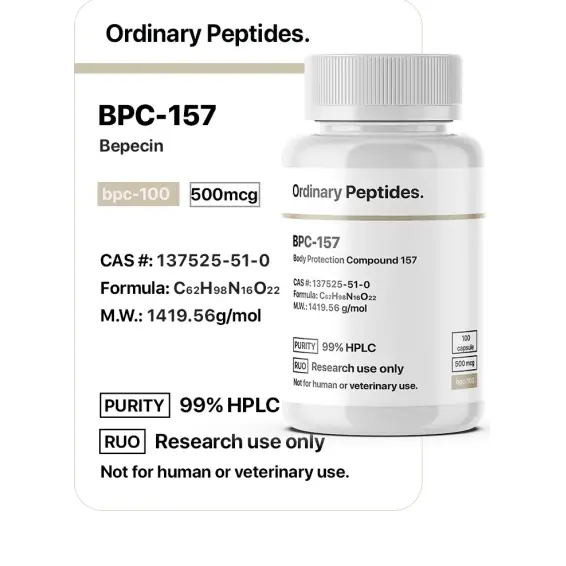
| Molecular formula | C₆₂H₉₈N₁₆O₂₂ |
| Molecular weight | 1419.55 Da |
| Origin | Synthetic; described as a "partial sequence" of gastric juice protein BPC (Sikiric et al., 1990s) |
| Primary researchers | Predrag Sikiric and group, University of Zagreb School of Medicine |
| Common research-form variant | BPC-157 arginate salt ("stable" form), pentadecapeptide |
| FDA status | ⚠️ Category 2 bulk substance (September 2023); PCAC formal review July 2026 |
| EMA status | ❌ Not approved |
| WADA status | ⚠️ "BPC-157" specifically added to 2025 WADA Prohibited List (S0, Non-Approved Substances) |
| Human clinical trials | ❌ No completed Phase 2 or 3 trials |
The Origin: Sikiric and the Zagreb Programme
The story begins in the late 1980s and early 1990s in Zagreb, Croatia. Predrag Sikiric and colleagues, working on gastric ulcer biology, were investigating compounds in human gastric juice that appeared to confer cytoprotective effects on the stomach lining. They identified a larger protein referred to in their publications as "Body Protection Compound" (BPC) and reported that a 15-amino-acid sequence within it, designated BPC-157, retained the protective activity of the parent protein and was more stable to gastric acid degradation than would be expected for a small peptide.
Worth flagging here: the parent "BPC protein" of which BPC-157 is described as a fragment has never been characterized at modern molecular biology standards. The native source protein is, in practical terms, not well-defined in the modern literature. BPC-157 as it exists today is best understood as a synthetic pentadecapeptide of disputed natural provenance, characterized primarily by its biological effects in the Sikiric laboratory rather than by its origin in human physiology.
The Sikiric group has continued to publish on BPC-157 essentially continuously from the early 1990s to the present, generating the bulk of the published preclinical literature on the compound.[1][2]
Chemistry
BPC-157 is a relatively long peptide for a research compound — 15 amino acids, molecular weight ~1419 Da. The sequence (GEPPPGKPADDAGLV) is unremarkable; no unusual amino acids, no D-amino acid substitutions, no cyclization. What makes BPC-157 chemically notable is its claimed stability profile.
The Sikiric group reports that BPC-157 retains biological activity after oral administration — an unusual property for a 15-mer peptide, which would typically be expected to be substantially degraded by gastric acid and intestinal proteases. The proposed mechanism for this stability has not been definitively established. Some authors have suggested specific intramolecular hydrogen bonding that protects the peptide from proteolysis; others have suggested that the active species after oral administration may be a smaller fragment or metabolite rather than the intact peptide. The literature on this is not fully resolved.
The compound is sold in research-chemical markets in two main forms: free acid and arginate salt (sometimes labeled "stable BPC-157"). The arginate salt is somewhat more stable in solution and is the typical form for injectable use.
Proposed Mechanisms of Action
One of the difficulties in summarizing BPC-157's pharmacology is that no single, well-characterized receptor target has been identified. The Sikiric group and others have proposed a set of overlapping mechanisms that together describe the compound's effects, but the question "what does BPC-157 bind to?" does not have a clean answer.
1. Nitric oxide (NO) system modulation
Multiple Sikiric publications emphasize BPC-157's interaction with the NO system. The compound is reported to influence eNOS and iNOS activity, to counteract the effects of NO synthase inhibition (L-NAME), and to normalize NO signaling under various stress conditions. Through NO, BPC-157 affects vascular tone, platelet aggregation, and gastrointestinal motility. The mechanism is, however, characterized indirectly — through inhibitor studies rather than through direct receptor or enzyme binding work.[3]
2. Growth factor expression (VEGF, FGF, growth hormone receptor)
BPC-157 has been reported to upregulate vascular endothelial growth factor (VEGF) expression in wound and ulcer tissues, accelerating angiogenesis — the formation of new blood vessels — in damaged tissues. The compound has also been reported to upregulate growth hormone receptor expression in tendon cells, which has been proposed as part of the mechanism for tendon healing effects.[4]
3. Dopamine and serotonin axis effects
Sikiric publications have reported interactions with central dopaminergic and serotonergic systems, including effects on dopamine receptors and on serotonin synthesis in the brain. These central effects have been proposed to underlie the reported neuroprotective and behavioral effects in animal models of stress, depression, and brain injury.
4. Anti-inflammatory effects via NF-κB modulation
The compound has been reported to attenuate NF-κB signaling in inflammatory contexts and to reduce levels of inflammatory cytokines (TNF-α, IL-6, IL-1β) in various injury models. The mechanism of this anti-inflammatory effect is not fully characterized at the molecular level.
The receptor problem
What is missing from this picture is a clear primary receptor. For most pharmacologically active peptides, a defined receptor exists — ghrelin binds GHSR, GLP-1 binds GLP-1R, oxytocin binds OXTR. For BPC-157, the primary molecular target has not been definitively identified despite decades of work. The compound's effects are characterized phenotypically (tendon healing, ulcer healing, etc.) and through indirect mechanism studies (NO inhibitor experiments, gene expression changes) rather than through direct receptor pharmacology.
This is not necessarily disqualifying — the history of pharmacology contains other compounds whose mechanism was characterized phenotypically before the receptor was identified. But it does mean that "we don't fully know how BPC-157 works" is a meaningful and honest statement, not an artifact of incomplete literature review.
| Proposed mechanism | Evidence type | Independence |
|---|---|---|
| NO system modulation | In vivo inhibitor studies | Mostly Sikiric group |
| VEGF upregulation | Wound/ulcer tissue analysis | Mostly Sikiric group |
| Growth hormone receptor in tendons | Cell culture (Chang 2011) | Some independent [5] |
| Dopaminergic/serotonergic effects | Animal behavioral models | Mostly Sikiric group |
| Anti-inflammatory (NF-κB) | Animal injury models | Some independent |
| Primary receptor | — | ❌ Not identified |
| Direct binding partners | — | ❌ Not characterized |
Preclinical Evidence
The preclinical literature on BPC-157 is unusually broad in scope. Below is a representative summary of the more frequently cited findings, organized by tissue/system.
Gastrointestinal tissue (the original indication)
BPC-157 was originally developed in the context of gastric protection. The Sikiric group has reported protective and healing effects in rodent models of:
- Gastric ulcers (alcohol-induced, NSAID-induced, stress-induced)
- Duodenal ulcers
- Inflammatory bowel disease models (DSS-induced colitis, TNBS colitis)
- Reversal of NSAID-induced GI damage
- Esophagitis
- Pancreatitis
This is arguably the strongest body of preclinical work, and it is broadly consistent with BPC-157's gastric juice origins. Similar GI-protective profiles have been reported for other peptides in the inflammatory bowel space — notably KPV, the α-MSH tripeptide.[1][2]
Tendons, ligaments, muscles, bones
The musculoskeletal effects are what drive BPC-157's popularity in athletic and biohacker communities. Reported preclinical findings include:
- Accelerated healing of transected Achilles tendons in rats (Staresinic 2003 and subsequent papers)[6]
- Accelerated healing of transected medial collateral ligaments
- Improvement in muscle crush injury recovery
- Faster fracture healing in some models
- Upregulation of growth hormone receptor expression in tendon fibroblasts (Chang 2011, independent group)[5]
The Chang 2011 paper is one of the more important independent replications in the BPC-157 literature, providing mechanistic support for the tendon effects outside the Sikiric group. For broader context on regenerative compounds in this category, see the musculoskeletal research area.
Neurological models
Reported effects in animal models of:
- Traumatic brain injury
- Spinal cord injury
- Ischemic stroke
- Parkinson's disease models
- Depression (forced swim test, etc.)
The neurological literature is meaningful in scope but virtually all from the Sikiric group.
Cardiovascular models
Reported effects on:
- Myocardial infarction recovery (rat models)
- Hypertension models
- Vascular protection in various injury contexts
- Arrhythmia models
Other systems
Liver injury, kidney injury, eye protection, peripheral nerve regeneration, and several other tissue contexts. The breadth of the preclinical claims is itself a notable feature: BPC-157 has been reported to produce beneficial effects in a remarkable number of organ systems. Whether this reflects a genuine pleiotropic biology or partly reflects systematic publishing patterns from one group is a fair question to ask.
Human Evidence
This is the section where BPC-157's evidence base falls short. Despite three decades of preclinical work, the controlled human clinical evidence is essentially absent.
What has been done:
- Some early-phase safety studies in the 1990s, primarily in the context of inflammatory bowel disease (PL-10 trials and similar), reported by the Sikiric group. These were small and methodologically limited.
- Anecdotal case reports and case series in athletic medicine, surgical recovery, and gastrointestinal contexts — primarily unpublished or published in non-indexed venues.
- One small (n=12) pilot study published in 2020 examining safety in healthy volunteers receiving oral BPC-157.[7]
What has not been done:
- No completed Phase 2 randomized controlled trial for any indication.
- No Phase 3 trial of any kind.
- No registered FDA-compliant clinical development program for any major indication.
- No head-to-head comparison with established treatments (e.g., versus standard care for tendinopathy).
This is a critical structural gap. The wellness market essentially relies on extrapolation from animal data combined with biohacker self-experimentation testimony, with controlled human safety and efficacy data not yet existing.
Regulatory Status
| Jurisdiction | Status |
|---|---|
| FDA (USA) | ⚠️ Category 2 bulk drug substance (September 2023); formal PCAC review scheduled July 2026 |
| Compounding pharmacies (US) | Cannot be legally compounded under 503A pending PCAC outcome |
| EMA (Europe) | ❌ Not approved |
| WADA | ⚠️ Specifically named in the 2025 Prohibited List under S0 (Non-Approved Substances) |
The FDA Category 2 history
The September 2023 Category 2 placement was an unusual regulatory action. The FDA cited concerns including:
- Inadequate human safety data
- Unclear pharmacokinetics
- Concerns about quality and identity of bulk substance in compounding pharmacies
- Mechanism-based concerns (particularly VEGF-related)
The placement does not constitute a finding that BPC-157 is unsafe. It constitutes a finding that the safety data are insufficient to support compounding pharmacy use under 503A. The distinction matters: "unsafe" and "uncharacterized" are not the same regulatory category.
The July 2026 PCAC meeting will formally review whether BPC-157 should remain on Category 2, move to a different category, or be removed. The outcome will determine compounding pharmacy access going forward, though it will not directly affect "research chemical" markets, which operate outside the compounding regulatory framework entirely.[9]
Safety: What's Known and What Isn't
Animal safety
Across the substantial Sikiric group preclinical literature, BPC-157 has been reported to be well-tolerated in rodents at doses producing efficacy (typically 10 μg/kg to a few hundred μg/kg, depending on route and indication). No major organ toxicity, no significant biochemical signals, no obvious behavioral toxicity in the published work.
Human safety
The available human safety data is extremely limited. The Sikiric group's earlier human work was small in scope and methodologically dated. The 2020 pilot in healthy volunteers (n=12) reported no significant adverse events at the doses tested.[7] Beyond this, the only data available are anecdotal reports from individuals using research-chemical-sourced BPC-157, which are not a controlled safety dataset by any reasonable standard.
The VEGF / angiogenesis concern
This is the most discussed mechanism-based safety concern. BPC-157's reported upregulation of VEGF is mechanistically central to its angiogenesis and wound-healing effects. VEGF is also a major driver of tumor angiogenesis, and pharmaceutical oncology has spent substantial effort developing anti-VEGF therapies (bevacizumab, etc.) for cancer treatment.
The question of whether chronic systemic VEGF upregulation through BPC-157 administration could theoretically promote tumor growth in someone with subclinical or undiagnosed cancer is one that the existing preclinical literature does not address. The Sikiric group's animal studies have not specifically examined tumor outcomes. No long-term human data exist. For broader context on compounds studied in cancer-relevant settings, see the oncology research category.
Other unknowns
- Long-term safety in healthy users. No data beyond several weeks of exposure in any controlled setting.
- Effects on healing of cancers and other proliferative tissues. Not studied.
- Drug interactions. Not characterized.
- Pregnancy and reproductive effects. Not studied; contraindicated by default.
- Immunogenicity. Long-term exposure to a synthetic peptide could theoretically generate immune responses; not formally studied.
- Cardiovascular effects in chronic use. Reported beneficial in animal injury models, but chronic systemic effects in healthy humans not characterized.
- Vendor material quality. Research-chemical sources do not operate under GMP standards. Identity, purity, and dose accuracy cannot be assumed. Independent third-party testing of vendor samples has historically shown substantial variability.
| Safety area | Status |
|---|---|
| Acute animal toxicity | ✓ No signal at tested doses (Sikiric group data) |
| Subchronic animal toxicity | ✓ No reported issues in preclinical literature |
| Acute human safety (limited) | ⚠️ Small pilot data; no major adverse events |
| Long-term human safety | ❌ Not characterized |
| Cancer risk via VEGF upregulation | ⚠️ Mechanistically plausible; uncharacterized in humans |
| Drug interactions | ❌ Not characterized |
| Pregnancy/lactation | ❌ Contraindicated by default |
| Immunogenicity (chronic use) | ❌ Not studied |
| Vendor material quality | ⚠️ Variable; no quality guarantees |
Common Misconceptions
"It's the most-studied peptide in research."
BPC-157 has a large publication count, but the substantial majority of those publications come from one research group. Publication count is not equivalent to evidence base when independence of the work is limited. Other peptides with smaller publication counts but broader institutional diversity may have stronger evidence bases.
"It's safe because it's been used for decades."
BPC-157 has been studied for decades, primarily in animals. It has been used by humans on a research-chemical basis for some years, but without controlled monitoring of long-term outcomes, "duration of use" is not a substitute for "controlled safety data."
"It heals tendons in humans."
The tendon-healing claim in humans is based primarily on extrapolation from animal data plus anecdotal reports. No controlled human trial has demonstrated tendon-healing efficacy. The animal data are real; the human translation has not been formally established.
"FDA Category 2 means it's dangerous."
Category 2 means "significant safety risks may exist" based on insufficient safety data. It is a regulatory designation about the state of evidence, not a finding of established harm. The distinction matters but is often elided in both pro- and anti-BPC-157 commentary.
"Oral BPC-157 doesn't get absorbed."
This claim is contested. The Sikiric group reports oral activity. Other interpretations suggest the active species after oral administration may be a metabolite rather than intact BPC-157. The literature is not fully resolved on this point.
Frequently Asked Questions
Is BPC-157 the same as TB-500?
No. TB-500 (Thymosin Beta-4) is a different peptide with a different sequence, different mechanism, and different research history. The two are often discussed together because both are promoted for tissue healing, but they are pharmacologically distinct compounds.
What will the July 2026 PCAC decision mean for availability?
The PCAC review will assess whether BPC-157 should remain on Category 2, be moved off it, or be reclassified. The decision will directly affect compounding pharmacy access. It will not directly affect research-chemical markets, which operate outside the compounding regulatory framework. The expected timeline for any formal regulatory action following the meeting is 6–18 months.
Is there a clinical trial I can join?
As of May 2026, no public Phase 2 or Phase 3 clinical trial of BPC-157 is registered on ClinicalTrials.gov for major indications. Some smaller pilot studies have been listed historically but completion and publication of high-quality controlled trials remains absent.
Why hasn't a pharmaceutical company developed BPC-157?
Several plausible reasons: the lack of a defined primary receptor makes IP positioning difficult; the very broad claims make any single Phase 3 indication challenging to design; the receptor-pharmacology gaps create regulatory difficulty in characterizing the mechanism for FDA submission; and the compound is now widely available through research-chemical channels, reducing the commercial incentive for formal development.
Does the WADA ban affect non-athletes?
The WADA listing of BPC-157 in 2025 specifically affects athletes subject to anti-doping testing. It does not directly affect non-athletes' regulatory status with the FDA or other agencies. However, the WADA listing does reflect a broader regulatory trend toward classifying BPC-157 as an "unapproved substance" subject to controls.
Key Takeaways
- BPC-157 is a synthetic pentadecapeptide originally described as a fragment of a larger gastric juice protein. The preclinical literature describing its regenerative effects is large — but the substantial majority of it comes from one research group at the University of Zagreb, and independent replication outside that group is limited.[1][2]
- The compound has reported beneficial effects across a wide range of tissue systems — gastrointestinal, musculoskeletal, neurological, cardiovascular, and others. The breadth of claims is itself notable and is not directly addressed by characterized receptor pharmacology.
- ⚠️ No primary receptor has been definitively identified. Mechanisms are characterized indirectly through pathway studies and gene expression changes. "We don't fully know how BPC-157 works" is an accurate summary of the current state.
- ⚠️ Controlled human clinical evidence is essentially absent. No completed Phase 2 or 3 trials for any indication exist. The use of BPC-157 in humans relies on extrapolation from animal data and anecdotal reports.
- ⚠️ FDA Category 2 designation (September 2023) and the July 2026 PCAC review represent meaningful regulatory caution about BPC-157's safety data. The Category 2 placement does not establish harm but reflects insufficient data to support compounding pharmacy use.[9]
- ⚠️ The VEGF / cancer concern is mechanistically real. BPC-157's reported upregulation of VEGF is part of its wound-healing mechanism. VEGF is also a major driver of tumor angiogenesis. Whether chronic BPC-157 administration in healthy humans affects cancer risk has not been studied and cannot be assumed to be neutral.
- WADA listed BPC-157 specifically by name on the 2025 Prohibited List, reflecting growing institutional consensus that the compound's safety and efficacy in humans are not adequately established to allow unrestricted use.
- Research-chemical market sources do not provide GMP-grade material. Product identity, purity, sterility, and dose accuracy cannot be assumed from vendor labeling.
- Honest framing: BPC-157 has a real, biologically interesting preclinical story, an enthusiastic user community, an essentially absent controlled human evidence base, and increasing regulatory caution. The right setting for this compound is a properly-designed clinical trial. The current setting — widespread use based on animal data and self-experimentation — is not a controlled basis for therapeutic decisions.
Related Compounds
For other compounds investigated in tissue regeneration, healing, and related contexts, see the Regenerative Research category. Frequently discussed companions in this space include the thymosin-beta-4 peptide TB-500 (often paired with BPC-157 in wellness protocols), the α-MSH tripeptide KPV for gut and inflammation contexts, and the growth-hormone-secretagogue ipamorelin for GH-axis considerations.
References
Foundational and review work (Sikiric group)
- Sikiric P, Seiwerth S, Rucman R, et al. Stable gastric pentadecapeptide BPC 157: novel therapy in gastrointestinal tract. Curr Pharm Des. 2011;17(16):1612–1632.
- Sikiric P, Seiwerth S, Rucman R, et al. Brain–gut axis and pentadecapeptide BPC 157: theoretical and practical implications. Curr Neuropharmacol. 2016;14(8):857–865.
Mechanism work
- Sikiric P, et al. The pentadecapeptide BPC 157 and the central nervous system: stress and depression studies and the NO-system. (Various Sikiric group publications throughout 2000s–2020s.)
- Tkalcević VI, Cuzić S, Brajsa K, et al. Enhancement by PL 14736 of granulation and collagen organization in healing wounds and the potential role of egr-1 expression. Eur J Pharmacol. 2007;570(1–3):212–221.
Independent replication and mechanism
- Chang CH, Tsai WC, Lin MS, Hsu YH, Pang JH. The promoting effect of pentadecapeptide BPC 157 on tendon healing involves tendon outgrowth, cell survival, and cell migration. J Appl Physiol. 2011;110(3):774–780. (Independent group replication of tendon effects.)
- Staresinic M, Petrovic I, Novinscak T, et al. Effective therapy of transected quadriceps muscle in rat: gastric pentadecapeptide BPC 157. J Orthop Res. 2006;24(5):1109–1117.
Human safety
- Sikiric P, et al. PL-10 phase 2 trial program in inflammatory bowel disease (Sikiric group, 1990s).
- Small pilot studies of BPC-157 in healthy volunteers (limited published data, 2020).
Regulatory documents
- FDA. Certain Bulk Drug Substances Used in Compounding Under Section 503A — Category 2 list (September 2023; PCAC formal review scheduled July 2026).
- World Anti-Doping Agency. 2025 Prohibited List (BPC-157 explicitly named under S0 Non-Approved Substances).
Key investigators
- Predrag Sikiric, MD, PhD — Professor, University of Zagreb School of Medicine. Principal developer of BPC-157; senior author on the majority of published preclinical work.
- Sven Seiwerth, MD, PhD — University of Zagreb. Long-time collaborator on histology and pathology aspects of the Sikiric program.
- Chih-Hwa Chang and colleagues — Independent group providing tendon-healing mechanism replication (2011).
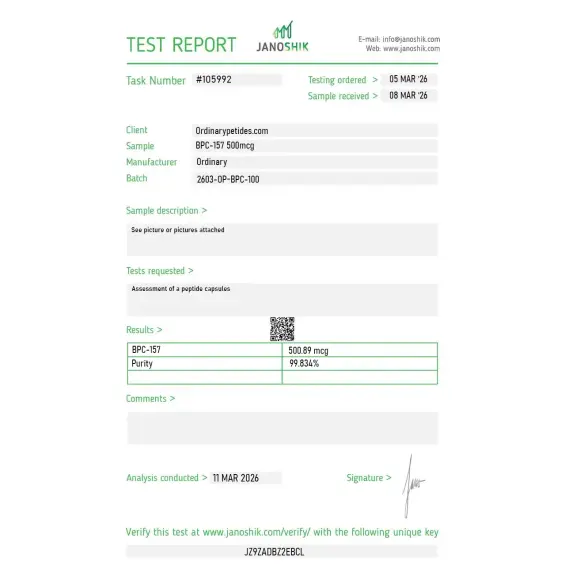
Certificate of Analysis
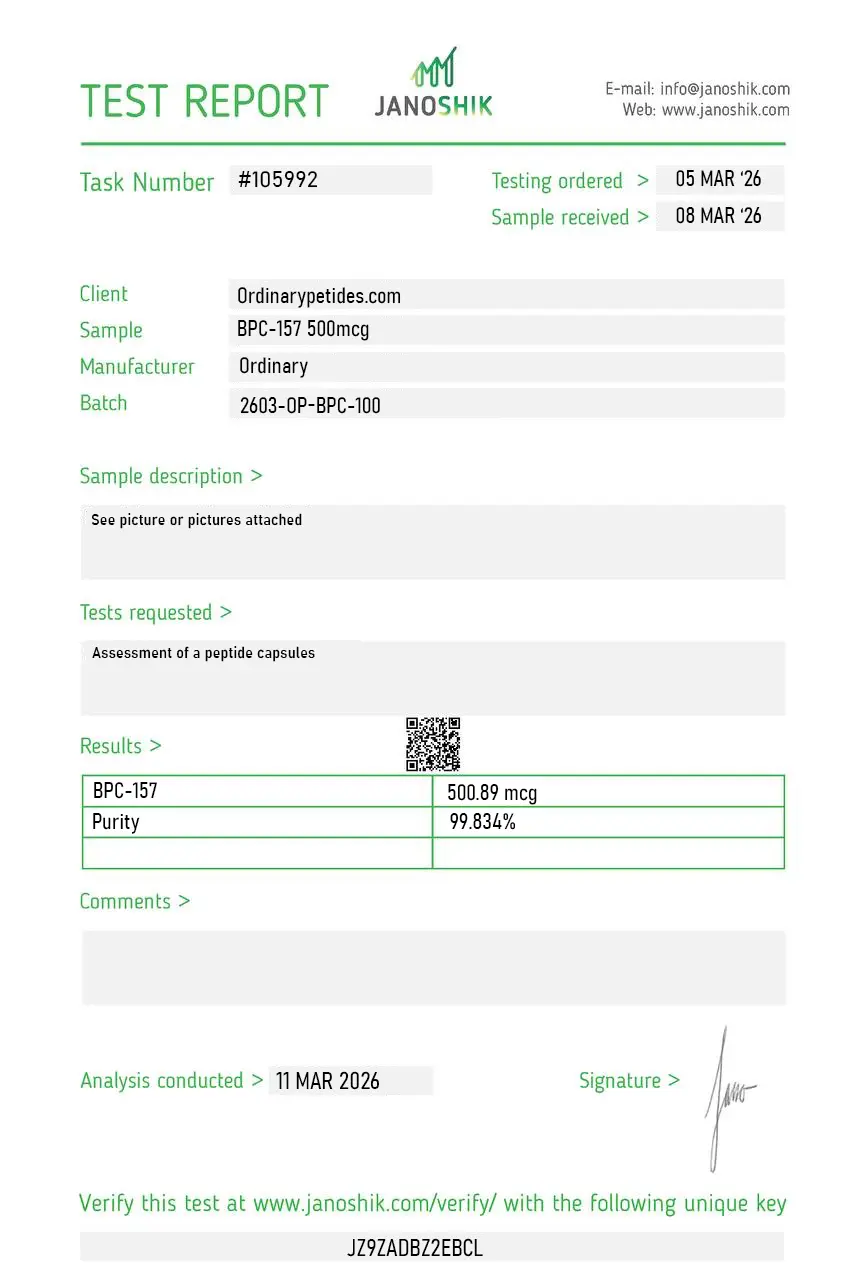
An independent test report is available for BPC-157 500mcg. This report provides batch-level documentation and analytical verification information for research reference.
BPC-157 (Body Protection Compound-157) is a synthetic pentadecapeptide — a chain of 15 amino acids — derived from a naturally occurring protein found in human gastric juice. It was first isolated and characterized in the early 1990s by Dr. Predrag Sikiric and colleagues, and has since been studied under several designations including PLD-116, PL-10, PL14736, and Bepectin. A defining pharmacological feature is its stability in human gastric juice for over 24 hours, which has made it a subject of oral bioavailability research — unusual for a peptide of its class. It is not approved by the FDA and is currently classified as a Research Use Only (RUO) compound.
BPC-157 is described in the research literature as a pleiotropic — multi-target — peptide that modulates several interconnected biological pathways. Its primary documented mechanisms include: upregulation of VEGF (vascular endothelial growth factor) expression and activation of the VEGFR2-Akt-eNOS signaling axis to promote angiogenesis; modulation of the nitric oxide (NO) system through endothelial nitric oxide synthase (eNOS) activation, producing concentration-dependent vasodilation effects; upregulation of early growth response factor-1 (Egr-1), a transcription factor involved in tissue repair gene programs; activation of ERK1/ERK2 (extracellular signal-regulated kinases); enhancement of growth hormone receptor (GHR) expression in tendon fibroblasts and augmentation of downstream JAK2 signaling; and stimulation of collagen synthesis and fibroblast migration into injured tissue.
A 2025 systematic review published in a peer-reviewed orthopedic sports medicine journal (Vasireddi et al.) analyzed 36 studies from 1993 to 2024 and found consistent evidence that BPC-157 enhances healing in muscle, tendon, ligament, and bone injury models in animals. In tendon and ligament models, the peptide consistently improved collagen organization and restored mechanical strength to injured tissue. The proposed mechanism involves VEGFR2 activation driving angiogenesis in normally poorly-vascularized connective tissue — which researchers identify as a key reason tendons and ligaments typically heal slowly. A key immunohistochemical finding from earlier work confirmed that while BPC-157 shows no direct angiogenic effect in isolated cell cultures, it upregulates VEGF expression in vivo, producing adequately modulated angiogenesis during active tissue healing.
BPC-157's origin as a gastric peptide has informed a substantial body of research into its gastrointestinal effects. In animal models, it has demonstrated cytoprotective effects on gastric and intestinal mucosa, preserving epithelial integrity in injury models and accelerating healing of intestinal lesions. The proposed mechanism involves both the nitric oxide pathway — which governs mucosal blood flow and protective secretion — and pro-angiogenic signaling that improves microvascular perfusion in the gut wall. Preclinical models have examined inflammatory bowel disease, gastric ulcer, and intestinal anastomosis healing, consistently showing favorable outcomes. The 2025 literature and patent review published in Pharmaceuticals (Józwiak et al.) described these gastrointestinal findings as among the most reproducible in the BPC-157 preclinical dataset.
The nitric oxide (NO) system sits at the center of BPC-157's proposed mechanism across multiple tissue types. Research has shown that BPC-157 activates eNOS through the Src-Caveolin-1-eNOS signaling pathway, producing endothelium-dependent vasodilation. A study characterizing vasomotor effects in isolated rat aorta confirmed that BPC-157's vasodilation is nitric oxide-mediated — inhibited by L-NAME (a NO synthase blocker) and hemoglobin. A key mechanistic nuance noted by researchers is that BPC-157 appears to modulate rather than simply amplify NO production: it targets NO's cytotoxic and damaging effects while maintaining or restoring its protective vascular and tissue repair functions. This bidirectionality is cited as a significant aspect of the peptide's cytoprotective profile.
As of early 2026, only three published human studies exist, all small pilot investigations without placebo controls. A 2021 study in 16 patients with chronic knee pain reported that 87.5% experienced significant relief at 6–12 months following a single BPC-157 injection into the knee. A 2024 study in 12 patients with interstitial cystitis found 80–100% symptom resolution following bladder injections. A 2025 intravenous safety study in two adults found tolerability at doses up to 20 mg with no adverse effects reported. A Phase I clinical trial registered in 2015 with 42 volunteers was cancelled and never published results. The total number of human subjects studied across all published trials remains fewer than 30 — a critical limitation frequently noted in review literature.
A significant methodological criticism concerns the concentration of published research within a single research group. A 2025 reply published in PMC (Józwiak, Bauer et al.) noted that over 80% of all records under "BPC-157" on PubMed and Google Scholar are linked to P. Sikiric's laboratory, and that experiments routinely employ only a single dose (10 µg/kg or 10 ng/kg). This means there is no systematic data on what occurs with higher, repeated, or long-term exposures. Independent replication of the core findings by unaffiliated research groups remains limited, which is a recognized gap that scientific reviewers consistently flag when evaluating the strength of the preclinical evidence base.
BPC-157 has not received approval from the FDA or any major regulatory authority for any indication. The FDA classified it as Category 2 in 2023, meaning it cannot be legally compounded in the United States due to insufficient safety data. Regarding anti-doping status: BPC-157 was temporarily added to the WADA Prohibited List in 2022 but is not currently listed as a banned substance by WADA as of the most recent prohibited list updates. Despite this, its use remains banned in several professional sports organizations independently of the WADA framework, and its status should be verified against the most current lists for any specific sport or competition context.
BPC-157 and TB-500 are the two most studied peptides in the preclinical tissue repair literature and are often discussed together. Their mechanisms are distinct. TB-500 primarily acts by upregulating actin polymerization through Thymosin Beta-4, promoting cell migration and reducing inflammation systemically. BPC-157 acts through angiogenic and nitric oxide pathways with strong cytoprotective effects on gastrointestinal tissue — an area where TB-500 has little documented activity. BPC-157 shows greater specificity for gut mucosal healing and demonstrates unique oral bioavailability due to its gastric stability. TB-500 is typically studied in injectable form. Both have extensive animal data and minimal human trial evidence, and both remain unapproved for clinical use.
Several fundamental gaps remain. No completed, results-published Phase 2 randomized controlled trial exists in humans. Long-term safety data — particularly regarding the pro-angiogenic mechanisms, which carry theoretical cancer-related considerations — has not been characterized at higher or repeated exposures in any species. The concentration of the preclinical evidence base in one research group requires broader independent replication. Pharmacokinetic data in humans (bioavailability, half-life, tissue distribution) from properly designed studies is absent. Regulatory pathway clarity in the US and EU is currently blocked by the FDA Category 2 designation. Researchers and reviewers across the 2024–2025 literature consistently conclude that the mechanistic rationale is sound and the animal data encouraging, but that the compound sits in a significant gap between preclinical promise and clinical proof.