Two Different Axes: Endocrine and Neural
Reproductive research peptides include kisspeptin, a 1996 Penn State Hershey discovery originally named metastin for its metastasis-suppressor role. It sits one step upstream of GnRH in the HPG axis through the KISS1R receptor. A Hammersmith Phase 2 trial of 60 IVF patients used kisspeptin-54 as an oocyte maturation trigger and reported 95% maturation with effectively zero moderate-to-severe OHSS, the main hCG complication. PT-141 works on a different axis entirely, central arousal via MC4R rather than the HPG hormonal cascade. The catalog also includes GnRH analogs and gonadotropins for downstream stimulation..
Reproductive Research
Showing 1–12 of 12 results
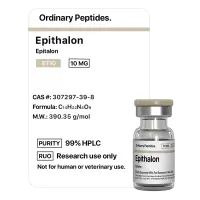
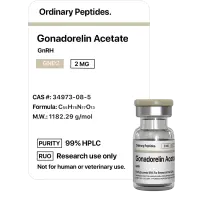
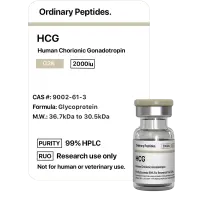
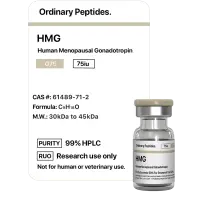
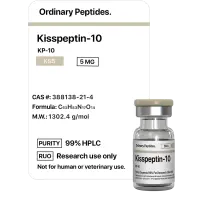
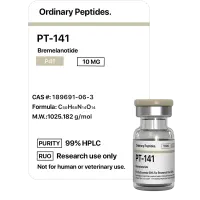
The kisspeptin clinical programme at Hammersmith is worth understanding in more depth. The Phase 2 trial referenced above (Abbara, Jayasena, Dhillo et al., JCEM 2015, NCT01667406) tested kisspeptin-54 as an alternative oocyte maturation trigger in IVF patients at high risk of OHSS — a group where conventional hCG triggers carry meaningful risk. The mechanistic rationale: hCG has a half-life of roughly 38 hours and prolongs LH receptor activation for over a week, far longer than the physiological LH surge of 24–28 hours. Kisspeptin-54 induces a more physiological LH pulse profile, which is why moderate-to-severe OHSS was effectively absent in the trial. A subsequent 2017 Phase 2 trial (Human Reproduction) tested a two-dose protocol in 62 high-risk patients and demonstrated improved oocyte maturation when LH exposure was extended through a second injection. This is an active research programme, not a single trial.
Kisspeptin and the HPG Axis
The hypothalamic-pituitary-gonadal (HPG) axis runs from kisspeptin neurons in the hypothalamus to GnRH neurons, to the pituitary, to the gonads. Kisspeptin is the master upstream regulator, binding the KISS1R receptor (also called GPR54) on GnRH neurons to trigger GnRH release in pulsatile patterns. The discovery story matters for the biology: the KISS1 gene was originally identified at Penn State Hershey as a metastasis suppressor in melanoma (Lee, Welch et al., 1996), with the name "metastin" reflecting that initial function. The reproductive role emerged later when KISS1R mutations were identified as a cause of hypogonadotropic hypogonadism in humans (de Roux et al., Seminara et al., 2003). The gene now sits at the intersection of cancer biology and reproductive endocrinology — an unusual scientific lineage.
Different kisspeptin forms (kisspeptin-54, kisspeptin-10, kisspeptin-13) share the same C-terminal active sequence but differ in half-life and pharmacokinetics. Kisspeptin-54 is the most-studied form in clinical trials because of its longer duration of action; kisspeptin-10 is more common in mechanistic in vivo rodent work where shorter half-life is acceptable.
PT-141: A Different Axis Entirely
PT-141 (bremelanotide) belongs to a fundamentally different research category from the HPG-axis compounds. It's a synthetic cyclic heptapeptide analog of α-MSH that activates melanocortin receptors — primarily MC4R in the central nervous system, with some MC3R cross-activity. The mechanism for sexual function is centrally mediated, not hormonal: MC4R activation in the medial preoptic area and paraventricular nucleus modulates dopaminergic signaling involved in sexual motivation and arousal. This is mechanistically distinct from PDE5 inhibitors (sildenafil, tadalafil), which act peripherally on vascular smooth muscle through cGMP. PT-141 also doesn't act through the HPG hormonal cascade — it has no significant effect on testosterone, FSH, LH, or related reproductive hormones. The compound was approved by the FDA in 2019 (as Vyleesi) for hypoactive sexual desire disorder in premenopausal women, providing one of the few clinical regulatory anchors in this category.
GnRH Analogs and Gonadotropins
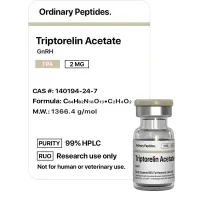
The downstream end of the HPG axis is occupied by GnRH analogs and recombinant gonadotropins. GnRH agonists (leuprolide, triptorelin, buserelin) initially stimulate then desensitize the pituitary GnRH receptor, producing chemical castration — used clinically in prostate cancer, endometriosis, precocious puberty, and IVF protocols. GnRH antagonists (cetrorelix, ganirelix) competitively block the receptor without initial stimulation, providing more controllable LH suppression for ART cycles. Recombinant FSH (follitropin alfa/beta) and recombinant LH products are pituitary hormone replacements used in controlled ovarian stimulation. These compounds occupy the bottom of the HPG axis architecture, providing direct gonadotropic stimulation rather than acting through upstream regulators. Research applications focus on protocol optimization, comparative efficacy across stimulation regimens, and combination strategies with novel triggers like kisspeptin.
Research Models Commonly Used
Standard in vivo models include hypogonadotropic mouse strains (Kiss1 knockout, Kiss1r knockout, hpg mice with GnRH deficiency) for HPG axis biology; ovariectomized rats with hormone replacement for studying central effects of reproductive hormones; PCOS models induced through prenatal androgen exposure or DHEA administration; and OHSS models in superovulated rats for testing trigger alternatives. In vitro work uses GT1-7 immortalized GnRH neurons for hypothalamic signaling, αT3-1 and LβT2 pituitary cell lines for gonadotrope function, and primary granulosa cells from antral follicles for ovarian biology. Human translational research relies on prospectively-recruited IVF cohorts where intermediate endpoints (oocyte yield, fertilization rate, embryo quality) provide more rapid feedback than pregnancy outcomes.
Frequently Asked Questions
How does kisspeptin differ from hCG as an oocyte maturation trigger?
hCG (human chorionic gonadotropin) acts directly at the LH receptor on ovarian theca and granulosa cells, with a long half-life (~38 hours) and prolonged receptor activation (>1 week). Kisspeptin-54 acts upstream — it triggers endogenous LH release from the pituitary, producing a more physiological LH pulse profile (24–28 hours). The reduced duration of LH exposure is part of why kisspeptin triggers are associated with much lower rates of moderate-to-severe OHSS in clinical research compared to standard hCG triggers, particularly in high-risk patients.
Why was kisspeptin originally called metastin?
The KISS1 gene was identified in 1996 at Penn State Hershey by Lee, Welch, and colleagues as a metastasis suppressor gene in melanoma — its expression appeared to inhibit cancer metastasis, and the gene product was named "metastin" for this function. The reproductive role emerged years later, when KISS1R mutations were found to cause hypogonadotropic hypogonadism in humans (2003 work by separate groups at Cohen-Tannoudji's lab and the Seminara/Crowley lab). The same gene product turns out to play distinct roles in different tissue contexts — cancer suppression in some tumor types, and HPG axis regulation in reproductive tissues.
What is the difference between kisspeptin-54 and kisspeptin-10?
Both peptides share the same C-terminal 10 amino acids that constitute the active binding region for KISS1R. The 54-amino acid form is the full-length cleavage product from the KISS1 precursor and has a longer plasma half-life. The 10-amino acid form is the minimal active sequence, with shorter duration of action. Clinical research has favored kisspeptin-54 because the longer half-life produces sustained physiological effects suitable for trial design; mechanistic research often uses kisspeptin-10 in rodent studies where rapid clearance is acceptable or desirable.
How does PT-141 work for sexual function research?
PT-141 (bremelanotide) is a synthetic α-MSH analog that activates melanocortin receptors, primarily MC4R, in the central nervous system. MC4R signaling in the medial preoptic area and paraventricular nucleus of the hypothalamus modulates dopaminergic neurotransmission involved in sexual motivation and arousal. The mechanism is centrally mediated and does not involve the HPG hormonal axis (no effect on testosterone, FSH, LH) or peripheral vascular mechanisms (unlike PDE5 inhibitors). PT-141 is FDA-approved as Vyleesi for hypoactive sexual desire disorder in premenopausal women, providing a clinical regulatory anchor for this mechanism.
What is OHSS and why is it a research priority?
Ovarian hyperstimulation syndrome (OHSS) is a complication of IVF treatment characterized by ovarian enlargement, third-space fluid accumulation, hemoconcentration, and in severe cases thromboembolic events and life-threatening complications. Moderate OHSS occurs in approximately 10% of IVF cycles, severe OHSS in approximately 5%, with the risk increasing fivefold in patients with PCOS or high antral follicle counts. The condition is largely caused by the prolonged LH receptor activation from hCG triggers, making alternative triggers with shorter duration of action (kisspeptin, GnRH agonists) an active research priority for improving IVF safety.
How do GnRH agonists and antagonists differ in IVF protocols?
GnRH agonists (leuprolide, triptorelin) initially stimulate GnRH receptors before desensitizing them, producing prolonged LH/FSH suppression. They're used in long protocols requiring stable pituitary suppression. GnRH antagonists (cetrorelix, ganirelix) directly block GnRH receptors without initial stimulation, producing immediate suppression. They're used in shorter "antagonist protocols" that allow more flexible ovarian stimulation timing and reduced total medication exposure. The choice between protocols depends on patient profile, previous response, and clinical preferences — both remain in active research and clinical use.
Reference Points for Further Reading
The Abbara/Dhillo group at Imperial College London has published the core kisspeptin clinical research — JCEM 2015 (NCT01667406) for the original Phase 2 IVF trigger trial, Human Reproduction 2017 for the two-dose protocol, and multiple follow-up papers covering mechanism and dose-finding. The original metastin identification is in Lee, Welch, et al. (JNCI 1996). KISS1R hypogonadism papers (de Roux et al., PNAS 2003; Seminara et al., NEJM 2003) established the reproductive role. For PT-141 mechanism, the Pfaus and colleagues publications cover central melanocortin signaling in sexual function. The 2019 FDA review documentation for Vyleesi provides the regulatory and trial data overview. For broader reproductive peptide research, the Clarke and Dhillo review series in Endocrine Reviews covers the kisspeptin field comprehensively.
All compounds in this catalog are intended for in vitro and preclinical research use only. None are approved by the FDA for therapeutic use in the indications discussed on this page, with the exception of bremelanotide (PT-141, marketed as Vyleesi) which is FDA-approved for HSDD in premenopausal women. Clinical trial data and regulatory information referenced on this page describes research conducted with approved or investigational pharmaceutical products and is provided as scientific context, not as claims for the research compounds offered here.