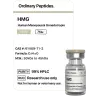
HMG
For in vitro testing and laboratory use only. Not for human or animal consumption. Bodily introduction is illegal. Handle only by licensed professionals. Not a drug, food, or cosmetic. Educational use only.
HMG (Menotropins): A Serious Gonadotropin Drug With a Clear Place in Reproductive Medicine
HMG, or menotropins, is not a "universal fertility peptide," but a serious gonadotropin drug with FSH- and LH/hCG-like activity that has long held a solid place in reproductive medicine. In the clinical context, it has shown itself most convincingly where precise ovarian stimulation tuning is needed — above all in ART/IVF protocols in women.
In the research and practical setting, it has also been considered in selected male scenarios, but there HMG is no solo hero — it is part of a narrower scheme, usually together with hCG. That is exactly what makes it interesting: not "hormones in general," but a clear and targeted action on specific links of the reproductive axis.
HMG has strong clinical logic, but also very real risks — so this is definitely not a story about a "one-shot solution for every case." If you are interested not in hype-driven promises but in molecules with a genuine medical biography, HMG clearly belongs in that category.
HMG (Human Menopausal Gonadotropin / Menotropins): A Scientific Review
Based on peer-reviewed literature — see References. Last updated: April 2026.
The Short Version
HMG — human menopausal gonadotropin, also known as menotropins — is the oldest gonadotropin preparation in reproductive medicine. It has been used clinically since 1961, when Bruno Lunenfeld reported the first pregnancy achieved through ovulation induction in a woman with hypogonadotropic amenorrhea.[2] The first IVF live birth in history, Louise Brown in 1978, was achieved after ovarian stimulation with Pergonal (the original HMG product). HMG is, in a meaningful sense, the foundation on which modern assisted reproductive technology was built.
It is not a peptide drug in the sense of most compounds in this series. It is a complex biological extract: a mixture of FSH and LH-activity gonadotropins purified from the urine of postmenopausal women. Three aspects require honest treatment:
The “LH activity” is largely hCG. Because of the longer half-life of hCG as compared with LH, about 95% of the in-vivo LH-receptor-mediated bioactivity in modern HP-hMG is attributable to the presence of hCG rather than true LH.[4] This means HMG’s “LH arm” is pharmacokinetically very different from actual pituitary LH — slower-acting, longer-lasting, and activating LH receptors with different signalling intensity.
HMG has survived the recombinant era. When recombinant FSH became available in the early 1990s, HMG was widely predicted to become obsolete. Yet meta-analyses have generally found comparable or slightly better ART outcomes with HP-hMG versus recombinant FSH alone in specific patient populations.[5]
The impurity content is clinically relevant. Even highly purified HMG preparations contain up to 30% non-gonadotropin proteins — the primary reason recombinant preparations are preferred when batch-to-batch consistency and purity are paramount.[4]
| At a glance | |
|---|---|
| Generic name | Menotropins (INN); human menopausal gonadotropin (hMG) |
| Source | Purified from urine of postmenopausal women |
| Active components | FSH + LH-like activity (largely hCG in modern preparations) |
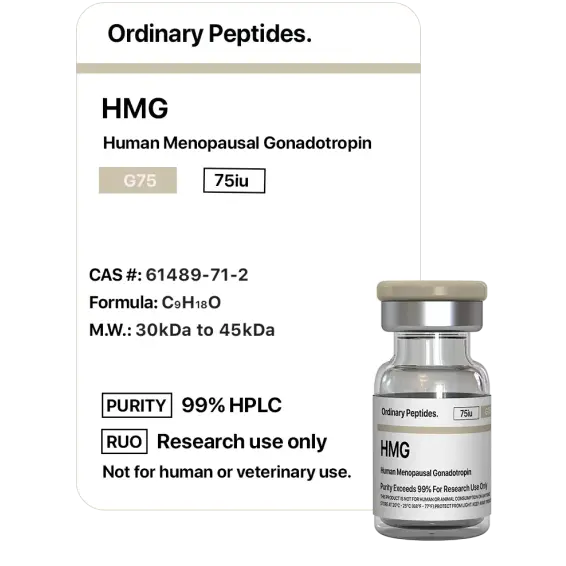
| Standard dose per ampoule | 75 IU FSH + 75 IU LH-activity (1:1 ratio) |
| Major brands (US) | Menopur (HP-hMG, Ferring); Repronex |
| FDA approval | ✅ Multiple indications: ovulation induction, ART stimulation, male HH |
| First clinical use | 1961 (Lunenfeld — ovulation induction) |
| First IVF success | 1978 (Steptoe/Edwards used Pergonal for ovarian stimulation) |
| Key distinguishing feature vs. rFSH | Contains LH-like activity (mostly hCG) in addition to FSH |
| WADA | ⚠️ FSH prohibited in men (S2); hCG component also prohibited in men |
History: From Urinary Extracts to Modern Preparations
The physiological basis for HMG as a therapy rests on the hormonal state of menopause: when ovarian function ceases, the pituitary dramatically upregulates FSH and LH secretion, and these hormones accumulate in urine at concentrations high enough to be pharmacologically useful. HMG was first successfully extracted from postmenopausal urine in 1950 and shown in 1953 to produce ovarian stimulation in female hypophysectomised rats and full spermatogenesis in male hypophysectomised rats.[2] Piero Donini’s development of a practical extraction method enabled scale-up; Lunenfeld’s 1962 report of the first pregnancy through HMG/hCG established the treatment protocol that remains conceptually unchanged today: FSH/LH activity (from HMG) to grow follicles, followed by an hCG trigger to simulate the LH surge.
Evolution of preparations
| Generation | Period | Product examples | Key characteristics |
|---|---|---|---|
| First-generation hMG | 1961–1980s | Pergonal 75, Humegon | 75 IU FSH + 75 IU LH-activity; IM only; high protein impurities; batch variability |
| Second-generation (HP-hMG) | 1990s–present | Menopur, Menogon HP | Highly purified; subcutaneous possible; >70% gonadotropin content; hCG added for LH activity |
| Recombinant FSH | 1995–present | Gonal-F, Follistim | Pure FSH; no LH activity; consistent batch profile; CHO cell production |
| Recombinant LH | ~2000–present | Luveris (lutropin alfa) | Pure recombinant LH; can be added separately to rFSH |
Chemistry and Composition
The FSH component
FSH in HMG preparations is a urinary-derived glycoprotein hormone (α-subunit shared with LH, TSH, hCG; unique β-subunit) purified from menopausal urine. Urinary FSH has a slightly different isoform profile from recombinant FSH — more acidic isoforms with greater carbohydrate content — which affects its half-life and receptor interaction. Whether these isoform differences have meaningful clinical consequences is debated but not definitively resolved.
The “LH activity” component: mostly hCG
The compositional analysis of Menopur (HP-hMG) found that three gonadotrophins are present: FSH, LH, and hCG. The immunoactivity for hCG was three-fold higher than the immunoactivity for LH. Because of the longer half-life of hCG as compared with LH, about 95% of the in-vivo LH-receptor-mediated bioactivity is attributable to the presence of hCG.[4] In some preparations, hCG is deliberately added from external sources to achieve the desired LH-like biological activity, since purification steps remove natural urinary LH while concentrating hCG.
Impurity profile
Even HP-hMG contains non-gonadotropin protein impurities: the amount of these impurities is at least 30% on a peak-area basis. Three major impurities were identified in compositional analysis: leukocyte elastase inhibitor, protein C inhibitor, and zinc-alpha(2)-glycoprotein.[4] The biological effects of these co-purified proteins at therapeutic doses are not well characterised and represent the principal argument for preferring recombinant preparations in settings where purity and consistency are paramount.
Mechanism of Action
FSH activity: Binds FSH receptor (FSHR) on granulosa cells (women) and Sertoli cells (men). FSHR is Gs-coupled → adenylyl cyclase → cAMP → PKA. In women: promotes follicle recruitment, growth, aromatase expression, and oestradiol production. In men: supports spermatogonial differentiation through Sertoli cell function; necessary for qualitatively normal spermatogenesis.
LH-like activity (primarily via hCG component): Binds LHCG receptor on theca cells (women), Leydig cells (men), and granulosa cells (late folliculogenesis). In women: promotes androgen synthesis in theca cells (substrate for aromatisation by granulosa cells) and drives follicular maturation in the late follicular phase. In men: stimulates intratesticular testosterone synthesis by Leydig cells.
The two-cell, two-gonadotropin model of folliculogenesis explains why HMG’s combined FSH + LH-like activity may be advantageous in some contexts: theca cells produce androgens (under LH-like stimulation) that granulosa cells then aromatise to oestrogens (under FSH stimulation), and this interplay is necessary for normal follicular development.
FDA-Approved Indications
In women: ovulation induction
HMG is FDA-approved for ovulation induction in women with WHO Type I (hypothalamic amenorrhea) and Type II (normogonadotropic anovulation, including PCOS) anovulation who have not responded to first-line treatment, and for controlled ovarian hyperstimulation (COH) as part of ART. Standard protocol: 75–150 IU/day adjusted based on ultrasonographic and hormonal response; single trigger dose of hCG when appropriate follicular development is achieved.
In men: hypogonadotropic hypogonadism
In men with CHH/Kallmann syndrome, menotropins are used to stimulate spermatogenesis in patients who have already been treated with hCG to effect masculinisation. Menotropins are given for 7 to 12 days, and after clinical evaluation, a single dose of hCG is given to simulate the typical LH surge. The usual combined regimen is 75–150 IU HMG (or equivalent rFSH) 3× weekly concurrent with hCG 1,500–2,000 IU 3× weekly, continued for 3–12 months until spermatogenesis is established.
Clinical Evidence
CHH male spermatogenesis: the most important finding
The 2024 systematic review and meta-analysis assessing 5,328 HH patients found: complete spermatogenesis was achieved in 86% of patients using combined therapy (hCG + FSH) compared with 40% with hCG monotherapy.[9] The FSH in combined therapy is typically provided by HMG or recombinant FSH. This 86% vs. 40% difference precisely quantifies what HMG’s FSH component adds beyond hCG alone: FSH is essential for bringing spermatogenesis to completion.
One study in 10 men with hypogonadotropic hypogonadism demonstrated that HMG + hCG triggered spermatogenesis after 24 months in all patients, while the combination of pure FSH and testosterone did not trigger spermatogenesis — confirming that intratesticular testosterone (produced by Leydig cell stimulation through hCG) is necessary alongside FSH-driven Sertoli cell support: neither alone is sufficient.[10]
ART ovarian stimulation: HMG vs. rFSH
The ongoing debate between HMG and recombinant FSH for ART stimulation has been extensively studied. Meta-analyses have generally shown a similar or slight advantage in terms of ART outcomes (implantation, ongoing pregnancy, and live birth rates) for hMG preparations, albeit small in magnitude.[5]
Specific findings: HP-hMG vs. rFSH in IVF shows comparable live birth rates with fewer total oocytes retrieved but better embryo quality in some analyses. HP-hMG may reduce OHSS risk in PCOS patients, possibly because the hCG component’s LH-like effect on small follicles causes selective atresia, reducing the number of small intermediate follicles contributing to hyperstimulation.[6] rFSH produces higher oocyte yield and may be preferred when maximising egg numbers is the priority. A three-arm RCT in women with normal ovarian function found no significant difference in pregnancy rates between rFSH alone, rFSH + HMG, and rFSH + rLH — suggesting LH supplementation provides no benefit when endogenous LH is adequate. Evidence increasingly suggests LH supplementation (from HMG or rLH) benefits poor ovarian responders specifically.[8]
Evidence summary
| Indication | Evidence level | Finding |
|---|---|---|
| CHH spermatogenesis (male) [9] | Meta-analysis (2024), multiple RCTs | 86% spermatogenesis with hCG + FSH vs. 40% hCG alone; well-established |
| ART COH (women, normal responders) [5][6] | Multiple RCTs and meta-analyses | HMG comparable to rFSH; slight advantage in embryo quality; lower oocyte yield |
| ART COH (women, poor responders) | RCTs and retrospective data | LH supplementation (from HMG or rLH) likely beneficial |
| Ovulation induction (hypothalamic amenorrhea) | Well-established since 1961 | Gold standard; 60–90% ovulation rates |
| ART COH (PCOS) | RCT | Lower oestradiol, fewer intermediate follicles, possibly lower OHSS risk with HMG |
Regulatory Status
| Jurisdiction | Status |
|---|---|
| FDA (USA) | ✅ Approved: Menopur (Ferring), Repronex — ovulation induction, ART COH, male HH |
| EMA (Europe) | ✅ Approved — Menogon, Merional, Menopur and others |
| Prescribing requirement | Prescription required; specialist supervision with ultrasonographic monitoring required |
| WADA | ⚠️ FSH prohibited for men (S2); hCG component also prohibited in men; HMG is prohibited in men. Permitted in women for legitimate medical treatment |
Safety
Primary risks
Ovarian hyperstimulation syndrome (OHSS) — the major safety concern in women. Occurs in approximately 1–10% of stimulated IVF cycles (mild to severe); up to 0.1–2% severe. Risk factors include PCOS, young age, low BMI, high antral follicle count, high AMH, and prior OHSS history. Severe cases may involve thromboembolism and respiratory compromise. HP-hMG may carry a slightly lower OHSS risk than rFSH in high-risk patients because the hCG component causes selective follicular atresia at the small/intermediate follicle stage. Multiple gestation — risk of twins or higher-order multiples when ovulation is triggered over multiple mature follicles. Mandatory ultrasonographic monitoring before triggering is standard of care.
In men: Side effects are similar to hCG monotherapy — gynecomastia, acne, injection site reactions. FSH supplementation is well tolerated.
Theoretical infection risk
Urinary-derived products carry a theoretical risk of transmissible spongiform encephalopathies (TSEs) because they are derived from human biological material. However, no case of TSE transmission from urinary gonadotropins has been documented in clinical history spanning more than 60 years of use.
HMG vs. Recombinant Alternatives
| Feature | HP-hMG (Menopur) | rFSH (Gonal-F/Follistim) | rFSH + rLH (Gonal-F + Luveris) |
|---|---|---|---|
| FSH activity | Urinary-derived | Recombinant, pure | Recombinant, pure |
| LH-like activity | hCG (mainly) + LH | None | Recombinant LH |
| Oocyte yield | Moderate | Higher | Moderate |
| OHSS risk (PCOS/high-risk) | Possibly lower | Standard | Standard |
| Batch consistency | Good (HP-hMG era) | Excellent | Excellent |
| Impurity content | ~30% non-gonadotropin protein | Near-zero | Near-zero |
| Subcutaneous administration | Yes (HP-hMG) | Yes | Yes |
| Best suited for | Normal/poor responders; PCOS (lower OHSS risk); cost-sensitive settings | Poor responders seeking maximum oocyte yield; purity-sensitive applications | Poor responders; strict LH titration desired |
Common Misconceptions
“HMG’s LH activity comes from pituitary LH.”
In modern HP-hMG preparations, the LH-like activity is provided almost entirely by hCG — either naturally co-purified from urine or deliberately added. This hCG has a 24–37 hour half-life and different receptor signalling characteristics from endogenous pituitary LH (25–30 minute half-life, pulsatile).[4]
“Recombinant FSH is always superior to HMG.”
Meta-analyses show comparable outcomes overall, with a slight advantage for HP-hMG in some measures (embryo quality, possibly lower OHSS risk).[5] For poor ovarian responders specifically, the LH-like activity in HMG may be advantageous. There is no universal answer — the appropriate choice depends on the patient’s profile.
“HMG is outdated because recombinant products exist.”
HMG in its highly purified modern form (Menopur) continues to be widely used globally and remains part of evidence-based clinical guidelines. Its survival into the recombinant era reflects genuine clinical value in specific contexts rather than institutional inertia.[8]
Frequently Asked Questions
How is HMG different from FSH-only injections?
HMG provides both FSH activity and LH-like activity (mostly from co-purified hCG). Pure FSH preparations (rFSH) provide only FSH. For women in whom LH stimulation is desired — particularly those with inadequate endogenous LH during GnRH analogue suppression, or poor responders — HMG may be preferred. For most normally responding women, the difference is modest.
Is HMG safer than rFSH?
Safety profiles are broadly comparable. HP-hMG may be associated with a lower OHSS risk in high-risk populations through the LH-mediated follicular atresia mechanism. This potential advantage requires confirmation in large prospective trials.
Can HMG replace the hCG + FSH combination in men?
In theory, HMG’s combined FSH and LH-like (hCG) activity could replace the conventional hCG + rFSH regimen for male CHH. In practice, HMG delivers a fixed 1:1 FSH:LH-activity ratio, which may not provide adequate hCG dosing to fully maintain intratesticular testosterone. Most current protocols use separate hCG (for LH-like activity) and rFSH or HMG (for FSH activity), allowing dose optimisation of each component independently.[9]
Key Takeaways
- HMG is the oldest gonadotropin preparation in reproductive medicine, developed in 1961 by Lunenfeld and used in the world’s first IVF pregnancy. Its role is established across six decades of clinical use and a very large controlled trial evidence base.[1][2]
- ⚠️ The LH-like activity in modern HP-hMG formulations is predominantly delivered by hCG, not pituitary LH. This is pharmacokinetically and pharmacodynamically significant: the LH arm of HMG behaves like hCG (long half-life, sustained receptor activation) rather than like the pulsatile, short-acting LH that the body normally produces.[4]
- HMG has survived the recombinant era because meta-analyses show comparable or slightly superior ART outcomes in specific populations, and because its LH-like component may reduce OHSS risk in high-risk patients and provide advantage to poor ovarian responders and those with inadequate endogenous LH.[5]
- In men with CHH/Kallmann syndrome, the addition of FSH supplementation (from HMG or rFSH) to hCG increases complete spermatogenesis rates from ~40% to ~86% — a clinically decisive difference demonstrating that FSH is essential and not optional for full sperm production.[9]
- ⚠️ The 30% non-gonadotropin protein impurity content in even highly purified urinary HMG is a genuine distinction from recombinant preparations. Clinical consequences appear limited but the impurity profile is not fully characterised.[4]
- HMG is a prescription pharmaceutical requiring specialist supervision and ultrasonographic monitoring — not a research chemical or supplement. The risks of unsupervised use, particularly OHSS and multiple gestation, are real and preventable with appropriate clinical management.
References
History and Development
- Lunenfeld B, et al. Treatment of male infertility. Human gonadotropins. Fertility and Sterility. 1967;18:581–592.
- Lunenfeld B, Donini P. Historical aspects of gonadotrophin therapy. Human Reproduction Update. 2004.
- Howles CM. The Development of Gonadotropins for Clinical Use in the Treatment of Infertility. Frontiers in Endocrinology. 2019;10:429.
Composition and Chemistry
- Hakola K, et al. Compositional analyses of a human menopausal gonadotrophin preparation extracted from urine (menotropin). Identification of some of its major impurities. Human Reproduction. 2004. PMID: 14680547
Clinical Evidence — ART
- van Wely M, et al. Recombinant versus urinary gonadotrophin for ovarian stimulation in assisted reproductive technology cycles. Cochrane Database of Systematic Reviews. 2011;2011:CD005354.
- Andersen AN, Devroey P, Arce JC. Clinical outcome following stimulation with highly purified hMG or recombinant FSH in patients undergoing IVF: a randomized assessor-blind controlled trial. Human Reproduction. 2006;21:3217–3227.
- Esteves SC, et al. A comparison of menotropin, highly-purified menotropin and follitropin alfa in cycles of ICSI. PMC2768716
- Rooted in pre-ART times [narrative review: menotropins in ART]. F&S Reviews. 2021.
Male CHH
- Esteves SC, et al. Human chorionic gonadotropin-based clinical treatments for infertile men with non-obstructive azoospermia. Andrology. 2025. doi: 10.1111/andr.70003
- Depenbusch M, et al. Maintenance of spermatogenesis in hypogonadotropic hypogonadic men with hCG alone. European Journal of Endocrinology. 2002.
Key Investigator
- Bruno Lunenfeld, MD — Hebrew University, Jerusalem; pioneer of HMG clinical use (1961); established the HMG/hCG protocol for ovulation induction and ART stimulation that remains the conceptual foundation of modern fertility medicine.
Certificate of Analysis
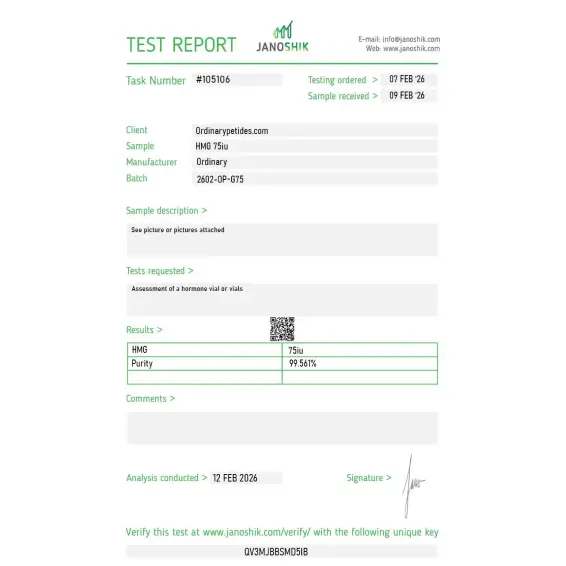
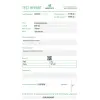
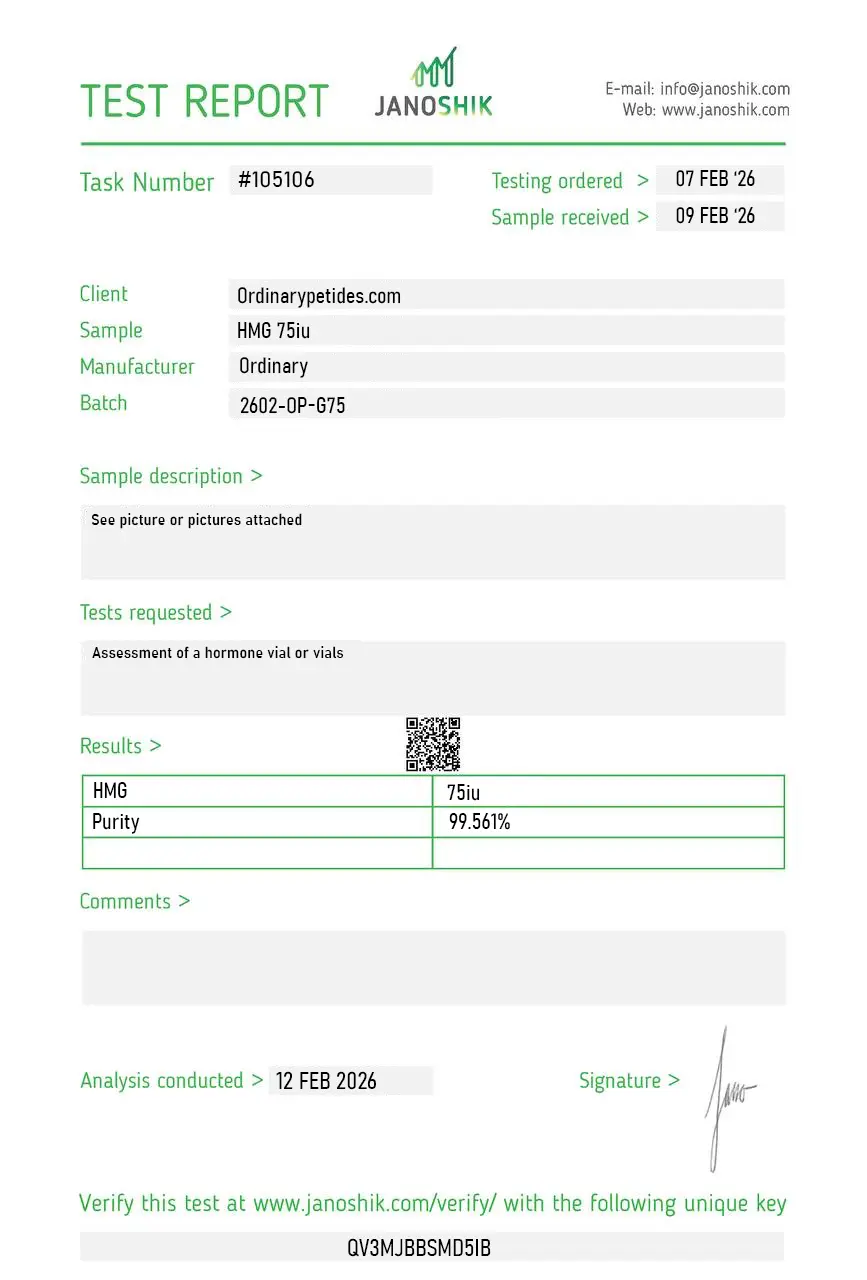
An independent test report is available for HMG. This report provides batch-level documentation and analytical verification information for research reference.
Based on 1 reviews
5.0
-
1
The mixture-as-research-object is the framing that matters — HMG isn't a defined single hormone you're tolerating impurity in; it's a deliberate FSH-plus-LH preparation where the combined action is the point, mirroring the natural pituitary output that drives follicular development. For reproductive-biology work asking whether both gonadotropins together produce effects neither does alone, the mixture composition is the experiment, not a confound. The material gave the expected dual-gonadotropin response in our follicular-development assays.
Not exactly. It is more accurate to describe HMG as a gonadotropin drug called menotropins, not a single short peptide. It contains both FSH-like and LH-like activity.
Not exactly. HMG refers to the drug class or type, while Menopur is a specific brand of menotropins.
Its strongest evidence is in controlled ovarian stimulation and ART/IVF protocols in women.
Yes, but in a much narrower setting. It is used in some cases of male hypogonadotrophic hypogonadism, usually together with hCG, rather than as a general treatment for male infertility.
There is no universal answer. The better choice depends on the specific treatment protocol and patient population, and clear overall superiority has not been established.
One of the most important risks in women is ovarian hyperstimulation syndrome (OHSS), especially when the ovaries respond too strongly.
HMG is the only commonly used gonadotropin preparation that provides both FSH and LH activity simultaneously in a single injection. HCG provides primarily LH-like activity — it activates LH receptors on Leydig cells and ovarian granulosa cells but provides no FSH activity. Recombinant FSH preparations such as follitropin alfa or beta provide pure FSH without LH activity, which is preferred in most modern controlled ovarian stimulation protocols where LH is deliberately suppressed. HMG occupies a distinct clinical niche precisely because of its combined FSH and LH activity — making it particularly valuable in hypogonadotropic hypogonadism where both hormones are deficient, and in situations where some LH supplementation alongside FSH is clinically desired.
Human Menopausal Gonadotropin (HMG), also known by its generic pharmaceutical name menotropin, is a naturally derived gonadotropin preparation extracted and purified from the urine of postmenopausal women. Postmenopausal women excrete large quantities of FSH and LH in urine because their ovaries no longer respond to pituitary signaling, causing the pituitary to produce these hormones at high levels. Each standard 75 IU vial of HMG contains approximately 75 IU of FSH and 75 IU of LH in a 1:1 ratio, along with small amounts of HCG and other urinary proteins. It has been in clinical use since 1961, when Bruno Lunenfeld first successfully applied it in fertility medicine, making it one of the oldest gonadotropin therapies in reproductive endocrinology. Brand names have included Pergonal, Menopur, Repronex, and numerous others. Recombinant gonadotropins have largely replaced urinary-derived HMG in modern fertility practice, though urinary HMG remains widely available particularly in cost-sensitive settings.
HMG is used primarily in controlled ovarian stimulation for assisted reproductive technologies including IVF and intrauterine insemination. It is given by daily subcutaneous or intramuscular injection — typically starting at 75 IU per day — with dose and duration adjusted based on ultrasound follicular monitoring and serum estradiol levels, usually for approximately 7 to 14 days. It is used in ovulation induction for anovulatory conditions including PCOS in women who do not respond to oral agents like clomiphene or letrozole. Clinical studies have demonstrated conception rates of approximately 45% and live birth rates around 43% after six treatment cycles in clomiphene-resistant women. It is also used in women with hypothalamic amenorrhea and hypogonadotropic hypogonadism where both FSH and LH are deficient.
HMG is given by intramuscular or subcutaneous injection. In women daily doses of 75 to 150 IU are used for ovarian stimulation, adjusted based on monitoring. In men doses range from 75 to 150 IU given one to three times weekly, typically in combination with HCG. Treatment duration in men for spermatogenesis restoration is measured in months — often 6 to 26 months or longer — given the time required to establish sperm production from scratch in severely hypogonadal men. It is supplied as lyophilized powder reconstituted with sterile saline.
The most serious risk in women is ovarian hyperstimulation syndrome (OHSS) — a potentially life-threatening condition involving massive fluid shifts, ovarian enlargement, abdominal pain, ascites, pleural effusions, and thromboembolism in severe cases. Multiple pregnancy — twins, triplets, or higher — is a significant risk because HMG stimulates multiple follicle development by bypassing the normal hypothalamic-pituitary feedback that would limit follicular recruitment to one dominant follicle. Careful ultrasound monitoring and dose adjustment are essential to minimize these risks. In both men and women injection site reactions, headache, nausea, vomiting, abdominal and pelvic discomfort, and mood changes are reported. Gynecomastia, dizziness, fainting, loss of appetite, and irregular heartbeat have been noted in case reports of men receiving HMG. Urinary-derived preparations carry a theoretical infection risk from donor urine, though no confirmed transmissible spongiform encephalopathy transmission has been documented.
Women with primary ovarian failure — where the ovaries are no longer capable of responding to gonadotropin stimulation — will not benefit. People with uncontrolled thyroid or adrenal disorders should not use it until those conditions are managed. Those with ovarian cysts or abnormal ovarian enlargement not caused by PCOS should avoid it given the OHSS risk. Anyone with hormone-sensitive cancers including breast, ovarian, or uterine cancer should not use it. People with pituitary tumors — particularly prolactinomas causing elevated prolactin — need the primary condition addressed first. Pregnancy should be confirmed before stopping treatment and HMG must not be continued once pregnancy is established. Concurrent use with clomiphene significantly increases OHSS risk and requires careful oversight.