GHRH Analogs and Ghrelin Mimetics: Two Parallel Circuits
Endocrine research peptides organize along the hypothalamic-pituitary axis: GHRH analogs like Sermorelin (GHRH 1-29) and Tesamorelin (stabilized GHRH 1-44 with DPP-4-resistant N-terminus) act upstream, while ghrelin-mimetic GHS-R1a agonists like the older GHRP-2 and the more selective Ipamorelin act on a parallel circuit. Tesamorelin is the only FDA-approved compound in the class. EGRIFTA WR, the weekly F8 formulation, received approval in April 2025, and a July 2025 ScienceDirect meta-analysis of 5 RCTs reported a 27.71 cm² visceral fat reduction in HIV-associated lipodystrophy. GnRH analogs and pituitary outputs round out the catalog..
Endocrine Research
Showing 1–44 of 44 results
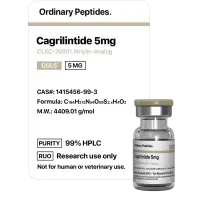
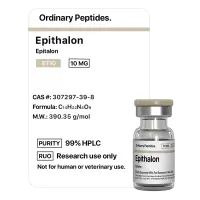
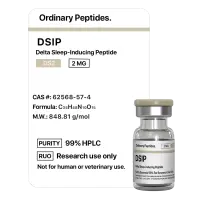
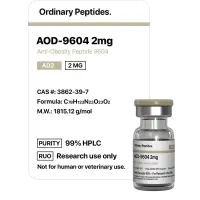
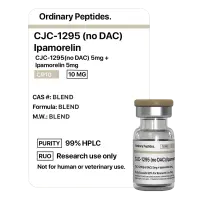
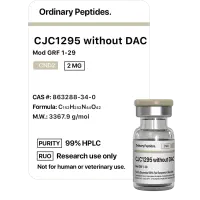
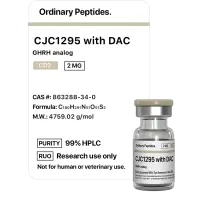
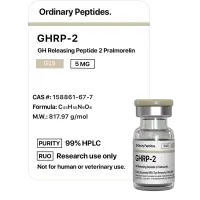
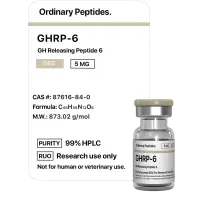
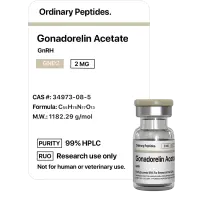
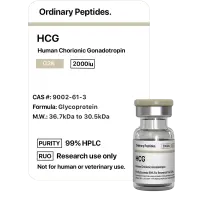
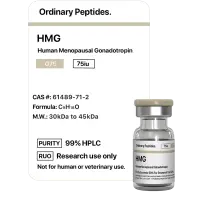
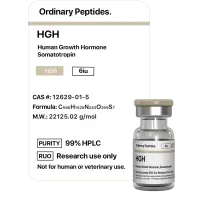
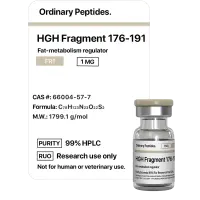
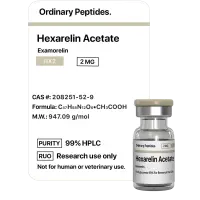
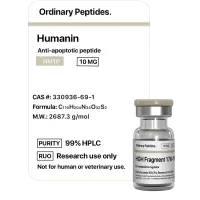
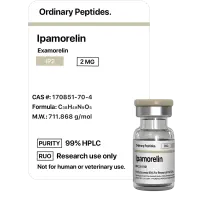
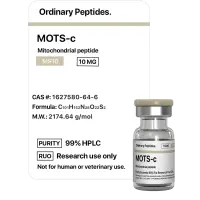
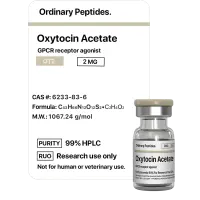
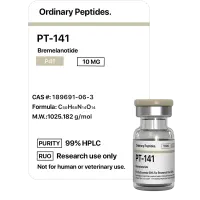
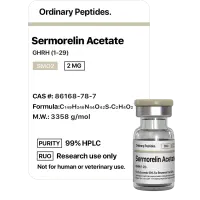
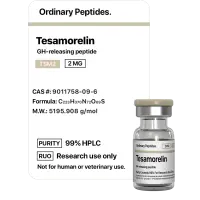
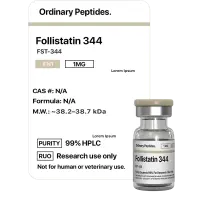
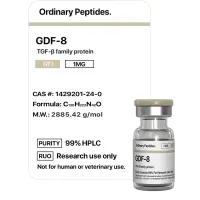
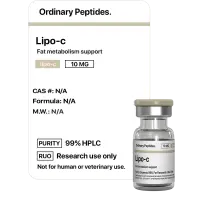
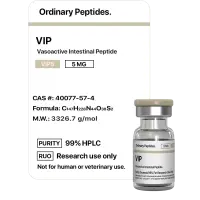
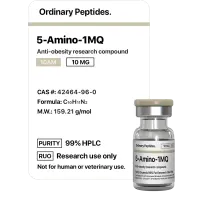
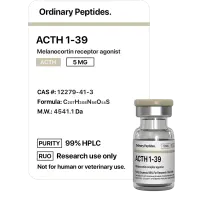
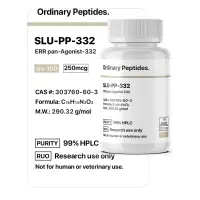
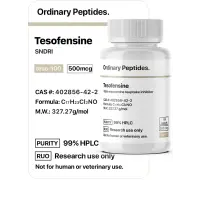
The Tesamorelin approval history is worth understanding in detail. The original EGRIFTA® (F1 formulation) received FDA approval in November 2010 for HIV-associated lipodystrophy — making Tesamorelin the only growth hormone-releasing factor analog with FDA approval. The F4 formulation followed as EGRIFTA SV®, requiring daily reconstitution. The most recent F8 formulation — EGRIFTA WR™ — received FDA approval on March 25, 2025, requiring only weekly reconstitution while maintaining daily injection. Theratechnologies, the developer, is one of the few companies that has carried a single GHRH analog through the full regulatory lifecycle including reformulation supplements. The compound's unusual position — clinically validated GHRH analog with multiple formulation generations — provides the regulatory anchor for the broader category of growth hormone axis research.
GHRH Analogs: The DPP-4 Resistance Strategy
Native GHRH is a 44-amino acid peptide cleaved rapidly by dipeptidyl peptidase-4 (DPP-4), giving it a plasma half-life of approximately 7 minutes. This is too short for clinical or research applications. Modified GHRH analogs solve this through different strategies. Sermorelin is GHRH(1-29) — the minimal active sequence — which retains receptor binding but has only marginally improved stability. Tesamorelin takes the full 44-amino acid sequence and adds a trans-3-hexenoyl group at the N-terminus, blocking DPP-4 cleavage at the critical Tyr1-Ala2 site. This modification extends plasma half-life to roughly 26-38 minutes — a fivefold improvement that makes pharmacological dosing feasible. CJC-1295 takes a different approach: it includes a Drug Affinity Complex (DAC) moiety that binds covalently to serum albumin, extending half-life to multiple days. The three compounds occupy the same receptor but differ substantially in pharmacokinetic profile, which is why they're studied in different research contexts.
Ghrelin Mimetics: The Parallel Circuit
Ghrelin signaling runs through GHS-R1a (growth hormone secretagogue receptor 1a) — a Gq-coupled receptor expressed on pituitary somatotrophs and arcuate hypothalamic neurons. The pathway is parallel to but distinct from GHRH signaling. The first-generation ghrelin mimetics — GHRP-2 (pralmorelin) and GHRP-6 — are hexapeptides with strong GH-releasing activity but limited receptor selectivity, also affecting prolactin, cortisol, and aldosterone secretion. Ipamorelin represents the second-generation refinement: a pentapeptide with improved GHS-R1a selectivity that minimizes effects on prolactin and cortisol. Hexarelin is structurally similar to GHRP-6 with additional cardioprotective effects studied separately from the GH axis context. The selectivity differences matter for research — Ipamorelin is preferred when isolating GH effects from broader endocrine perturbation, while GHRP-2/6 are studied when the parallel hormonal effects are themselves the research interest.
GHRH Plus Ghrelin: Synergistic Pulses
GHRH analogs and ghrelin mimetics act through different receptors converging on the same somatotrophs — and combining them produces more than additive GH release. The synergy is studied in research models examining GH pulse architecture: GHRH primes the somatotroph through cAMP/PKA signaling, while ghrelin mimetics independently activate Ca²⁺ release through Gq/PLC pathways. The combined signaling amplifies GH secretion beyond what either compound produces alone. CJC-1295 + Ipamorelin combinations are among the most-studied research stack configurations for this reason, though "research stack" usage in non-controlled contexts has outpaced formal pharmacokinetic characterization of the combinations.
Research Models Commonly Used
Standard in vivo endocrine peptide research uses GHRH receptor knockout (Ghrhr-deficient lit/lit mice) for receptor-specific work, hypophysectomized rats for studying pituitary-independent effects, fasted rodents for ghrelin pulse characterization, and aged C57BL/6 mice for studying somatopause biology. HIV-associated lipodystrophy research uses both human clinical cohorts and rodent models with antiretroviral exposure. In vitro work uses primary rat pituitary cell cultures for direct somatotroph studies, GH3 immortalized rat pituitary cells for screening, and HEK293 cells transfected with human GHRH receptor or GHS-R1a for receptor pharmacology. GH pulse measurement typically uses serial blood sampling protocols (every 10-15 minutes for 6-24 hours) with sensitive immunoassays, deconvolution analysis to characterize pulse amplitude and frequency, and IGF-1 as a longer-term integrated readout.
Frequently Asked Questions
What is the difference between Sermorelin and Tesamorelin?
Both are GHRH analogs binding the same pituitary receptor (GHRHR), but they differ structurally. Sermorelin is GHRH(1-29) — the minimal active sequence of the natural 44-amino acid GHRH molecule. Tesamorelin is the full GHRH(1-44) with a trans-3-hexenoyl modification at the N-terminus that blocks DPP-4 enzymatic cleavage. The modification extends Tesamorelin's plasma half-life to roughly 26-38 minutes, compared to about 11-12 minutes for Sermorelin and 7 minutes for native GHRH. Tesamorelin is FDA-approved for HIV-associated lipodystrophy; Sermorelin had FDA approval for pediatric GH deficiency but is no longer marketed in the US, though it remains in compounding pharmacy use and research applications.
How does CJC-1295 differ from other GHRH analogs?
CJC-1295 includes a Drug Affinity Complex (DAC) modification — a maleimidopropionic acid (MPA) group that forms a covalent bond with serum albumin in vivo. This extends the plasma half-life dramatically, from minutes to multiple days, depending on the specific formulation. The version with DAC ("CJC-1295 with DAC") has the extended half-life; the version without DAC ("CJC-1295 without DAC" or modified GRF 1-29) has a shorter half-life similar to Sermorelin. The two versions are different compounds despite the shared core sequence and are studied in different research contexts depending on whether sustained or pulsatile GH effects are the goal.
Why is Ipamorelin considered more selective than GHRP-2?
Both compounds bind GHS-R1a (the ghrelin receptor) on pituitary somatotrophs and stimulate GH release. The selectivity difference involves their additional effects on other endocrine outputs. GHRP-2 has measurable effects on prolactin, cortisol, and aldosterone secretion at GH-stimulating doses, likely through interactions with related receptors or downstream signaling cascades. Ipamorelin shows minimal effects on these other hormones at GH-stimulating doses — its selectivity profile is essentially limited to GH. This makes Ipamorelin preferred in research contexts where isolating GH effects is important, while GHRP-2 is used when the broader endocrine perturbation is itself the research interest.
What does the 2025 Tesamorelin meta-analysis tell us about visceral fat reduction?
The 2025/2026 meta-analysis in Practical Diabetes Research and Clinical Practice pooled five randomized controlled trials of Tesamorelin in HIV-associated lipodystrophy and reported a mean visceral adipose tissue reduction of 27.71 cm² (95% CI -38.37 to -17.06, P<0.001) compared to placebo. This corresponds to roughly 15-20% reduction in visceral fat over 26 weeks, consistent with the original Phase 3 trials that supported FDA approval. The meta-analysis also examined hepatic fat, metabolic markers, and adverse events — providing the current consolidated evidence base for Tesamorelin's primary indication.
What is DPP-4 and why does it matter for GHRH analogs?
DPP-4 (dipeptidyl peptidase-4, also called CD26) is a serine protease that cleaves N-terminal dipeptides from substrates with proline or alanine in the second position. Native GHRH has Tyr-Ala at its N-terminus, making it a prime DPP-4 substrate — the enzyme rapidly cleaves the first two amino acids, inactivating the peptide. This is why native GHRH has only a 7-minute plasma half-life. DPP-4 resistance is the key engineering challenge for therapeutic GHRH analogs. Tesamorelin's trans-3-hexenoyl modification at Tyr1 sterically blocks DPP-4 cleavage. Other GHRH analogs use different modifications to address the same problem. DPP-4 is also relevant in metabolic research because it cleaves GLP-1 with similar kinetics — DPP-4 inhibitors are a class of approved diabetes drugs targeting this same enzyme.
Why are GHRH and ghrelin mimetics studied in combination?
GHRH analogs activate GHRHR on pituitary somatotrophs through cAMP/PKA signaling. Ghrelin mimetics activate GHS-R1a on the same cells through Gq/PLC/IP3/Ca²⁺ signaling. The two pathways converge on GH release but engage different second messengers. Combined activation produces synergistic — not just additive — GH secretion in preclinical studies. This is why combinations like CJC-1295 + Ipamorelin are studied in research contexts examining GH pulse amplification. The synergy is a real pharmacological phenomenon; the rigor of formal pharmacokinetic characterization for specific combinations varies across the literature.
Reference Points for Further Reading
For Tesamorelin clinical evidence, the 2010 Falutz et al. publications in NEJM and subsequent Theratechnologies-sponsored studies provide the Phase 3 data foundation. The 2026 ScienceDirect meta-analysis (S1871403X26000025) covers the consolidated evidence base across five RCTs. The Theratechnologies regulatory documentation for EGRIFTA WR (March 2025 FDA approval) is publicly available. For GHRH and ghrelin pharmacology more broadly, the Bowers reviews on growth hormone secretagogues provide the historical mechanistic foundation; Smith's reviews cover the discovery and characterization of GHS-R1a. For DPP-4 resistance strategies, the Demuth et al. publications on enzyme-substrate engineering remain standard references. The Sonntag and Murialdo reviews on the somatopause and aged GH/IGF-1 axis provide context for aging-related applications of the GH research field.
All compounds in this catalog are intended for in vitro and preclinical research use only. None are approved by the FDA for therapeutic use in humans, with the exception of Tesamorelin (marketed as EGRIFTA, EGRIFTA SV, and EGRIFTA WR by Theratechnologies) which is FDA-approved for the specific indication of HIV-associated lipodystrophy. Sermorelin previously had FDA approval for pediatric growth hormone deficiency but is no longer marketed in the US under that approval. Clinical and regulatory information referenced on this page describes research conducted with approved pharmaceutical products and is provided as scientific context, not as claims for the research compounds offered here.