CJC-1295 with DAC
For in vitro testing and laboratory use only. Not for human or animal consumption. Bodily introduction is illegal. Handle only by licensed professionals. Not a drug, food, or cosmetic. Educational use only.
CJC-1295 with DAC: What Kind of Peptide It Is, Why It Stands Out in Research, and Why It Still Requires a Sober View
CJC-1295 with DAC is not "just another GH peptide," but a long-acting GHRH analogue designed for markedly prolonged action through its DAC modification, which enables albumin binding. That feature is exactly what made the molecule stand out in research: it was built not as growth hormone itself, but as a way to stimulate the body's own GH axis for much longer than short-lived GHRH peptides typically can.
In early studies in healthy adults, it showed a measurable and unusually prolonged activity profile: after a single subcutaneous dose, GH levels rose on average about 2–10-fold for 6 days or longer, while IGF-1 increased about 1.5–3-fold for roughly 9–11 days. For a GHRH analogue, that is a striking pharmacodynamic signal and one of the main reasons CJC-1295 with DAC continues to attract attention in the research context.
Another detail that adds scientific interest is that published observations suggested GH pulsatility was preserved during stimulation. In other words, the effect did not look exactly like a simple flat "hormone flood," but more like a prolonged push on the endogenous GH axis with pulsatile secretion still present. That makes the molecule especially notable for people who look at peptide pharmacology through mechanism and physiology rather than through internet slogans.
An Honest Detail Worth Noting
That said, the honest caveat matters just as much as the pharmacology. CJC-1295 with DAC is not an approved drug, and the FDA specifically highlights the confusion between different CJC-1295 forms, the limited nature of the clinical data, and potential risks — especially outside standardized pharmaceutical settings. The most accurate way to view it is not as a finished therapeutic solution, but as a biologically active and scientifically interesting GHRH analogue with early human evidence and significant unresolved questions.
Practical Takeaway
If what interests you is not forum mythology but genuinely active molecules with a real early human research footprint, CJC-1295 with DAC absolutely deserves careful attention — but that attention should remain informed, cautious, and clear-eyed.
CJC-1295 with DAC: A Scientific Review of the Long-Acting GHRH Analogue
Based on peer-reviewed literature and regulatory documents — see References. Last updated: April 2026.
The Short Version
CJC-1295 with DAC is a synthetic growth hormone-releasing hormone (GHRH) analogue — a compound engineered to stimulate the pituitary gland to produce and release more of the body’s own growth hormone. Its defining feature is an albumin-binding technology called the Drug Affinity Complex (DAC) that extends the peptide’s half-life from roughly 30 minutes (for native GHRH) to approximately 6–8 days, enabling once-weekly dosing.
Developed by ConjuChem Biotechnologies in Canada, it was the most pharmacologically sophisticated GHRH analogue to enter human clinical trials in the 2000s. Two published Phase 1/2 studies — both randomised and placebo-controlled — demonstrated genuine, robust, dose-dependent GH and IGF-1 elevation in healthy adults, with preserved pulsatile GH secretion and a reasonably clean short-term safety profile.[1][2]
Then development stopped. A Phase 2 trial in HIV lipodystrophy patients was halted in July 2006 after a participant died. The attending physician attributed the death most likely to asymptomatic coronary artery disease — unrelated to the drug — but ConjuChem discontinued development regardless. No Phase 3 trial was ever conducted. No indication was ever approved.[5]
| At a glance | |
|---|---|
| Also known as | DAC:GRF, drug affinity complex:growth hormone-releasing factor, CJC-1295 DAC |
| Developer | ConjuChem Biotechnologies (Montreal, Canada) |
| Drug class | GHRH analogue / growth hormone secretagogue |
| Mechanism | GHRH receptor agonist → pituitary GH release → hepatic IGF-1 production |
| Half-life | ~6–8 days (via albumin binding through DAC technology) |
| Clinical stage | Phase 2 (discontinued); no Phase 3 conducted |
| FDA status | ❌ Not approved; not added to 503A compounding bulks list (December 2024) |
| WADA status | ❌ Prohibited (growth hormone secretagogue) |
| Human trials | 2 published Phase 1/2 studies in healthy adults; 1 Phase 2 in HIV lipodystrophy (halted) |
The Critical Naming Confusion: Two Completely Different Compounds
This must be addressed before anything else, because it affects how almost all online information about CJC-1295 should be read. There are two compounds commonly called “CJC-1295” that are frequently conflated — in vendor materials, in some scientific papers, and extensively in online health and fitness communities. They are structurally and pharmacokinetically distinct.
| Feature | CJC-1295 with DAC | CJC-1295 without DAC |
|---|---|---|
| Other names | DAC:GRF | Modified GRF (1-29), Mod-GRF |
| Length | 30 amino acids | 29 amino acids |
| DAC technology | Yes — enables albumin binding | No |
| Half-life | ~6–8 days | ~30 minutes |
| Dosing frequency | Once weekly | Multiple times daily |
| Published human trials | Yes (Teichman 2006; Ionescu & Frohman 2006) | No independent published human trials |
| Developer | ConjuChem Biotechnologies | Multiple generic manufacturers |
| Development status | Discontinued | Never formally developed |
Development History
ConjuChem Biotechnologies, a Montreal-based pharmaceutical company, developed CJC-1295 in the early-to-mid 2000s using its proprietary DAC bioconjugation platform. The primary intended indication was HIV-associated lipodystrophy — the redistribution and accumulation of visceral fat that commonly affects patients on antiretroviral therapy. The competing compound in this space was tesamorelin (TH-9507), a different GHRH analogue developed by Theratechnologies, which eventually received FDA approval for HIV lipodystrophy in 2010 — the indication that CJC-1295 was targeting.
Phase 1 and Phase 2 studies in healthy adults through 2005–2006 demonstrated the pharmacology worked as designed. The Phase 2 trial in HIV patients was launched. Then, in July 2006, a participant died after receiving their eleventh injection at a site in Argentina.[5] The attending physician concluded that the most likely explanation was asymptomatic coronary artery disease with plaque rupture and vessel occlusion — unrelated to CJC-1295. No causal link to the drug was established. But ConjuChem halted the programme, and formal pharmaceutical development of CJC-1295 never resumed.
Chemistry and the DAC Technology
CJC-1295 is a 30-amino acid synthetic peptide analogue of GHRH(1-29), the biologically active N-terminal fragment of human growth hormone-releasing hormone. The native GHRH sequence was modified in four positions to improve receptor binding and resistance to enzymatic degradation: position 2 (Ala → D-Ala, protects against DPP-4 cleavage); position 8 (Asn → Gln); position 15 (Gly → Ala); and position 27 (Met → Leu).
The most pharmacologically significant addition is the DAC: a maleimidopropionyl-lysine moiety attached to the C-terminus, which reacts covalently with the free thiol group of cysteine-34 on endogenous serum albumin shortly after subcutaneous injection. Albumin has a half-life of approximately 19 days. By hitching a ride on albumin, CJC-1295 is protected from renal filtration, proteolytic degradation, and rapid clearance — extending its own half-life to approximately 6–8 days.[9]
| Parameter | Native GHRH(1-29) | CJC-1295 without DAC | CJC-1295 with DAC |
|---|---|---|---|
| Half-life | ~7 minutes | ~30 minutes | ~6–8 days |
| Dosing frequency | Continuous infusion | Multiple daily injections | Once weekly |
| Albumin binding | No | No | Yes — covalent post-injection |
| DPP-4 resistance | No | Partial | Yes |
Mechanism of Action
CJC-1295’s mechanism follows the endogenous GHRH pathway precisely — it simply occupies that pathway for much longer than the native hormone. GHRH binds to the GHRH receptor (GHRHR) on somatotroph cells in the anterior pituitary, activating adenylyl cyclase and generating cyclic AMP (cAMP), which promotes both GH gene expression and immediate GH secretion. CJC-1295 engages this same receptor with comparable or greater affinity to native GHRH, maintaining receptor stimulation for days rather than minutes.
Preserved GH pulsatility — a key distinction
One of the most pharmacologically significant features of CJC-1295 is that despite providing continuous GHRH receptor stimulation, it preserves the pulsatile pattern of GH secretion. This was directly demonstrated by Ionescu and Frohman in 2006: GH secretion was increased after CJC-1295 administration with preserved pulsatility.[2] This matters because many of GH’s physiological effects — including its anabolic effects on muscle and body composition — are dependent on pulsatile rather than continuous GH exposure. Pulsatility is preserved because the intact somatostatin feedback loop continues to cycle normally, periodically suppressing GH release even in the presence of ongoing GHRH stimulation.
Downstream: IGF-1 and the GH axis
Elevated GH stimulates hepatic insulin-like growth factor 1 (IGF-1) production. With multiple doses of CJC-1295, IGF-1 levels were found to remain elevated in humans for up to 28 days.[1] This cumulative IGF-1 elevation is both a pharmacological feature and a safety concern — chronically elevated IGF-1 is mitogenic and has been associated with cancer risk in epidemiological studies (see Safety section).
Unlike GHRPs that stimulate cortisol and prolactin alongside GH, CJC-1295 does not elevate cortisol, prolactin, or aldosterone. It also requires an intact, functional pituitary somatotroph population to work, and its effect is naturally capped by the endogenous somatostatin feedback system.
Human Clinical Evidence
Study 1 — Teichman et al., 2006 (Journal of Clinical Endocrinology & Metabolism)
Design: Two randomised, placebo-controlled, double-blind, ascending-dose trials in healthy adults aged 21–61 years, duration 28 and 49 days. Subcutaneous administration.[1]
Results: After a single injection of CJC-1295, there were dose-dependent increases in mean plasma GH concentrations by 2- to 10-fold for 6 days or more and in mean plasma IGF-1 concentrations by 1.5- to 3-fold for 9–11 days. The estimated half-life of CJC-1295 was 5.8–8.1 days. After multiple CJC-1295 doses, mean IGF-1 levels remained above baseline for up to 28 days. No serious adverse reactions were reported. Subcutaneous administration resulted in sustained, dose-dependent increases in GH and IGF-1 levels and was safe and relatively well tolerated, particularly at doses of 30 or 60 µg/kg, with evidence of a cumulative effect after multiple doses.
Study 2 — Ionescu & Frohman, 2006 (Journal of Clinical Endocrinology & Metabolism)
Design: GH pulsatility assessment. 20-minute blood sampling over 12-hour overnight periods in healthy men aged 20–40, before and one week after single injection of CJC-1295 (60 or 90 µg/kg).[2]
Results: CJC-1295 increased trough and mean GH secretion and IGF-1 production with preserved GH pulsatility. Approximately 50% increase in mean GH secretion, 46% rise in mean GH levels, 45% rise in IGF-1. Basal GH levels were approximately 7.5-fold higher than pre-treatment.
The Phase 2 HIV Lipodystrophy Trial (Halted, Unpublished)
A multicentre, randomised, placebo-controlled, double-blind Phase 2 study had completed enrolling 192 participants with HIV-related visceral obesity at various sites in North and South America. The study was halted in July 2006 after the death of a study participant at an Argentinian site.[5] The death was attributed by the attending physician to asymptomatic coronary artery disease — pre-existing cardiovascular disease that manifested coincidentally — rather than to CJC-1295 itself. No efficacy data from this trial was ever published.
Evidence Summary
| Study | Design | N | Key finding |
|---|---|---|---|
| Teichman et al. 2006 [1] | RCT, DB, placebo-controlled | Healthy adults, 28–49 days | GH ↑2–10×; IGF-1 ↑1.5–3×; half-life 5.8–8.1 days; no SAEs |
| Ionescu & Frohman 2006 [2] | RCT, 12-h pulsatility study | Healthy men 20–40 | GH pulsatility preserved; trough GH and IGF-1 significantly elevated |
| Phase 2 HIV lipodystrophy [4] | RCT, DB, placebo-controlled | 192 HIV patients | Halted due to participant death; efficacy data never published |
Regulatory Status
| Jurisdiction | Status |
|---|---|
| FDA (USA) | ❌ Not approved; not added to 503A compounding bulks list (December 2024) [6] |
| EMA (Europe) | ❌ Not approved |
| WADA | ❌ Prohibited — growth hormone secretagogue category [7] |
| Compounding status (US) | Cannot be legally compounded under 503A framework |
| Research chemical market | Widely available; unregulated |
The December 2024 PCAC review outcome is practically significant. It means US compounding pharmacies cannot legally prepare CJC-1295 under the 503A framework. The rejection was based on the absence of completed efficacy trials and the inadequacy of available evidence to support safe use in compounded preparations. CJC-1295 occupies a different regulatory niche from tesamorelin — tesamorelin (Egrifta) achieved FDA approval in 2010 for HIV-associated lipodystrophy, the exact indication CJC-1295 was targeting, and now has the evidence base and regulatory standing that CJC-1295 lacks.
Safety: What Is Known and What Isn’t
Short-term safety in healthy adults (published data)
The Teichman and Ionescu studies both found CJC-1295 to be generally well-tolerated at doses up to 120 µg/kg. No serious adverse events were reported. Common mild effects included transient flushing or warmth after injection (attributable to nitric oxide-mediated vasodilation from GH release), injection site reactions (erythema, pruritus), mild headache, and transient water retention or peripheral oedema.
The irreversibility problem
⚠️ This is the most clinically underappreciated safety concern specific to CJC-1295 with DAC — one that does not apply to its shorter-acting counterparts. A half-life of 6–8 days means that if adverse effects occur, the compound cannot be rapidly cleared. There is no reversal agent. If GH or IGF-1 elevation causes adverse effects — glucose intolerance, fluid overload, joint pain, or any serious event — the pharmacological stimulus remains active for days to weeks after the last injection. This is in fundamental contrast to sermorelin or CJC-1295 without DAC, where stopping injections results in rapid clearance.
GH-axis effects and metabolic concerns
Insulin resistance: GH is a counter-regulatory hormone to insulin. Chronic GH elevation antagonises insulin signalling, raising fasting glucose and reducing insulin sensitivity. This is a real concern with long-term CJC-1295 use, particularly in individuals with pre-existing insulin resistance or metabolic syndrome. Fluid retention: GH promotes sodium and water retention. Peripheral oedema, carpal tunnel syndrome-like symptoms, and arthralgias are known effects of GH excess and have been reported with GHRH analogues. Acromegaly-like syndrome at supraphysiological doses: Sustained non-physiological GH elevation can produce features of acromegaly at doses substantially above those studied in Phase 1.
The IGF-1 and cancer question
⚠️ IGF-1 is a potent mitogen — it promotes cell proliferation across many tissue types. Epidemiological studies have associated chronically elevated endogenous IGF-1 with increased risk of several cancers, including prostate, colorectal, and breast cancers. No published study has directly evaluated the cancer risk from CJC-1295 use. This is not reassurance — it reflects the absence of long-term safety studies, not the absence of risk.
Pituitary somatotroph proliferation
Animal studies with CJC-1295 noted that it “caused an increase in total pituitary RNA and GH mRNA, suggesting that proliferation of somatotroph cells had occurred.”[3] Whether this translates to any meaningful tumour risk in humans after realistic duration of use is unknown — no long-term pituitary surveillance data from CJC-1295 users exists.
| Safety domain | ✅ Known | Unknown |
|---|---|---|
| Short-term tolerability in healthy adults | Generally good (2 studies, limited N) | Long-term safety in any population |
| Reversibility of adverse effects | Slow — 6–8 day half-life means days-to-weeks exposure | Whether any serious AEs occurred in halted Phase 2 |
| Insulin resistance | Theoretical + class effect; not systematically measured | Long-term metabolic impact |
| IGF-1 elevation and cancer | Legitimate theoretical concern; no human cancer data | Whether chronic use increases cancer risk |
| Pituitary somatotroph proliferation | Seen in animals | Human long-term pituitary safety |
How CJC-1295 with DAC Compares to Related Compounds
| Compound | Mechanism | Half-life | FDA status | Human evidence |
|---|---|---|---|---|
| CJC-1295 with DAC | GHRH receptor agonist; albumin-bound | 6–8 days | ❌ Not approved | Phase 1/2 PK studies; Phase 2 halted |
| CJC-1295 without DAC (Mod-GRF) | GHRH receptor agonist | ~30 min | ❌ Not approved | No independent published human trials |
| Sermorelin | GHRH(1-29) analogue | ~10–20 min | Discontinued by manufacturer 2008 (commercial, not safety); available via compounders | Multiple human studies; used clinically |
| Tesamorelin (Egrifta) | GHRH analogue | ~26 min (daily SC) | ✅ FDA-approved for HIV lipodystrophy (2010) | Phase 3 completed; extensive human data |
| Ipamorelin | GHRP (ghrelin receptor agonist) | ~2 hours | ❌ Not approved | Limited human data; different mechanism |
| Direct GH replacement | Variable | ✅ FDA-approved (multiple) | Extensive; 30+ years clinical use |
Common Misconceptions
“CJC-1295 without DAC is basically the same thing, just shorter-acting.”
They are not the same. They share a similar core GHRH agonist sequence, but “CJC-1295 without DAC” is a different compound (Modified GRF 1-29) with no independent human trial data, a 30-minute half-life, and a fundamentally different pharmacodynamic profile. The published human data applies only to the DAC version.
“Because development was halted after a death, it must be dangerous.”
The participant death was attributed by the attending physician to pre-existing cardiovascular disease, not to CJC-1295.[5] ConjuChem halted development as a business and risk-management decision — not as a regulatory finding of causation. The safety concerns are about long-term effects and the irreversibility of adverse events given the 6–8 day half-life, not about the Phase 2 participant death per se.
“It’s safer than direct HGH injections because it works through your own pituitary.”
Partly true in mechanism — CJC-1295 is subject to endogenous somatostatin feedback in ways that exogenous HGH is not. But “working through the pituitary” does not automatically confer a safety advantage if the downstream hormonal environment is significantly altered for extended periods. CJC-1295 with DAC produces sustained, cumulative IGF-1 elevation over weeks.
“The PCAC just didn’t approve it for compounding because of bureaucracy.”
The PCAC review rejected the compounding nomination on its merits — the absence of completed efficacy trials and the inadequacy of available evidence to support safe use in compounded preparations.[6] This is a substantive scientific and regulatory finding, not procedural obstruction.
Frequently Asked Questions
Is CJC-1295 with DAC the same as sermorelin?
No. Both are GHRH receptor agonists, but they are distinct molecules with different amino acid sequences, half-lives (6–8 days vs. ~10–20 minutes), and development histories. Sermorelin is available through compounding pharmacies in the US; CJC-1295 with DAC is not.
Can it be legally compounded in the US?
No. Following the December 2024 PCAC review, CJC-1295 was not added to the 503A compounding bulks list.[6] Compounding pharmacies in the US cannot legally prepare it under the standard 503A framework.
What happened to the company that developed it?
ConjuChem Biotechnologies eventually restructured as ConjuChem LLC. Its DAC platform technology remains of scientific interest, but CJC-1295 as a drug development candidate was not revived.
Why didn’t tesamorelin face the same problems?
Tesamorelin required daily injections (not weekly) and was developed through a complete Phase 3 programme without a programme-halting adverse event. It received FDA approval for HIV lipodystrophy in 2010. The CJC-1295 development programme was discontinued before comparable evidence was generated.
Is it detectable in anti-doping tests?
Yes. Methods for detecting CJC-1295 in equine and human plasma exist in the anti-doping literature, and it is explicitly prohibited by WADA as a growth hormone secretagogue.[7]
Key Takeaways
- CJC-1295 with DAC represents a genuine pharmacological achievement — ConjuChem’s DAC technology solved a real problem (short GHRH half-life) elegantly. The Phase 1 data showing sustained, dose-dependent GH and IGF-1 elevation with preserved pulsatility is legitimate science.[1][2]
- The naming confusion between CJC-1295 with and without DAC is pervasive and consequential. They are different compounds. The published human evidence belongs only to the DAC version.
- Development was discontinued without completing Phase 3. No efficacy trial for any indication was completed. The compound exists in a strange limbo: pharmacological plausibility confirmed, clinical utility undemonstrated, long-term safety unevaluated.
- ⚠️ The 6–8 day half-life is both the compound’s selling point and its most significant safety concern. Sustained GH and IGF-1 elevation cannot be rapidly reversed if adverse effects occur. This is a clinically meaningful distinction from shorter-acting GHRH analogues.
- There is a proven, FDA-approved alternative in the same mechanistic class. Tesamorelin (Egrifta) is a GHRH receptor agonist approved for HIV lipodystrophy — the original indication CJC-1295 was targeting. For anyone seeking GHRH agonism under medical supervision for an appropriate indication, tesamorelin offers an approved, evidence-backed option that CJC-1295 cannot match.
- The FDA’s December 2024 PCAC decision matters. The rejection of CJC-1295 from the 503A compounding bulks list reflects a substantive regulatory assessment that the available evidence is insufficient to support its safe use in compounded preparations.[6]
References
Published Human Clinical Studies
- Teichman SL, Neale A, Lawrence B, et al. Prolonged stimulation of growth hormone (GH) and insulin-like growth factor I secretion by CJC-1295, a long-acting analog of GH-releasing hormone, in healthy adults. Journal of Clinical Endocrinology & Metabolism. 2006;91(3):799–805. PMID: 16352683
- Ionescu M, Frohman LA. Pulsatile secretion of growth hormone (GH) persists during continuous stimulation by CJC-1295, a long-acting GH-releasing hormone analog. Journal of Clinical Endocrinology & Metabolism. 2006;91(12). PMID: 17018654
- Alba M, et al. Once-daily administration of CJC-1295, a long-acting growth hormone-releasing hormone analog, normalizes growth in the GHRH knockout mouse. American Journal of Physiology — Endocrinology and Metabolism. 2006;291(6):E1290–1294. PMID: 16822960
Phase 2 Clinical Trial (Halted)
- ClinicalTrials.gov. Phase 2 study of CJC-1295 (DAC:GRF) for HIV-associated lipodystrophy. Halted July 2006 after participant death (Argentina site). Results unpublished. clinicaltrials.gov
- aidsmap.com. Lipodystrophy study halted after patient death. July 2006. aidsmap.com
Regulatory Documents
- FDA Pharmacy Compounding Advisory Committee (PCAC). Briefing Document: CJC-1295-related bulk drug substances. December 4, 2024. fda.gov
- WADA. Prohibited List — Growth Hormone Secretagogues. wada-ama.org
Structural and Mechanistic References
- Wikipedia. CJC-1295. en.wikipedia.org/wiki/CJC-1295 — for nomenclature and structural characterisation.
- Human growth hormone-releasing factor (hGRF)1-29-albumin bioconjugates activate the GRF receptor on the anterior pituitary in rats: identification of CJC-1295 as a long-lasting GRF analog. PubMed
Key Figures
- Madalina Ionescu, MD — Lead investigator, GH pulsatility study; presented Phase 1 data at Endocrine Society 2006.
- Lawrence A. Frohman, MD — University of Illinois at Chicago; co-author, Ionescu & Frohman 2006; long-standing authority in GHRH biology.
- Mark Perrin — President and CEO, ConjuChem Biotechnologies at time of Phase 2 halt.
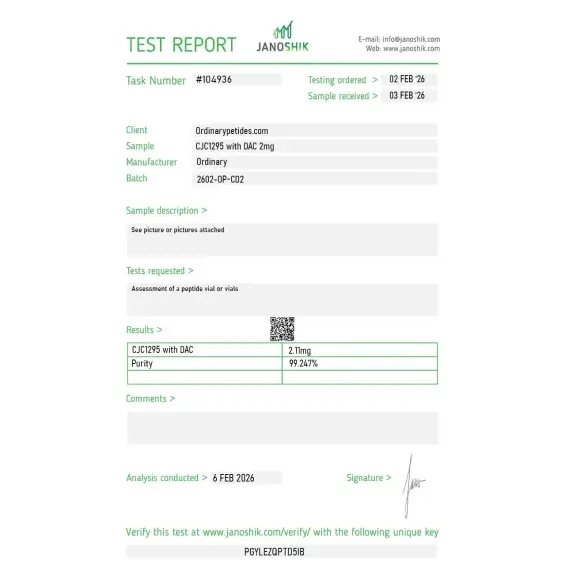
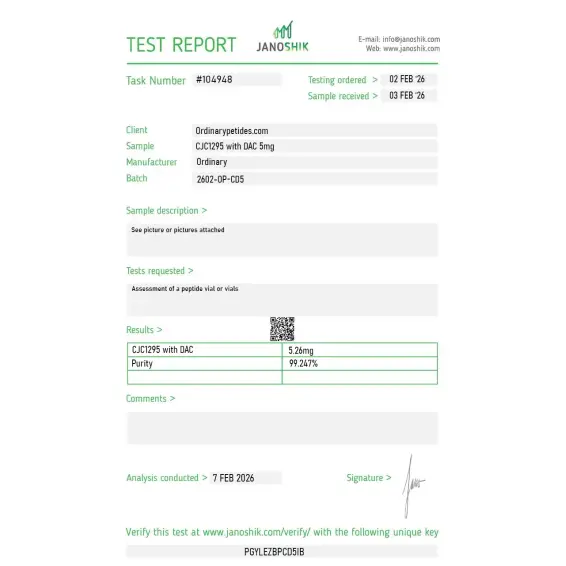
Certificate of Analysis
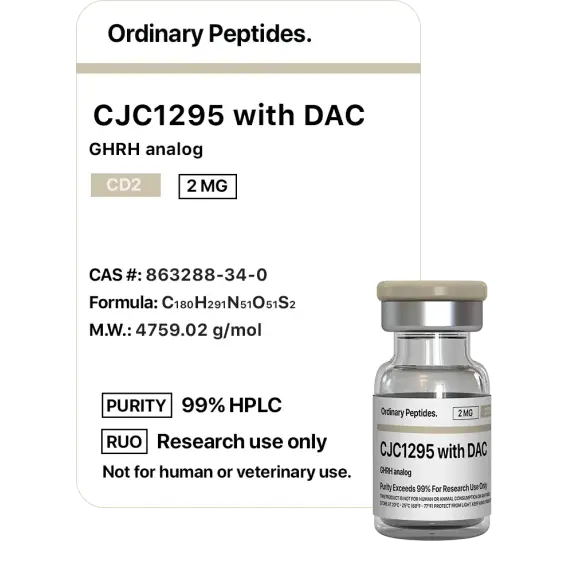
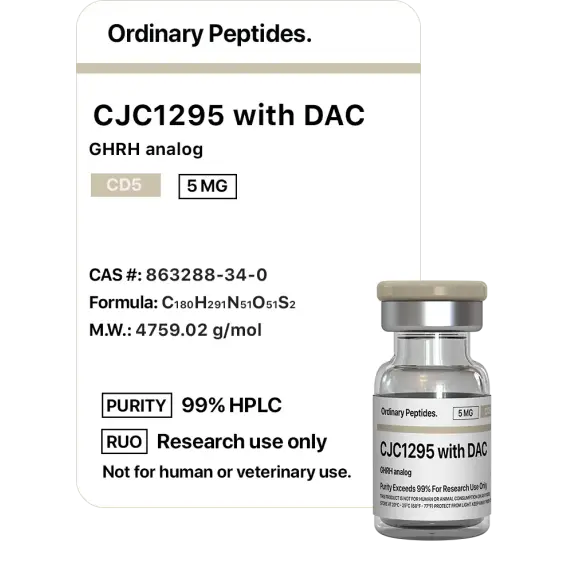
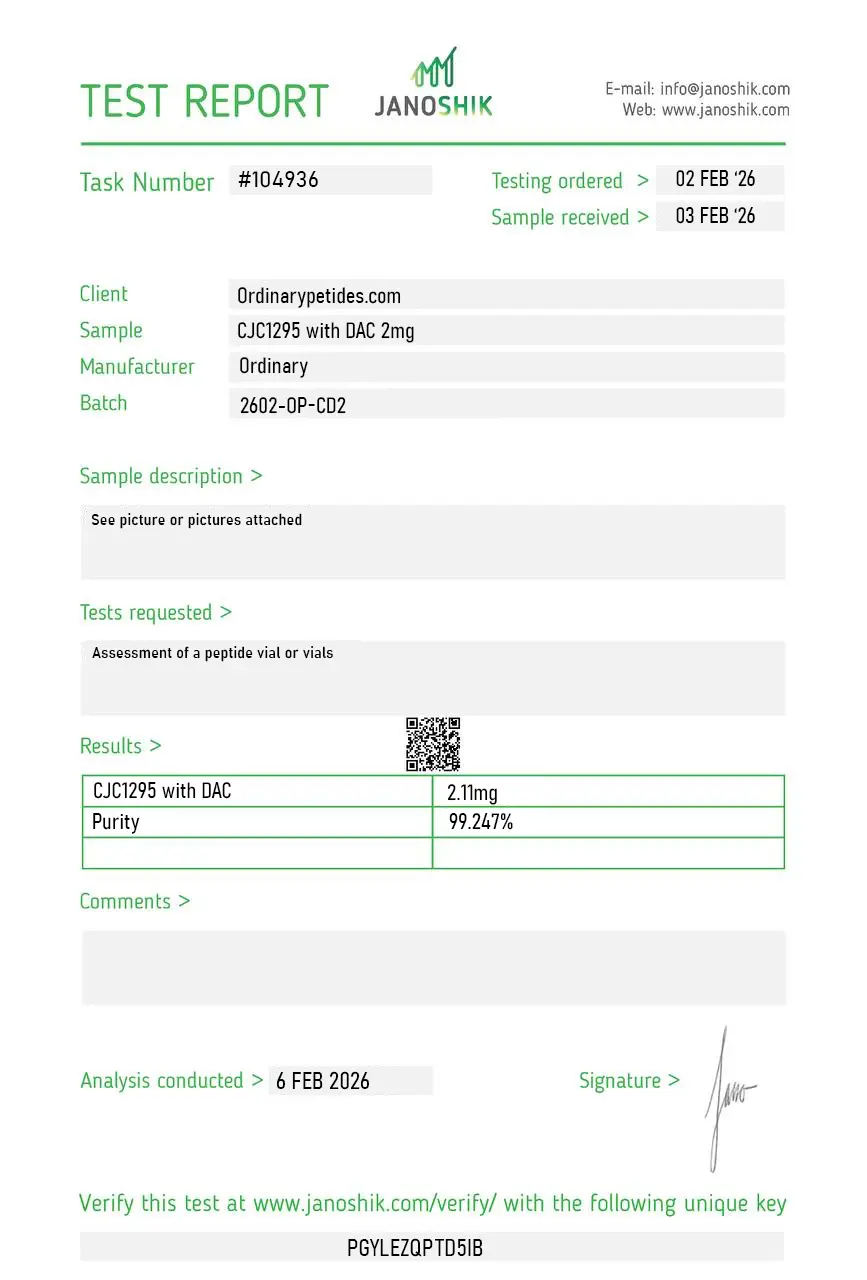
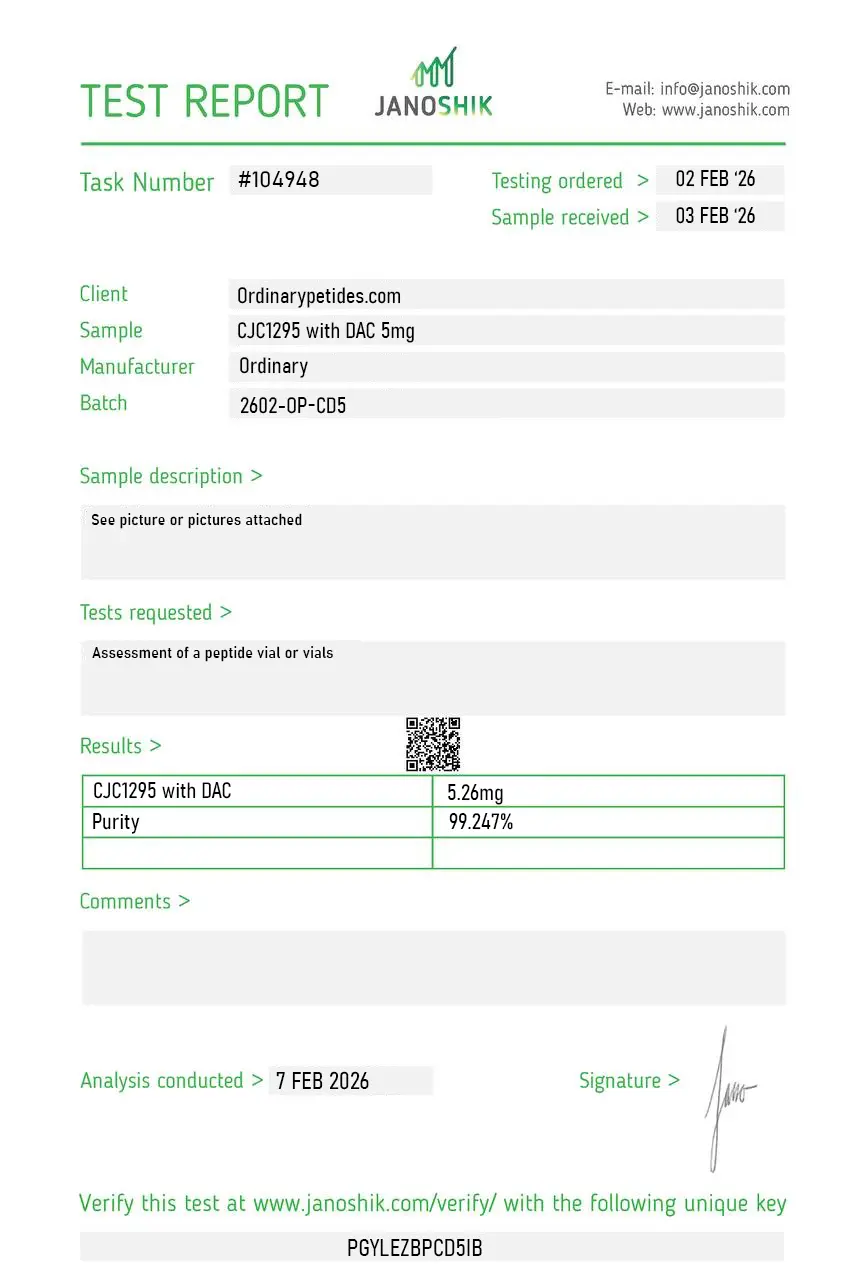
Independent test reports are available for CJC-1295 with DAC 2mg and 5mg batches. These reports provide batch-level documentation and analytical verification information for research reference.
Based on 3 reviews
4.7
-
2
-
1
What earned the order is that it frames the DAC version as the long-acting, non-physiologic tonic-activation tool it is, rather than implying it's a cleaner or better CJC — it's a different pharmacology, not an upgrade. For receptor-pathway work where I need the sustained signal specifically and understand its non-physiologic nature, that honest framing was the deciding factor. Consistent across two orders.
Good that the listing distinguishes the DAC version from No-DAC by half-life rather than treating them as interchangeable, but it could note that the failed ConjuChem clinical program means there's no human pharmacokinetic benchmark — the week-long half-life figure comes from the development data, and a buyer should know the clinical translation didn't complete. Material itself was reliable for our sustained-activation assays.
We use it as the sustained-exposure arm in a receptor-desensitization comparison — tonic week-long activation from the DAC version against the brief pulses from No-DAC, mapping how continuous versus pulsatile GHRH-receptor stimulation drives downregulation differently. The DAC's whole value here is that it does not clear quickly; the persistent signal is the experimental condition. Material held that sustained-activation profile across the extended window we ran.
In experimental settings, it stimulates endogenous growth hormone release and can lead to prolonged elevation of GH and IGF-1 levels due to its DAC modification.
Potential research observations include fluid retention, flushing, insulin sensitivity changes, or sustained hormone elevation depending on protocol design.
It binds to GHRH receptors in the pituitary gland and, due to its Drug Affinity Complex, attaches to albumin, resulting in prolonged stimulation of growth hormone secretion.
Yes. It is a peptide analogue of GHRH with a DAC modification that prolongs its activity.
It means drug affinity complex. FDA documents describe that CJC-1295 with DAC contains an added MPA-Lys fragment that enables albumin binding and prolonged exposure.
CJC-1295 with DAC (Drug Affinity Complex) is a synthetic analog of growth hormone-releasing hormone (GHRH) developed by ConjuChem Biotechnologies. It is a modified form of the naturally occurring GHRH(1-29) peptide sequence, engineered with four amino acid substitutions for stability and a proprietary Drug Affinity Complex attached to the C-terminus. The DAC component is a maleimidopropionyl-lysine modification that allows the peptide to covalently bind to albumin — the most abundant protein in blood — dramatically extending its active lifespan in the body. It is also known as DAC:GRF (Drug Affinity Complex: Growth Hormone-Releasing Factor). It is not approved by the FDA for any therapeutic indication and cannot be legally compounded in the United States.
Without DAC, CJC-1295 (also called Mod GRF 1-29) has a half-life of approximately 30 minutes — it enters circulation, triggers a brief pulse of GH from the pituitary, and is rapidly cleared. This closely mimics the body's natural pulsatile GHRH secretion pattern. With DAC, the peptide binds to albumin in the bloodstream immediately after injection, which protects it from enzymatic breakdown and renal clearance, extending its half-life to approximately 6 to 8 days with effects potentially lasting up to two weeks. This is the defining pharmacological distinction. The DAC version achieves sustained, non-pulsatile GH elevation with once or twice weekly dosing — a convenient but physiologically artificial pattern. The non-DAC version requires daily or multiple-daily dosing but preserves the natural pulsatile rhythm considered important for receptor sensitivity and long-term endocrine health.
CJC-1295 with DAC binds to GHRH receptors on somatotrope cells in the anterior pituitary gland, stimulating the synthesis and release of growth hormone into circulation. Elevated GH then travels to the liver where it stimulates production of IGF-1, which mediates many of GH's downstream effects on muscle, fat, bone, and tissue repair. Unlike administering synthetic HGH directly — which suppresses the body's own production and disrupts feedback loops — CJC-1295 works upstream by stimulating the body's own GH production, preserving the HPG axis feedback mechanisms to some degree.
The key published human study — a 2006 randomized, placebo-controlled, double-blind trial published in the Journal of Clinical Endocrinology & Metabolism — found that a single injection of CJC-1295 with DAC produced dose-dependent increases in mean plasma GH levels of 2 to 10-fold lasting 6 days or more, and IGF-1 increases of 1.5 to 3-fold lasting 9 to 11 days. With multiple doses, IGF-1 remained elevated above baseline for up to 28 days. The estimated half-life was 5.8 to 8.1 days. No serious adverse reactions were reported in these short-term trials. CJC-1295 was also studied as a potential treatment for HIV-associated lipodystrophy and growth hormone deficiency but clinical development was discontinued — one trial subject died, though the attending physician concluded the death was most likely due to pre-existing asymptomatic coronary artery disease rather than the peptide itself.
CJC-1295 with DAC is given by subcutaneous injection once or twice per week due to its long half-life. Research protocols typically use doses of approximately 100 mcg one to two times weekly. Unlike the non-DAC version it does not require timing relative to meals — its sustained albumin-bound release means food intake does not significantly alter the GH response. It is supplied as a lyophilized powder reconstituted with bacteriostatic water.
The most commonly reported side effects are water retention, temporary flushing, mild tingling or numbness in the extremities, headaches, increased appetite, mild fatigue, and injection site redness or irritation. These are generally mild and dose-dependent. A significant concern unique to the DAC version is that its extremely long half-life makes side effects difficult to manage — if adverse effects occur they persist for days rather than clearing within hours as they would with a shorter-acting compound. Theoretical long-term risks of sustained GH and IGF-1 elevation include insulin resistance, joint pain, fluid retention, and the general concern that chronically elevated IGF-1 carries potential effects on abnormal cell growth that have not been adequately studied in this context.
People with active cancer or a history of cancer should not use it given IGF-1's established role in promoting cell growth and its association with cancer risk at chronically elevated levels. Those with diabetes or insulin resistance should use caution as sustained GH elevation can worsen glucose control. People with pituitary tumors or disorders should avoid it. Pregnant or breastfeeding women should not use it. Athletes subject to anti-doping testing should note it is detectable for up to 4 days in urine and prohibited under WADA. Many physicians and researchers working in this space actually favor CJC-1295 without DAC over the DAC version precisely because its physiological pattern is more natural, its side effects resolve quickly if they occur, and dosing is more easily adjusted.