The Pathways Behind Tissue Repair and Recovery
Regenerative research peptides have a lopsided evidence profile in 2025. The Vasireddi systematic review in AJSM identified 36 BPC-157 musculoskeletal studies between 1993 and 2024 with consistent healing signal in animals; a parallel HSS Journal review found only one retrospective human cohort. The catalog below covers BPC-157 and thymosin β4 working through the VEGFR2-Akt-eNOS angiogenesis axis, GHK-Cu for collagen and decorin upregulation, relaxin-receptor agonists such as B7-33 for fibrosis, plus shorter Khavinson bioregulators like Cortagen and Pinealon. Every compound here sits on rodent data first, human work second.
Regenerative Research
Showing 1–40 of 40 results
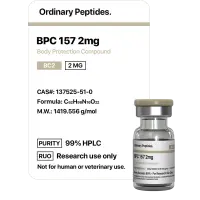
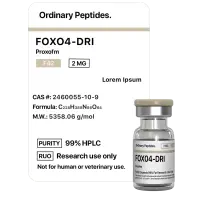
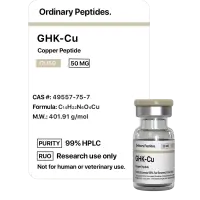
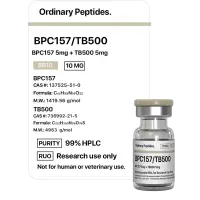
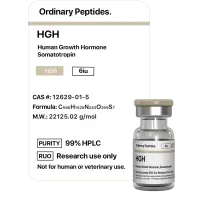
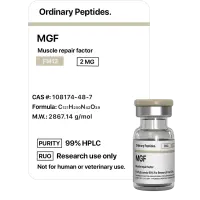
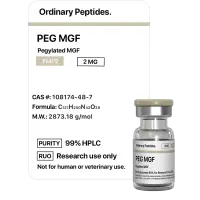
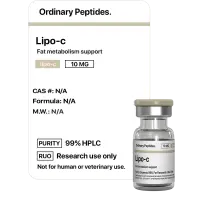
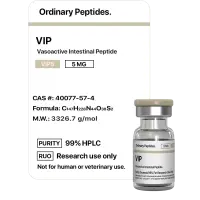
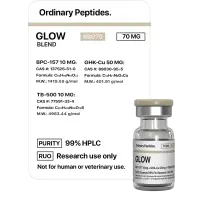
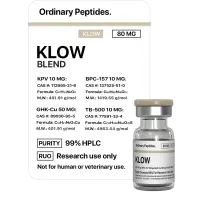
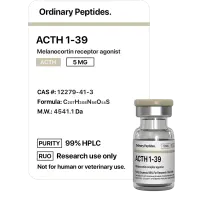
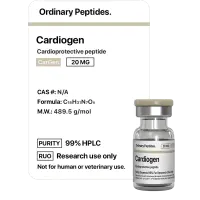
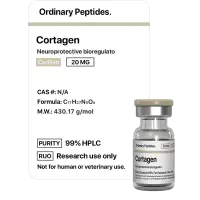
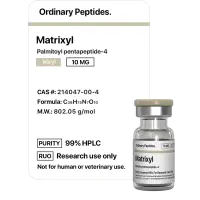

The 35-to-1 ratio is worth sitting with. The Vasireddi 2025 review in HSS Journal screened 544 articles and identified 36 BPC-157 musculoskeletal studies — 35 preclinical, 1 retrospective human clinical. Across muscle, tendon, ligament, and bone models, the preclinical signal was remarkably consistent: enhanced cell migration, improved biomechanical outcomes, accelerated healing across injury types. The single human study (Lee and Padgett, 2021) was a small retrospective series of 12 knee patients receiving intra-articular BPC-157, with 7 of 12 reporting subjective improvement over six months. That's the actual evidence shape. Most regenerative peptides in this catalog sit on similar profiles — substantial rodent data, sparse human translation. The clinical literature has not caught up with the preclinical literature, and the gap is part of why this category remains in research status.
Mechanistic Clusters in This Catalog
Regenerative peptide research groups around four molecular themes, each addressing a different aspect of tissue repair biology.
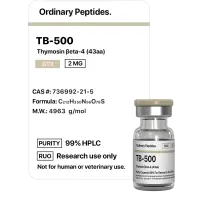
The angiogenesis axis is the most studied. BPC-157 and thymosin β4 both modulate VEGFR2 signaling, downstream Akt phosphorylation, and eNOS activation — together producing the vascular sprouting that supports tissue repair. BPC-157 additionally affects nitric oxide synthesis and dopaminergic/serotonergic stress responses in some preclinical work. Thymosin β4 has a parallel role through G-actin sequestration and cell migration support. Both compounds are studied across wound healing, gastric ulcer, tendon transection, and ischemia-reperfusion models.
The copper-dependent collagen pathway centers on GHK-Cu. The tripeptide binds Cu²⁺ with high affinity and delivers it to lysyl oxidase, the enzyme that crosslinks collagen and elastin. GHK-Cu has also been shown in dermal and connective tissue models to upregulate decorin (a proteoglycan that regulates collagen fibril spacing), modulate metalloproteinase expression, and increase fibroblast proliferation. Its mechanism is biochemically distinct from the angiogenesis-focused peptides — it acts on the extracellular matrix side of repair biology.
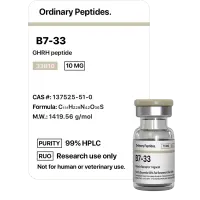
Fibrosis and relaxin-receptor work is a smaller but growing area. B7-33 is a synthetic single-chain analog of relaxin-2 that binds RXFP1 with biased signaling toward anti-fibrotic effects. Relaxin biology is studied in cardiac, hepatic, and pulmonary fibrosis models, where excessive collagen deposition is the underlying problem rather than insufficient collagen synthesis. This makes the relaxin pathway mechanistically opposite to GHK-Cu in some respects — one supports matrix production, the other modulates matrix turnover.
Khavinson bioregulators (Cortagen, Pinealon, and others) form a distinct subgroup developed at the St. Petersburg Institute of Bioregulation and Gerontology. These are short peptides — typically 2–4 residues — proposed to function as tissue-specific epigenetic regulators through chromatin binding. The literature on Khavinson peptides is substantial in Russian sources but limited in independent Western replication, a structural caveat the field acknowledges.
Research Models Commonly Used
Standard in vivo models in regenerative peptide research include Achilles tendon transection (rats, mice), gastric ulcer models (cysteamine-induced, indomethacin-induced), excisional wound healing (full-thickness skin punch), MCL injury (medial collateral ligament transection), and segmental bone defect models. In vitro work uses primary tenocytes for tendon studies, NIH-3T3 or human dermal fibroblasts for skin and matrix work, HUVECs (human umbilical vein endothelial cells) for angiogenesis assays, and tube formation assays on Matrigel for vascular sprouting endpoints. The endpoint diversity is wide because "regeneration" itself spans different tissue types with different repair biology.
Why Human Translation Remains Limited
Several structural reasons explain the preclinical-human gap. Regulatory pathway: regenerative peptides do not fit neatly into single-indication clinical trial designs, since they target broad repair biology rather than a specific disease. Commercial economics: short peptides are difficult to patent broadly and have shorter exclusivity windows than novel biologics, reducing pharmaceutical industry investment in clinical development. Methodological challenges: tendon, ligament, and connective tissue repair endpoints are harder to measure in human trials than they are in standardized rodent models, where histological and biomechanical endpoints are direct. The result is that compounds with strong preclinical data often do not progress to Phase 2/3 work, not because the biology fails, but because the development path is structurally less attractive.
Frequently Asked Questions
What is the VEGFR2-Akt-eNOS pathway in regenerative research?
VEGFR2 is the primary receptor for vascular endothelial growth factor on endothelial cells. When activated, it signals through PI3K to phosphorylate Akt, which then phosphorylates eNOS (endothelial nitric oxide synthase) at Ser1177. Active eNOS produces nitric oxide, supporting vasodilation and angiogenesis. This pathway is studied as the molecular foundation of BPC-157 and thymosin β4 effects in tissue repair models — angiogenesis enables the vascular supply needed for new tissue growth.
How does GHK-Cu differ from BPC-157 mechanistically?
GHK-Cu and BPC-157 act on different parts of repair biology. GHK-Cu functions through copper delivery to lysyl oxidase, which crosslinks collagen and elastin in the extracellular matrix — its primary role is matrix synthesis support. BPC-157 functions primarily through angiogenesis pathways and cell migration signaling — its primary role is supporting vascular sprouting and cell recruitment. The two are sometimes studied in parallel, but they target mechanistically distinct steps of the repair process.
What is the BPC-157 and TB-500 combination?
BPC-157 and TB-500 (a synthetic fragment of thymosin β4) are sometimes studied together in injury repair models on the rationale that BPC-157's angiogenesis effects and TB-500's cell migration effects may be complementary. The combination is more common in research applications than in published systematic preclinical study designs — head-to-head and combination data is limited compared to either compound studied alone. Most rigorous mechanistic work uses one compound at a time to isolate mechanism.
Are Khavinson peptides scientifically validated outside Russia?
Khavinson bioregulators (Cortagen, Pinealon, Epitalon, and related short peptides) have a substantial publication record from the St. Petersburg Institute of Bioregulation and Gerontology and affiliated Russian groups. Independent Western replication is limited, with a small but growing body of papers from European and US laboratories beginning around 2019–2025. The compounds are not approved by FDA, EMA, or comparable Western regulators, and the evidence base is asymmetric — large in volume but concentrated in one research lineage. This is a structural caveat the field acknowledges.
What is biased agonism at the relaxin RXFP1 receptor?
RXFP1 is the primary relaxin receptor, a G-protein-coupled receptor that signals through both Gs (cAMP) and Gi pathways, with downstream effects on cAMP, ERK, and NO production. Biased agonism refers to ligands that selectively activate one signaling arm over another. B7-33 is a single-chain relaxin analog designed to preferentially activate the anti-fibrotic signaling arm while reducing other downstream effects. The biased agonism concept is studied as a way to retain therapeutic mechanism while reducing off-target signaling.
Why does regenerative peptide research focus so heavily on animal models?
Animal injury and repair models allow direct measurement of histological, biomechanical, and functional endpoints that are difficult to assess non-invasively in humans. Tendon healing, for example, can be evaluated by tensile strength testing in rodents, which is not possible in living human subjects. This methodological advantage makes preclinical work efficient for mechanism research but creates the translational gap visible in regenerative peptide literature — human studies require longer timelines, indirect endpoints, and larger sample sizes.
Reference Points for Further Reading
The Vasireddi 2025 systematic review in HSS Journal is the current standard reference for BPC-157 musculoskeletal literature. For the broader tissue repair peptide field, the Sikiric group at the University of Zagreb has published the foundational BPC-157 mechanistic work over three decades, and their reviews in Current Pharmaceutical Design cover the original cytoprotection theory. The thymosin β4 literature is reviewed by Goldstein and Kleinman in multiple Annals of the New York Academy of Sciences volumes. For GHK-Cu biology, Pickart's reviews remain the most comprehensive entry points. Khavinson group publications are concentrated in Bulletin of Experimental Biology and Medicine and Biogerontology.
All compounds in this catalog are intended for in vitro and preclinical research use only. None are approved by the FDA or any other regulatory authority for therapeutic use in humans. The clinical literature referenced on this page is provided as scientific context for the broader research field, not as claims for the compounds offered here.