
P 21
For in vitro testing and laboratory use only. Not for human or animal consumption. Bodily introduction is illegal. Handle only by licensed professionals. Not a drug, food, or cosmetic. Educational use only.
P21 / P021 (Ac-DGGLAG-NH₂): A CNTF-Derived Oral Neuropeptide With a Serious Preclinical Record and Zero Human Data
P21 is a small synthetic peptide — a CNTF mimetic developed by Dr. Khalid Iqbal at IBR — engineered from the active region of ciliary neurotrophic factor with an adamantane modification that gives it rare oral bioavailability and blood-brain barrier penetration.
Mechanism
It works through two parallel pathways: blocking LIF/STAT3 signaling to disinhibit adult hippocampal neurogenesis, and upregulating BDNF to activate the TrkB-PI3K-Akt-GSK3β cascade — directly reducing the tau hyperphosphorylation that drives Alzheimer's neurofibrillary tangles.
Preclinical Record
The preclinical data is genuinely substantial: 18 months of oral administration in triple-transgenic AD mice showed tau reduction, neurogenesis rescue, cognitive improvement, and a clean safety profile with no tumors or weight loss. An independent replication from an Italian group in 2024 (CDKL5 model) added further credibility to the findings.
P21 / P021 (Ac-DGGLAG-NH&sub2;): A Scientific Review
Based on peer-reviewed literature — see References. Last updated: April 2026.
The Short Version
P21 (also written P021 in the primary literature) is a small synthetic peptide — Ac-DGGLAG-NH&sub2; — developed by Dr. Khalid Iqbal and colleagues at the New York State Institute for Basic Research in Developmental Disabilities (IBR) in Staten Island. It is a ciliary neurotrophic factor (CNTF) small-molecule peptide mimetic: a rationally designed, adamantylated tetrapeptide derived from the biologically active region of CNTF (residues 148-151), engineered to replicate CNTF’s neurogenic and neuroprotective properties while solving the pharmacokinetic problems that made CNTF itself a clinical failure.
The compound works through two parallel mechanisms: (1) competitive inhibition of leukemia inhibitory factor (LIF), which suppresses adult neurogenesis via JAK-STAT3 signalling, thereby disinhibiting neurogenesis; and (2) indirect upregulation of BDNF expression, activating the TrkB-PI3K-Akt-GSK3β cascade that promotes neuronal survival, synaptic plasticity, and — critically — inhibits the primary tau kinase responsible for neurofibrillary tangle formation in Alzheimer’s disease. The published preclinical evidence base (~10–15 peer-reviewed publications, 2010–2024) is substantive, with an 18-month oral administration study in 3xTg-AD mice showing no weight loss, tumours, or signs of pain. No human data exists.
| At a glance | |
|---|---|
| Full chemical name | Ac-Asp-Gly-Gly-Leu-[Adamantylated Gly]-NH&sub2; (Ac-DGGLAG-NH&sub2;) |
| Also known as | P21; P021; Peptide 021 |
| Type | Modified synthetic tetrapeptide (CNTF small-molecule mimetic); lipopeptide |
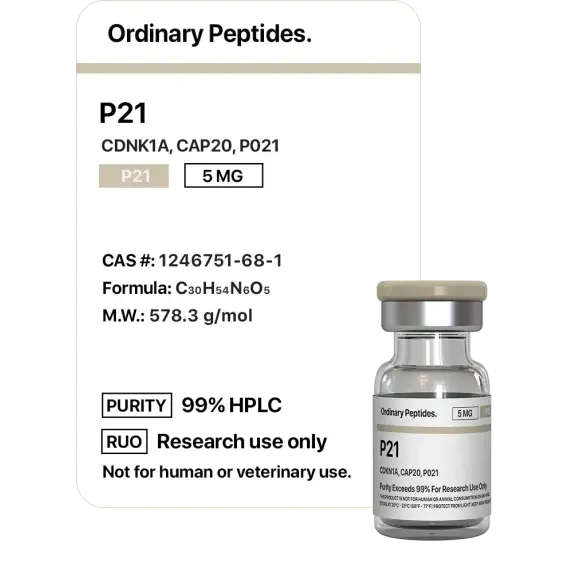
| MW | ~578.3 Da |
| Developer | Khalid Iqbal PhD, NYS Institute for Basic Research in Developmental Disabilities (IBR), Staten Island, NY |
| Primary mechanism | LIF/STAT3 inhibition → disinhibited neurogenesis + BDNF upregulation → TrkB-PI3K-Akt-GSK3β → anti-tau/pro-synaptic |
| Routes of administration | Oral (diet admixture); subcutaneous injection; intranasal (investigated) |
| Blood-brain barrier | Yes — adamantane modification enables penetration |
| FDA status | ❌ Not approved; no IND filed; no clinical trials registered |
| Human clinical data | ❌ None |
Origin: From Cerebrolysin to CNTF to P021
P021’s development follows a logical research path worth tracing in full because it explains why the compound’s design is pharmacologically elegant. Step 1 — Cerebrolysin observation: The Iqbal laboratory found that Cerebrolysin (a porcine brain extract used clinically in Europe and Asia) contained peptide fragments that reacted with neutralising antibodies to CNTF, and that the CNTF-neutralising antibody inhibited Cerebrolysin’s neurogenic effects — establishing CNTF as a key mediator. Step 2 — Epitope mapping of CNTF: Using the CNTF neutralising antibody as a probe, the group identified an 11-amino acid peptide (Peptide 6; Ac-VGDGGLFEKKL-NH&sub2;, CNTF residues 147–157) that reproduced neurogenic effects in normal mice. Step 3 — Minimal active sequence: Further truncation identified a 4-amino acid core (Peptide 6c; Ac-DGGL-NH&sub2;, CNTF residues 148–151) retaining activity. Step 4 — Adamantane engineering: The bare tetrapeptide DGGL faced two problems: rapid proteolytic degradation at the C-terminus, and poor BBB penetration. To address these design goals, adamantane building blocks were added to the C-terminus of Peptide 6c, producing Ac-DGGLAG-NH&sub2;, called P21.[1]
Structure: What Ac-DGGLAG-NH&sub2; Actually Is
Ac-Asp-Gly-Gly-Leu-[Adamantylated Gly]-NH&sub2;
Ac = N-terminal acetylation (protects from aminopeptidase attack); Asp (D) = aspartic acid (negatively charged; important for receptor recognition); Gly-Gly (GG) = glycine duplet (small, flexible; allows appropriate backbone conformational freedom); Leu (L) = leucine (hydrophobic; contributes to receptor binding surface); [Adamantylated Gly] (AG) = glycine backbone with a C-10 adamantane (tricyclo[3.3.1.1³&sup7;]decane) cage group; NH&sub2; = C-terminal amidation (protects from carboxypeptidase degradation).
Why adamantane? Adamantane is a rigid, symmetric, diamond-like carbon cage molecule that dramatically increases lipophilicity (facilitating passive diffusion through lipid bilayers including the BBB); provides steric protection from C-terminal exopeptidase attack; and at the compound’s small overall MW (~578 Da), enables both intestinal absorption and BBB penetration. Adamantane is present in several approved drugs (amantadine, memantine, saxagliptin) with a well-established pharmaceutical scaffold history.
Mechanism of Action
Pathway 1: LIF inhibition → neurogenesis disinhibition
Leukemia inhibitory factor (LIF) is a pleiotropic cytokine (IL-6 family) that signals through LIFR/gp130 → JAK1/2 → STAT3 phosphorylation. LIF’s effect on adult hippocampal neurogenesis is paradoxical: while it maintains neural stem cell (NSC) self-renewal, it strongly inhibits NSC differentiation into mature neurons, keeping progenitors as progenitors. P021’s tetrapeptide core (DGGL) contains the putative LIFR-binding sequence of CNTF. By competing with LIF for LIFR binding, P021 partially inhibits LIF signalling — relieving the differentiation brake on neural stem cells in the hippocampal dentate gyrus (SGZ) without completely eliminating the self-renewal signal. P21 acts as its parent molecule, partially inhibiting LIF activity through the STAT3 pathway, and because LIF inhibits neurogenesis in the dentate gyrus, this promotes neurogenic differentiation.[1]
Pathway 2: BDNF upregulation → TrkB-PI3K-Akt-GSK3β cascade
P021 increases BDNF expression at the transcriptional level in hippocampal neurons. The BDNF → TrkB → PI3K → Akt → GSK-3β (phosphorylation at Ser9) → GSK-3β inactivation cascade is the most important part of P021’s therapeutic rationale for Alzheimer’s disease. GSK-3β is the primary tau kinase responsible for hyperphosphorylation of tau at AD-defining epitopes (AT8: Ser202/Thr205; PHF-1: Ser396/Ser404; Ser262). When GSK-3β is inactivated by Akt-mediated Ser9 phosphorylation: tau hyperphosphorylation decreases (reduced neurofibrillary tangle pathology); and amyloid precursor protein (APP) processing is altered (GSK-3β promotes amyloidogenic processing) → reduced Aβ production. P021 increases BDNF expression which via the TrkB-PI3K-AKT pathway leads to inhibitory phosphorylation of GSK3β at Ser9, causing decrease in both tau and Aβ pathologies.[5]
The multi-target architecture addresses multiple Alzheimer’s hallmarks simultaneously: promotes neurogenesis (new neurons replace lost ones); promotes synaptic plasticity (existing connections strengthened); prevents tau hyperphosphorylation (slows tangle formation); and reduces amyloid burden (secondary to GSK3β effects on APP processing) — through a mechanistically coherent cascade rather than targeting a single pathway as most Alzheimer’s candidates have done.
Pharmacokinetics: Why Peripheral Administration Works
P021 was rationally designed for oral bioavailability — a rare achievement among peptide therapeutics. Multiple Iqbal laboratory studies administered P021 via diet admixture (mixed into standard rodent chow pellets) and achieved measurable CNS effects — the most stringent test of oral bioavailability for a peptide drug. The pharmacokinetic paper (Blanchard et al., Neurotoxicity Research, 2014) characterised P021’s PK profile in rodents following peripheral administration and confirmed detectable CNS concentrations.[2]
P021 overcomes the typical peptide drug barriers through: very small size (~578 Da, facilitating intestinal absorption); N-terminal acetylation (blocks aminopeptidase attack); C-terminal amidation (blocks carboxypeptidase attack); and adamantylated glycine (provides proteolytic resistance, lipophilicity for BBB penetration, and hepatic metabolic stability). The practical implication: if P021 advances to human trials, oral dosing should be feasible — a significant advantage over most peptide candidates requiring chronic injection.
Published Preclinical Evidence
Initial characterisation (Li et al., FEBS Letters, 2010; PMID 20600002)
The landmark paper establishing: (1) oral/peripheral bioavailability with CNS effects; (2) enhancement of adult hippocampal neurogenesis; (3) cognitive improvement (learning, short-term and spatial reference memories) in normal adult C57Bl/6 mice; (4) LIF/STAT3 as the mechanism; (5) no adverse effects in the treatment period. P21 induced enhancement of neurogenesis and maturation of newly born neurons in the granular cell layer and subgranular zone of the dentate gyrus.[1]
Triple-transgenic Alzheimer’s model — disease modification (Kazim et al., Neurobiology of Disease, 2014; PMID 25046994)
Chronic oral P021 treatment in 3xTg-AD mice from 3 months to 21 months produced: robust reduction in tau hyperphosphorylation at multiple AD-specific epitopes; mild reduction in Aβ pathology; rescue of hippocampal neurogenesis deficits; restoration of synaptic plasticity markers; improved cognitive performance; significantly reduced mortality vs. untreated 3xTg-AD controls; and no weight loss, tumours, or signs of pain over 18 months.[3]
Prevention of synaptic/dendritic deficits (Baazaoui & Iqbal, Alzheimer’s Research & Therapy, 2017; PMC5488423)
P021 treatment rescued dendritic and synaptic deficits, boosted neurogenesis, and reversed cognitive impairment in 3xTg-AD mice. Unlike CNTF, which causes severe anorexia, cramps, and muscle pain, treatment with P021 for around 18 months did not show any weight loss, tumours, or signs of pain in 3xTg-AD mice.[4]
Additional preclinical models
Tau-specific model (htau transgenic mice): P021 prevented tau-mediated neurodegeneration through BDNF/TrkB/PI3K/Akt/GSK3β — confirming the tau pathway as a primary target independent of amyloid. Traumatic brain injury (Kazim et al., 2021): Oral P021 after controlled cortical impact reduced TBI-induced chronic tau pathology, prevented delayed neurodegeneration, attenuated neuroinflammation, and improved cognitive outcomes at 3 months post-injury. Down syndrome model (Ts65Dn mice): Prenatal to early postnatal P021 rescued hippocampal neurogenesis deficits, reduced tau pathology, and improved cognitive function.
Independent replication — CDKL5 deficiency disorder (Mottolese et al., Journal of Neurodevelopmental Disorders, 2024; PMC11590213)
The CNTF Comparison: Why P021 Is Better Than the Real Thing
Full-length CNTF was tested in human clinical trials in the 1990s for ALS and obesity. It was largely abandoned due to unacceptable systemic toxicity: severe anorexia and weight loss (hypothalamic effects); muscle cramps and hyperalgesia; systemic inflammation; rapid immunogenicity; very short plasma half-life (5 minutes); no oral bioavailability; no CNS penetration after peripheral administration.
P021 avoids all of these: no weight loss or anorexia (18-month 3xTg-AD study confirmed); no muscle cramps or hyperalgesia; not immunogenic (defined synthetic molecule); orally bioavailable; BBB-penetrant via adamantane modification; and does not directly activate the full CNTF receptor signalling cascade. This combination — CNTF-like neurogenic effects without CNTF’s toxicity — is the primary rationale for P021’s design.
P021 vs. Related Nootropic/Neurogenic Peptides
| Compound | Mechanism | BBB | Oral | Human data |
|---|---|---|---|---|
| P021 | LIF inhibition + BDNF upregulation | Yes (adamantane) | Yes | ❌ None |
| Semax | BDNF upregulation + DA/GABA modulation | Yes (nasal) | No | Russian clinical use |
| Cerebrolysin | Multiple CNTF/GDNF fragments | Partial | No (IV) | European/Asian RCTs |
| Dihexa | HGF/c-Met | Yes | Yes | ❌ None |
| BDNF (native) | TrkB direct agonism | No | No | Clinical failed (poor PK) |
P021’s unique advantage: oral bioavailability + BBB penetration + defined mechanism + no neurotrophic protein-associated toxicity — a combination not achieved by any other compound in this category.
Safety Profile
Short-term (Li et al. 2010, Blanchard et al. 2014): No alterations in body weight, exploratory behaviour, or swim speed; no changes in haematological, biochemical, or histological markers; no hepatotoxicity signals.
Long-term (Baazaoui & Iqbal 2017; Kazim et al. 2014): 18 months of continuous oral administration in 3xTg-AD mice: no weight loss, no tumours, no signs of pain; no signs of immunogenicity; reduced mortality compared to untreated 3xTg-AD controls.
⚠️ The human safety gap: No human pharmacokinetic, safety, or tolerability data exists. Key unknowns for human translation: allometric dose scaling from mice; potential immunogenicity in immunologically diverse human populations; off-target effects from BDNF pathway activation at clinical scale (chronic supraphysiological BDNF signalling has been implicated in some pain sensitisation contexts); and the theoretical concern that any compound stimulating neural progenitor proliferation could interact with existing tumour biology, requiring formal carcinogenicity evaluation. None of these concerns are demonstrated for P021 — they are the standard open questions for any pre-IND compound.
Common Misconceptions
“P21 is the active fragment of Cerebrolysin.”
P21 was developed through research that started with studying Cerebrolysin, but P21 is not a fragment of Cerebrolysin. It is a synthetic peptide derived from CNTF (specifically from CNTF residues 148–151). Cerebrolysin is a heterogeneous porcine brain extract; P21 is a defined synthetic molecule with a completely different origin.
“P21 directly binds CNTF receptors.”
P21 does not activate the canonical CNTF receptor complex (CNTFRα/gp130/LIFR tripartite complex) the way CNTF does. It primarily works by partial competitive inhibition of LIF at the LIFR and indirectly by upregulating BDNF — a different and more targeted mechanism that avoids CNTF’s systemic toxicity.
“There are human trials confirming P21 works.”
No human clinical trials have been published or registered as of April 2026. The impressive preclinical data represents genuine scientific progress; it does not constitute clinical evidence of efficacy in humans.
Key Takeaways
- P021 (Ac-DGGLAG-NH&sub2;) is a rationally designed CNTF small-molecule mimetic with a well-characterised structure, clear synthesis route, defined mechanism, and a coherent biological rationale. Its development from CNTF epitope mapping represents genuine pharmaceutical engineering.[1]
- The dual mechanism — LIF inhibition (neurogenesis promotion) + BDNF upregulation (TrkB-PI3K-Akt-GSK3β anti-tau cascade) — simultaneously addresses neurogenesis failure and tau hyperphosphorylation, the two most important pathological processes in Alzheimer’s disease beyond the amyloid hypothesis.[5]
- ✅ Oral bioavailability and BBB penetration set P021 apart from most neurotrophic factor-based therapeutic strategies. Full-length CNTF and BDNF failed clinically because they cannot reach the brain after peripheral administration; P021’s adamantane modification solves this problem in rodent models.[2]
- ✅ The preclinical evidence base is genuinely substantive — 10–15 publications including 18-month chronic oral administration studies, multiple disease models, and one independent group replication (CDKL5, 2024).[3][6]
- ⚠️ No human data exists. P021’s journey from impressive preclinical results to clinical validation is uncertain and may fail — as many Alzheimer’s candidates before it. Phanes Biotech is the commercial development vehicle; no IND or clinical trial registration is publicly available as of April 2026.
References
Primary Literature
- Li B, Wanka L, Blanchard J, Liu F, Chohan MO, Iqbal K, Grundke-Iqbal I. Neurotrophic peptides incorporating adamantane improve learning and memory, promote neurogenesis and synaptic plasticity in mice. FEBS Letters. 2010;584(15):3359–3365. PMID 20600002
- Blanchard J, Chohan MO, Li B, Liu F, Iqbal K, Grundke-Iqbal I. Pharmacokinetics and safety profile of a neurotrophic peptidergic compound P021 in rodents. Neurotoxicity Research. 2014;26(1):16–29. PMID 24136733
- Kazim SF, Blanchard J, Dai CL, Tung YC, LaFerla FM, Iqbal IG, Iqbal K. Disease modifying effect of chronic oral treatment with a neurotrophic peptidergic compound in a triple transgenic mouse model of Alzheimer’s disease. Neurobiology of Disease. 2014;71:110–130. PMID 25046994
- Baazaoui N, Iqbal K. Prevention of dendritic and synaptic deficits and cognitive impairment with a neurotrophic compound. Alzheimer’s Research & Therapy. 2017;9:45. PMC5488423
- Kazim SF, Iqbal K. Neurotrophic factor small-molecule mimetics mediated neuroregeneration and synaptic repair: emerging therapeutic modality for Alzheimer’s disease. Molecular Neurobiology. 2016;53(1):1195–1210. PMID 27400746
Recent Independent Replication
- Mottolese N, Loi M, Trazzi S, et al. Effects of a ciliary neurotrophic factor (CNTF) small-molecule peptide mimetic in an in vitro and in vivo model of CDKL5 deficiency disorder. Journal of Neurodevelopmental Disorders. 2024;16:65. PMC11590213
Key Investigator
- Khalid Iqbal, PhD — Former Chair, Department of Neurochemistry, NYS Institute for Basic Research in Developmental Disabilities (IBR), Staten Island, NY. One of the world’s foremost tau researchers; co-discoverer (with Inge Grundke-Iqbal) of the link between tau hyperphosphorylation and Alzheimer’s disease neurofibrillary tangles. Co-founder and Chief Scientific Officer, Phanes Biotech (clinical development vehicle for P021).
Certificate of Analysis
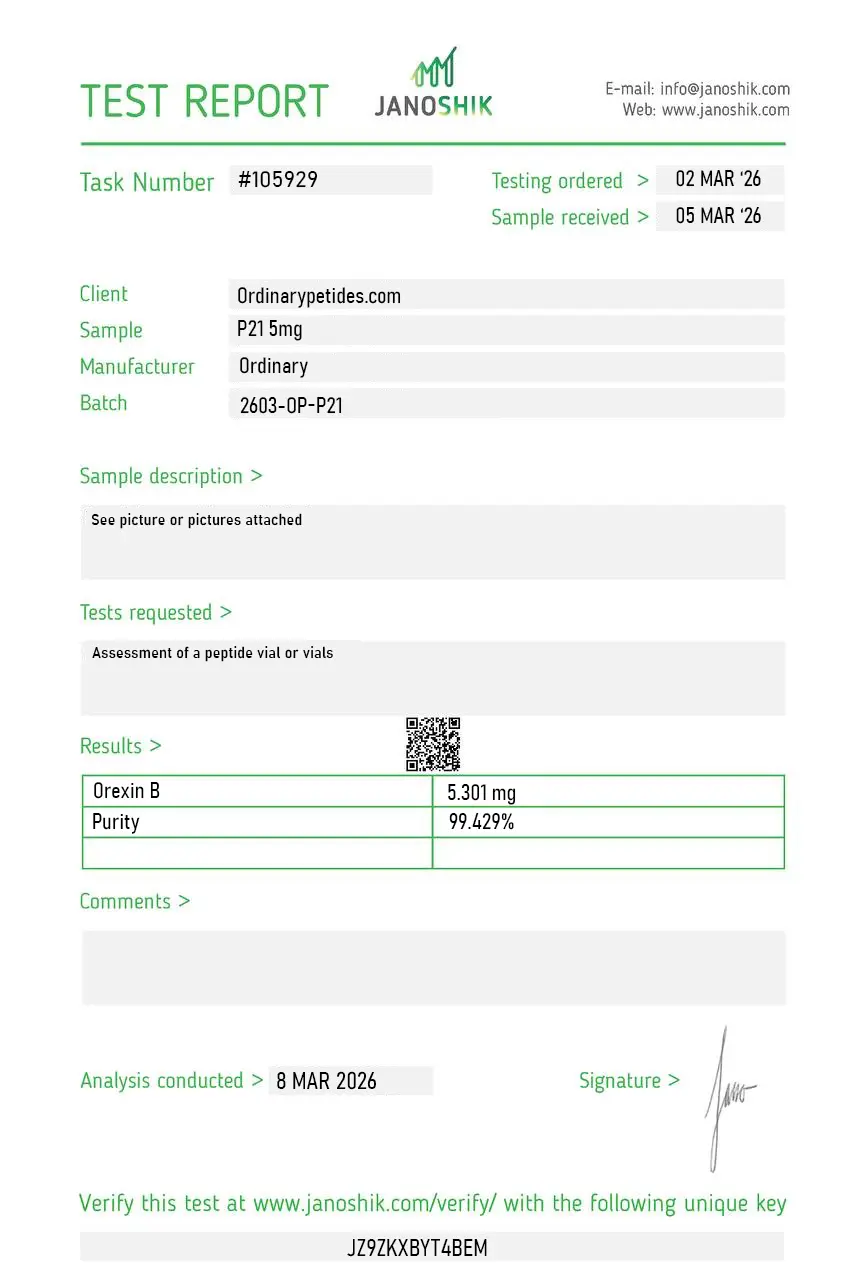
An independent test report is available for P21 5mg. This report provides batch-level documentation and analytical verification information for research reference.
Based on 2 reviews
4.5
-
1
-
1
Reorder. The Ac-DGGLAG-NH₂ sequence checked out by mass spec including the adamantane modification.
The adamantane modification is what makes this peptide unusual — most short peptides don't survive oral GI passage, and the adamantane group provides the stability and BBB penetration that distinguishes P021 from typical research peptides. The certificate confirmed the modified residue, which matters because an unmodified DGGLAG sequence would be a meaningfully different compound without the oral/CNS properties. Worth verifying.
P021 (also written as P21 or Peptide 021) is a synthetic tetrapeptide mimetic derived from the most biologically active region of Ciliary Neurotrophic Factor (CNTF) — specifically amino acid residues 148 to 151 of the human CNTF protein, yielding the core sequence Asp-Gly-Gly-Leu (DGGL). A critical structural modification distinguishes it from a simple peptide fragment — an adamantane group is covalently attached to a glycine at the C-terminus, giving the complete structure Ac-DGGLAG-NH₂ with a molecular weight of 578.3 Da. This modification was engineered specifically to solve the fundamental problems that make full-length CNTF clinically unusable — poor blood-brain barrier penetration, rapid enzymatic degradation, and severe systemic side effects. P021 was developed primarily by Dr. Khalid Iqbal's research team at the New York State Institute for Basic Research in Developmental Disabilities.
CNTF is a potent neurotrophic cytokine with well-established roles in neuronal survival, hippocampal neurogenesis, and neural stem cell differentiation. However, its clinical therapeutic use has been severely limited because it cannot cross the blood-brain barrier, has poor plasma stability, produces CNTF-specific antibodies when administered systemically, and caused serious adverse effects in a clinical trial for ALS — including significant weight loss, severe cramps, anorexia, and muscle pain. P021 was engineered to retain the neurogenic benefits of CNTF while eliminating all of these problems. The adamantane modification dramatically increases lipophilicity for blood-brain barrier penetration while simultaneously protecting the peptide from exopeptidase breakdown. Critically, no immune reaction to P021 has been documented in any study to date.
P021 does not simply mimic CNTF by binding to CNTF receptors. Its primary mechanism operates indirectly through inhibition of Leukemia Inhibitory Factor (LIF) signaling via the JAK-STAT3 pathway. In the brain, LIF acts as a brake on neurogenesis — when LIF signaling is active, formation of new neurons from neural progenitor cells in the hippocampal dentate gyrus is suppressed. By competitively inhibiting LIF signaling, P021 releases this brake and allows neurogenesis to proceed. This leads downstream to significantly increased BDNF (Brain-Derived Neurotrophic Factor) expression and elevated phosphorylation of CREB — a transcription factor that further drives BDNF synthesis, creating a self-reinforcing neurogenic feedback loop. Additionally P021 inhibits GSK-3β activity — a major tau kinase — which reduces tau hyperphosphorylation and has implications for amyloid-beta processing.
The most extensively studied application is Alzheimer's disease. In triple transgenic AD mouse models (3xTg-AD), chronic P021 treatment initiated during the period of synaptic compensation prevented synaptic and dendritic deficits, preserved cognitive function, increased neurogenesis and BDNF levels, reduced tau hyperphosphorylation, and attenuated amyloid-beta accumulation — all over an 18-month treatment period with no observed weight loss, tumors, or signs of pain. Additional research has demonstrated benefits in Down syndrome models, CDKL5 deficiency disorder — a severe epileptic encephalopathy — traumatic brain injury models, and normal aging models. It is currently under clinical development by Phanes Biotech as a disease-modifying drug for Alzheimer's disease and other neurodegenerative diseases.
As of the latest available information, P021 has not completed published Phase I, II, or III human clinical trials. All efficacy and safety data to date comes from in vitro experiments and animal studies spanning up to 18 months. Phanes Biotech is reportedly working toward clinical development but no human trial results have been published. The Alzheimer's Drug Discovery Foundation's Cognitive Vitality review notes that no human research confirming benefits to patients with dementia is currently available.
In animal studies P021 has been administered orally — incorporated directly into the diet — which is a significant practical advantage over most neuropeptides that require injection. Its small molecular weight of 578.3 Da and the adamantane modification make it suitable for oral bioavailability and CNS penetration, properties that distinguish it from virtually all other neurotrophic factor-derived compounds. No standardized human dosing protocol exists as it has not entered human trials.
In animal studies lasting up to 18 months, P021 showed no weight loss, tumors, abnormal cellular proliferation, or signs of pain — a striking safety contrast to full-length CNTF. Theoretical concerns include potential interference with endogenous CNTF's neuroprotective functions if LIF inhibition is excessive, unknown effects of very long-term use beyond what has been studied, and a theoretical possibility of antibody formation raised in one review — though no immune reaction has been observed in any published study. Because it promotes neurogenesis, the theoretical question of uncontrolled cellular proliferation has been raised but not supported by any evidence to date.