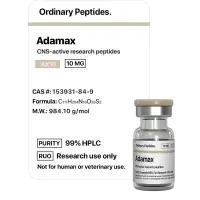
Semax
For in vitro testing and laboratory use only. Not for human or animal consumption. Bodily introduction is illegal. Handle only by licensed professionals. Not a drug, food, or cosmetic. Educational use only.
Semax: Research on Neuroprotection and New Horizons in Science
Semax is a synthetic heptapeptide that has attracted the attention of scientists due to its experimental results in the field of neuroprotection. In preclinical studies, it demonstrated interesting effects by activating neurotrophin genes, which are associated with neuroplasticity and cognitive processes.
In models of ischemic stroke, Semax showed a positive effect on molecules related to vascular and inflammatory processes. These findings make it an intriguing subject for research projects in neurobiology and neurorehabilitation.
Its ability to activate gene transcription opens new horizons for scientific experiments. Semax deserves the attention of anyone interested in the in-depth study of neuroprotectors and their impact on the brain.
Semax: A Scientific Review
Based on peer-reviewed literature — see References. Last updated: April 2026.
The Short Version
Semax is the older sibling of Selank — designed by the same team, at the same institution, using the same structural strategy — but with a fundamentally different pharmacological identity. Where Selank is an anxiolytic-first peptide derived from the immune system (tuftsin), Semax is a neuroprotective/nootropic-first peptide derived from a fragment of adrenocorticotropic hormone (ACTH).
The design insight was elegant: ACTH is a 39-amino acid pituitary hormone whose ACTH(4-10) internal fragment retains neurotrophic and cognitive effects but has no hormonal activity and does not stimulate cortisol production. Researchers at the Institute of Molecular Genetics isolated this functionally separable fragment, shortened it to ACTH(4-7) (Met-Glu-His-Phe), and appended the Pro-Gly-Pro stabilisation tripeptide. The result was Semax (MEHFPGP).[1]
Semax has been on the Russian List of Vital and Essential Drugs since 2011. The most compelling human evidence is the Gusev et al. 2018 study in 110 post-stroke patients showing that two 10-day courses of intranasal Semax elevated plasma BDNF and significantly improved motor function recovery and Barthel index scores compared to standard rehabilitation alone.[6]
| At a glance | |
|---|---|
| Full name | Semax (ACTH(4-7)PGP) |
| Sequence | Met-Glu-His-Phe-Pro-Gly-Pro (MEHFPGP) |
| Type | Synthetic heptapeptide; ACTH fragment analogue |
| Molecular weight | ~865 Da |
| Parent peptide fragment | ACTH(4-10); the non-hormonal cognitive/neurotrophic fragment of ACTH |
| Mechanism | BDNF/NGF/TrkB upregulation; dopaminergic/serotonergic activation; enkephalinase inhibition; possible melanocortin receptor interactions; anti-inflammatory via gene expression modulation |
| Russian regulatory status | ✅ Approved; on Russian List of Vital & Essential Drugs since 2011; prescription required |
| Russian approved indications | Ischemic stroke, TIA, cognitive disorders, optic nerve disease, encephalopathy |
| FDA status | ❌ Not approved; research chemical |
| Administration | Intranasal (primary; clinical standard); subcutaneous (community use) |
Derivation: The ACTH Fragment Story
From the 1950s–1970s, research — particularly by David de Wied and colleagues at Utrecht University — established that ACTH fragments affect memory, learning, and adaptive behaviour in rats independently of their adrenal hormonal effects. Rats injected with ACTH(4-10) still showed enhanced memory consolidation and faster learning, establishing that the behavioural and neurotrophic effects of ACTH were separable from its hormonal effects.
Systematic studies established that ACTH(1-3) carries the adrenal stimulatory activity, while ACTH(4-7) (Met-Glu-His-Phe) is sufficient for the core neurotrophic activity. Igor Ashmarin’s team at the Institute of Molecular Genetics appended the Pro-Gly-Pro tripeptide to the C-terminus, creating Semax (MEHFPGP). This extension substantially increases proteolytic stability (proline residues resist cleavage by most endopeptidases), extends the biological half-life, and may itself contribute to biological activity — the Pro-Gly-Pro sequence has intrinsic neurotrophic properties as a fragment of the endogenous neuroprotective peptide prolyl-glycyl-proline (PGP), released during collagen breakdown in brain injury.
Structure and the Cortisol-Free Design
The defining pharmacological feature of Semax relative to full-length ACTH is the absence of hormonal activity. Full ACTH stimulates ACTH receptors (MC2R) on adrenocortical cells, triggering the corticosteroid synthesis cascade and elevating cortisol. Semax’s truncation precisely removes the steroidogenic domain while retaining the neurotrophic fragment. This means no cortisol elevation, no HPA axis suppression concern, no mineralocorticoid effects, and safety for repeated use without the endocrine complications of corticosteroid therapy. Preserving what ACTH does in the brain while eliminating what it does at the adrenal gland is the elegant pharmacological logic underlying Semax’s development.
Mechanism of Action
1. BDNF and TrkB upregulation (best documented)
Semax is a heptapeptide analogue of the adrenocorticotropin fragment (4-10) which after intranasal application has profound effects on learning and exerts marked neuroprotective activities — rapidly elevating levels and expression of BDNF and its signalling receptor TrkB in the hippocampus, and rapidly activating serotonergic and dopaminergic brain systems. Dolotov et al. (2006, Brain Research) demonstrated intranasal Semax → rapid BDNF mRNA increase in rat hippocampus and cortex → increased TrkB receptor expression and activation.[3] The Gusev et al. 2018 clinical study confirmed elevated plasma BDNF in stroke patients during Semax treatment, correlated with functional recovery.[6]
2. Neurotrophin cascade in ischaemia
Both Semax and PGP activate the transcription of neurotrophins and their receptors in the cortex of rats subjected to permanent middle cerebral artery occlusion. Semax enhanced the transcription of Bdnf, TrkC, and TrkA at 3 hours after occlusion, Nt-3 and Ngf at 24 hours, and Ngf at 72 hours — suggesting a coordinated neuroprotective programme.[8] NGF (nerve growth factor) and NT-3 (neurotrophin-3) contribute to neuronal survival and recovery in the penumbra zone around an ischaemic core.
3. Dopaminergic and serotonergic activation
Eremin et al. (2005, Neurochemical Research) demonstrated that Semax activates both dopaminergic and serotonergic brain systems in rodents.[4] These monoaminergic effects contribute to improved motivation and attentional capacity (dopamine), mood stabilisation and mild anti-anxiety effects (serotonin), and the psychostimulant character of Semax distinct from classic sedating nootropics.
4. Enkephalinase inhibition
Similar to Selank, Semax inhibits enzymes that degrade endogenous enkephalins, increasing the half-life of these naturally anxiolytic/analgesic opioid peptides. This mechanism may contribute to Semax’s stress-resilience effects.
5. Anti-inflammatory and vascular gene expression in ischaemia
A genome-wide transcriptional analysis (Medvedeva et al., BMC Genomics) found that Semax modulated the expression of over 1,500 genes in ischaemic rat brain cortex — predominantly genes related to immune function and vascular biology, with enhanced expression of protective vascular response genes at 3 hours and substantially increased immune response modulation at 24 hours post-stroke.[5]
6. What remains unknown
The receptor through which Semax initiates these downstream effects is not confirmed. Proposed mechanisms include partial agonism at MC4R, MC3R interaction, interaction with an uncharacterised “Met-Glu-His-Phe binding site,” or direct membrane interactions without specific receptor engagement. The uncertainty at this level does not undermine the downstream biology — BDNF elevation, dopaminergic activation, and genomic neuroprotection are independently confirmed — but the mechanistic explanation remains incomplete.
Russian Regulatory History
Semax was first described in scientific literature in 1991 as ACTH(4-7)PGP. In 1997, Ashmarin et al. published a 15-year retrospective on its development and preclinical/clinical evidence — the authoritative summary paper.[1] It entered clinical use in Russia for ischemic stroke and cognitive disorders through the 1990s–2000s, championed by leading stroke neurologists Gusev and Skvortsova. In 2011, Semax was added to the Russian List of Vital and Essential Drugs — the highest-tier listing indicating essential medicine status. It is currently available by prescription in Russia and Ukraine as intranasal solutions at 0.1% and 1% concentrations.
Clinical Evidence
Ischemic stroke (primary indication)
Gusev et al. (2018): The most methodologically advanced Semax clinical study — 110 ischaemic stroke patients; Semax protocol: 6,000 µg/day intranasally for 2 × 10-day courses with 20-day interval. Administration of Semax, regardless of the timing of rehabilitation, increased BDNF plasma levels which remained high during the whole study period. Administration of Semax and high BDNF levels accelerated the improvement and ameliorated the final outcome of Barthel score index. There was a positive correlation between BDNF plasma levels and Barthel score, as well as a correlation between early rehabilitation and motor performance improvement.[6]
Gusev et al. (1997): 30 stroke patients with add-on Semax vs. 80 controls receiving conventional therapy alone; EEG mapping and somatosensory evoked potential monitoring showed improved rate of neurological function restoration. Methodological limitations: small treatment group, non-randomised historical controls.[7]
Optic nerve disease
Polunin et al. (2000, Vestn Oftalmol): Semax eye drops (0.1% solution) in patients with optic nerve atrophy and ischaemic optic neuropathy. Reported improvements in visual field parameters, contrast sensitivity, and visual evoked potential latencies. The mechanism — neuroprotection via BDNF/NGF upregulation in retinal ganglion cells — is biologically plausible given Semax’s neurotrophin effects.[9]
Cognitive effects in healthy subjects
Kaplan et al. (1996): Semax (intranasal, 16 µg/kg, single dose) in fatigued healthy subjects after 8-hour work shifts — 71% accuracy on memory test vs. 41% in controls. This small study provides the foundation for the cognitive enhancement claim in healthy individuals but is a single-dose study in fatigued subjects, not rested cognitive enhancement.[2]
Evidence Summary
| Endpoint | Population | Finding | Evidence quality |
|---|---|---|---|
| Motor recovery after ischaemic stroke [6] | 110 stroke patients | BDNF elevation; improved Barthel index | Low-moderate (N=110, Russian, no placebo arm) |
| Neurological function recovery in acute stroke [7] | 30 stroke patients | Faster motor deficit regression | Low (N=30; historical controls) |
| Optic nerve neuropathy [9] | Clinical patients | Visual field and VEP improvement | Low (single Russian study) |
| Cognition in healthy fatigued subjects [2] | Healthy adults (single dose) | 71% vs. 41% memory test accuracy | Low (very small; single dose; fatigued) |
| BDNF upregulation (preclinical) [3] | Rats | Rapid BDNF + TrkB elevation in hippocampus | Strong preclinical |
| Ischaemia neuroprotection (preclinical) [5] | Rats | Reduced infarct volume; neurotrophin cascade; 1,500+ genes modulated | Strong preclinical |
| Antidepressant-like (CUS model) [10] | Rats (chronic unpredictable stress) | Reversed anhedonia; elevated hippocampal BDNF | Moderate preclinical |
| ADHD (pilot) | 45 children | Improved attention (pilot data) | Very low; single Russian study |
Comparison: Semax vs. Selank
| Feature | Semax | Selank |
|---|---|---|
| Sequence | MEHFPGP | TKPRPGP |
| Parent peptide | ACTH(4-7) fragment | Tuftsin |
| Primary profile | Neuroprotective + nootropic (stimulating) | Anxiolytic + nootropic (calming) |
| Best clinical evidence | Stroke recovery, optic nerve disease | GAD/neurasthenia |
| BDNF effect | Direct; strongly documented | Indirect; documented |
| Dopamine | Activates | Modulates (less pronounced) |
| GABA system | Not primary | Major mechanism |
| Stimulating character | Yes (can cause insomnia if dosed late) | No (calming without sedation) |
| Clinical approval | Russia/Ukraine: stroke, TIA, cognitive decline, optic nerve (2011) | Russia/Ukraine: GAD, neurasthenia (2009) |
Safety Profile
Semax has been used clinically in Russia for approximately 30 years. The reported adverse effect profile is minimal: most common are mild nasal irritation and transient nasal discolouration (up to 10% of users); mild stimulation or mild anxiety at higher doses (consistent with dopaminergic activation); sleep disturbance if dosed late in the day (morning dosing recommended); occasional headache. No serious adverse effects have been reported in the clinical literature. Specifically: no seizures, no cardiac effects, no hormonal disruption — as expected from the cortisol-free design.
⚠️ Mechanistic cautions: Semax activates dopaminergic and serotonergic systems; theoretical interactions with SSRIs, MAOIs, and other monoaminergic drugs exist, but clinical drug-drug interaction data is not formally published. Not recommended in pregnancy (insufficient safety data). The BDNF-mitogenic concern applies as a class-level theoretical caution; no clinical reports of malignancy promotion have been published.
Modified Forms: N-Acetyl Semax Amidate (NASHA)
Community use has driven development of N-Acetyl Semax Amidate (NASHA), with N-terminal acetylation (protecting the Met residue from aminopeptidase cleavage) and C-terminal amidation (protecting the C-terminal Pro from carboxypeptidase cleavage). These modifications further increase plasma stability and may increase CNS bioavailability per unit dose. No human clinical data specifically for NASHA exists; it is studied exclusively in preclinical or community contexts.
Common Misconceptions
“Semax raises cortisol because it’s derived from ACTH.”
This is the most common and most important misconception. The entire point of the ACTH(4-7) derivation is that the steroidogenic domain (residues 1-3 of ACTH) is absent. Semax does not stimulate ACTH receptors on the adrenal cortex and does not raise cortisol. The endocrinological concern that applies to corticosteroid therapy does not apply to Semax.
“Semax works like a stimulant and can be used like caffeine.”
Semax’s cognitive activation is mechanistically distinct from stimulants — it works through BDNF upregulation and monoaminergic modulation rather than adenosine antagonism (caffeine) or monoamine reuptake inhibition (amphetamines). The character of the effect is described as enhanced clarity and motivation without jitteriness, crash, or cardiovascular effects. The degree of stimulation is much milder.
“The receptor mechanism is known.”
The receptor-level mechanism of Semax is genuinely unknown after 30 years of research. The downstream biological effects (BDNF elevation, dopaminergic activation, genomic neuroprotection) are independently confirmed — but the primary receptor that initiates these effects has not been identified with certainty. This should be acknowledged honestly rather than filled with confident speculation.
Frequently Asked Questions
Why does Semax have a “stimulating” character compared to Selank?
Semax activates dopaminergic and serotonergic systems more prominently than Selank, contributing to increased motivation, alertness, and cognitive drive. Selank modulates GABA and produces a calming anxiolytic profile. The community convention of using Semax in the morning and Selank in the evening reflects this pharmacological difference.
Can Semax be used post-stroke in Western patients?
Semax is not an approved treatment in Western medicine. Its use would be off-label, outside of any standard of care protocol, without physician familiarity or established dosing guidance in Western clinical guidelines. Post-stroke neurological recovery is a complex medical situation requiring specialist management. The Russian stroke evidence is encouraging but does not constitute sufficient evidence for Western clinical use without further controlled trials.
Is Semax effective for ADHD?
There is a single small Russian pilot study in 45 children with ADHD showing improved attention. This is insufficient to draw clinical conclusions about efficacy. ADHD has approved treatments with extensive RCT evidence. Semax’s dopaminergic mechanism is relevant but needs proper controlled trial data before ADHD claims can be substantiated.
Key Takeaways
- Semax is a rationally designed neuropeptide that dissociates ACTH’s hormonal effects from its neurotrophic effects. The cortisol-free design was the fundamental pharmacological insight: retain what ACTH does in the brain while eliminating what it does at the adrenal gland.[1]
- ✅ BDNF upregulation is the most robustly documented mechanism and provides a coherent mechanistic explanation for cognitive, neuroprotective, and antidepressant-like effects. Multiple independent studies confirm this in animals; the Gusev 2018 trial confirms BDNF elevation in humans and correlates it with functional outcome.[3][6]
- ⚠️ The receptor-level mechanism remains unknown. Thirty years of research have not definitively identified Semax’s primary receptor. This is an honest limitation that should be acknowledged rather than filled with confident speculation.
- ⚠️ The clinical evidence is real but limited by Western standards. The 2018 Gusev stroke trial (N=110) is the most substantial human data, showing functional improvement correlating with BDNF elevation, but lacks randomisation, blinding, and placebo control at standards expected by Western regulators.
- The combination Semax + Selank is the foundational Russian nootropic stack — complementary mechanisms producing cognitive clarity (Semax) with emotional stability (Selank) simultaneously.
References
Foundational Development
- Ashmarin IP, Nezavibat’ko VN, Myasoedov NF, et al. The nootropic adrenocorticotropin analog Semax (15 years experience in its design and study). Zh Vyssh Nerv Deiat Im I P Pavlova. 1997;47(2):420–430. PMID 9234274
- Kaplan AYa, Kochetova AG, Nezavibat’ko VN, et al. Synthetic ACTH analogue Semax displays nootropic-like activity in humans. Zh Vyssh Nerv Deiat. 1996. (Cited in multiple reviews)
Mechanism
- Dolotov OV, Karpenko EA, Inozemtseva LS, et al. Semax, an analog of ACTH(4-10) with cognitive effects, regulates BDNF and trkB expression in the rat hippocampus. Brain Research. 2006;1117(1):54–60. PMID 16996037
- Eremin KO, Kudrin VS, Saransaari P, et al. Semax, an ACTH(4-10) analogue with nootropic properties, activates dopaminergic and serotonergic brain systems in rodents. Neurochemical Research. 2005;30(12):1493–1500.
- Medvedeva EV, Dmitrieva VG, Povarova OV, et al. The peptide Semax affects the expression of genes related to the immune and vascular systems in rat brain focal ischemia: genome-wide transcriptional analysis. BMC Genomics. 2014. PMC3987924
Stroke and Neurotrophin Evidence
- Gusev EI, Martynov MYu, Kostenko EV, Petrova LV, Bobyreva SN. The efficacy of Semax in the treatment of patients at different stages of ischemic stroke. Zh Nevrol Psikhiatr Im S S Korsakova. 2018. PMID 29798983
- Gusev EI, Skvortsova VI, Miasoedov NF, et al. Effectiveness of Semax in acute period of hemispheric ischemic stroke. Zh Nevrol Psikhiatr Im S S Korsakova. 1997. PMID 11517472
- Semax and Pro-Gly-Pro activate the transcription of neurotrophins and their receptor genes after cerebral ischaemia. PMC11498467. 2024.
Optic Nerve Disease
- Polunin GS, Nurieva SM, Baiandin DL, et al. Evaluation of therapeutic effect of new Russian drug Semax in optic nerve disease. Vestn Oftalmol. 2000;15:15–18.
Antidepressant-like Evidence
- Antidepressant-like and antistress effects of the ACTH(4–10) synthetic analogs Semax and Melanotan II on male rats in a model of chronic unpredictable stress. ScienceDirect. 2024.
Key Investigators
- Igor P. Ashmarin, PhD (1925–2007) — Institute of Molecular Genetics, Russian Academy of Sciences; principal founder of the Russian neuropeptide pharmacology programme; primary designer of both Semax and Selank.
- Nikolai F. Myasoedov, PhD — Institute of Molecular Genetics; successor to Ashmarin as the programme’s lead scientist; co-author on most major Semax papers.
- Eugene I. Gusev, MD, PhD — Pirogov Russian National Research Medical University; Russia’s leading stroke neurologist and the principal clinical investigator for Semax in stroke recovery.
Certificate of Analysis
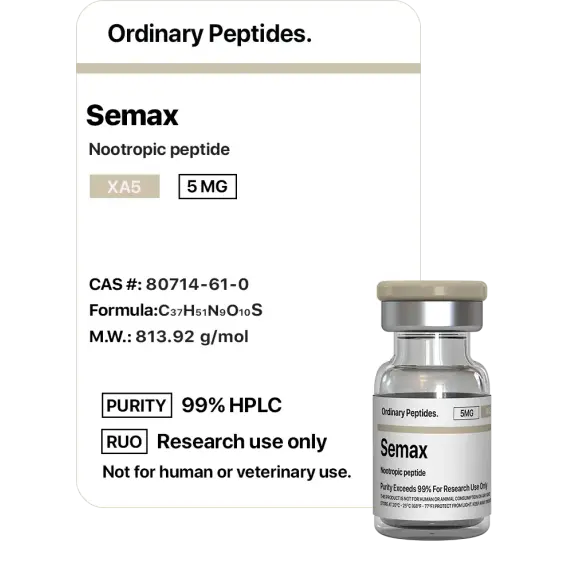
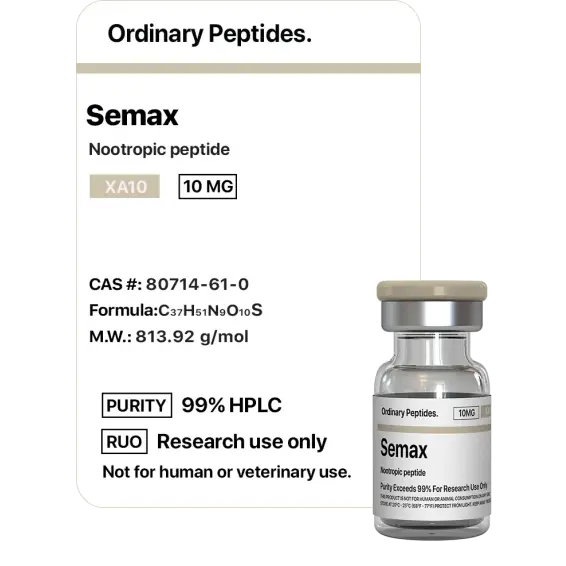
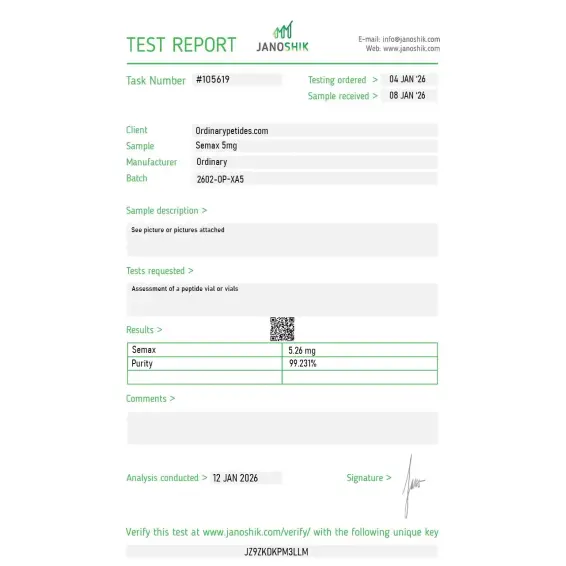
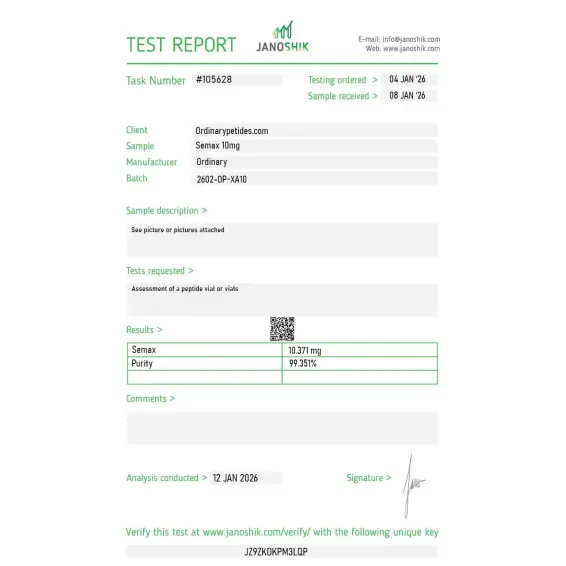
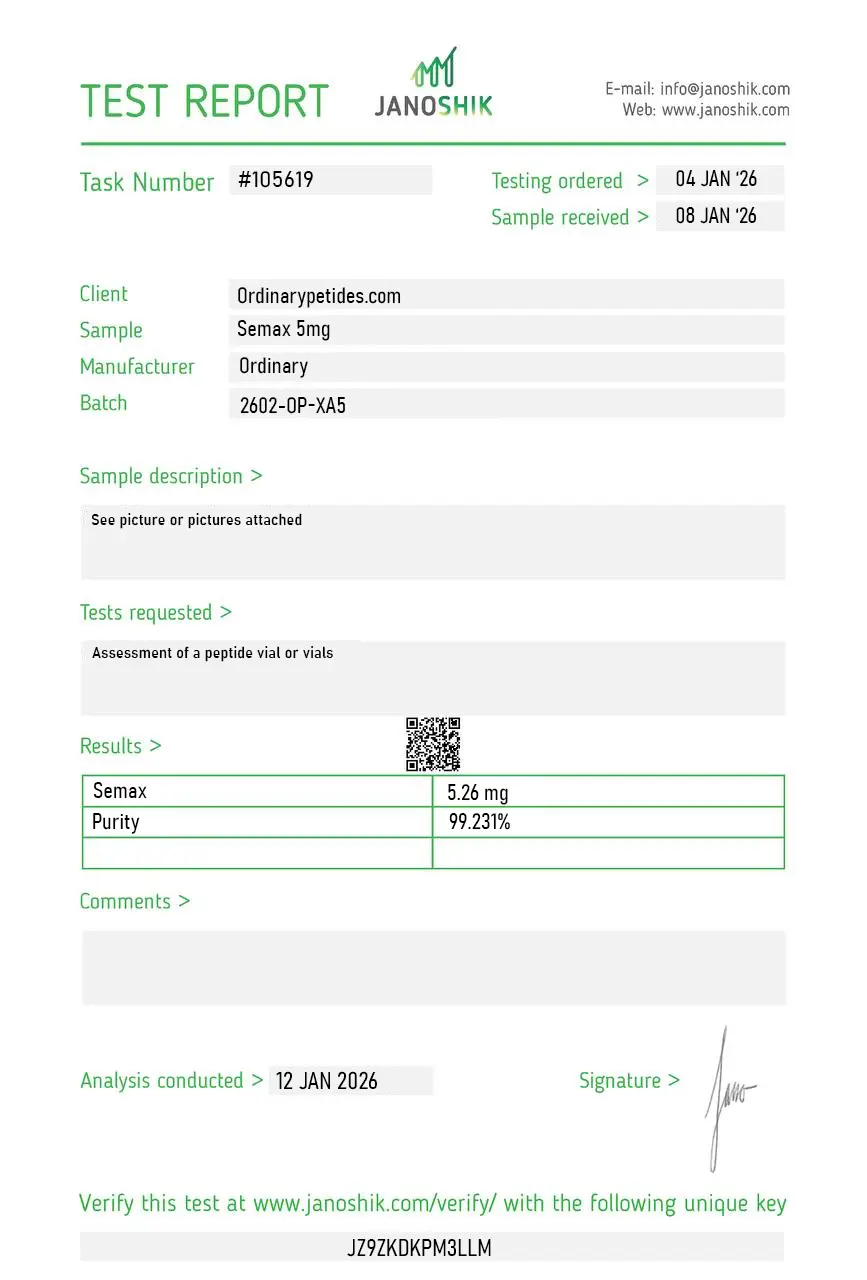
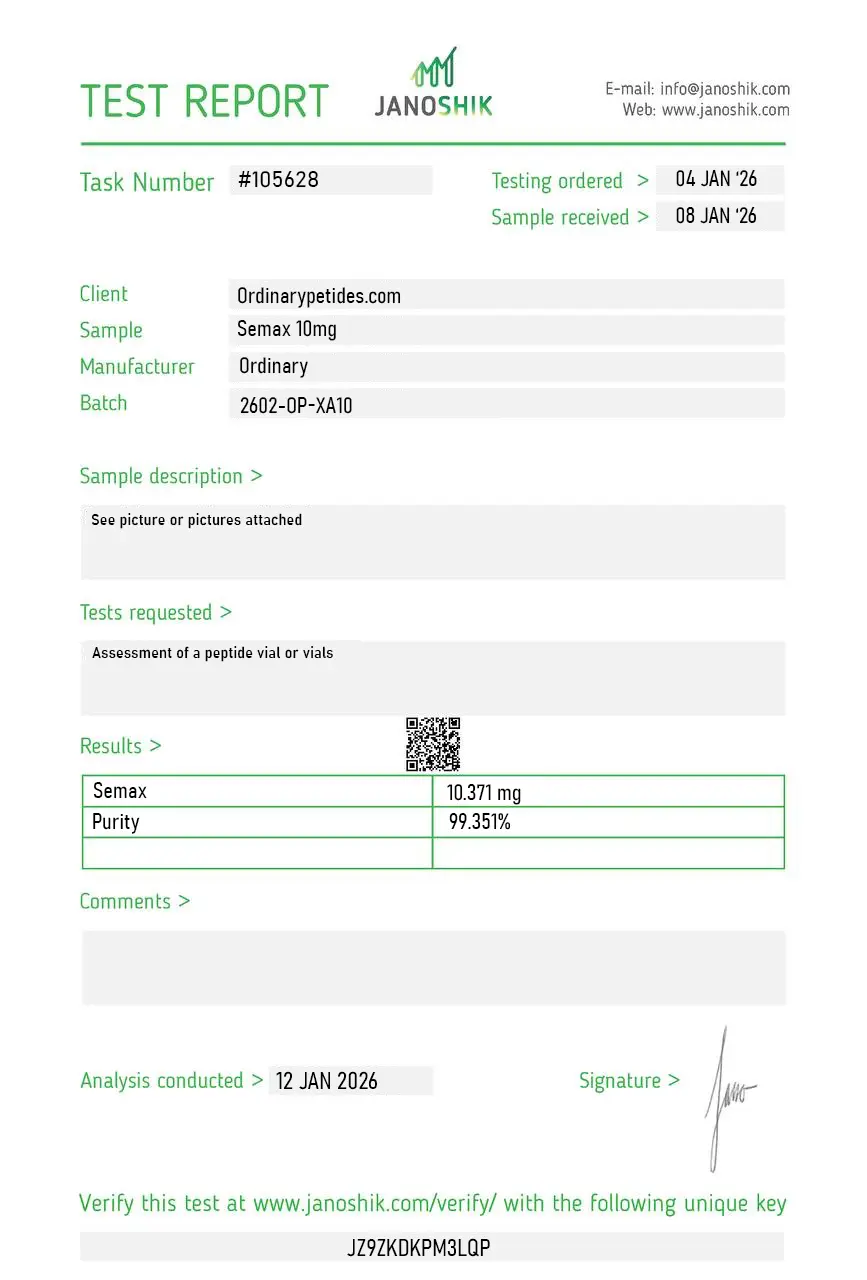
Independent test reports are available for Semax 5mg and Semax 10mg. These reports provide batch-level documentation and analytical verification information for research reference.
Based on 1 reviews
5.0
-
1
The reason we order here over a couple of cheaper Russian-direct sources is the certificate language — it actually states the sequence in single-letter code rather than only listing "Semax" by name, which sounds basic but is what lets us cross-reference against published structures without an extra translation step. For a compound where the name has more cultural weight than chemical specificity in casual use, that explicit sequence labeling is the small thing that earns repeat ordering.
In Russia, it is a medicinal product. In the USA and EU, it is not a globally approved drug; in the FDA context, it appears as a substance with compounding-related safety concerns, not as an approved drug.
The most characteristic Russian indication is acute ischemic stroke and related neuroprotective tasks; there are also local uses in ophthalmology and in cognitive/neurological conditions.
Yes, primarily Russian clinical studies and publications on stroke and some ophthalmological conditions. But this is not a large international program.
Most plausibly through a multicomponent influence on neurotrophins, inflammatory genes, neuroplasticity, and possibly certain melanocortin pathways.
No. It is more correct to say that this is a locally used Russian neuropeptide with a clinical signal in stroke, but not an international standard of stroke therapy.
Semax (an abbreviation of the Russian for "seven amino acids") is a synthetic heptapeptide with the sequence Met-Glu-His-Phe-Pro-Gly-Pro, developed in Russia in the 1980s at the Institute of Molecular Genetics of the Russian Academy of Sciences. It is a synthetic analog of the ACTH 4-10 fragment — a seven amino acid segment of adrenocorticotropic hormone — modified by replacing the C-terminus with a Pro-Gly-Pro tripeptide to enhance metabolic stability and extend biological activity. Unlike native ACTH, Semax does not stimulate adrenal cortisol production — its effects are purely neurological. It was initially developed for stroke prevention and treatment and is approved as a prescription drug in Russia and Ukraine for stroke, transient ischemic attack, cognitive disorders, traumatic brain injury, and optic nerve disease, and is listed on Russia's national List of Vital and Essential Drugs. It has not been evaluated or approved by the FDA, EMA, or most other regulatory authorities, and is sold in most Western countries only as a research compound.
The two compounds share a Russian development history, intranasal administration, and nootropic applications, but differ meaningfully in mechanism and emphasis. Selank derives from tuftsin and acts primarily as an anxiolytic — its dominant effect is anxiety and stress reduction through GABA system modulation with secondary nootropic benefits. Semax derives from ACTH and acts primarily as a cognitive enhancer and neuroprotective agent — its dominant effects are memory, focus, learning, and neuronal survival with secondary anxiolytic properties. Selank calms; Semax sharpens. In terms of activation profile Semax is generally described as mildly stimulating — increasing alertness, focus, and motivation — while Selank is calming and mood-stabilizing. Many users and clinicians use them as complementary rather than competing compounds — Semax for cognitive performance, Selank for anxiety management — and they are frequently stacked together.
Semax's mechanism is genuinely complex and, as Wikipedia honestly notes, not fully established. Its best-documented primary effect is rapid and potent upregulation of BDNF (Brain-Derived Neurotrophic Factor) and its signaling receptor TrkB in the hippocampus — producing within hours increases in BDNF expression that support neuronal survival, synaptic plasticity, and neurogenesis. This BDNF elevation is central to both its nootropic effects — learning and memory improvement — and its neuroprotective effects in ischemia and injury. It modulates dopaminergic and serotonergic systems simultaneously, increasing neurotransmitter release and metabolism in limbic and cortical regions, contributing to improved motivation, focus, and mood without the mechanism of a conventional stimulant. It inhibits enkephalinase enzymes that degrade endogenous enkephalins, sharing this mechanism with Selank and contributing to stress resilience and mild anxiolysis. In ischemia models a genome-wide transcriptional analysis documented over 1,500 significantly modulated genes — with the immune response and vascular system gene expression most markedly affected, suggesting Semax's neuroprotection operates through immunomodulatory and cerebrovascular mechanisms as well as direct neuronal effects. Additionally Semax forms stable complexes with copper(II) ions, which has been studied in the context of Alzheimer's disease where copper-catalyzed amyloid-beta aggregation is a pathological mechanism — Semax significantly reduced amyloid fiber formation in published laboratory models.
The published evidence base is meaningful but carries the same caveat as Selank — the majority originates from Russian institutions, is published in Russian, and lacks independent international replication. Within that context the evidence is substantive across multiple domains. In stroke and cerebrovascular disease Semax has been used clinically in Russia for decades with published data documenting improved outcomes in stroke recovery, reduced progression of cerebrovascular insufficiency, and lower risk of secondary stroke events. In cognitive enhancement human studies have shown improved learning, memory, and attention in both patients with cognitive impairment and healthy volunteers. In optic nerve disease — including optic neuritis and ischemic optic neuropathy — Russian clinical data documents meaningful benefit. In animal models the evidence for neuroprotection, memory enhancement, antidepressant and anxiolytic effects, and BDNF upregulation is consistently replicated across multiple independent research groups.
Intranasal spray is the primary clinical and research route — the standard Russian pharmaceutical formulation is a 0.1% nasal solution, with a 1% solution used for more acute neurological indications. Intranasal delivery enables partial bypass of the blood-brain barrier through olfactory and trigeminal nerve pathways, achieving meaningful CNS concentrations rapidly — users report noticeable effects within 30 to 60 minutes. Standard nootropic dosing protocols use the 0.1% solution at 1 to 2 drops per nostril one to three times daily in cycles of 5 to 14 days, repeated monthly or as needed. Subcutaneous injection is also used in some clinical and wellness contexts. As a peptide Semax has poor oral bioavailability and is not effective orally. N-Acetyl Semax and N-Acetyl Semax Amidate are modified versions with enhanced stability and potentially longer duration of action available through research vendors.
Semax has a consistently favorable and well-characterized safety profile based on decades of clinical use in Russia. Nasal irritation and occasional temporary discoloration of nasal mucosa are the most commonly reported effects with intranasal administration. Headache and mild dizziness are occasionally reported, particularly at higher doses or in sensitive individuals. A transient mild elevation in blood glucose has been noted in diabetic patients — reflecting ACTH lineage effects — warranting monitoring in this population. Unlike conventional stimulants it does not cause cardiovascular activation, insomnia, or dependency. Unlike benzodiazepines it does not cause sedation or cognitive impairment. No significant drug interactions have been identified at standard doses, though caution is advised with concurrent use of SSRIs, MAOIs, or other dopaminergic and serotonergic agents given Semax's monoamine system activity.
People with uncontrolled hypertension should exercise caution given the reported effects on cerebral vasculature and blood pressure. Those on SSRIs, MAOIs, or dopamine-targeting medications should consult a physician before use given mechanistic overlap. People with a history of neurological hypersensitivity or seizure disorders should use it only under physician supervision. Pregnant or breastfeeding women should not use it. Anyone seeking cognitive enhancement should understand that while Semax's nootropic applications are plausible and mechanistically grounded, the evidence base supporting its use in healthy, cognitively normal individuals is thinner than the evidence for its use in neurological disease states — the strongest data is for stroke and brain injury contexts.