

Selank
For in vitro testing and laboratory use only. Not for human or animal consumption. Bodily introduction is illegal. Handle only by licensed professionals. Not a drug, food, or cosmetic. Educational use only.
Sequence, formula, CAS, and molecular weight are listed consistently for Selank in PubChem, FDA GSRS, and ProSpec.
Selank: A Peptide Development With an Anxiolytic Focus, Best Understood Through a Research Context
Selank is a synthetic heptapeptide created as an analogue of tuftsin, and that is exactly why it attracts attention not as "just another fashionable peptide," but as part of an entire Russian line of regulatory neuropeptides. In the research context and in local clinical publications, it has been associated with an anxiolytic and anti-asthenic profile, and in preclinical data — with effects on stress models, GABAergic signals, cytokines, and behavioral manifestations of anxiety.
This makes Selank especially interesting for those who care not just about a loud label, but about a peptide with a real scientific history and several levels of study — from molecular work to local clinical practice. At the same time, the whole interest in it is built precisely on nuances: not on promises of a "miracle effect," but on how it has shown itself in published observations and experimental models.
Practical Takeaway
If you want to take a closer look at a peptide surrounded not only by marketing, but also by a substantial research base, Selank at the very least deserves attention. This is the kind of case where the intrigue lies not in the loudness of the promises, but in the depth of the topic itself.
Selank: A Scientific Review
Based on peer-reviewed literature — see References. Last updated: April 2026.
The Short Version
Selank is an unusual compound in the Western nootropic and peptide market: it is not an experimental research chemical theorised to work — it is a drug that has been clinically approved and used in Russia and Ukraine since 2009 for the very conditions people take it for. That is a meaningful distinction that separates it from most of the peptides in this series.
The backstory begins with tuftsin — a naturally occurring tetrapeptide (Thr-Lys-Pro-Arg) released by enzymatic cleavage of the IgG heavy chain during normal immune processing. Researchers at the Institute of Molecular Genetics of the Russian Academy of Sciences extended the tuftsin sequence at the C-terminus with the tripeptide Pro-Gly-Pro, dramatically improving metabolic stability and adding CNS activity. The result was Selank (Thr-Lys-Pro-Arg-Pro-Gly-Pro) — a heptapeptide with anxiolytic, nootropic, and immunomodulatory properties.
The Russian clinical trial evidence — principally the 2008 Zozulia et al. study comparing Selank to medazepam in 62 patients with GAD and neurasthenia — showed that Selank produced anxiolytic effects comparable to the benzodiazepine comparator but without sedation, dependence, or withdrawal, and with added antiasthenic and psychostimulant effects.[1] The evidence limitations are equally real: small trials, Russian institutions only, limited independent international validation.
| At a glance | |
|---|---|
| Full name | Selank (TP-7) |
| Sequence | Thr-Lys-Pro-Arg-Pro-Gly-Pro (TKPRPGP) |
| Type | Synthetic heptapeptide; tuftsin analogue |
| Molecular weight | ~751 Da |
| Parent peptide | Tuftsin (Thr-Lys-Pro-Arg) — IgG heavy chain fragment |
| Primary action | Anxiolytic + nootropic + immunomodulatory |
| Key mechanisms | GABAergic modulation; enkephalinase inhibition; serotonin metabolism; BDNF upregulation |
| Russian/Ukrainian approval | ✅ 2009; prescription intranasal spray for GAD and neurasthenia |
| FDA status | Not approved; Category 2 placed 2023; removed Sep 2024; compounding permitted with prescription |
| Administration | Intranasal (approved); subcutaneous (off-label community use) |
Derivation from Tuftsin
Tuftsin (Thr-Lys-Pro-Arg) is a naturally occurring tetrapeptide first isolated by Victor Najjar at Tufts University in 1970, produced by enzymatic cleavage of the Fc region of IgG heavy chains. Tuftsin has pro-immune properties (stimulates phagocytosis, NK cell activity, macrophage function) and documented CNS effects including anxiolytic and anti-stress properties in rodent models. Its pharmacological liability: very short plasma half-life (minutes) due to rapid degradation by aminopeptidases.
The Institute of Molecular Genetics team, led by Igor Ashmarin, addressed this by appending the tripeptide Pro-Gly-Pro to the C-terminus. This modification creates steric hindrance protecting against carboxypeptidase degradation, and the two proline residues confer resistance to endopeptidases (proline-containing bonds are refractory to most peptidases). Selank is a synthetic analog of the endogenous tuftsin molecule, elongated at the C terminus via the addition of three natural L-amino acids (Pro-Gly-Pro) to improve its metabolic stability and yield a relatively longer duration of action. The resulting heptapeptide retains tuftsin’s pharmacological properties and adds CNS activity from the Pro-Gly-Pro extension, which appears to facilitate blood-brain barrier penetration — particularly relevant for intranasal administration directly to the olfactory epithelium.[4]
Structure
Full amino acid sequence: Thr¹-Lys²-Pro³-Arg&sup4;-Pro&sup5;-Gly&sup6;-Pro&sup7;. The first four residues (Thr-Lys-Pro-Arg) are the native tuftsin sequence; the C-terminal extension Pro-Gly-Pro provides stability. Molecular weight approximately 751 Da. The molecule is entirely composed of natural L-amino acids, contributing to low immunogenicity and a favourable tolerability profile. As an all-natural-amino-acid peptide of only 7 residues, it degrades to normal amino acid metabolites — no toxic metabolites are anticipated.
Mechanism of Action: Multiple Pathways
Selank’s mechanisms are genuinely complex and reflect the multi-target pharmacology that characterises many neuropeptides. The relative contribution of each pathway to observed clinical effects is not precisely quantified.
1. Enkephalinase inhibition (opioidergic system)
One of the best-documented mechanisms: Selank inhibits enkephalin-degrading enzymes (enkephalinases), increasing the half-life of endogenous enkephalins in the brain. Enkephalins are endogenous opioid peptides that activate delta opioid receptors, producing anxiolytic and mood-elevating effects without the reward/addiction profile of mu-opioid activation. By preventing enkephalin degradation rather than directly activating opioid receptors, Selank enhances endogenous opioidergic tone in a physiologically regulated manner. The 2008 clinical trial (Zozulia et al.) found that GAD/neurasthenia patients had reduced leu-enkephalin half-life at baseline, and Selank treatment normalised this — suggesting the enkephalinase pathway is clinically relevant in the target patient population.[1]
2. GABAergic modulation
Selank’s anxiolytic effects are similar to those of classical benzodiazepine drugs, which enhance the inhibitory effect of GABA by allosteric modulation of GABA-A receptors — suggesting the molecular mechanism of Selank’s effect may also be related to its ability to affect GABA receptors. Volkova et al. (2016, Frontiers in Pharmacology) found that Selank administration altered mRNA levels of genes involved in GABAergic neurotransmission in rat brain, suggesting transcriptional effects on the GABAergic system.[4] However, a separate in vitro study found no direct change in GABA-A receptor gene expression in response to Selank alone — only when combined with olanzapine. This suggests Selank’s GABAergic effects may be indirect or require in vivo CNS conditions not replicated in cell culture. The precise receptor-level pharmacology remains incompletely characterised.
3. Serotonin system and monoamines
Selank influences serotonin metabolism — specifically the rate of serotonin turnover in different brain regions. Its cognition-enhancing effects may be due to an ability to influence brain levels of noradrenaline, serotonin, and dopamine, three neurotransmitters with well-documented relationships to vigilance, attention, learning, and motivation. The mechanism is not via direct SERT inhibition (as with SSRIs) but through indirect modulation of serotonin metabolic pathways.[6]
4. BDNF upregulation
Inozemtseva et al. (2008) demonstrated that intranasal Selank administration rapidly elevates BDNF (brain-derived neurotrophic factor) expression in the rat hippocampus in vivo.[5] This BDNF upregulation is consistent with Selank’s reported cognitive (nootropic) effects and is a shared feature with the related peptide Semax. Kolik et al. (2019) showed that Selank protected against ethanol-induced memory impairment in rats by regulating BDNF content in the hippocampus and prefrontal cortex, providing a functional link between the BDNF mechanism and memory endpoints.[7]
5. Immunomodulatory activity (tuftsin heritage)
Selank retains tuftsin’s immunomodulatory properties, including effects on IL-6 expression, T-helper cytokine balance (Th1/Th2 ratio), and macrophage phagocytic activity. Uchakina et al. (2008) documented immunomodulatory effects in patients with anxiety-asthenic disorders.[3] These immunological effects may contribute to Selank’s anti-asthenic (fatigue-reducing) properties through normalisation of stress-related immune dysregulation.
Russian Regulatory History
Selank was developed at the Institute of Molecular Genetics through research on tuftsin analogues through the 1990s before entering human trials. The Russian Federation Ministry of Health approved it in 2009 as a prescription intranasal formulation for generalised anxiety disorder (GAD) and neurasthenia, marketed in Russia and Ukraine under the brand name Selanc (Ñеланк) as a nasal spray at 0.15% concentration (300 µg/dose). Selank was subsequently placed on the FDA’s Category 2 list in 2023 but removed in September 2024 following additional safety information from the nominator — restoring compounding permissibility in the US with a valid prescription.
Clinical Evidence
The pivotal Russian clinical trial (Zozulia et al., 2008)
Sixty-two patients with GAD and neurasthenia; Selank (N=30) compared to medazepam (N=32). Outcomes assessed with Hamilton, Zung, and CGI scales; leu-enkephalin activity in blood serum measured. The anxiolytic effects of both drugs were similar, but Selank had also antiasthenic and psychostimulant effects — not seen with the benzodiazepine comparator. Biological correlate: GAD/neurasthenia patients had reduced leu-enkephalin half-life, normalised by Selank treatment. Safety: no sedation, no cognitive impairment, no dependence with Selank.[1]
This trial provides the primary data point for Selank’s anxiolytic efficacy, but it has significant limitations for contemporary Western regulatory standards: N=62, single centre (presumably), published in Russian, no independent replication, no long-term follow-up, and the comparator (medazepam) is not a front-line GAD treatment in contemporary Western practice.
Subsequent comparative trials
Multiple subsequent Russian clinical studies compared Selank to phenazepam (a high-potency benzodiazepine widely used in Russia) and other anxiolytics, with consistent findings of comparable anxiolytic efficacy and superior tolerability for Selank.[2] These studies share the methodological limitations of the 2008 trial: small samples, single institution, Russian-language publication, no independent replication.
Evidence Summary
| Endpoint | Population | Finding | Evidence quality |
|---|---|---|---|
| Anxiolytic vs. medazepam [1] | GAD + neurasthenia (N=62) | Similar anxiety reduction; Selank had additional antiasthenic effects; no sedation/dependence | Low-moderate (small, Russian-language, single institution) |
| Anxiolytic vs. phenazepam [2] | Anxiety disorders | Comparable efficacy; superior Selank tolerability | Low-moderate |
| BDNF upregulation [5] | Rat hippocampus | Rapid BDNF elevation after intranasal administration | Preclinical |
| Memory protection (BDNF) [7] | Rats | BDNF-mediated protection against ethanol memory impairment | Preclinical |
| Immunomodulation [3] | Anxiety-asthenic patients | Cytokine normalisation | Low (small Russian trial) |
| Enkephalin half-life normalisation | GAD patients | Normalisation of reduced τ½ leu-enkephalin | Low-moderate (within 2008 Zozulia trial) |
Comparison: Selank vs. Benzodiazepines
| Feature | Benzodiazepines | Selank |
|---|---|---|
| Mechanism | Direct GABA-A positive allosteric modulation | Indirect GABAergic + enkephalinase + serotonin + BDNF |
| Anxiolytic efficacy | ✅ Well-established (extensive RCT evidence) | Comparable in Russian trials (N=62; limited evidence) |
| Sedation | Common | Not observed in trials |
| Cognitive impairment | Common (anterograde amnesia) | Not observed; nootropic effects reported |
| Dependence/tolerance | ⚠️ Well-documented | Not observed at trial durations |
| Withdrawal | ⚠️ Clinically significant, potentially severe | Not documented |
| International approval | Widely approved | Russia/Ukraine only |
| Evidence quality | Very high (hundreds of large RCTs) | Low-moderate (small Russian trials) |
The superior tolerability profile claimed for Selank relative to benzodiazepines is the central clinical argument for its use. The evidence comes from small Russian trials, not from large head-to-head RCTs that would inform clinical guidelines in Western medicine. The pharmacological rationale for lower dependence/tolerance risk is sound — multiple complementary mechanisms rather than direct GABA-A modulation — but it has not been established at an evidence level that would change clinical practice in the West.
Comparison: Selank vs. Semax
| Feature | Selank | Semax |
|---|---|---|
| Sequence | TKPRPGP | MEHFPGP (ACTH fragment analogue) |
| Primary effect | Anxiolytic + nootropic | Cognitive enhancement + neuroprotection |
| Primary mechanism | GABAergic + enkephalinase + serotonin | BDNF upregulation + dopaminergic + ACTH-like |
| Best suited | Anxiety + stress management + mood | Cognitive performance + recovery from neurological insult |
| Clinical approval | Russia/Ukraine: GAD, neurasthenia (2009) | Russia: post-stroke, TBI, nootropic |
Safety Profile
Russian clinical trials consistently report Selank as highly well-tolerated: no sedation; no cognitive impairment; no dependence; no withdrawal syndrome; no tolerance at trial durations (up to 1 month); no significant cardiovascular, hepatic, or renal effects documented. The most common adverse effects are mild nasal irritation from the intranasal formulation and mild headache.
⚠️ What is not known: Long-term safety beyond the trial durations of 2–4 weeks; safety in pregnancy and breastfeeding; drug-drug interaction profile (particularly with SSRIs, benzodiazepines, other CNS-active drugs); and the safety of subcutaneous injection (the community-preferred route outside Russia), for which no formal pharmacokinetic or safety study exists. Immunomodulatory concern: Selank retains tuftsin’s immunomodulatory properties. In individuals with autoimmune conditions, immune stimulation could theoretically exacerbate disease; this has not been systematically studied.
Regulatory Status
| Jurisdiction | Status |
|---|---|
| Russia/Ukraine | ✅ Prescription-only intranasal nasal spray (brand: Selanc). Approved since 2009. |
| United States (FDA) | Not approved. Removed from Category 2 list September 2024. May be compounded by licensed 503A pharmacies with valid physician prescription. Not a controlled substance. |
| EMA/UK/Canada/Australia | ❌ Not approved. |
| WADA | Not specifically listed on the 2024 Prohibited List. Athletes should verify current status with their relevant anti-doping authority before use. |
Common Misconceptions
“Selank is a black-market research chemical with no legitimate use.”
Selank is a prescription drug in Russia and Ukraine, approved after regulatory review for GAD and neurasthenia. It has been used clinically for 15+ years. Calling it a black-market chemical misrepresents its regulatory status in the countries where it is approved.
“Selank is basically a peptide version of diazepam.”
Selank does not directly bind GABA-A receptor benzodiazepine sites. The clinical effect profile (anxiolytic without sedation/amnesia/dependence) distinguishes it mechanistically from benzodiazepines, even if the clinical endpoint (anxiety reduction) is comparable in small trials.
“The science is all from Russia so it can’t be trusted.”
Russian pharmacological research is legitimate science. The underlying biology (GABAergic system, enkephalinase, BDNF, serotonin) is well-understood globally. The concern is methodological — small sample sizes, limited independent replication, language barriers — not that Russian science is inherently invalid.
Frequently Asked Questions
Is Selank effective for GAD in Western patients?
Based on the available evidence (primarily the 2008 Russian trial, N=62), Selank produced anxiolytic effects comparable to medazepam without benzodiazepine side effects. This is encouraging but not definitive for Western clinical practice. The trial is too small and methodologically limited to support clinical guidelines. Anecdotal community experience in Western users is broadly consistent with anxiolytic effects, but anecdotal evidence is not a substitute for controlled trials.
Why hasn’t Selank been studied in Western Phase 2/3 trials?
No Western pharmaceutical company has invested in bringing Selank through the Western regulatory process. The compound was developed by Russian academic institutions without the commercial infrastructure for international trials. Without a commercial sponsor willing to fund a Phase 2/3 programme (typically $100M+), the Western regulatory pathway does not progress regardless of the Russian approval.
Can Selank be used long-term?
Russian protocols use Selank in 14-day courses with breaks. Community use often involves similar cycling patterns (2–4 weeks on, 2–4 weeks off). Long-term daily use data does not exist from clinical trials. The absence of tolerance and dependence observed in short-term trials is reassuring but does not establish long-term safety.
Key Takeaways
- ✅ Selank has more regulatory legitimacy than almost any other compound in the Western community nootropic market. It is approved as a prescription drug in Russia and Ukraine based on clinical trial evidence — a history that distinguishes it from the vast majority of compounds in this series that have never been through any regulatory review.
- ⚠️ The clinical evidence, while real, is limited by Western standards. The pivotal trial enrolled 62 patients at presumably a single Russian institution, published in Russian, and has not been independently replicated in large multicentre trials. Sufficient for Russian regulatory approval; not sufficient for FDA/EMA approval.
- The proposed mechanism — anxiolytic without benzodiazepine liabilities — is pharmacologically plausible. Multiple complementary mechanisms (enkephalinase inhibition, indirect GABAergic modulation, serotonin system effects, BDNF upregulation) rather than direct GABA-A agonism are consistent with the observed clinical profile of anxiolytic effects without sedation, amnesia, or dependence.[1][4]
- ✅ The FDA Category 2 removal (September 2024) is a positive regulatory development. US compounding pharmacies can legally prepare Selank for patients with valid prescriptions.
- ⚠️ Safety appears favourable in short-term use but long-term data is absent. 15+ years of clinical use in Russia without major safety signals is reassuring. Chronic use carries uncharacterised risks that short-term clinical observation cannot quantify.
References
Primary Clinical Trials
- Zozulia AA, Neznamov GG, Siuniakov TS, Kost NV, et al. Efficacy and possible mechanisms of action of a new peptide anxiolytic Selank in the therapy of generalised anxiety disorders and neurasthenia. Zh Nevrol Psikhiatr Im S S Korsakova. 2008;108(4):38–48. PMID 18454096
- Seredenin SB, et al. A comparison of the anxiolytic effect and tolerability of Selank and phenazepam in the treatment of anxiety disorders. Zh Nevrol Psikhiatr Im S S Korsakova. 2014. PMID 25176261
- Uchakina ON, Uchakin PN, Miasoedov NF, et al. Immunomodulatory effects of Selank in patients with anxiety-asthenic disorders. Bulletin of Experimental Biology and Medicine. 2008. PMID 18577961
Mechanism
- Volkova A, Shadrina M, Kolomin T, Andreeva L, Limborska S, Myasoedov N, Slominsky P. Selank administration affects the expression of some genes involved in GABAergic neurotransmission. Frontiers in Pharmacology. 2016;7:31. PMC4757669
- Inozemtseva LS, Karpenko EA, Dolotov OV, et al. Intranasal administration of the peptide Selank regulates BDNF expression in the rat hippocampus in vivo. Doklady Biological Sciences. 2008;421:241–243.
- Andreeva LA, et al. Psychotropic effects of Selank and its influence on the content of monoamines and their metabolites in the brain structures of rats. Bulletin of Experimental Biology and Medicine. 2005;140(4):482–484.
BDNF and Neuroprotection
- Kolik LG, et al. Selank, peptide analogue of tuftsin, protects against ethanol-induced memory impairment by regulating BDNF content in the hippocampus and prefrontal cortex in rats. Bulletin of Experimental Biology and Medicine. 2019.
Key Investigators
- Igor P. Ashmarin, PhD — Institute of Molecular Genetics, Russian Academy of Sciences; principal architect of the Selank molecule and the tuftsin-extension strategy; established the Pro-Gly-Pro C-terminal stabilisation approach.
- Nikolai F. Myasoedov, PhD — Institute of Molecular Genetics; co-developer of Selank and Semax; continuing leader of the regulatory peptide pharmacology programme.
- Sergei B. Seredenin, PhD — V.V. Zakusov Research Institute of Pharmacology; led the clinical pharmacology and comparative trial programme that supported Russian regulatory approval.
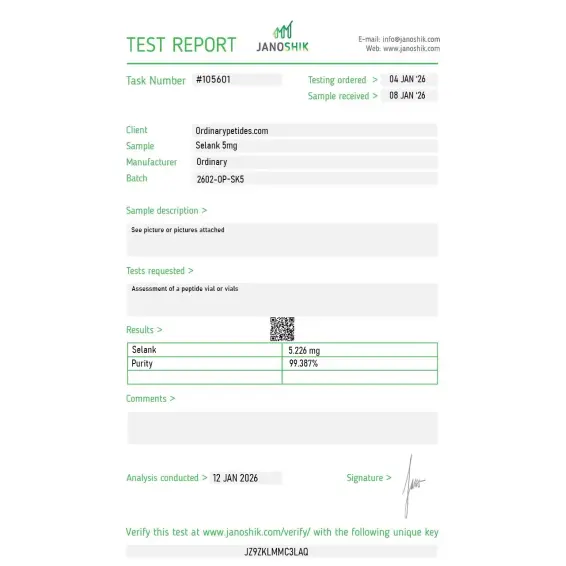
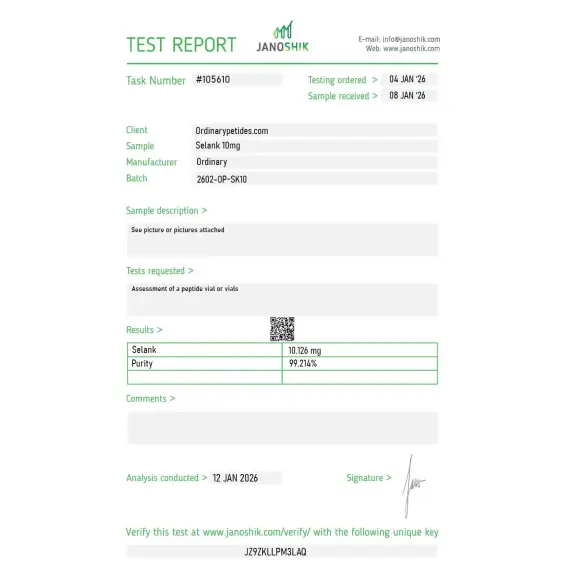
Certificate of Analysis
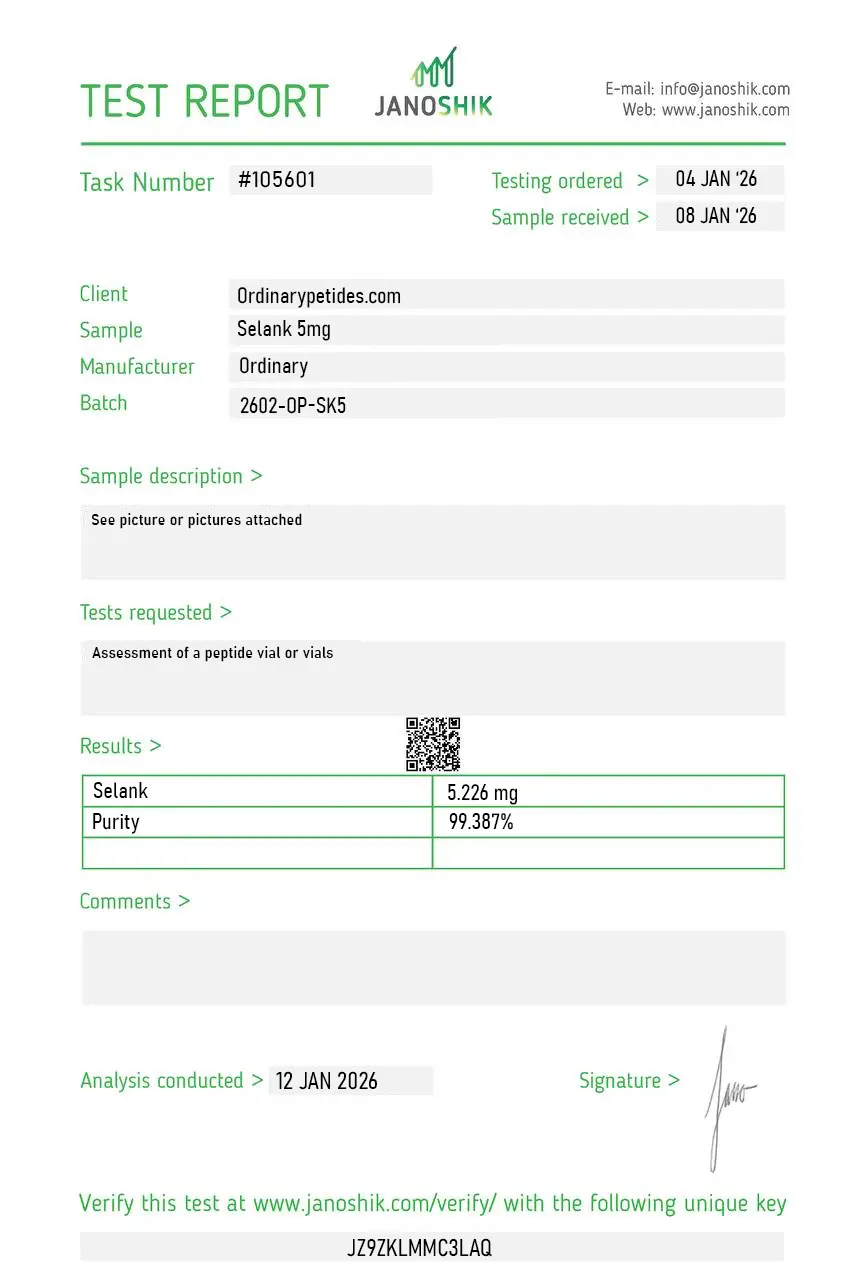
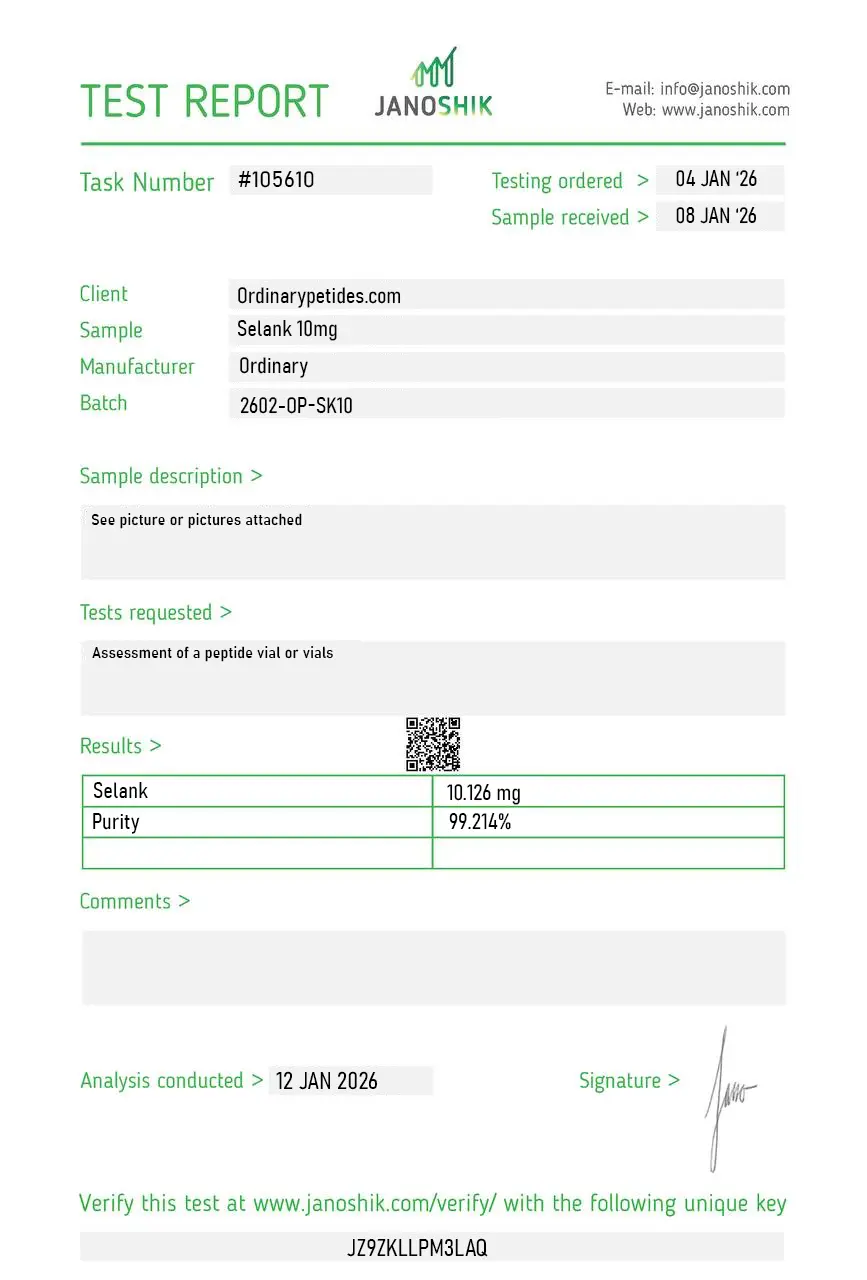
Independent test reports are available for Selank 5mg and Selank 10mg. These reports provide batch-level documentation and analytical verification information for research reference.
Based on 1 reviews
5.0
-
1
Confirmed the heptapeptide was correctly Selank and not a related Russian neuropeptide before ordering — sent a sequence-comparison query because the Cyrillic transliterations of these compounds get inconsistent across vendors and I've seen Selank, Semax, and Selanok mixed up in less careful catalogs. Vendor responded within hours with the explicit sequence, which was right. Would prefer not to have to ask, but the answer was prompt and accurate.
In Russia, it is a medicinal product. Outside Russia, it more often appears as a chemical substance or a research/compounded peptide, but not as a globally approved drug.
In Russian practice, primarily for anxiety, asthenic, neurotic, and neurosis-like states.
Yes, but mainly small Russian studies, not large international RCTs.
No. It does not belong to benzodiazepines, although it is often compared with them in terms of anxiolytic effect.
There are plausible data on GABAergic modulation, monoamines, and immune pathways, but the mechanism is not finally and unilinearly closed.
No. The evidentiary and regulatory base is insufficient for such wording.
Selank (also designated TP-7) is a synthetic heptapeptide with the sequence Thr-Lys-Pro-Arg-Pro-Gly-Pro, developed in the 1990s at the Institute of Molecular Genetics of the Russian Academy of Sciences in cooperation with the V.V. Zakusov Research Institute of Pharmacology. It was designed as a metabolically stabilized analog of tuftsin — a naturally occurring tetrapeptide (Thr-Lys-Pro-Arg) derived from the Fc region of immunoglobulin G heavy chains, first identified at Tufts University — by adding three C-terminal amino acids (Pro-Gly-Pro) that significantly extend its in vivo stability and duration of action. Tuftsin's primary known role is immunomodulatory, but researchers observed that it also had neuropsychological properties, and Selank was specifically engineered to exploit and amplify this. It was approved in Russia in 2009 for treatment of generalized anxiety disorder and neurasthenia, making it one of the few peptides in this series with a genuine national regulatory approval — though not FDA or EMA approved. It is closely related to Semax, another Russian-developed neuropeptide, and the two are frequently discussed and used together.
Selank's mechanism is genuinely multifaceted and operates across several neurotransmitter systems simultaneously — a profile that distinguishes it from single-target anxiolytics like benzodiazepines. Its primary anxiolytic mechanism involves positive allosteric modulation of GABAA receptors — the same receptor class targeted by benzodiazepines, barbiturates, and alcohol. Selank acts as an allosteric modulator that alters GABA receptor conformation and binding characteristics without directly activating the receptor as benzodiazepines do, which is the mechanistic basis for its anxiolytic effects without sedation, tolerance development, or dependence. Simultaneously it modulates serotonergic neurotransmission — influencing serotonin metabolism and receptor expression — contributing to mood stabilization and emotional balance. It influences dopaminergic signaling including Drd5 receptor expression, linked to memory, learning, and long-term potentiation, providing the basis for its nootropic effects. It protects enkephalins — the brain's endogenous opioid peptides involved in pain and emotional regulation — by inhibiting the enzymes that degrade them, elevating endogenous enkephalin levels and contributing to anxiolytic and mood-enhancing effects. It rapidly upregulates BDNF (Brain-Derived Neurotrophic Factor) expression in the hippocampus, supporting neuroplasticity and providing neuroprotective effects. Additionally, as a tuftsin analog it retains immunomodulatory properties — modulating IL-6 expression, T helper cell cytokine balance, and demonstrating antiviral effects in published research.
The evidence base for Selank is more developed than most research peptides in this series but carries an important caveat — the majority of clinical studies originate from Russian research institutions, are published in Russian, and have not been independently replicated in Western controlled trial frameworks. Within those constraints the evidence is directionally consistent and reasonably well-characterized. A 2008 clinical study in 30 patients with generalized anxiety disorder compared Selank to a benzodiazepine — both produced comparable anxiolytic effects, but Selank additionally demonstrated antiasthenic and psychostimulant effects absent in the benzodiazepine group, with no sedation, cognitive impairment, or dependence signals. A 2015 study in 70 patients combining Selank with a benzodiazepine found superior efficacy and fewer side effects than benzodiazepine alone. Rat studies have consistently demonstrated reduced anxiety-phobic states, improved learning and memory, BDNF upregulation, and benzodiazepine-comparable anxiolytic effects without sedation. A study published through NIH databases documented improvements in generalized anxiety, PTSD, depression, and attention deficit disorder in human subjects. Animal models have explored its protective effects against alcohol-induced brain damage through BDNF pathways.
Intranasal spray is the most common and clinically preferred route for Selank — it allows direct delivery to the brain via olfactory and trigeminal pathways, bypassing the blood-brain barrier and achieving meaningful CNS concentrations rapidly. This is the formulation used in Russian clinical practice. Standard intranasal doses range from 250 to 3000 mcg per day divided into two to three administrations — typically 250 to 750 mcg per nostril per dose. Subcutaneous injection is also used, particularly by those seeking more predictable systemic dosing. The peptide is cleared from circulation within approximately 10 minutes by sensitive detection methods, though its neurobiological effects persist considerably longer — consistent with its receptor-level and gene-expression mechanisms that outlast circulating peptide levels. Both N-Acetyl Selank and N-Acetyl Selank Amidate are modified forms available in research contexts designed to further improve stability and extend duration of action.
Selank has one of the most favorable side effect profiles of any neuroactive compound in this series — consistently cleaner than benzodiazepines, SSRIs, or most conventional anxiolytics in published comparisons. The most commonly reported effects are mild headache, transient nausea, and brief dizziness particularly at higher doses or initiation. Mild fatigue has been reported in some users. Nasal irritation with intranasal administration is occasional. Critically and distinctively, Selank does not produce the sedation, psychomotor impairment, cognitive blunting, tolerance development, physical dependence, or withdrawal syndrome associated with benzodiazepines. Animal studies have even shown it attenuates morphine withdrawal symptoms — suggesting it could have utility in addiction contexts. It does not impair memory or coordination at anxiolytic doses — a meaningful differentiator from existing anxiolytic drug classes.
People with severe psychiatric conditions including schizophrenia or bipolar disorder should use it only under qualified psychiatric supervision given its broad neurotransmitter system effects. Those currently taking benzodiazepines should be aware that Selank can modulate benzodiazepine binding site activity in a non-cumulative and complex manner — the two drugs interact at GABAA receptors in ways that are not simply additive. People on SSRIs, MAOIs, or other serotonergic medications should consult a physician before adding a serotonin-modulating peptide. Pregnant or breastfeeding women should not use it given absent human safety data in these populations. Anyone with significant anxiety or mood disorders should pursue established evidence-based treatment through qualified mental health professionals rather than relying on a research peptide as primary therapy.