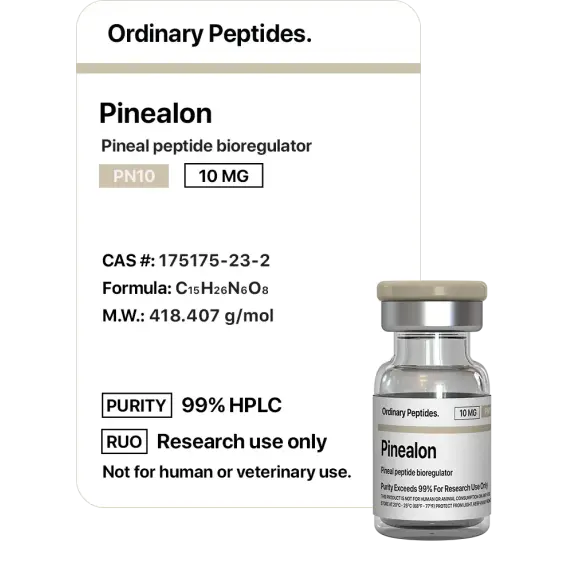
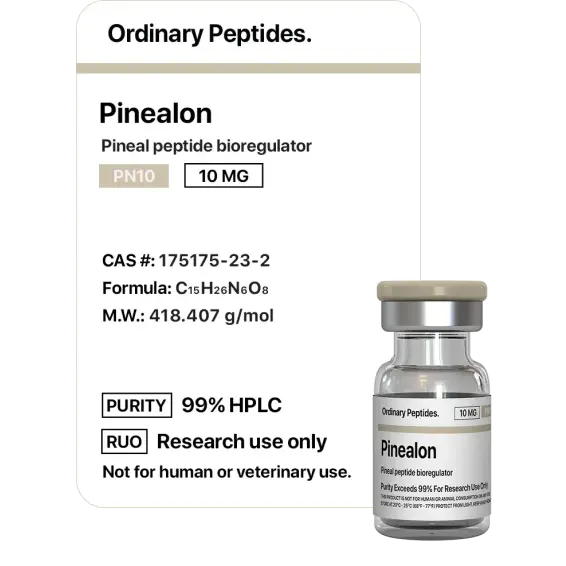


Pinealon
For in vitro testing and laboratory use only. Not for human or animal consumption. Bodily introduction is illegal. Handle only by licensed professionals. Not a drug, food, or cosmetic. Educational use only.
Pinealon (EDR / Glu-Asp-Arg): A Khavinson Neuropeptide With Direct DNA-Binding Data and No Independent Replication
Pinealon is a synthetic tripeptide (Glu-Asp-Arg) developed by Vladimir Khavinson's group in St. Petersburg, derived from Cortexin — a bovine cerebral cortex extract — despite being marketed as a "pineal gland bioregulator."
Proposed Mechanism
Its proposed mechanism involves nuclear penetration and direct DNA promoter binding — confirmed via FITC-labelled peptide in HeLa cells — upregulating neuroprotective and antioxidant genes including SOD2, GAP43, and CASP3, with downstream effects through MAPK/ERK and PI3K/Akt pathways.
Evidence Base
The data is slightly stronger than most Khavinson peptides: a 2011 Rejuvenation Research paper showed dose-dependent ROS suppression across multiple cell types, and a 2021 study in 5xFAD Alzheimer's mice showed dendritic spine preservation. Both findings are genuinely intriguing.
Pinealon (Glu-Asp-Arg / EDR): A Scientific Review
Based on peer-reviewed literature — see References. Last updated: April 2026.
The Short Version
Pinealon is the commercial trade name for Glu-Asp-Arg (EDR) — a synthetic tripeptide bioregulator developed by Vladimir Khavinson’s group at the St. Petersburg Institute of Bioregulation and Gerontology. It is one of the most extensively published Khavinson Cytogens in English-language peer-reviewed journals, with papers appearing in Rejuvenation Research, Molecules (MDPI), and Pharmaceuticals (MDPI). The compound has a clear structural identity, a proposed mechanism (nuclear penetration + DNA binding at promoter regions → neuroprotective gene expression), and a published evidence base covering oxidative stress protection, anti-apoptosis, neuroprotection in hypoxia/ischaemia, dendritic spine preservation in Alzheimer’s disease models, and Huntington’s disease models.
The same epistemic constraints apply here as to all Khavinson bioregulators: single research group provenance, no independent replication by Western groups, no registered human RCT. Pinealon’s evidence is somewhat more granular and molecular than Cardiogen’s, though still substantially short of clinical validation. A specific naming confusion requires upfront clarification: Pinealon is marketed as a “pineal gland bioregulator,” but the EDR sequence was identified from Cortexin — the bovine cerebral cortex polypeptide complex — not from pineal tissue.
| At a glance | |
|---|---|
| Trade name | Pinealon® |
| Systematic name | Glu-Asp-Arg (EDR); H-Glu-Asp-Arg-OH |
| Type | Synthetic tripeptide bioregulator (Cytogen class) |
| MW | ~404 Da; PubChem CID: 10273502 |
| Developer | Vladimir Khavinson, St. Petersburg Institute of Bioregulation and Gerontology |
| Tissue origin | Identified from Cortexin (bovine cerebral cortex extract) — NOT pineal gland |
| Proposed mechanism | Nuclear penetration + DNA promoter binding → neuroprotective gene expression |
| Key pathways | MAPK/ERK; PI3K/Akt; Nrf2/Keap1; NF-κB; antioxidant enzyme upregulation |
| FDA/EMA status | ❌ Not approved; not in clinical trials |
Naming Confusion: Pinealon, Pineal Gland, and Cortexin
The EDR (Glu-Asp-Arg) sequence is described as the most common tripeptide motif in Cortexin — the same parent preparation from which Cortagen (AEDP) was also derived. Pinealon was commercially positioned as a “pineal bioregulator” based on its proposed neurological and circadian-regulatory functions, not its tissue origin. The Khavinson 2011 Rejuvenation Research paper states explicitly: the Glu-Asp-Arg sequence is the most common motif in a complex peptide from the cerebral cortex called cortexin that demonstrates neuroprotective properties.[1]
Pinealon is not the same as Epitalon. These are entirely different compounds frequently confused in community discussions:
| Pinealon (EDR) | Epitalon (AEDG) | |
|---|---|---|
| Sequence | Glu-Asp-Arg (tripeptide) | Ala-Glu-Asp-Gly (tetrapeptide) |
| Derived from | Cortexin (cerebral cortex) | Epithalamin (pineal extract) |
| Primary evidence focus | Neuroprotection; antioxidant; AD/HD models | Telomerase activation; longevity; anti-tumour |
Epitalon (AEDG) — derived from actual pineal extract (epithalamin) — has direct evidence of effects on melatonin secretion normalisation in elderly subjects. Pinealon’s relationship to the pineal gland is more hypothetical; the pineal gland framing is a commercial positioning decision rather than a conclusion from primary evidence.
Structure
Sequence: Glu-Asp-Arg (H&sub2;N-Glu-Asp-Arg-OH; linear tripeptide with free termini). Amino acid properties: Glutamic acid (E) — negatively charged side chain at physiological pH; forms hydrogen bonds with DNA bases; Aspartic acid (D) — also negatively charged; shorter side chain providing a second acidic anchor; Arginine (R) — strongly positively charged guanidinium group; capable of forming multiple hydrogen bonds with DNA phosphate backbone and base pairs; arginine-rich motifs are common in natural DNA/RNA-binding proteins. The combination of two negatively charged and one positively charged residue creates a net-neutral-to-slightly-negative peptide with the dominant Arg guanidinium providing the primary DNA-interaction surface.
Proposed Mechanism: Nuclear Penetration and DNA Interaction
The mechanism proposed for Pinealon is identical in principle to all other Khavinson bioregulators (see Cardiogen and Cortagen articles for full discussion of the scientific basis and limitations of this framework): small peptide → cell membrane penetration → nuclear entry → DNA/histone interaction → gene expression modulation. Pinealon has more granular mechanistic data than most Khavinson Cytogens in three specific respects.
Nuclear penetration confirmed by fluorescence
A key study in Biochemistry (Moscow), 2011 (Fedoreyeva et al., PMID 22117547) used FITC (fluorescein isothiocyanate)-labelled EDR peptide and demonstrated its accumulation in the nuclei of HeLa cells within 15–30 minutes of exposure, with confirmed direct in vitro interaction with deoxyribooligonucleotides and DNA. This is the most direct published evidence for any Khavinson peptide’s nuclear penetration.[2]
Molecular docking to specific DNA promoter sites
The 2021 Pharmaceuticals paper used molecular modelling and DNA docking to identify specific hexanucleotide sequences where EDR peptide binds with lowest energy configurations. EDR peptide has identified binding sites in the promoter regions of CASP3 (caspase-3; primary executioner caspase in apoptosis), NES (nestin; neural stem cell marker), GAP43 (growth-associated protein 43; axonal growth and synaptic plasticity), APOE (apolipoprotein E; major AD risk gene), SOD2 (mitochondrial superoxide dismutase; primary mitochondrial antioxidant enzyme), and PPARA/PPARG (peroxisome proliferator-activated receptors; neuroinflammation and neuroprotection). Whether this molecular docking translates to transcriptional regulation of these genes in vivo requires experimental confirmation — some of which exists from the same research group.[7]
MAPK/ERK pathway with delayed kinetics
The 2011 Rejuvenation Research paper demonstrated dose-dependent restriction of ROS accumulation and necrotic cell death accompanied by a delayed time course of ERK1/2 activation. Because restriction of ROS accumulation and cell mortality was saturated at lower concentrations whereas cell cycle modulation continued at higher concentrations, the authors concluded that besides its antioxidant activity, pinealon is able to interact directly with the cell genome. The delayed ERK1/2 kinetics are specifically inconsistent with rapid receptor-mediated signalling and consistent with a transcriptional mechanism — making this the most pharmacodynamically specific published observation in the Pinealon literature.[1]
Published Evidence
Cell viability and ROS suppression (Khavinson et al., Rejuvenation Research, 2011; PMID 21978084)
In cerebellar granule cells, neutrophils, and PC12 (pheochromocytoma) cells subjected to oxidative stress: dose-dependent reduction in ROS accumulation; reduced necrotic cell death (propidium iodide assay); delayed ERK1/2 activation; and cell cycle modulation at higher concentrations. Published in Rejuvenation Research (Mary Ann Liebert; peer-reviewed international journal) — among the more rigorous cell biology papers in the Khavinson Cytogen literature.[1]
Alzheimer’s disease mechanistic review (Molecules, 2021; PMC7795577)
The most comprehensive mechanistic synthesis of the EDR/Pinealon evidence base, connecting it specifically to Alzheimer’s disease pathways including MAPK/ERK, PI3K/Akt, Nrf2/Keap1, and NF-κB. Arginine-rich peptides possess the ability to diminish mitochondrial dysfunction and inhibit extracellular matrix metalloproteinase activation in neuropathology, increasing viability of the neurovascular unit in various pathological processes.[6]
5xFAD Alzheimer’s disease mouse model — dendritic spine preservation (Pharmaceuticals, MDPI, 2021)
Daily IP administration of EDR peptide (400 μg/kg) in 5xFAD mice (five familial Alzheimer’s mutations) from 2–4 months of age prevented dendritic spine loss — the primary synaptic structural correlate of cognitive decline in AD. Molecular docking analysis identified specific promoter binding sites for CASP3, NES, GAP43, APOE, SOD2, PPARA, and PPARG genes.[7]
Prenatal hyperhomocysteinemia (Arutjunyan et al., Int J Clin Exp Med, 2012; PMID 22567179; PMC3342713)
In rat models of prenatal hyperhomocysteinemia (elevated homocysteine is a known risk factor for neural tube defects and cognitive impairment in offspring): prenatal Pinealon treatment reduced ROS accumulation in offspring brains, reduced necrotic cell death, and preserved cognitive function (Morris water maze) and motor coordination. One of the few Pinealon studies suggesting developmental neuroprotection in a specific pathological context.[3]
Huntington’s disease model (Khavinson et al., 2017)
EDR peptide tested in a mouse model of Huntington’s disease reported neuroprotective effects in mutant huntingtin-expressing neurons — one of the few neurodegenerative models beyond Alzheimer’s in the Pinealon literature, consistent with the general anti-apoptotic and antioxidant mechanisms.
Human observational data — professional truck drivers (Bashkireva & Artamonova, 2012; PMID 23734521)
A study in professional truck drivers (Russian language) reported that peptide bioregulator treatment including Pinealon improved neurotic disorders. This is the closest published reference to human observational data in the Pinealon literature — but it is an uncontrolled observational study in a small occupational cohort, not a randomised controlled trial.[4]
Antioxidant Mechanism: The Strongest Evidence Layer
Of all the proposed mechanisms for Pinealon, the antioxidant and anti-apoptotic pathways have the strongest published experimental support. Antioxidant enzyme upregulation: SOD2 (superoxide dismutase 2, mitochondrial) increased expression and activity; GPX1 (glutathione peroxidase 1) increased expression. Anti-apoptotic effects: Reduced caspase-3 activity; reduced propidium iodide uptake; binding site in CASP3 gene promoter (molecular docking) providing a plausible molecular basis. The mechanistic coherence between the proposed DNA binding (SOD2 promoter), the pathway effect (SOD2 upregulation), and the observable endpoint (reduced ROS) is stronger for this antioxidant limb than for other proposed mechanisms. Neuronal oxidative stress and mitochondrial dysfunction are early features of Alzheimer’s disease, Huntington’s disease, and normal ageing, making this mechanism broadly relevant.
Comparison with Related Neuroprotective Peptides
| Peptide | Sequence | Primary evidence | Independent replication |
|---|---|---|---|
| Pinealon (EDR) | Glu-Asp-Arg | Rejuvenation Research 2011; MDPI 2021 (AD mice) | None published |
| Cortagen (AEDP) | Ala-Glu-Asp-Pro | Sciatic nerve; microarray; Springer chromatin study | None published |
| Semax | MEHFPGP | Russian clinical use; BDNF upregulation | Some European data |
| P021 (Ac-DGGLAG-NH&sub2;) | Adamantylated tetrapeptide | 10+ publications; 3xTg-AD (18 months); CDKL5 | Yes (Italian group, 2024) |
| Cerebrolysin | Polypeptide complex | Multiple European/Asian RCTs | Yes (extensive) |
Common Misconceptions
“Pinealon is derived from the pineal gland.”
It is derived from Cortexin — a bovine cerebral cortex extract. The EDR sequence was identified as the most common tripeptide motif in Cortexin. The “Pinealon” name reflects a commercial positioning around neurological/circadian effects, not the actual tissue source.
“Pinealon is the same as Epitalon.”
These are entirely different compounds. Epitalon is Ala-Glu-Asp-Gly (AEDG, tetrapeptide), derived from epithalamin (pineal extract), with a separate research base focused on telomerase activation. Pinealon is Glu-Asp-Arg (EDR, tripeptide), derived from Cortexin (cerebral cortex). The only similarity is both are Khavinson bioregulators with neurological associations.
“The MAPK/ERK activation proves Pinealon works through cell surface receptors.”
The Rejuvenation Research 2011 paper specifically notes the ERK1/2 activation is delayed compared to receptor-mediated signalling, consistent with a transcriptional mechanism. The authors explicitly use this delayed kinetics to argue for direct genomic action rather than receptor signalling.
Key Takeaways
- Pinealon (EDR, Glu-Asp-Arg) is a synthetic tripeptide derived from Cortexin (cerebral cortex extract), marketed as a pineal gland bioregulator despite its actual cortical origin. The “pineal” name reflects commercial positioning around neurological applications, not tissue derivation.[1]
- ✅ The evidence base is more granular than most Khavinson Cytogens, with key contributions: FITC-labelled peptide nuclear localisation;[2] cell biology across multiple cell types;[1] molecular docking to specific gene promoters (CASP3, NES, GAP43, APOE, SOD2);[7] and dendritic spine preservation in 5xFAD Alzheimer’s mice.[7] The antioxidant enzyme (SOD2, GPX1) upregulation pathway is the most coherently supported mechanistic chain.
- ⚠️ The single research group limitation persists. Like all Khavinson Cytogens reviewed in this series, essentially all Pinealon data originates from the St. Petersburg Institute of Bioregulation and Gerontology. The truck driver study (PMID 23734521) is the closest to human observational data — an uncontrolled occupational cohort study, not an RCT.[4]
- The MAPK/ERK delayed-kinetics finding is the most mechanistically interesting published observation — it provides a pharmacodynamic signature consistent with transcriptional rather than receptor-mediated action, which is what the DNA-interaction hypothesis predicts.
- ⚠️ No registered human RCT has been published. The evidence base, while genuinely interesting as hypothesis-generating data, falls well short of the clinical validation required for therapeutic recommendations.
References
Primary Publications (PubMed-indexed)
- Khavinson V, Ribakova Y, Kulebiakin K, Vladychenskaya E, Kozina L, Arutjunyan A, Boldyrev A. Pinealon increases cell viability by suppression of free radical levels and activating proliferative processes. Rejuvenation Research. 2011;14(5):535–541. PMID 21978084
- Fedoreyeva LI, Kireev II, Khavinson VKh, Vanyushin BF. Penetration of short fluorescence-labeled peptides into the nucleus in HeLa cells and in vitro specific interaction of the peptides with deoxyribooligonucleotides and DNA. Biochemistry (Moscow). 2011;76(11):1210–1219. PMID 22117547
- Arutjunyan A, Kozina L, Stvolinskiy S, Bulygina Y, Mashkina A, Khavinson V. Pinealon protects the rat offspring from prenatal hyperhomocysteinemia. International Journal of Clinical and Experimental Medicine. 2012;5(2):179–185. PMC3342713
- Bashkireva AS, Artamonova VG. The peptide correction of neurotic disorders among professional truck drivers. Advances in Gerontology. 2012;25(4):718–728. PMID 23734521 [Russian]
- Kozina LS. Investigation of anti-hypoxic properties of short peptides. Advances in Gerontology. 2008;21(1):61–67. PMID 18546825
Molecular Mechanism and AD Focus
- Khavinson V, Linkova N, Kozhevnikova E, Trofimova S. EDR peptide: possible mechanism of gene expression and protein synthesis regulation involved in the pathogenesis of Alzheimer’s disease. Molecules. 2021;26(1):159. PMC7795577
- Khavinson V, Kraskovskaya N, Linkova N, et al. Neuroprotective effects of tripeptides — epigenetic regulators in mouse model of Alzheimer’s disease. Pharmaceuticals. 2021;14(6):515. doi:10.3390/ph14060515
- Khavinson VK et al. Neuroprotective effect of EDR peptide in mouse model of Huntington’s disease. 2017. doi:10.21767/2171-6625.1000166
Key Investigator
- Vladimir Khatskelevich Khavinson, MD, PhD, DSc — St. Petersburg Institute of Bioregulation and Gerontology. All Pinealon primary research originates from his institution.
Certificate of Analysis
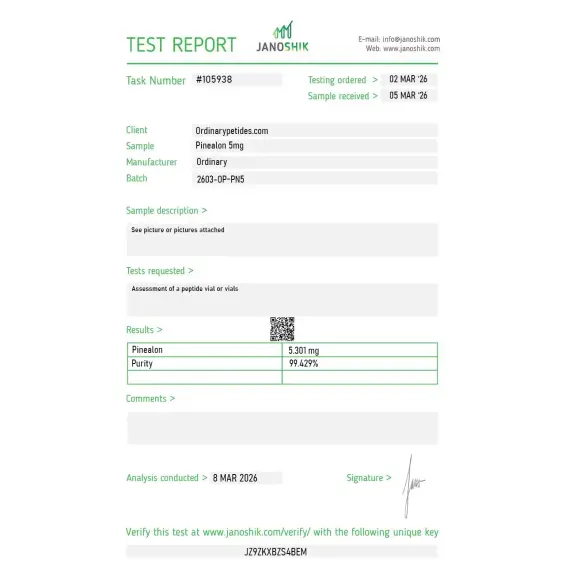
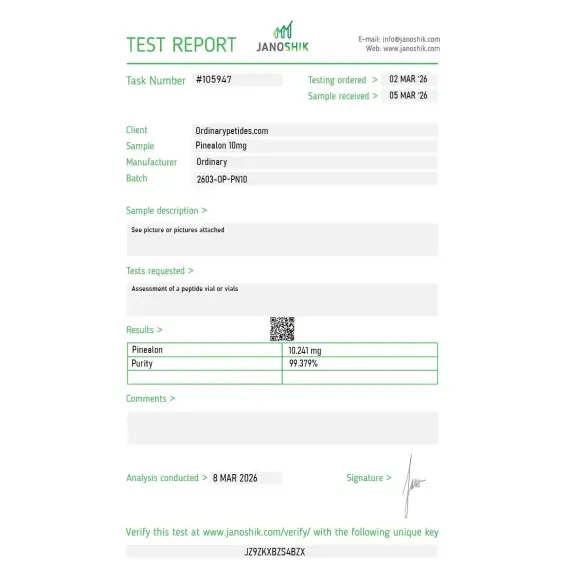
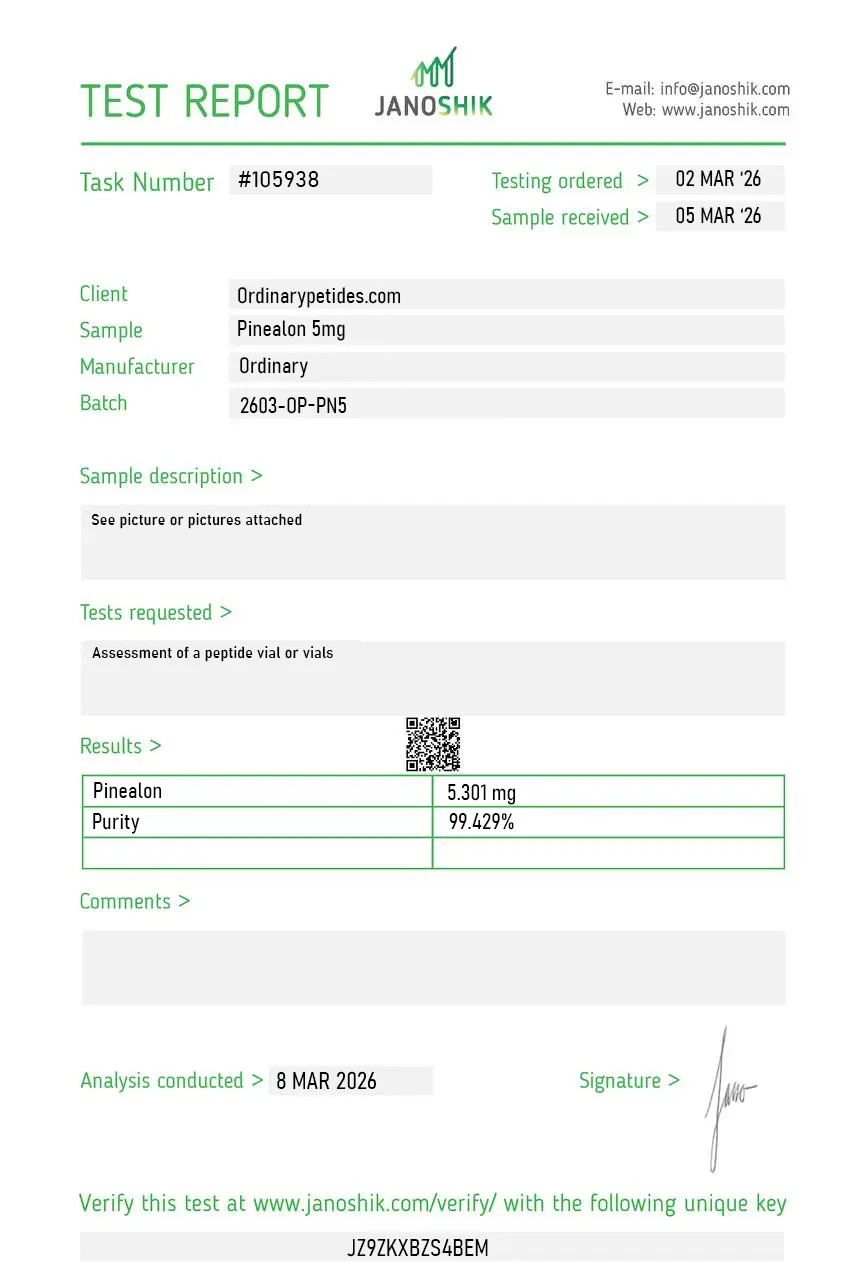
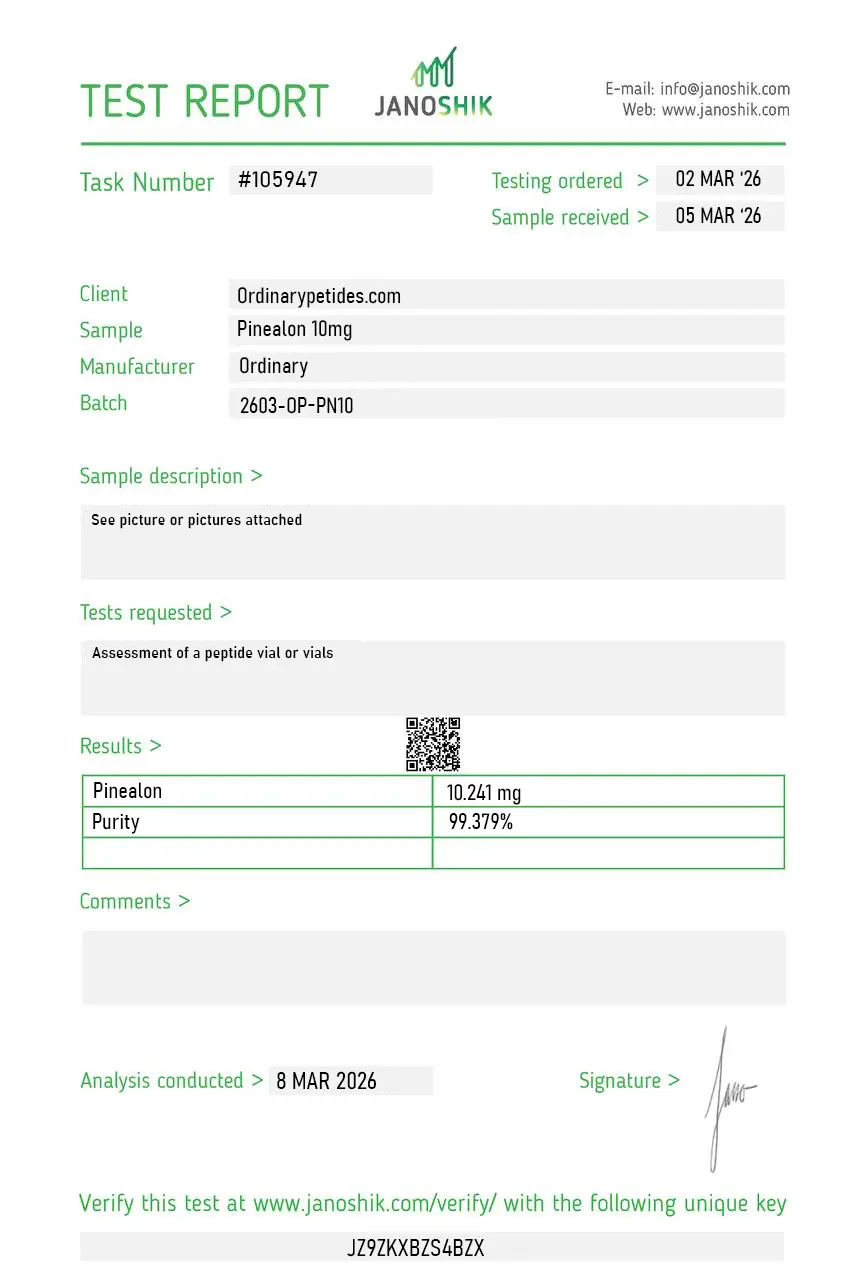
Independent test reports are available for Pinealon 5mg and Pinealon 10mg. These reports provide batch-level documentation and analytical verification information for research reference.
Based on 1 reviews
4.0
-
1
EDR tripeptide from the Khavinson family — verified the sequence by MS, looked clean. The Russian-language literature dominance for this peptide specifically means a lot of bibliographic work before designing experiments around it. Material from this supplier was consistent with the published sequence.
Pinealon — also known as the EDR peptide or Glu-Asp-Arg — is a synthetic tripeptide bioregulator composed of three amino acids: L-glutamic acid, L-aspartic acid, and L-arginine. It was originally isolated from Cortexin, a neuroprotective polypeptide complex derived from the brain tissue of pigs and cattle, and later synthesized in its purified tripeptide form. Developed within the same Russian bioregulator research tradition as Cortagen, Cardiogen, and Crystagen, Pinealon is classified as a cytogen specifically targeting the central nervous system and pineal gland. Its name reflects its primary organ of action — the pineal gland — a small but critically important brain structure that regulates circadian rhythms, melatonin production, and endocrine function.
Pinealon operates through an unusually direct mechanism compared to most peptides. Rather than binding to cell surface receptors, its small molecular size allows it to cross both cell membranes and nuclear membranes, enabling direct interaction with chromatin and DNA. Inside the nucleus it modulates gene expression — activating genes associated with neuronal activity and suppressing those driving neuronal cell death. Specific documented molecular actions include inhibiting NMDA receptor-mediated excitotoxicity, suppressing reactive oxygen species (ROS) accumulation, reducing caspase-3 activity — a key enzyme triggering programmed cell death — and stimulating 5-tryptophan hydroxylase expression through epigenetic modification, which drives serotonin synthesis. It also interacts with nuclear receptor proteins PPAR-alpha and PPAR-gamma which play a role in preventing amyloid-beta plaque formation relevant to Alzheimer's disease.
Research — primarily from Russian and Eastern European institutions — points to several areas of benefit. In a clinical study of 72 patients with traumatic brain injury consequences, oral Pinealon combined with standard therapy improved memory, reduced headache duration and intensity, improved emotional balance, and enhanced cognitive performance. Studies also show improved working memory in a significant proportion of subjects. In animal models it protected against prenatal hyperhomocysteinemia and preserved postnatal cognitive function, maintained learning retention in diabetic rats, restored dendritic spines in a Huntington's disease model, and improved sleep patterns in aged rats. It also shows circadian rhythm regulation potential — helping reset disrupted sleep-wake cycles in models of shift work disorder. Anti-aging effects at the cellular level in brain tissue have been observed alongside the related peptide Vesugen.
All three are Khavinson-class bioregulators targeting the brain and aging. Cortagen targets the cerebral cortex and peripheral nervous system for neuroregeneration. Epitalon targets the pineal gland primarily through telomerase activation and melatonin restoration. Pinealon overlaps with Epitalon in pineal gland targeting but operates through a different mechanism — direct epigenetic gene regulation rather than telomerase activation. The two are sometimes stacked together for longevity and cognitive support, though excessive doses of both are cautioned against due to potential pathway overlap.
Pinealon is available in both oral capsule form and as an injectable solution. Standard protocols from Russian clinical practice typically involve 1 to 2 capsules once or twice daily with meals for one month, repeated every 3 to 6 months. Its small molecular size gives it reasonable oral bioavailability — an advantage over many larger peptides that require injection. Injectable forms are also used in research settings. In Russian clinical observational use it is sometimes recommended alongside Cortexin or Vesugen for broader neuroprotection.
No major adverse events have been reported in animal studies or Russian observational clinical use. The existing peptide bioregulator class has a consistently clean safety profile in published literature. However, dedicated long-term human safety studies in the Western clinical trial framework do not exist for Pinealon specifically. Theoretical concerns include potential overstimulation of neurogenic and serotonergic pathways at excessive doses, and unknown interactions when combined with other pineal-targeting peptides at high doses.
Pregnant or breastfeeding women should avoid it in the absence of safety data for these populations. People with active psychiatric conditions — particularly those involving serotonin dysregulation such as bipolar disorder or serotonin syndrome risk — should consult a physician before use given Pinealon's stimulating effect on serotonin synthesis pathways. Those on medications affecting the central nervous system, mood, or sleep should disclose all compounds to their physician. As with all bioregulators in this series, it is not FDA-approved and all use should be under qualified medical supervision.