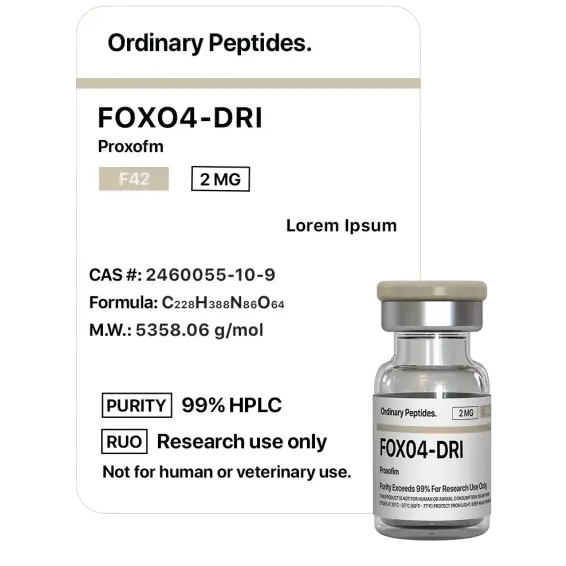
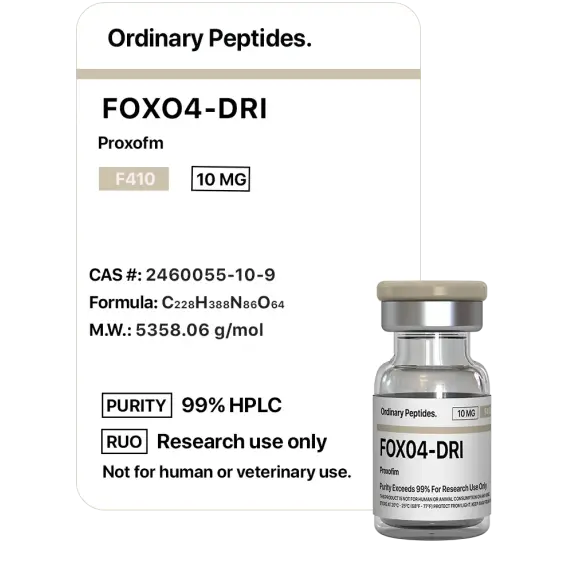
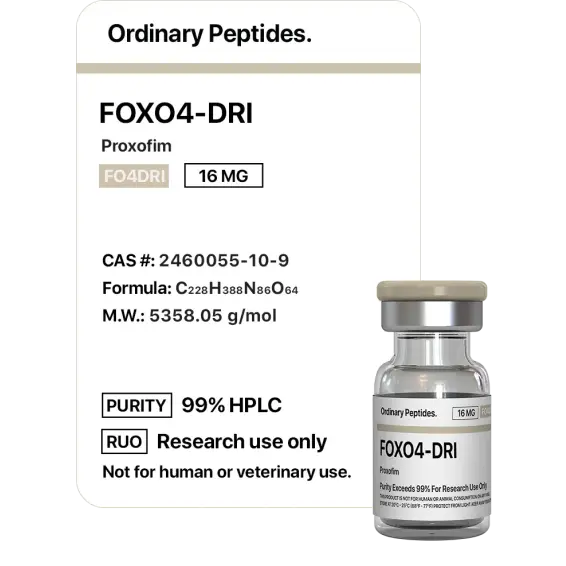
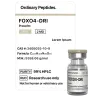



FOXO4-DRI
For in vitro testing and laboratory use only. Not for human or animal consumption. Bodily introduction is illegal. Handle only by licensed professionals. Not a drug, food, or cosmetic. Educational use only.
FOXO4-DRI: An Experimental Senolytic Peptide at the Frontier of Aging Biology and Senotherapy Research
FOXO4-DRI is not a "daily youth peptide," but an experimental senolytic peptide from the world of aging biology, designed to target senescent cells — those very cells that no longer divide, yet continue to damage the tissue environment.
In the research context, it is studied as a molecule capable of disrupting the FOXO4-p53 axis and triggering apoptosis in a portion of these cells. In preclinical models, this was associated with a reduction in senescent cell burden and improvement in certain age-related phenotypes in mice, and later interest in the compound expanded to cartilage, blood vessels, keloid fibroblasts, and Leydig cells.
It sounds a bit like science fiction, but this is exactly the kind of case where science fiction is already holding a test tube.
At the same time, nearly all of its strength still lives in cellular and animal data, not in mature human clinical evidence. That is why FOXO4-DRI is most interesting to those who view senotherapy as the frontier of research, rather than as a ready-made everyday "rejuvenation" story.
FOXO4-DRI: A Scientific Review of the First Targeted Senolytic Peptide
Based on peer-reviewed literature — see References. Last updated: April 2026.
The Short Version
FOXO4-DRI is a cell-penetrating peptide designed to do one thing with unusual molecular precision: kill senescent cells. It achieves this by disrupting the interaction between FOXO4, a transcription factor, and p53, the most important tumour suppressor protein in human biology. In senescent cells, FOXO4 sequesters p53 in the cell nucleus, preventing it from triggering programmed cell death. FOXO4-DRI competes for p53 binding, freeing it to translocate to the mitochondria and execute the apoptosis programme the senescent cell was suppressing. The result, in cell culture and in mice, is selective elimination of senescent cells while leaving normal cells largely intact.
The 2017 Cell paper by Baar et al. at the Erasmus University Medical Centre that introduced this compound produced some of the most visually striking results in aging biology research in years — aged mice with restored fur density, improved physical fitness, and enhanced kidney function.[1] That paper remains, seven years on, the primary evidence base for FOXO4-DRI as a systemic anti-aging intervention.
| At a glance | |
|---|---|
| Full name | FOXO4 D-Retro-Inverso peptide |
| Also known as | FOXO4-DRI, FOXO4DRI |
| Structure | D-retro-inverso isoform of the p53-binding domain of FOXO4; cell-penetrating peptide |
| Mechanism | Displaces FOXO4 from p53 → p53 nuclear exclusion → mitochondrial apoptosis in senescent cells |
| Drug class | Senolytic (senescent cell-eliminating agent) |
| Developer | Marjolein Baar, Peter de Keizer, and colleagues; Erasmus University Medical Centre, Rotterdam |
| Origin paper | Baar et al., Cell. 2017;169(1):132–147.e13 |
| Human clinical trials | ❌ None published |
| FDA status | Not approved; research compound only |
| Primary concern | ⚠️ p53 disruption in normal cells; unknown cancer safety profile in humans |
The Biological Foundation: Cellular Senescence and the SASP
What senescent cells are
Cellular senescence is a state of permanent cell cycle arrest that a cell enters when it encounters stress it cannot resolve — typically DNA damage (from radiation, chemotherapy, reactive oxygen species, or telomere shortening), oncogenic signalling, or replication exhaustion. Rather than dividing with potentially damaged DNA (cancer risk) or dying immediately, the cell enters a stable, non-dividing state. Senescent cells are not simply silent — they adopt the Senescence-Associated Secretory Phenotype (SASP), continuously pumping out cytokines (IL-6, IL-8), proteases, and growth factors into surrounding tissue.
In long-term contexts, as the accumulation of senescent cells outpaces the immune system’s ability to clear them, the SASP becomes pathological. The continuous secretion of SASP factors has detrimental effects on normal tissue homeostasis and is considered to significantly contribute to aging.[10] Landmark mouse studies demonstrated that even small numbers of transplanted senescent cells can drive physical dysfunction, and that removing senescent cells with genetic or pharmacological tools extends both healthspan and lifespan. This established senolysis — the selective elimination of senescent cells — as one of the most promising approaches in geroscience.[11]
Why senescent cells resist apoptosis
Senescent cells are characteristically resistant to programmed cell death despite being permanently growth-arrested. They upregulate anti-apoptotic pathways — including BCL-2 family proteins and, as the Baar group discovered, the FOXO4-p53 interaction — that prevent p53 from executing its normal pro-apoptotic function. Baar et al. showed how FOXO4 protects senescent cell viability by keeping p53 sequestered in nuclear bodies, preventing it from inducing apoptosis.[1]
The FOXO4-p53 Axis: Why It’s the Right Target
FOXO4 in senescence
FOXO4 is a member of the Forkhead box O (FOXO) family of transcription factors, involved in stress response, metabolism, DNA repair, and cell longevity. In normal, non-senescent cells, FOXO4 is expressed at low levels. In senescent cells, FOXO4 expression increases significantly and the protein migrates into the nucleus, where it forms complexes with p53 at specific nuclear structures adjacent to DNA damage foci.
p53 and its dual role
p53 is arguably the most important protein in cancer biology — the “guardian of the genome.” It normally functions to detect DNA damage and halt cell division, drive repair, and if repair fails, execute apoptosis. When p53 is mutated or lost, cells can accumulate DNA damage and divide uncontrollably — which is why p53 is mutated or lost in over 50% of human cancers. In senescent cells, p53 is functional — but physically constrained. FOXO4 sequesters p53 in the nucleus, preventing it from translocating to the mitochondria where it would initiate the apoptotic cascade.
The mechanism of FOXO4’s constraint on p53 was fully characterised at atomic resolution in 2025: the disordered FOXO4-DRI binds to the disordered p53TAD2 and forms a transiently folded complex. Both the FOXO4-derived region and the cationic cell permeability peptide contribute to the interaction. Furthermore, p53 phosphorylation enhances the affinity for both FOXO4 and FOXO4-DRI — meaning FOXO4-DRI has even higher affinity for senescent cells, where p53 is constitutively phosphorylated due to ongoing DNA damage signalling.[3]
Design of FOXO4-DRI: Chemistry and Cell Penetration
The D-Retro-Inverso strategy
To design a peptide that disrupts the FOXO4-p53 interaction, Baar et al. needed to address two challenges: the peptide had to reach the nucleus (where the interaction occurs), and it had to resist rapid degradation by proteolytic enzymes. Both challenges were addressed through the D-retro-inverso (DRI) modification. D-amino acids are the mirror-image versions of natural L-amino acid isomers — proteolytic enzymes, which evolved to cleave L-amino acid peptides, cannot cleave D-amino acid sequences. The retro-inverso design reverses the sequence and converts all amino acids to D-form, preserving the binding surface topology while making the peptide protease-resistant. The FOXO4-DRI sequence was derived from the region of FOXO4 that binds p53’s transactivation domain 2 (TAD2), competing with endogenous FOXO4 and freeing p53 to migrate to mitochondria and trigger apoptosis.[1]
Why selectivity is achieved
The selectivity of FOXO4-DRI for senescent cells over normal cells derives from the dramatically higher FOXO4 expression and nuclear localisation in senescent cells. In normal cells with low FOXO4 expression, there is little FOXO4-p53 complex to disrupt. In senescent cells where FOXO4 is highly expressed and actively sequestering p53, disruption of the complex releases a large quantity of activated p53 against a background where other pro-apoptotic signals (PUMA, BIM) are already upregulated. The 2017 Cell paper quantified this selectivity: FOXO4-DRI potently and selectively reduced the viability of senescent versus control IMR90 cells with an 11.73-fold difference.[1]
Preclinical Evidence: The 2017 Cell Paper and Subsequent Work
In vitro selectivity (Baar et al. 2017)
The original study in human IMR90 lung fibroblasts established an 11.73-fold selectivity for senescent over normal cells at EC50 — the largest selectivity index reported at the time for any senolytic. Mechanistic confirmation came through p53 knockdown (which abolished the effect) and caspase inhibitors (also abolishing it, confirming apoptosis dependence). The L-isoform of the same peptide had no effect, confirming the DRI modification was essential. An unrelated DRI peptide (FOXM1-DRI) had no effect, confirming sequence specificity.[1]
In vivo phenotypic rescue in mice (Baar et al. 2017)
Mice were treated with FOXO4-DRI intraperitoneally, three times per week, over extended periods in two models. In doxorubicin-treated mice (chemotherapy-induced senescence), FOXO4-DRI treatment neutralised chemotoxicity — restoring fur density and physical condition while doxorubicin’s anti-tumour effects remained intact. In naturally aged mice and fast-aging XpdTTD/TTD mice (XPA-related DNA repair deficiency), FOXO4-DRI restored fitness, fur density, and renal function. Importantly, mice were treated for over 10 months with infusions three times per week, and no obvious side effects were observed.[1]
Independent replications across tissues
| Study | Tissue/cell type | Finding |
|---|---|---|
| Zhang et al. 2020 (Aging) [4] | Leydig cells (testosterone-producing) | Selectively eliminated senescent Leydig cells; improved testosterone production in aged mice |
| Frontiers in Bioengineering 2025 [6] | Endothelial cells (vascular) | Cleared senescent endothelial cells; partially restored vascular function in aged mice |
| PMC8116695 (2021) [5] | Chondrocytes (cartilage) | Selectively removed senescent chondrocytes; improved cartilage-forming potential in ACI models |
| Multiple groups | Fibroblasts, cancer cell lines, various senescent models | Confirmed basic senolytic activity; mechanism replicated |
The Critical p53 Safety Question
The fundamental tension
⚠️ FOXO4-DRI works by binding p53 and displacing it from FOXO4. In senescent cells, this is the desired effect. But p53 is not only expressed in senescent cells — it is the universal guardian of the genome in every human cell. When FOXO4-DRI is administered systemically, it reaches every tissue. The question is: what does FOXO4-DRI do to p53’s function in normal cells? Could it be that treatment causes rare senescent cells carrying oncogenic lesions to re-enter the cell cycle rather than undergo apoptosis, thereby increasing the risk of tumour development? This question was raised in the accompanying Cell commentary in 2017 and remains unanswered in humans in 2026.[2]
The p53 transactivation domain concern
The 2025 Nature Communications structural paper clarified that the FOXO4-DRI binding site on p53 is the transactivation domain 2 (TAD2) — the region through which p53 activates transcription of its target genes, including not just apoptotic genes but also DNA repair genes and cell cycle checkpoint genes. When FOXO4-DRI occupies TAD2, it potentially prevents p53 from activating its transcriptional programme in normal cells. The same paper notes that the structural data provides the basis for development of p53 inhibitors — acknowledging explicitly that this binding interaction effectively constitutes p53 inhibition in any cell the compound enters.[3]
What the mouse data does and does not tell us
The 10-month mouse treatment studies showed no obvious side effects. This is reassuring for acute and subacute toxicity. But mice have much shorter lifespans than humans; 10 months of treatment does not translate to equivalent oncological surveillance in a human. Mice and humans differ substantially in p53 biology — mouse cells are more easily transformed by oncogenic insults. “No obvious side effects” means no gross tissue pathology, not that no molecular changes occurred in normal cells.
The selectivity index in context
⚠️ The 11.73-fold selectivity for senescent over normal cells means that at concentrations required for effective senescent cell elimination, approximately 1/12 the effect is also applied to normal cells. In a compound being used by healthy adults to optimise aging — where treatment would be periodic and long-term — the implications of this normal-cell effect require much more thorough characterisation than has been conducted.
Comparison with Other Senolytics
| Senolytic | Mechanism | Human evidence | Stage |
|---|---|---|---|
| FOXO4-DRI | FOXO4-p53 interaction disruption → mitochondrial apoptosis | ❌ None | Preclinical |
| Dasatinib + Quercetin (D+Q) | Tyrosine kinase inhibition + flavonoid; broad anti-apoptotic pathway targeting | Phase 2 trials ongoing (Mayo Clinic, UNITY Biotechnology) | Human trials |
| Navitoclax (ABT-263) | BCL-2/BCL-XL inhibitor | Phase 1/2 (oncology); thrombocytopenia limits use | Human trials |
| Fisetin | Flavonoid; multiple pathways | Phase 2 trials (Alzheimer’s, frailty) | Human trials |
| ES2 peptide [7] | Targets FOXO4 CR3 domain (not p53); same interaction but different binding point | ❌ Preclinical only | Preclinical; 3–7× more potent than FOXO4-DRI in some assays |
Two features distinguish FOXO4-DRI from the small-molecule senolytics: specificity (designed around the precise protein-protein interaction that sustains senescent cell viability, not broad pathway inhibitors) and nuclear access (as a cell-penetrating peptide, it reaches the nucleus where the FOXO4-p53 interaction occurs). The competing peptide ES2 may offer the same senolytic potency with a mechanistically safer approach since it targets FOXO4 directly rather than binding p53.
Human Evidence: None
There are no published randomised controlled trials, Phase 1 safety studies, Phase 0 studies, or any formal clinical data on FOXO4-DRI in humans. The compound progressed from the 2017 Cell paper directly into research chemical markets without formal pharmaceutical development. No IND application or human trial registration appears in major clinical trial databases as of April 2026. Dasatinib/Quercetin combination, which does not carry the same p53 concern, has progressed furthest into human trials and may provide a cleaner regulatory path for senolytic validation.
Safety: Known and Unknown
Known short-term animal safety
In the 2017 study, mice were treated with FOXO4-DRI intraperitoneally three times per week for up to 10 months. No gross toxicity, significant weight loss, organ pathology, or behavioural abnormalities were observed. This represents the most comprehensive published safety assessment available.[1]
Critical unknowns
| Safety domain | Status |
|---|---|
| Human pharmacokinetics | ❌ Unknown |
| Human dose-response | ❌ Unknown |
| p53 function in normal human cells during treatment | ⚠️ Unknown; theoretically significant |
| Long-term oncological risk | ⚠️ Unknown; theoretically significant |
| Whether pre-malignant senescent cells escape to proliferative state | ⚠️ Not assessed; theoretically possible |
| Immune/inflammatory response to senolysis | Systemic clearing of senescent cells releases SASP factors — acute inflammatory response possible |
| Long-term safety of repeated cycles | ❌ Unknown |
Why FOXO4-DRI Has Not Entered Clinical Trials
Several factors are likely at play. The p53 problem: regulatory bodies appropriately require extensive safety data before approving studies of compounds that interfere with p53 in healthy humans. Demonstrating that FOXO4-DRI does not increase cancer incidence in humans would require either very large long-term safety studies or convincing non-human primate data — neither has been published. The indication challenge: anti-aging and healthspan extension are not recognised disease indications by the FDA. Competition from small molecules: Dasatinib/Quercetin combination, which does not carry the same p53 concern, has progressed further and may provide a cleaner regulatory path. Commercial incentives: the research chemical market provides an alternative economic model that bypasses pharmaceutical development investment.
Common Misconceptions
“The mouse study proves it works in humans.”
The mouse study shows mechanistically elegant senolytic activity in rodent models with impressive phenotypic reversal. Translation to humans requires clinical trials. The gap between mouse aging biology and human aging biology is well-documented — mouse lifespan studies have repeatedly failed to translate to human benefit.
“Because it’s selective, it’s safe.”
⚠️ Selectivity (11.73-fold) means it preferentially kills senescent cells but is not exclusive to them. More importantly, selectivity for cytotoxic effect does not address what FOXO4-DRI does to p53 function in the normal cells it also enters. These are distinct safety questions.
“It’s being used clinically, so there must be some safety data.”
There is no published clinical safety data. Self-administration by biohackers and research chemical users is not clinical use and does not generate safety data that can be evaluated or regulated.
“Only a few senolytic treatments are needed, so risks are minimal.”
⚠️ The dosing frequency question is unresolved in humans. More importantly, even periodic disruption of p53 across all tissues, repeated over years, represents a cumulative oncological exposure that cannot be assessed without long-term follow-up studies.
Frequently Asked Questions
Has any human taken FOXO4-DRI?
Research chemical vendors sell FOXO4-DRI widely, and self-experimentation in the biohacking community is documented online. However, this is entirely outside any supervised clinical framework, and no safety or efficacy data from these self-experiments has been published in peer-reviewed form.
Is FOXO4-DRI being developed by a pharmaceutical company?
No pharmaceutical company appears to have FOXO4-DRI in formal IND-stage development as of April 2026. The original research group (Erasmus) continues preclinical work.
Are there better senolytics coming?
The ES2 peptide approach (targeting FOXO4’s CR3 domain) may offer higher potency with a mechanistically safer profile since it does not require direct p53 binding.[7] The Dasatinib/Quercetin combination is the most clinically advanced senolytic combination and is undergoing Phase 2 trials in multiple indications. The field is advancing rapidly.
What would a proper clinical trial of FOXO4-DRI look like?
A responsible development path would include: non-human primate studies with long-term cancer surveillance; p53 function assessments in normal cells following treatment; a Phase 1 escalating-dose study with extensive biomarker monitoring (including cancer surveillance markers); followed by Phase 2 in a defined indication — e.g., chemotherapy-induced frailty where senescent cell burden is acutely elevated and the risk-benefit calculation is most favourable.
Key Takeaways
- FOXO4-DRI has the most precisely designed mechanism of any compound in this article series. It was designed from deep understanding of the specific protein-protein interaction that sustains senescent cells, and that design shows in its selectivity profile — 11.73-fold preference for senescent over normal cells, confirmed independently across multiple cell types.[1]
- The 2017 Cell paper represents landmark work in geroscience — phenotypic reversal in aged mice (restored fitness, fur density, kidney function) with good short-term tolerability. It remains one of the most compelling demonstrations that senescent cell burden is causally linked to age-related functional decline.
- No human trial data exists. This is not a gap that can be bridged by the quality of animal data, however impressive. FOXO4-DRI has proceeded directly from a landmark mouse study into research chemical markets, bypassing human pharmacology entirely.
- ⚠️ The p53 safety question is the most significant unresolved issue in the compound’s development. FOXO4-DRI binds p53’s transactivation domain, which not only disrupts FOXO4 binding but potentially modulates p53’s broader transcriptional functions in every cell it enters. Long-term p53 disruption in healthy humans is a genuine and uncharacterised cancer risk.[3]
- The field is advancing beyond FOXO4-DRI. ES2 and related next-generation peptides that target FOXO4 rather than p53 may offer the same senolytic potency with a mechanistically safer approach.[7]
- ⚠️ For anyone considering FOXO4-DRI outside a clinical trial: the compound is being used based on compelling mouse data and theoretical reasoning, in the complete absence of human pharmacokinetic, dose-finding, or safety data. This places it at the highest-risk end of the research peptide landscape — not because harm is established, but because the central mechanism of action directly touches the biology of cancer suppression.
References
Primary Research
- Baar MP, Brandt RMC, Putavet DA, et al. Targeted Apoptosis of Senescent Cells Restores Tissue Homeostasis in Response to Chemotoxicity and Aging. Cell. 2017;169(1):132–147.e13. PMC5556182
- Triana-Martínez F, et al. Rejuvenation by Therapeutic Elimination of Senescent Cells: Commentary on Baar et al. Cell. 2017;169(1):3–4.
Structural Studies
- Bourgeois B, et al. The disordered p53 transactivation domain is the target of FOXO4 and the senolytic compound FOXO4-DRI. Nature Communications. 2025;16. doi: 10.1038/s41467-025-60844-9
Independent Replications and Applications
- Zhang C, Xie Y, Chen H, et al. FOXO4-DRI alleviates age-related testosterone secretion insufficiency by targeting senescent Leydig cells in aged mice. Aging. 2020. doi: 10.18632/aging.102682. PMC7053614
- Senolytic Peptide FOXO4-DRI Selectively Removes Senescent Cells From in vitro Expanded Human Chondrocytes. PMC8116695
- Hu et al. FOXO4-DRI regulates endothelial cell senescence via the P53 signaling pathway. Frontiers in Bioengineering and Biotechnology. 2025. PMC12852416
Next-Generation Peptides
- Le HH, Cinaroglu SS, Manalo EC, et al. Molecular modelling of the FOXO4-TP53 interaction to design senolytic peptides for the elimination of senescent cancer cells. EBioMedicine. 2021;73:103646. doi: 10.1016/j.ebiom.2021.103646
- Development of a novel senolytic by precise disruption of FOXO4-p53 complex. Commentary. eBioMedicine. PMC8601985
Cellular Senescence and Senolytics Context
- Di Micco R, Krizhanovsky V, Baker D, d’Adda di Fagagna F. Cellular senescence in ageing: from mechanisms to therapeutic opportunities. Nature Reviews Molecular Cell Biology. 2021;22(2):75–95.
- Kirkland JL, Tchkonia T. Cellular Senescence: A Translational Perspective. EBioMedicine. 2017;21:21–28.
Key Investigators
- Marjolein Baar — Lead author, 2017 Cell paper; PhD student in Peter de Keizer’s group at Erasmus University Medical Centre.
- Peter de Keizer, PhD — Principal investigator; Erasmus University Medical Centre, Rotterdam; subsequently at Utrecht University. Developed the FOXO4-DRI concept and framework.
- Jan Hoeijmakers, PhD — Erasmus University Medical Centre; senior author on the 2017 paper; authority on DNA repair and aging.
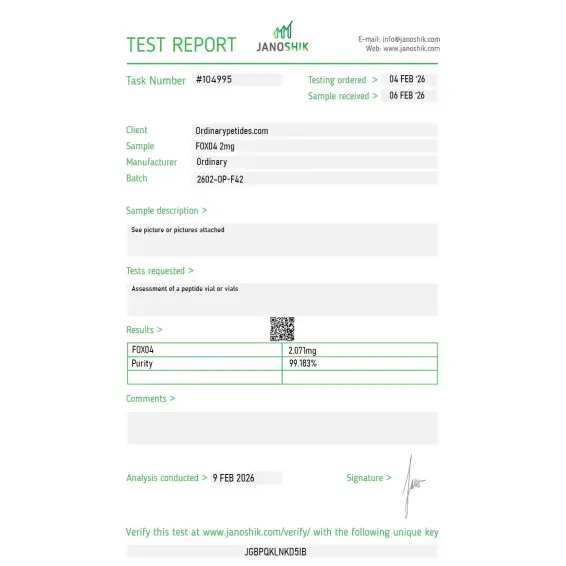
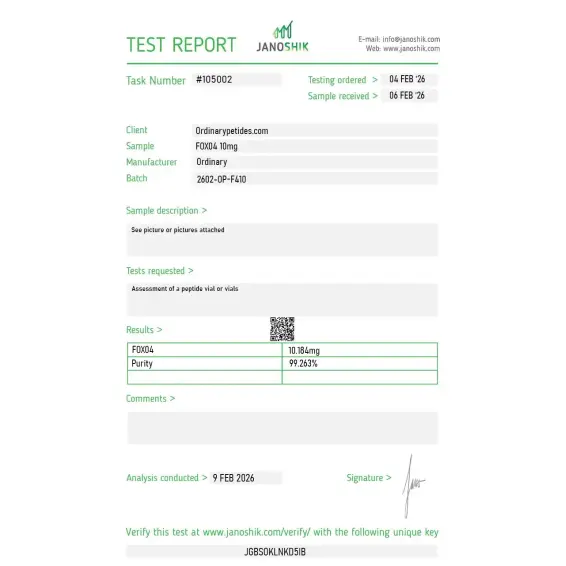
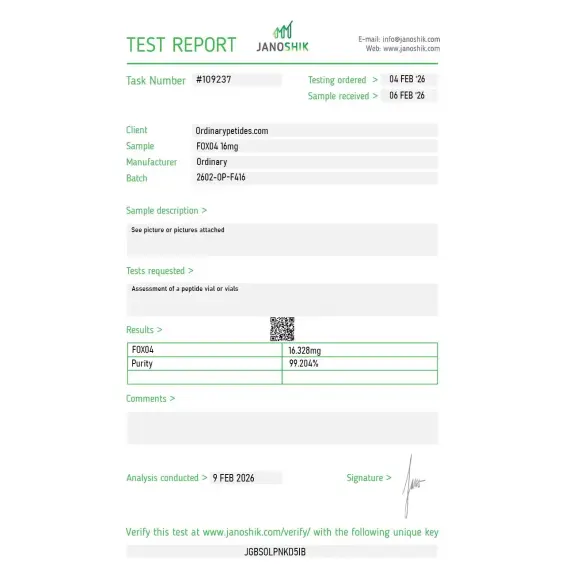
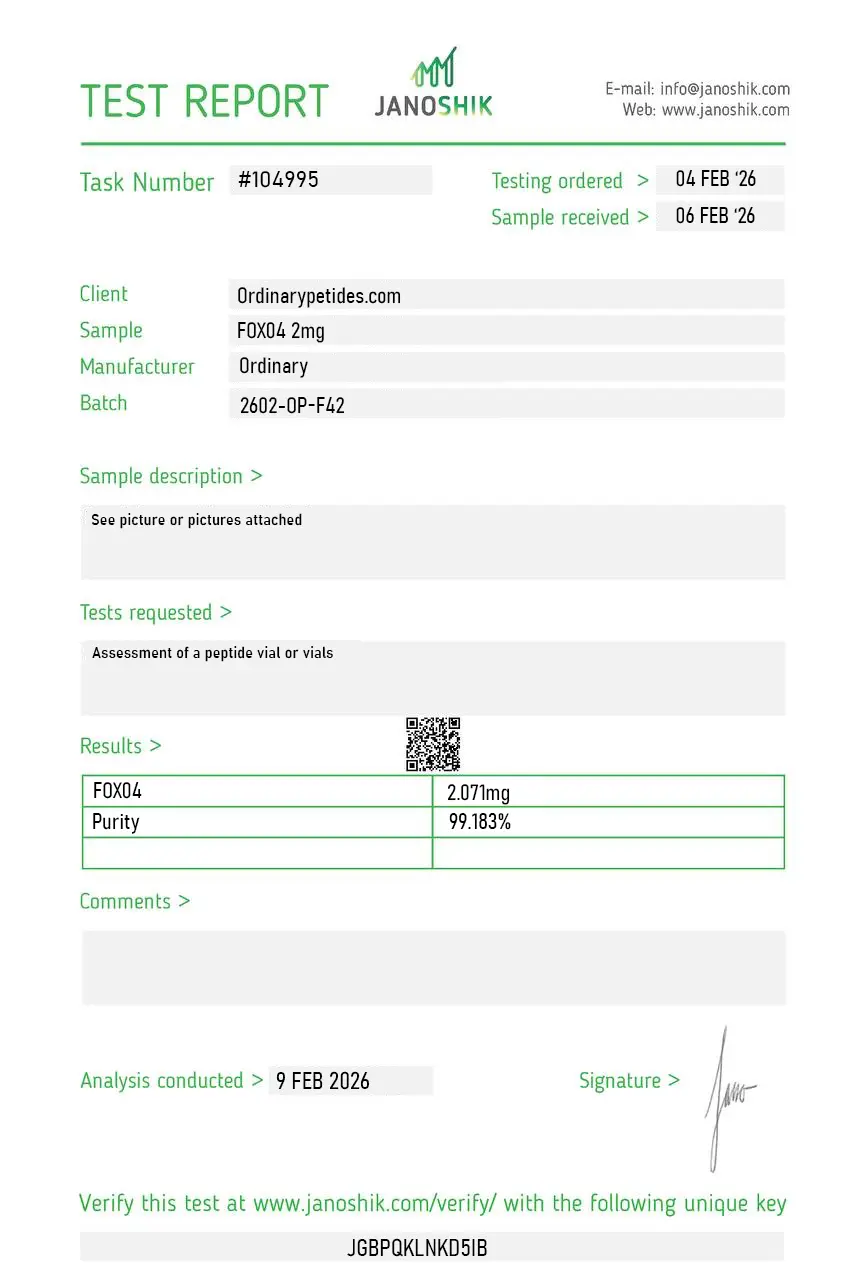
Certificate of Analysis
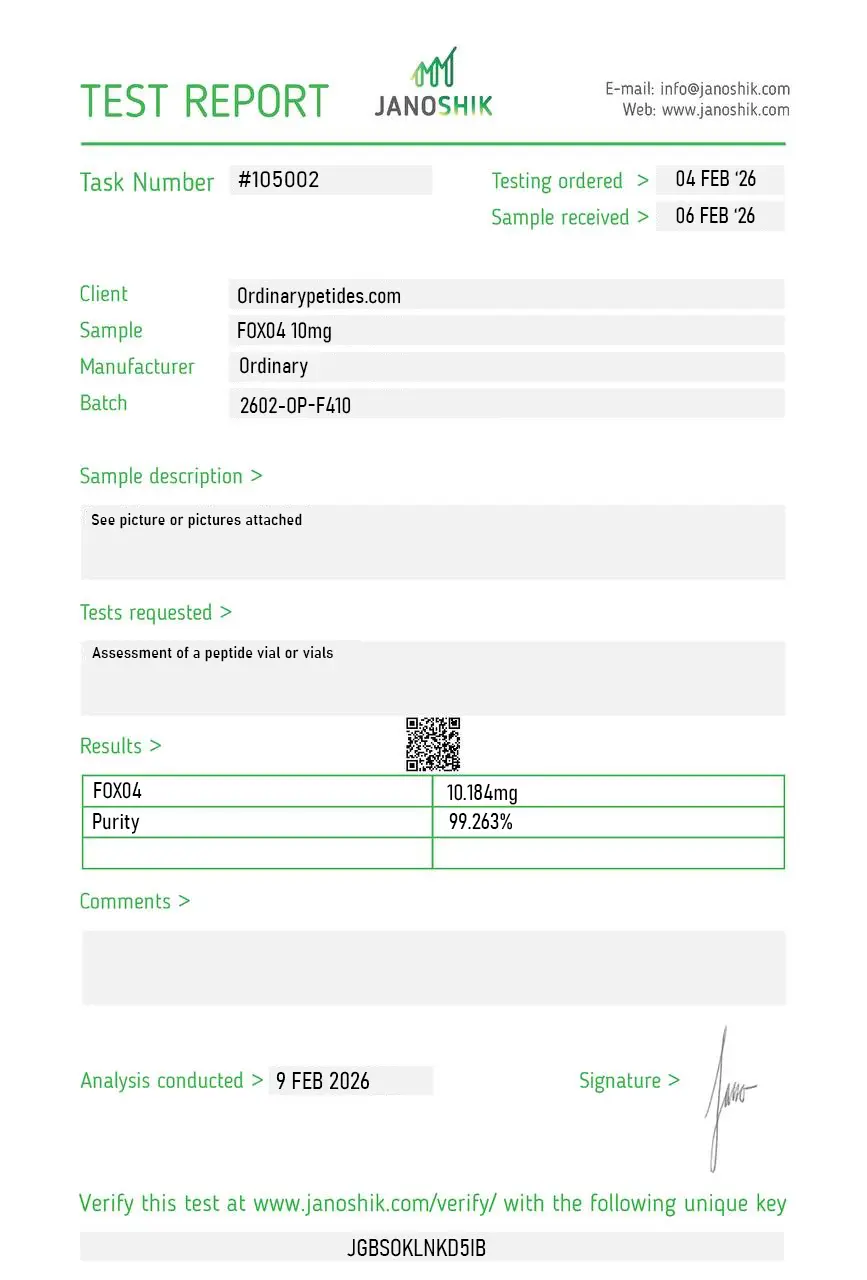
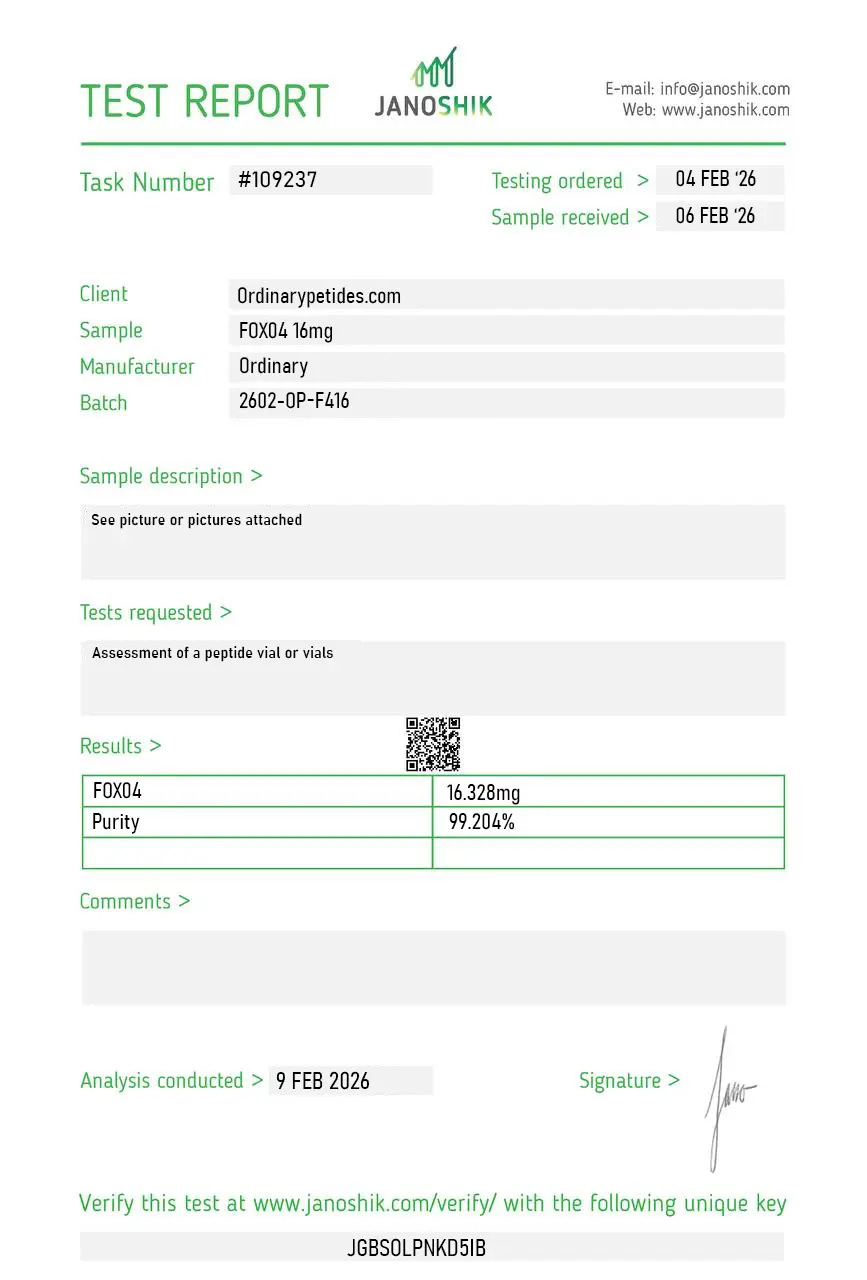
Independent test reports are available for FOXO4 2mg, 10mg, and 16mg batches. These reports provide batch-level documentation and analytical verification information for research reference.
Based on 2 reviews
4.5
-
1
-
1
The senolytic mechanism is the entire reason we work with it — FOXO4-DRI disrupts the FOXO4–p53 interaction that senescent cells rely on to keep p53 nuclear, and blocking it releases p53 to the mitochondria to trigger apoptosis selectively in senescent cells. For studying targeted clearance of senescent cells in culture, it's one of the few peptide-based tools with a defined molecular interaction rather than a vague mechanism. The material produced the expected selective senescent-cell apoptosis in our in-vitro model
The D-retro-inverso architecture is the identity-critical feature and exactly what the certificate should address — the whole point of the design is D-amino acids in reversed sequence for protease resistance, and a preparation made with L-residues or in the wrong order would be a completely different, protease-labile molecule that fails. A standard purity figure can't confirm the stereochemistry. The material behaved as the protease-resistant form should in our assays, but for a DRI peptide the chirality and sequence-direction are what I most want verified.
FOXO4-DRI (Forkhead Box O4-D-Retro-Inverso) is a synthetic cell-penetrating senolytic peptide — meaning it is specifically designed to selectively kill senescent cells, the dysfunctional "zombie cells" that accumulate in tissues with age and drive chronic inflammation, tissue degradation, and age-related disease. It was first described in a landmark 2017 paper by Baar et al. and belongs to a class of next-generation senolytics distinguished by molecular precision — targeting a single specific protein-protein interaction rather than broadly disrupting cellular survival pathways. The "D-Retro-Inverso" suffix describes its structural engineering — its amino acid sequence is reversed and uses D-amino acids rather than natural L-amino acids, making it highly resistant to enzymatic degradation in biological systems.
Its function is to interfere with FOXO4 binding to p53, potentially triggering apoptosis in senescent cells in preclinical experimental systems.
FOXO4-DRI itself is not a tumor suppressor; rather, it interacts with pathways involving the tumor suppressor protein p53 in research models.
Potential risks observed in experimental systems may include unintended cell death, tissue stress responses, or off-target apoptotic effects. Human safety data are limited.
It is a real synthetic peptide, first described in detail in a 2017 preclinical study as a senolytic targeting the FOXO4-p53 axis.
It is intended to disrupt the interaction between FOXO4 and p53 in senescent cells, thereby releasing p53 and triggering apoptosis.
Because it became one of the most visible molecules showing that removing senescent cells can improve age-related phenotypes in mice.
The main risks are linked to incomplete selectivity and to the fact that the molecule intervenes in p53-dependent biology, which is important for tumor suppression and responses to damage.
Senescent cells are cells that have permanently exited the cell cycle — they no longer divide — in response to DNA damage, telomere shortening, oxidative stress, oncogene activation, or replicative exhaustion. Rather than dying, they remain metabolically active and secrete a toxic cocktail of pro-inflammatory cytokines, proteases, and growth factors collectively called the Senescence-Associated Secretory Phenotype (SASP). SASP drives chronic low-grade inflammation — sometimes called "inflammaging" — which contributes to tissue dysfunction, immune dysregulation, cardiovascular disease, neurodegeneration, metabolic disease, and cancer progression. Senescent cells accumulate progressively with age and are now recognized as one of the twelve hallmarks of aging. Clearing them — senolytics — is one of the most actively researched strategies in geroscience.
In senescent cells, the FOXO4 transcription factor translocates to the nucleus where it forms a complex with p53 — one of the body's most critical tumor suppressor proteins. Within this complex, FOXO4 effectively holds p53 captive in the nucleus and prevents it from migrating to mitochondria where it would trigger apoptosis. This FOXO4-p53 interaction is essentially the survival mechanism that keeps senescent cells alive despite their dysfunction. FOXO4-DRI is designed to mimic the p53-binding domain of FOXO4 — it competes with endogenous FOXO4 for p53 binding, displacing FOXO4 from the complex. Freed from FOXO4's grip, p53 is excluded from the nucleus and redirects to mitochondria, where it triggers transcription-independent apoptosis — programmed cell death — selectively in the senescent cell. Crucially, FOXO4 expression is significantly elevated in senescent cells compared to healthy cells, meaning this mechanism preferentially targets the intended population with minimal effect on normal tissue.
The foundational 2017 Baar et al. mouse study demonstrated that FOXO4-DRI cleared senescent cells from aged, fast-aging, and chemotherapy-treated mice, restoring fitness, fur density, and renal function, and extending healthspan. Subsequent research has expanded the picture considerably. In aged male mice it improved Leydig cell function and partially restored age-related testosterone decline. In expanded human chondrocytes it selectively removed senescent cells, reducing SASP markers and improving cartilage quality — with direct implications for autologous chondrocyte implantation in orthopedic surgery. In cancer models senescent cancer cells induced by chemotherapy — which would otherwise drive tumor recurrence — were selectively eliminated. A 2025 Nature Communications study provided detailed NMR structural models of the p53-FOXO4 interaction and confirmed FOXO4-DRI's binding mechanism at atomic resolution, supporting rational refinement of next-generation analogs.
FOXO4-DRI has not entered human clinical trials. There is no published human safety or efficacy data. It is not FDA-approved and is not available through any regulated pharmaceutical channel. In the biohacking community it is administered by subcutaneous injection, typically at doses derived loosely from animal study protocols — commonly cited anecdotal doses range from 1 to 5 mg per injection — but no standardized human dosing exists. It is expensive to produce due to the complexity of D-Retro-Inverso synthesis, with single vials often costing several hundred dollars from research peptide vendors of highly variable purity and quality.
From the limited anecdotal self-experimentation community, the most commonly reported side effects are burning or itching at the injection site, fatigue, and flu-like symptoms — possibly consistent with immune system response to rapid senescent cell clearance. The most serious theoretical concern is its mechanism itself — it directly modulates p53, arguably the most important tumor suppressor in the human body. Any off-target effects on p53 in healthy cells could be catastrophic — either inducing apoptosis in vital healthy tissue or, paradoxically, disrupting p53's tumor-suppressive function and promoting oncogenesis. The clinical trial failure of UBX0101, another p53-modulating senolytic for osteoarthritis, is a noted cautionary example for this drug class. Rapid bulk clearance of senescent cells could also overwhelm immune clearance capacity, generating secondary inflammation from accumulating apoptotic debris.
Anyone outside a formally approved clinical research setting should not use this compound. People with active cancer or a history of cancer face a particularly serious and uncharacterized risk from p53 modulation — the interaction between FOXO4-DRI and malignant cells is incompletely understood, with theoretical risks in both directions. Young, healthy individuals are considered unlikely to benefit given that senescent cell burden is low in youth, while the intervention carries the same theoretical risks. Those on compounds that might interfere with its senolytic mechanism — including rapamycin, quercetin, and corticosteroids — should be aware of potential pharmacological conflicts reported anecdotally. As with all research peptides with no human trial data, qualified medical supervision is essential if this compound is to be explored at all.