L-carnitine
For in vitro testing and laboratory use only. Not for human or animal consumption. Bodily introduction is illegal. Handle only by licensed professionals. Not a drug, food, or cosmetic. Educational use only.
L-Carnitine: The Mitochondrial Transporter With Real Clinical Context
L-carnitine is a naturally occurring compound best known for one core job: helping long-chain fatty acids get into mitochondria, where they can be used for energy production. That role is not marketing fluff — it is the main reason levocarnitine is FDA-approved for specific deficiency states and for certain patients on hemodialysis.
In published clinical data, it has also been studied in cardiovascular settings, male fertility, and weight management, although the strength of evidence varies a lot depending on the use. The weight-loss signal is real but modest — so this is not a miracle shortcut in a capsule.
What makes L-carnitine genuinely interesting is that it sits at the crossroads of fat metabolism, mitochondrial function, and energy balance — quietly doing the unglamorous but essential transport work. At the same time, important nuance exists: the unresolved TMAO question with long-term oral use and the need to avoid D-carnitine and DL-carnitine are real considerations.
So the smart takeaway is simple: L-carnitine is most compelling where there is a clear metabolic or clinical rationale, not where hype tries to do all the heavy lifting.
L-Carnitine: A Scientific Review
Based on peer-reviewed literature and meta-analyses of randomised controlled trials — see References. Last updated: April 2026.
The Short Version
L-carnitine is not a peptide. It is a naturally occurring quaternary ammonium compound — a conditionally essential nutrient biosynthesised from the amino acids lysine and methionine — that sits at the centre of mitochondrial fatty acid metabolism. Without adequate carnitine, long-chain fatty acids cannot enter the mitochondrial matrix and cannot be oxidised for energy. This makes carnitine functionally indispensable for normal fat metabolism, particularly in cardiac and skeletal muscle where fatty acids are the primary fuel source.
L-carnitine is included in this series because it is a routine component of compounded injectable Lipo-C formulations and because injectable L-carnitine has genuinely different pharmacokinetics from oral supplementation. The honest summary: L-carnitine has real FDA-approved indications, real meta-analytic evidence for modest weight loss (−1.21 kg across 37 RCTs), real cardiovascular data both positive (reduced ventricular arrhythmias and mortality post-MI; improved LVEF in heart failure) and concerning (TMAO elevation from gut bacterial metabolism; Mendelian randomisation suggesting possible CAD/HF risk from higher endogenous carnitine). The injectable route genuinely delivers more carnitine to tissues than oral supplementation (oral bioavailability 14–18% vs. near-100% for IV/IM). The population that benefits most is narrower than supplement marketing implies.
| At a glance | |
|---|---|
| Chemical name | (R)-3-hydroxy-4-(trimethylammonio)butanoate |
| Also known as | L-carnitine; levocarnitine; Vitamin BT (historical) |
| Type | Quaternary ammonium compound; conditionally essential nutrient |
| Biosynthesis | From L-lysine + L-methionine; primary sites: liver, kidneys |
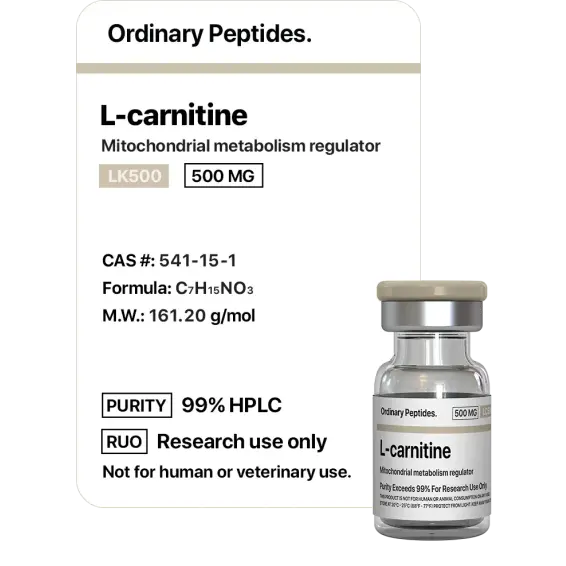
| MW | 161.20 Da; CAS 541-15-1 |
| Oral bioavailability | 14–18% (supplements); ~60–75% (from food) |
| IV/IM bioavailability | ~100% |
| FDA approval | ✅ Primary systemic carnitine deficiency; secondary deficiency in metabolic diseases; ESRD on haemodialysis |
| WADA | Not prohibited |
| Key forms | L-carnitine (LC); acetyl-L-carnitine (ALCAR); propionyl-L-carnitine (PLC); glycine propionyl-L-carnitine (GPLC) |
Discovery and History
L-carnitine was first isolated from meat extract by Russian scientists Gulewitsch and Krimberg in 1905 — its name derived from carnis (Latin: flesh). Its chemical structure was elucidated by Tomita and Sendju in 1927. For decades it was considered a vitamin (Vitamin BT) because it was essential for the growth of certain organisms. The discovery that humans could biosynthesize carnitine from lysine and methionine reclassified it as conditionally essential. The biochemical function — fatty acid transport into mitochondria — was established by Fritz and Bremer in the late 1950s and early 1960s, work that forms the basis of all subsequent therapeutic rationale.[1][2]
The biosynthesis pathway: L-lysine → Nε-trimethyllysine → β-hydroxy-Nε-trimethyllysine → γ-butyrobetaine aldehyde → γ-butyrobetaine → L-carnitine. The final step — γ-butyrobetaine dioxygenase (BBD) — requires vitamin C, which is why severe ascorbate deficiency (scurvy) produces a functional carnitine deficiency contributing to muscle weakness.
Biochemistry: What Carnitine Actually Does
The carnitine shuttle — core function
The inner mitochondrial membrane is impermeable to long-chain fatty acids (LCFAs; ≥12 carbons) and their CoA thioesters. Long-chain fatty acids must be esterified to L-carnitine (acylcarnitine) in order to enter the mitochondrial matrix where β-oxidation occurs. On the outer mitochondrial membrane, CPT-I (carnitine palmitoyltransferase I) catalyses the transfer of medium/long-chain fatty acids esterified to coenzyme A to L-carnitine. A transport protein called CACT (carnitine-acylcarnitine translocase) facilitates transport of acylcarnitine across the inner mitochondrial membrane. On the matrix side, CPT-II converts acylcarnitine back to acyl-CoA for β-oxidation. CPT-I is the rate-limiting step for β-oxidation and the primary regulatory point for fatty acid entry into mitochondria.[3]
CoA buffering — the secondary function
Within the mitochondrial matrix, carnitine acetyltransferase (CAT) catalyses the reversible transfer of acetyl groups between acetyl-CoA and carnitine, forming acetylcarnitine. This serves a critical metabolic buffering role: when acetyl-CoA accumulates (high fat oxidation, β-oxidation exceeding TCA cycle capacity), carnitine accepts acetyl groups and frees CoA for continued metabolic flux — supporting pyruvate dehydrogenase (glucose oxidation) and other CoA-dependent reactions. In carnitine deficiency, accumulation of acyl-CoA esters inhibits PDH and impairs glucose oxidation even when glucose is available. Additional documented roles: antioxidant (L-carnitine and especially ALCAR reduce ROS and upregulate SOD, GPx, and catalase); anti-inflammatory (TNF-α and IL-6 suppression); ammonia clearance; and lactic acid buffering during anaerobic exercise.
The Four Forms of L-Carnitine
L-carnitine (LC): The base form. Used in FDA-approved indications, most dietary supplements, and Lipo-C injectable formulations. Acetyl-L-carnitine (ALCAR): Crosses the blood-brain barrier more efficiently and serves as an acetyl donor for acetylcholine synthesis in the CNS; primary research applications in Alzheimer’s disease, peripheral neuropathy, and cognitive ageing. Does not generate TMAO to the same extent (the acetyl group changes gut bacterial handling). Propionyl-L-carnitine (PLC): Preferentially used in cardiac and vascular tissues; stimulates NO production and improves endothelial function; dedicated RCT evidence for peripheral arterial disease and heart failure; available as a pharmaceutical in some European countries. Glycine propionyl-L-carnitine (GPLC): Enhances NO production; studied for blood flow and exercise capacity.
Endogenous Synthesis and Dietary Sources
Humans synthesise approximately 25% of their carnitine needs endogenously; the remainder comes from diet. Biosynthesis requires lysine and methionine as substrates plus vitamin C, niacin (NAD♠), vitamin B6 (PLP), and iron (Fe²♠). Primary synthesis sites: liver and kidneys. Primary users: cardiac and skeletal muscle (which cannot synthesise carnitine).
| Food | L-carnitine content (mg per 100 g) |
|---|---|
| Beef steak | 60–95 mg |
| Lamb | 75–80 mg |
| Pork | 25–35 mg |
| Chicken breast | 3–5 mg |
| Fish (cod) | 4–7 mg |
| Dairy (whole milk) | 2–4 mg |
| Vegetarian/vegan diet (total daily) | ~1–3 mg/day |
| Omnivorous diet (total daily) | ~60–180 mg/day |
Vegetarians and vegans have plasma L-carnitine levels 30–50% lower than omnivores. This is the population most likely to benefit from supplementation — not because of pharmacological enhancement, but because they are replacing a genuine dietary shortfall.
Oral Bioavailability: The Critical Pharmacokinetic Issue
When circulating L-carnitine concentration increases through oral supplementation, renal reabsorption of L-carnitine may become saturated, resulting in increased urinary excretion. Dietary or supplemental L-carnitine that is not absorbed by enterocytes is degraded by colonic bacteria to form two principal products: trimethylamine (TMA) and γ-butyrobetaine.[3] Oral bioavailability from supplements is 14–18% (contrast with ~60–75% from food, where carnitine is complexed with protein and absorbed via a different mechanism). The majority of orally supplemented L-carnitine enters the colon, where gut bacteria metabolise it to TMA → oxidised in the liver to TMAO.
Injectable (IV or IM) L-carnitine bypasses this entirely: near-100% bioavailability, no TMA/TMAO production from unabsorbed carnitine, rapid tissue delivery. At a 1 g dose, oral delivery achieves ~140–180 mg systemic circulation with ~820–860 mg entering the colon; injectable delivers ~1,000 mg with no colonic exposure. This is the primary pharmacological justification for injectable LC in Lipo-C formulations.
Evidence Base
Weight loss — meta-analytic evidence
Pooyandjoo et al., 2016 (Obesity Reviews; 9 RCTs): Meta-analysis revealed that subjects who received carnitine lost significantly more weight (MD: −1.33 kg; 95% CI: −2.09 to −0.57) and showed a decrease in BMI (MD: −0.47 kg/m²; 95% CI: −0.88 to −0.05) compared with the control group; the magnitude of weight loss from carnitine supplementation significantly decreased over time (p = 0.002).[4]
Ghaedi et al., 2020 (Clinical Nutrition ESPEN; 37 RCTs, N=2,292): Meta-analysis showed significantly decreased body weight (WMD = −1.21 kg; 95% CI: −1.73, −0.68; P<0.001), BMI (WMD = −0.24 kg/m²; P = 0.001), and fat mass. A non-linear dose-response association indicated that ingestion of 2,000 mg L-carnitine per day provides the maximum effect in adults.[5] The weight-loss effect is statistically real but clinically modest (~1.2 kg); effect size decreases with longer duration; the dose-response curve peaks at 2 g/day — higher doses do not produce proportionally greater weight loss and divert more carnitine to gut bacterial metabolism.
Cardiovascular disease — post-MI and heart failure
DiNicolantonio et al., 2013 (Mayo Clinic Proceedings; meta-analysis of 5 RCTs, N=3,108, post-AMI): L-carnitine was associated with a 27% reduction in all-cause mortality, 65% reduction in ventricular arrhythmias, and 40% reduction in angina compared to placebo in patients after acute myocardial infarction. The mechanistic rationale: after ischaemia, accumulating acyl-CoA esters inhibit PDH and worsen glucose oxidation; carnitine restores metabolic flexibility in the ischaemic myocardium.[6]
Song et al., 2017 (BioMed Research International; meta-analysis of 17 RCTs, N=1,625 CHF patients): L-carnitine treatment was associated with considerable improvement in overall efficacy (OR = 3.47; P<0.01), left ventricular ejection fraction (WMD: +4.14%; P = 0.01), stroke volume (WMD: 8.21 mL; P = 0.01), and cardiac output. A 4% absolute improvement in LVEF is clinically meaningful.[7]
Haemodialysis patients
Patients on maintenance haemodialysis lose large amounts of carnitine during each dialysis session (carnitine passes freely through dialysis membranes). The resulting carnitine deficiency contributes to dialysis-related hypotension, anaemia, and muscle cramps. IV L-carnitine supplementation post-dialysis is FDA-approved for this indication and has RCT support for reducing symptoms.
Athletic performance — inconsistent evidence
Results across exercise performance studies are heterogeneous. The fundamental problem: healthy omnivores eating normal diets are not carnitine-deficient. Muscle carnitine content is tightly regulated; oral supplementation alone does not reliably increase muscle carnitine in replete individuals. The key finding from Wall et al. (2011, Journal of Physiology) is that combining L-carnitine with carbohydrate (insulin-dependent uptake via increased OCTN2 expression) does increase muscle carnitine content — plain L-carnitine alone does not.[11] Exercise performance evidence is primarily positive in carnitine-deficient populations (vegetarians, dialysis patients, older adults); in replete athletes, the effect is minimal or absent unless co-administered with carbohydrate.
The TMAO Problem
This is the most important safety consideration for long-term L-carnitine supplementation. When oral L-carnitine is not absorbed in the small intestine (which is most of a supplemental dose given 14–18% bioavailability), colonic bacteria — particularly Prevotella and related Firmicutes — metabolise it to trimethylamine (TMA). TMA is absorbed, transported to the liver, and oxidised by FMO3 to trimethylamine-N-oxide (TMAO), which circulates in blood and is excreted in urine.
Koeth et al. (Nature Medicine, 2013) established that L-carnitine from red meat is metabolised by gut bacteria to TMAO; TMAO plasma levels predict cardiovascular risk in humans; and gut microbiota composition determines the extent of TMAO production from carnitine (vegans and vegetarians produce far less TMAO from a carnitine challenge than omnivores, due to different gut flora).[8] Numerous studies show a positive correlation between TMAO concentration and onset of diabetes mellitus, hypertension, ischaemic stroke, atrial fibrillation, heart failure, acute myocardial infarction, and chronic kidney disease.
TMAO promotes cardiovascular disease through several mechanisms: inhibiting reverse cholesterol transport from macrophages (promoting foam cell formation); upregulating SR-A1 and CD36 scavenger receptors; enhancing platelet aggregation and thrombosis risk; and directly impairing pyruvate and fatty acid oxidation in cardiac mitochondria at high concentrations.
How can L-carnitine simultaneously improve post-MI outcomes and potentially increase cardiovascular risk? The post-MI/heart failure benefit occurs in established disease where metabolic dysfunction is already present and carnitine’s role in restoring mitochondrial function outweighs TMAO concerns, typically with IV or high-dose oral carnitine. The cardiovascular risk from TMAO is most relevant to long-term oral supplementation in prevention contexts, where TMAO exposure accumulates chronically without corresponding metabolic benefit. The established safe threshold for long-term oral supplementation is up to 2,000 mg/day, a limit imposed due to both GI adverse effects and TMAO-related cardiovascular risk.
FDA-Approved Indications
| Indication | Form | Route | Basis |
|---|---|---|---|
| Primary systemic carnitine deficiency (OCTN2 transporter mutation) | L-carnitine | Oral or IV | Well-established; life-saving in severe deficiency |
| Secondary carnitine deficiency (organic acidaemias, fatty acid oxidation disorders) | L-carnitine | Oral or IV | Well-established |
| End-stage renal disease — maintenance haemodialysis | L-carnitine injection | IV post-dialysis | ✅ FDA-approved; RCT support |
L-carnitine is not FDA-approved for weight loss, athletic performance, cardiovascular disease prevention, or general anti-ageing — all common marketing claims.
Comparing L-Carnitine Forms
| Form | CNS penetration | Primary evidence domain | TMAO generation (oral) |
|---|---|---|---|
| L-carnitine (LC) | Low | Weight, cardiovascular, dialysis, deficiency | Yes |
| Acetyl-L-carnitine (ALCAR) | High | Neuroprotection, cognition, peripheral neuropathy | Lower (acetyl group alters gut metabolism) |
| Propionyl-L-carnitine (PLC) | Low–moderate | Peripheral arterial disease, CHF, NO production | Yes |
| Glycine propionyl-L-carnitine (GPLC) | Moderate | Exercise performance, NO/blood flow | Yes |
Population-Specific Considerations
Most likely to benefit: Vegetarians and vegans (dietary intake near zero; plasma levels 30–50% lower than omnivores; supplementation replaces genuine shortfall); older adults (>65; both synthesis capacity and dietary intake tend to decline; studies show improvements in muscle mass, physical endurance, and cognitive function to a greater extent than in younger subjects); haemodialysis patients (deficiency pharmacologically certain from dialytic losses; IV supplementation FDA-approved); post-MI/CHF patients (meta-analytic evidence of benefit; IV or high-dose oral under medical supervision); PCOS patients (RCT evidence that L-carnitine 3 g/day combined with standard treatment improved ovulation and pregnancy rates, likely through insulin sensitisation).
Probably does not benefit meaningfully: Healthy omnivorous adults with normal carnitine status (already carnitine-replete; muscle uptake saturated without insulin stimulation; weight-loss effects minimal; TMAO generation is a cost without proportional benefit); athletes seeking performance enhancement without documented deficiency (no effect in replete individuals without carbohydrate co-administration).
Safety Profile
Common and mild: Nausea, vomiting, abdominal cramping (dose-dependent; most common at doses >3 g/day); fishy body odour from TMA production; diarrhoea at high oral doses.
⚠️ The TMAO concern (serious, long-term): L-carnitine has garnered attention for its role in increasing TMAO levels in the bloodstream. This relationship is particularly significant given TMAO’s association with cardiovascular diseases. The concern is most relevant for long-term oral supplementation at doses >1 g/day in individuals with established cardiovascular risk. The injectable route’s advantage: injectable carnitine bypasses the gut entirely for the administered dose and does not generate TMAO from an unabsorbed fraction — a genuine safety advantage over oral delivery for the portion of carnitine administered.[10]
Drug interactions: Valproate depletes carnitine (supplementation may be indicated); pivampicillin depletes carnitine via urinary excretion; thyroid hormone — carnitine antagonises thyroid hormone action in peripheral tissues (relevant in hyperthyroidism where carnitine may be therapeutic, and in hypothyroid patients where supplementation may worsen symptoms); warfarin — case reports of enhanced anticoagulant effect; monitor INR.
Common Misconceptions
“L-carnitine is a fat burner.”
The framing is mechanistically appealing but practically misleading. L-carnitine enables fat oxidation by transporting fatty acids into mitochondria, but fat oxidation is rate-limited by many factors beyond carnitine availability. In carnitine-replete individuals, carnitine is not the limiting factor. The −1.21 kg weight-loss effect from 37 RCTs represents the real-world magnitude — modest.[5]
“More carnitine means more fat burning.”
Muscle carnitine uptake is saturable and insulin-dependent. Simply increasing circulating carnitine does not proportionally increase fat oxidation. The dose-response curve peaks at 2 g/day for weight effects; beyond that, additional carnitine enters gut bacteria.[11]
“Carnitine is always good for the heart.”
The post-MI and CHF meta-analyses show benefit in established disease. The Mendelian randomisation evidence and TMAO data raise concerns for long-term supplementation in healthy individuals for primary prevention. These are not contradictory — they apply to different populations, doses, contexts, and routes of administration.
Key Takeaways
- L-carnitine is an endogenously synthesised, conditionally essential compound with a well-established biochemical role in mitochondrial fatty acid transport. The question is not whether carnitine works in its biological role, but whether supplementation beyond physiological levels produces clinical benefit in non-deficient individuals.
- Oral bioavailability is 14–18%, making injectable delivery meaningfully pharmacokinetically different. The injectable route delivers substantially more carnitine to systemic circulation per milligram administered, with the additional advantage of not generating TMAO from unabsorbed gut fraction.[3]
- ✅ The weight-loss effect is modest but real. Across 37 RCTs, the effect is −1.21 kg compared to placebo. Effect peaks at 2 g/day and diminishes over time. Most relevant in overweight/obese adults, vegetarians, and older adults.[5]
- ⚠️ The cardiovascular evidence is genuinely bidirectional. Post-MI and CHF meta-analyses show real benefit in established disease. TMAO-mediated cardiovascular risk from long-term oral supplementation is a legitimate concern for primary prevention in healthy individuals, supported by Mendelian randomisation data.[6][9]
- The population most likely to benefit is narrower than supplement marketing implies. Vegetarians/vegans, dialysis patients, older adults, and patients with established cardiovascular disease under medical supervision have the strongest evidence bases. Healthy omnivorous adults seeking fat-burning or performance enhancement have the weakest.
References
Foundational Biochemistry
- Fritz IB, McEwen B. Effects of carnitine on fatty acid oxidation by muscle. Science. 1959;129:334–335.
- Bremer J. Carnitine in intermediary metabolism. Journal of Biological Chemistry. 1962;237:2228–2231.
- Oregon State University, Linus Pauling Institute. L-Carnitine. Micronutrient Information Center. lpi.oregonstate.edu
Weight Loss Meta-Analyses
- Pooyandjoo M, Nouhi M, Shab-Bidar S, Djafarian K, Olyaeemanesh A. The effect of (L-)carnitine on weight loss in adults: a systematic review and meta-analysis of randomized controlled trials. Obesity Reviews. 2016;17(10):970–976.
- Ghaedi E, Mohammadi M, Mohammadi H, et al. Effects of l-carnitine supplementation on weight loss and body composition: a systematic review and meta-analysis of 37 randomised controlled clinical trials with dose-response analysis. Clinical Nutrition ESPEN. 2020;37:9–23.
Cardiovascular Evidence
- DiNicolantonio JJ, Lavie CJ, Fares H, Menezes AR, O’Keefe JH. L-carnitine in the secondary prevention of cardiovascular disease: systematic review and meta-analysis. Mayo Clinic Proceedings. 2013;88(6):544–551.
- Song X, Qu H, Yang Z, et al. Efficacy and safety of L-carnitine treatment for chronic heart failure: a meta-analysis of randomized controlled trials. BioMed Research International. 2017;2017:6274854.
TMAO and Cardiovascular Risk
- Koeth RA, Wang Z, Levison BS, et al. Intestinal microbiota metabolism of L-carnitine, a nutrient in red meat, promotes atherosclerosis. Nature Medicine. 2013;19(5):576–585.
- Johansson M, et al. L-carnitine, a friend or foe for cardiovascular disease? A Mendelian randomization study. PMC9434903. 2022.
- Wilkhoo HS, Reji F, Islam AW, et al. Comparison of short-term and long-term effects of peroral L-carnitine intake: clinical implications of elevated TMAO levels in cardiovascular complications. Exploratory Cardiology. 2025;3:101250.
Pharmacokinetics
- Wall BT, Stephens FB, Constantin-Teodosiu D, et al. Chronic oral ingestion of L-carnitine and carbohydrate increases muscle carnitine content and alters muscle fuel metabolism during exercise in humans. Journal of Physiology. 2011;589(4):963–973.
L-Carnitine is a naturally occurring amino acid derivative synthesized in the body from lysine and methionine, primarily in the liver and kidneys. It is found in high concentrations in skeletal muscle and cardiac tissue. It is available as an oral supplement, intravenous infusion, and intramuscular injection, and is one of the most widely researched compounds in sports nutrition and metabolic medicine.
Its primary role is transporting long-chain fatty acids across the inner mitochondrial membrane, where they are burned for energy through beta-oxidation. Without adequate L-carnitine, fatty acids cannot efficiently enter the mitochondria and accumulate in the cytoplasm instead of being used as fuel. It also plays a role in clearing toxic metabolic byproducts from cells, supports acetyl-CoA balance, and has antioxidant properties that protect mitochondria from oxidative damage.
The most well-supported benefits include improved fat metabolism and body composition, enhanced exercise performance and reduced muscle soreness, faster recovery after physical exertion, and improved insulin sensitivity. In clinical settings it is used to treat primary and secondary carnitine deficiency, improve outcomes in cardiovascular disease and heart failure, support kidney disease patients on dialysis who develop deficiency, and aid in male fertility by improving sperm motility and quality.
Yes. The FDA-approved injectable form — levocarnitine (Carnitor) — is indicated for treatment of primary systemic carnitine deficiency and for prevention and treatment of carnitine deficiency in patients undergoing dialysis. Oral forms are widely available as over-the-counter supplements and are used both medically and for general wellness purposes.
It is available in several forms — oral capsules or liquid, intravenous infusion, intramuscular injection, and as a component in compounded formulations like Lipo-C. Injectable forms achieve significantly higher bioavailability than oral supplementation, where only 14 to 18% of an oral dose is typically absorbed. Injection delivers close to 100% bioavailability directly into circulation. Typical injectable doses in clinical and wellness settings range from 500 mg to 2000 mg per session.
L-Carnitine is generally very well tolerated. The most common side effects are gastrointestinal — nausea, vomiting, abdominal cramps, and diarrhea — and are more frequent with oral supplementation than injection. A notable side effect is a fishy body odor caused by bacterial conversion of carnitine to trimethylamine in the gut. At high doses, rare cases of seizure activity have been reported in individuals with existing seizure disorders. There is also evidence that gut bacteria convert L-carnitine to TMAO, a compound associated with cardiovascular risk when chronically elevated, though this remains an area of ongoing research.
People with seizure disorders should use it with caution and under medical supervision. Those on anticoagulant therapy such as warfarin should be monitored closely as L-carnitine may potentiate blood-thinning effects. Individuals with hypothyroidism should also consult a physician, as carnitine can antagonize thyroid hormone action in some tissues. Pregnant and breastfeeding women should seek medical guidance before supplementing beyond dietary levels.