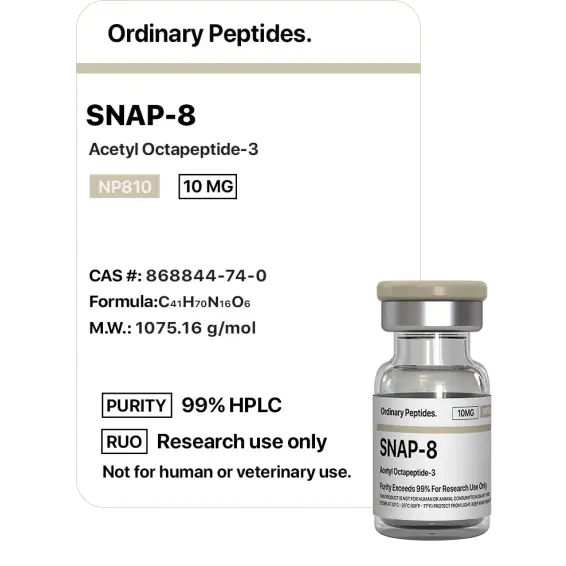
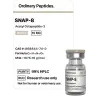
Snap-8
For in vitro testing and laboratory use only. Not for human or animal consumption. Bodily introduction is illegal. Handle only by licensed professionals. Not a drug, food, or cosmetic. Educational use only.
Snap-8 (Acetyl Octapeptide-3): A Cosmetic Peptide With a "Botox-Like" Idea, but Without Unnecessary Promises
Snap-8, or Acetyl Octapeptide-3, is a cosmetic peptide that in reviews and in the research context is described as an extended version of Argireline, with a logic of action through the SNAP-25/SNARE system. In published laboratory and cosmetic data, it is associated with a gentle anti-wrinkle direction, primarily in the context of expression lines rather than with an effect on the level of injectable procedures.
That is exactly what makes it interesting: the peptide has a clear mechanistic story and a place in modern skincare formulas, especially where a delicate approach matters more than loud "wow promises." At the same time, the article honestly shows the boundaries — most of the evidence base relates to reviews, multicomponent formulas, and delivery systems, rather than to large independent clinical research on pure Snap-8.
Practical Takeaway
Snap-8 is compelling not as "magic in a jar," but as a careful cosmetic active with a scientifically plausible idea and very real interest in anti-aging skincare. If you want to take a closer look at a peptide that sounds smart, works within the logic of modern cosmetic science, and does not pretend to be botox — this is exactly it.
SNAP-8 (Acetyl Octapeptide-3): A Scientific Review
Based on peer-reviewed literature — see References. Last updated: April 2026.
This Article Is Different
Every previous article in this series has covered peptides used systemically — injected subcutaneously, administered intravenously, or delivered through nasal spray or oral formulations to produce systemic pharmacological effects. SNAP-8 is different in a fundamental way: it is a topical cosmetic ingredient applied to the surface of the skin. It has no systemic action, no FDA drug approval history, no clinical trials registered with ClinicalTrials.gov, and no pharmacokinetic data in the conventional sense.
Most SNAP-8 efficacy data originates from its manufacturer (Lipotec, now a subsidiary of Lubrizol) rather than independent academic groups. The studies use non-standardised measurements, small sample sizes, and no placebo arms. This is normal in the cosmetics industry, but it means the evidence deserves critical appraisal rather than uncritical acceptance.
| At a glance | |
|---|---|
| INCI name | Acetyl Octapeptide-3 |
| Sequence | Ac-Glu-Glu-Met-Gln-Arg-Arg-Ala-Asp-NH&sub2; (8 amino acids) |
| Molecular weight | ~1,075 Da |
| Type | Synthetic cosmetic peptide; SNARE complex inhibitor |
| Derived from | Extended analogue of Argireline (acetyl hexapeptide-8), based on SNAP-25 protein fragment |
| Proposed mechanism | Competitive SNAP-25 inhibitor → SNARE complex destabilisation → reduced neurotransmitter-driven muscle contraction |
| Manufacturer | Lipotec (subsidiary of Lubrizol) |
| Regulatory status | Cosmetic ingredient (not a drug); not FDA drug-regulated |
| Penetration limitation | ⚠️ Molecular weight and hydrophilicity significantly limit percutaneous absorption |
| WADA | Not prohibited |
Background: Why “Botox-like Peptides” Exist
Botulinum toxin type A (Botox) works by cleaving the SNAP-25 protein within the SNARE complex at peripheral neuromuscular junctions, preventing synaptic vesicle fusion, blocking acetylcholine release, and paralysing the muscle — reducing dynamic expression lines. Its limitations are invasive administration, medical professional requirement, cost, and preference for non-injection options. This created market demand for topical ingredients that could produce a SNAP-25 or SNARE-inhibiting effect without injection.
The cosmetics industry’s response was to develop synthetic peptides derived from the SNAP-25 protein fragment that botulinum toxin targets. The original compound on this rationale was Argireline (acetyl hexapeptide-8), a 6-amino acid fragment introduced by Lipotec around 2001. SNAP-8 was subsequently developed as an extension — adding two amino acids to improve receptor engagement and stability, producing an 8-amino acid peptide claimed to be approximately 30% more active than its parent.[1]
Structure and Chemistry
SNAP-8’s sequence is based on the N-terminal region of the SNAP-25 (Synaptosomal Associated Protein 25) protein — the portion involved in SNARE complex assembly. Botulinum toxin A cleaves SNAP-25 at a specific Gln197-Arg198 bond, disrupting the α-helical domain that contributes to SNARE complex formation. SNAP-8 is designed to mimic this region and compete with endogenous SNAP-25 for the SNARE complex binding site: Ac-Glu-Glu-Met-Gln-Arg-Arg-Ala-Asp-NH&sub2;. The N-terminal acetylation improves stability and lipophilicity; the C-terminal amidation is standard for preventing carboxy-terminal degradation.
Key physicochemical properties relevant to penetration: molecular weight ~1,075 Da (substantially above the general 500 Da threshold for meaningful percutaneous absorption); high hydrophilicity from multiple polar residues (Glu, Gln, Arg, Asp); and negative Log P. Both molecular weight and hydrophilicity are unfavourable for passive diffusion through the stratum corneum, which is preferentially permeable to small (<500 Da), moderately lipophilic molecules.
The Proposed Mechanism: SNARE Complex Inhibition
Normal muscle contraction at the neuromuscular junction proceeds through: action potential → Ca²+ influx → SNARE complex assembly (synaptobrevin + syntaxin + SNAP-25 zipper together) → vesicle membrane fusion → acetylcholine release → muscle contraction. Botulinum toxin specifically cleaves SNAP-25, preventing SNARE complex assembly and blocking ACh release entirely until new SNAP-25 is synthesised over weeks to months.
SNAP-8 is proposed to act as a competitive inhibitor: by mimicking the SNAP-25 structural domain involved in SNARE complex formation, it competes with endogenous SNAP-25 for the syntaxin binding site, reducing vesicle fusion efficiency and modestly decreasing ACh release. Manufacturer in vitro data reports 43% glutamate release inhibition at 1.5 mM concentration of SNAP-8. The key question — whether this concentration is achievable at presynaptic nerve terminals in facial muscle via topical application — is not answered by the in vitro assay.[2]
Unlike botulinum toxin, which is an enzymatic cleaver where one molecule cleaves many SNAP-25 molecules irreversibly, SNAP-8 is a reversible competitive inhibitor whose effect is proportional to concentration and entirely reversible. It will never produce the degree of muscle relaxation that botulinum toxin does at any topically achievable concentration.
The Penetration Problem
This is the most important section for assessing SNAP-8’s mechanistic claims. The proposed mechanism requires SNAP-8 to penetrate the stratum corneum, diffuse through the viable epidermis, pass through the dermal matrix, and reach presynaptic nerve terminals of motor neurons (located at the dermal-epidermal junction and below in facial skin).
If less than 0.2% of applied Argireline penetrates even the stratum corneum, the concentration reaching presynaptic nerve terminals is immeasurably small relative to the 1.5 mM required for 43% SNARE inhibition in vitro. The straightforward interpretation: whatever benefit SNAP-8 provides to wrinkle appearance, it likely does not do so primarily by reaching and inhibiting SNARE complexes at neuromuscular junctions in the manner proposed. The precise biological mechanisms underlying these effects — particularly the peptide’s ability to inhibit muscle contraction when applied topically — remain incompletely understood.[3]
Alternative mechanisms that may actually account for observed wrinkle improvement include: hydration and plumping effects from humectant formulation bases; superficial stratum corneum interactions altering surface tension and temporarily smoothing micro-texture; and simple moisturisation effects (many wrinkle measurement studies lack placebo arms). This is not to say that SNAP-8 produces no cosmetic benefit — it may well reduce wrinkle appearance. It is to say that the specific SNARE complex inhibition mechanism has not been validated at topically achievable concentrations and depths.
The SNARE Peptide Family: Context
| Peptide | INCI | Mechanism claimed | Evidence quality |
|---|---|---|---|
| Argireline | Acetyl Hexapeptide-8 | SNARE complex competitive inhibitor (SNAP-25 mimic) | Limited independent clinical data |
| SNAP-8 | Acetyl Octapeptide-3 | SNARE complex competitive inhibitor (extended SNAP-25 mimic) | Primarily manufacturer data |
| Leuphasyl | Pentapeptide-18 | Enkephalin receptor agonist → reduced Ca²+ influx → reduced ACh release | Manufacturer data; limited independent |
| Syn-Ake | Tripeptide-3 | Nicotinic ACh receptor antagonist (Waglerin-1 mimic) | Manufacturer data only |
All of these peptides face the same fundamental challenge: the penetration problem. None has compelling independent evidence that topical application at cosmetically achievable doses produces meaningful neuromuscular inhibition at the depths required.
Clinical Evidence
The efficacy numbers cited for SNAP-8 — typically “35% mean wrinkle reduction,” “62% maximum wrinkle reduction” — come from Lipotec’s technical data sheets, not peer-reviewed publications. These are typically small cohort studies (N = 10–20) with no placebo/vehicle control group, short duration (28 days), and mixed endpoints (wrinkle depth by profilometry, subject perception). These numbers should be read as manufacturer claims supported by sponsor-conducted data, not as established clinical evidence meeting pharmaceutical standards.[9]
Independent clinical evidence for the parent compound Argireline is also limited: the available literature reports roughly 30% wrinkle depth reduction after 30 days at 10% concentration, but without placebo arms — meaning the reduction may partly reflect formulation moisturising effects, measurement sensitivity, or the placebo effect. One positive finding from the Argireline literature: patients receiving botulinum toxin injections had longer time until return to baseline symptoms when also using daily topical acetyl hexapeptide-8, suggesting some complementary effect to neurotoxin treatment, even if the mechanism is unclear. This finding has not been replicated with SNAP-8 specifically.
The most recent independent assessment (2025 MDPI review) concludes: preclinical and clinical studies indicate that AH-8 may reduce wrinkle depth, improve skin elasticity, and enhance hydration; however, the precise biological mechanisms underlying these effects — particularly the peptide’s ability to inhibit muscle contraction when applied topically — remain incompletely understood.[3] This is the most honest summary: the outcome (wrinkle appearance improvement) has some evidence; the mechanism (SNARE inhibition) does not.
The “Botox Alternative” Claim: An Honest Assessment
What botulinum toxin does: Irreversible SNAP-25 cleavage → complete local ACh blockade → 50–80% reduction in targeted muscle activity → visible wrinkle reduction within days, lasting 3–6 months. Demonstrated in hundreds of randomised controlled trials.
What topical SNAP-8 does: Possibly softens the appearance of fine lines over weeks of consistent application, likely through some combination of superficial hydration, formulation vehicle effects, and possibly very modest surface-level peptide interactions. The magnitude of wrinkle reduction is substantially smaller than botulinum toxin. The effect does not involve muscle paralysis. No clinical study has directly compared SNAP-8 or its parent compound to botulinum toxin; the “botox alternative” label is a marketing position, not a clinically validated equivalency claim.
Appropriate framing: SNAP-8 is a topical cosmetic ingredient that may modestly reduce the visible depth of expression lines over time with consistent use, with a strong safety profile and no systemic effects. For patients who prefer non-invasive options or who want to support maintenance between injectable treatments, it is a reasonable cosmetic ingredient with acceptable safety data.
Formulation and Delivery Considerations
Because penetration is SNAP-8’s primary limitation, formulation science is genuinely important. Typical product concentrations are 3–10% SNAP-8 by weight. Higher concentrations are generally considered more effective, subject to cost constraints. Delivery system approaches that may improve penetration include liposomal encapsulation (masking hydrophilicity to improve SC penetration); microneedle patches (physically bypassing the stratum corneum — the only delivery approach that meaningfully addresses the penetration problem and represents an interesting research direction); and SNEDDS (self-nanoemulsifying drug delivery systems) currently under investigation for cosmetic peptide delivery.
SNAP-8 is unstable at low pH (below 4) and should not be combined with strong exfoliating acids in the same formulation step. It is compatible with hyaluronic acid, niacinamide, and most moisturising actives.
Safety Profile
SNAP-8 has a well-established cosmetic safety record. Because it is topically applied and does not penetrate systemically, the systemic risk profile is essentially nil. Contact allergy is rare, with no significant sensitisation signals in cosmetic ingredient safety reviews. Mild skin irritation is possible in sensitive skin at high concentrations (>10%) or in combination with other actives. SNAP-8 is not photosensitising, and no known concerns exist for topical cosmetic use in pregnancy or breastfeeding given the absence of systemic absorption. The European Scientific Committee on Consumer Safety (SCCS) has reviewed SNARE-family cosmetic peptides and has not raised safety concerns for topical use at standard concentrations.
Comparison: SNAP-8 vs. Argireline vs. Leuphasyl
| Argireline (Ac-Hexapeptide-8) | SNAP-8 (Ac-Octapeptide-3) | Leuphasyl (Pentapeptide-18) | |
|---|---|---|---|
| Structure | 6 AA SNAP-25 fragment | 8 AA extended SNAP-25 fragment | 5 AA enkephalin mimic |
| MW | ~889 Da | ~1,075 Da | ~743 Da |
| Mechanism | SNARE inhibitor | SNARE inhibitor (extended) | Enkephalin receptor → ↓Ca² |
| In vitro potency | Reference | ~30% more potent (manufacturer) | Different pathway; synergistic |
| Independent clinical trials | Very limited | Almost none | Very limited |
| Penetration challenge | Significant | Slightly greater (higher MW) | Somewhat better (lower MW) |
The complementary mechanism of Leuphasyl (Ca²+ channel modulation upstream of SNARE) and SNAP-8/Argireline (SNARE complex inhibition) provides a theoretical basis for combination formulations targeting two points in the ACh release pathway simultaneously. Some manufacturer data supports enhanced efficacy of combinations, though again, this is sponsor-generated data.
Common Misconceptions
“SNAP-8 is topical botox.”
Botulinum toxin is an irreversible enzymatic toxin that produces profound, reproducible muscle paralysis administered by injection by a trained professional. SNAP-8 is a topical cosmetic ingredient with modest and variable effects on wrinkle appearance. The mechanisms have a structural relationship (both involve SNARE/SNAP-25) but the pharmacological outcomes are categorically different. “Topical botox” is a marketing claim, not a scientific equivalency.
“Because it targets the same protein as botox, it works the same way.”
The mechanism is analogous in direction but not in execution. Botulinum toxin reaches its target via injection and works as an enzymatic amplifier. SNAP-8 must penetrate multiple skin barriers to reach the same target, at which point its competitive inhibition is a much weaker signal than the enzymatic amplification of botulinum toxin. Same target protein; fundamentally different pharmacological outcome.
“The 62% wrinkle reduction data proves it works as well as botox.”
62% wrinkle reduction is a manufacturer-reported maximum from an uncontrolled, small-N study without a placebo arm. These numbers are not comparable to botulinum toxin RCT data across different measurement methods, different populations, different anatomical sites, and fundamentally different experimental designs.[9]
Frequently Asked Questions
How long does it take to see results from SNAP-8?
In manufacturer studies, wrinkle improvements were observed over 28 days with twice-daily application. Some users report effects on skin texture within 2–4 weeks, primarily reflecting improved hydration and surface smoothing. Meaningful expression line reduction, to whatever degree it occurs, typically requires consistent use over months rather than days.
Can SNAP-8 replace botulinum toxin?
For patients with pronounced dynamic expression lines who respond well to botulinum toxin, SNAP-8 is not a replacement. It may be useful as: a maintenance option between injection cycles; an option for patients with needle aversion or mild lines not warranting injection; or a preventive ingredient for individuals before expression lines become established.
How does microneedle delivery change the picture?
Microneedle patches for SNAP-8 bypass the stratum corneum barrier by creating physical channels into the viable epidermis. If SNAP-8 can be delivered at sufficient concentration to the dermal level by this route, the neuromuscular mechanism becomes more plausible. This is an active research area and represents the most scientifically interesting future direction for SNARE-family peptide delivery.
Key Takeaways
- SNAP-8 is a cosmetic ingredient, not a pharmaceutical. The evidence standards and regulatory frameworks are entirely different from the drugs and research peptides covered elsewhere in this series.
- The proposed mechanism is biologically coherent. SNAP-25 involvement in SNARE complex assembly is established science. A competitive peptide inhibitor based on the SNAP-25 sequence is a pharmacologically rational concept.[1]
- ⚠️ The penetration problem is real and limits the mechanistic claim. Less than 0.2% of the parent compound (Argireline) penetrates even the stratum corneum in 24 hours. The 1.5 mM concentration required for SNARE inhibition in vitro has not been demonstrated at presynaptic nerve terminals via topical application. Whatever cosmetic benefit SNAP-8 provides is likely at least partly attributable to non-SNARE mechanisms including hydration and formulation effects.[3]
- ⚠️ Clinical evidence is primarily manufacturer-generated. The “35% mean wrinkle reduction” and “62% maximum wrinkle reduction” figures come from Lipotec’s data sheets, not independent peer-reviewed, placebo-controlled clinical trials.[9]
- SNAP-8 is not a botox alternative in any clinically meaningful sense. It is a cosmetic ingredient that may modestly improve wrinkle appearance with consistent use, particularly in a well-formulated skincare routine. “Botox alternative” is a marketing strategy that substantially overstates its efficacy.
- Advanced delivery — particularly microneedle patches — is the most scientifically interesting direction. If the penetration barrier can be overcome, the neuromuscular mechanism becomes genuinely testable and potentially clinically relevant.
References
Mechanism and Structure
- Blanes-Mira C, Clemente J, Jodas G, et al. A synthetic hexapeptide (Argireline) with antiwrinkle activity. International Journal of Cosmetic Science. 2002;24(5):303–310.
- Nguyen TTM, Yi EJ, et al. Sustainable dynamic wrinkle efficacy: non-invasive peptides as the future of botox alternatives. Cosmetics. 2024;11(4):118. doi: 10.3390/cosmetics11040118
Penetration and Efficacy Reviews
- Acetyl hexapeptide-8 in cosmeceuticals — a review of skin permeability and efficacy. International Journal of Molecular Sciences. 2025;26(12):5722. PMC12193160
- Cosmeceutical peptides in the framework of sustainable wellness economy. PMC7662462
Broader Context
- Lee DH, Oh JH, Chung JH. Topical peptides as anti-aging agents. Clinics in Dermatology. 2016;34(6):698–706.
- Pintea A, Manea A, Pintea C, et al. Peptides: emerging candidates for the prevention and treatment of skin senescence. Biomolecules. 2025;15(1):88.
Manufacturer Technical Data
- Lipotec S.A. (subsidiary of Lubrizol). SNAP-8 technical data sheet. [Proprietary commercial document; the primary source for efficacy numbers cited in the cosmetics industry]
Certificate of Analysis
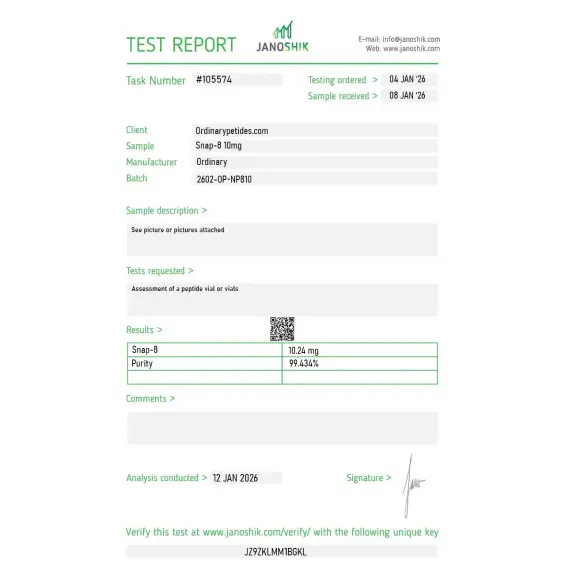
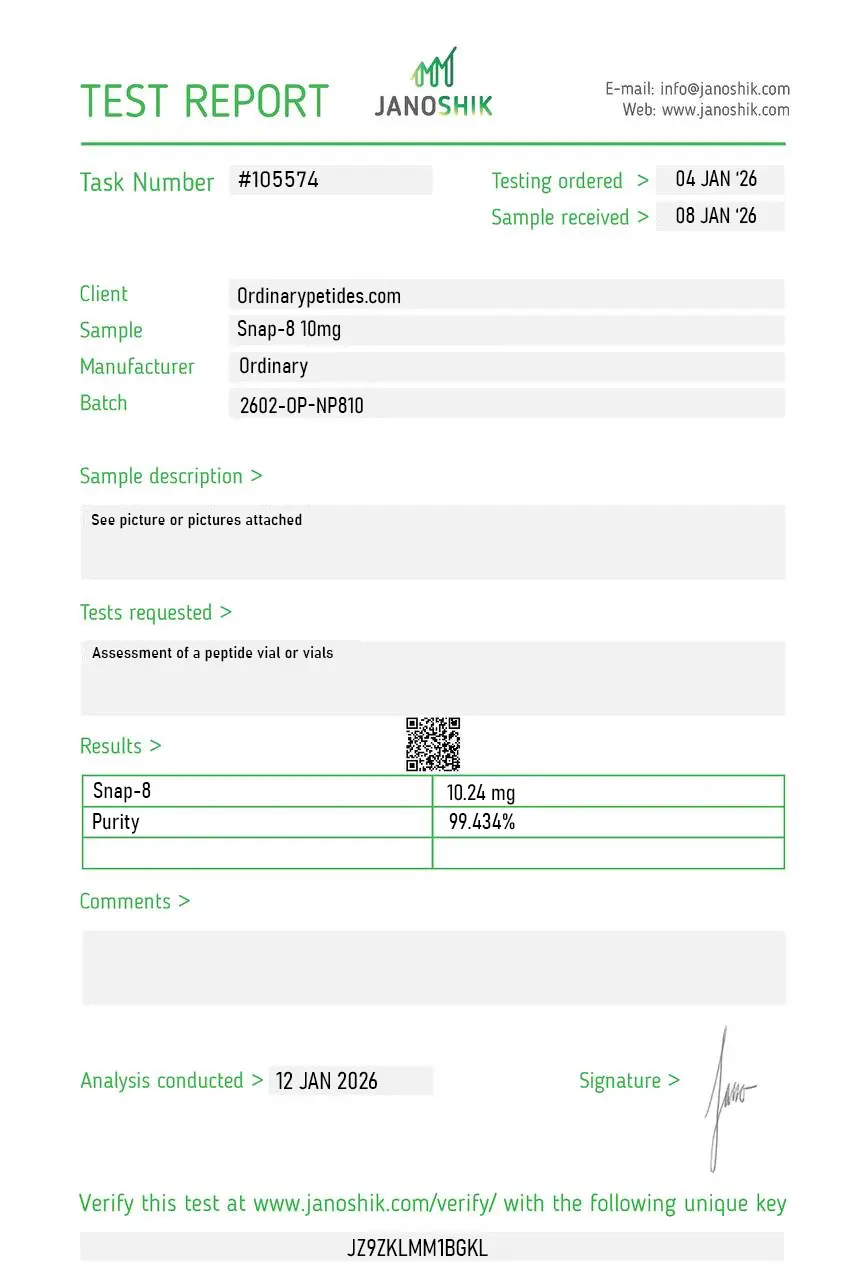
An independent test report is available for Snap-8 10mg. This report provides batch-level documentation and analytical verification information for research reference.
Based on 1 reviews
5.0
-
1
We use it in SNARE-complex biology specifically — characterizing how N-terminal SNAP-25 fragments compete with full-length SNAP-25 for assembly into the syntaxin/synaptobrevin/SNAP-25 ternary complex that drives vesicle fusion. That competitive-inhibition mechanism is the in-vitro question we ask, and SNAP-8 is a defined research tool for that biology that's almost entirely overshadowed by the topical cosmetic framing. Material delivered consistent SNARE-interference in our reconstituted vesicle-fusion assays.
Based on the available evidence base, it is more correct to speak of the cosmetic ingredient Acetyl Octapeptide-3, not a medicinal product.
In the cosmetic literature, Snap-8 is described as a peptide that mimics a fragment of SNAP-25 and interferes with the formation of the SNARE complex, which in theory may reduce expression contractions.
According to the available data, it may help as part of certain cosmetic formulations, but convincing independent medicinal evidence for strong claims is absent.
No. The data are too weak for that claim, and the logic of use is too different from botulinum therapy.
There are several interesting studies and many review mentions, but they often concern multicomponent formulations or special delivery systems, not pure Snap-8 as a standalone active.
Based on the available cosmetic studies, tolerability appears generally good, but the long-term and independent safety base is limited.
Snap-8 (INCI name: Acetyl Octapeptide-3, also called Acetyl Glutamyl Heptapeptide-1) is a synthetic eight-amino acid cosmetic peptide developed by the Spanish company Lipotec (now part of Lubrizol). Its chemical sequence is Ac-Glu-Glu-Met-Gln-Arg-Arg-Ala-Asp-NH₂. It was designed as an extended, more potent analog of Argireline (Acetyl Hexapeptide-3) — the first widely marketed "botox-like" cosmetic peptide — by adding two additional amino acids to the N-terminus to improve SNARE complex binding affinity and stability. It is used exclusively as a topical cosmetic ingredient in serums, creams, and eye contour formulations for anti-aging purposes. It is not injected, not a pharmaceutical drug, not FDA-approved as a drug, and not subject to the same regulatory framework as the injectable compounds throughout this series.
Snap-8's mechanism targets the SNARE (Soluble NSF Attachment Protein REceptor) complex — the molecular machinery responsible for acetylcholine release at neuromuscular junctions. When a facial muscle contracts in response to a nerve signal, synaptic vesicles containing acetylcholine must fuse with the presynaptic membrane to release neurotransmitter — a process requiring assembly of the SNARE complex from three proteins: SNAP-25, syntaxin, and synaptobrevin (VAMP). Botulinum toxin (Botox) works by cleaving SNAP-25, permanently preventing SNARE complex formation until new protein is synthesized. Snap-8 works differently and far more mildly — it mimics the N-terminal domain of SNAP-25 and competes with the native protein for incorporation into the SNARE complex, acting as a competitive inhibitor that reduces — but does not eliminate — SNARE assembly efficiency. This reduces the amount of acetylcholine released at the neuromuscular junction, partially attenuating facial muscle contraction and consequently reducing the depth of dynamic expression wrinkles caused by repetitive muscle movement. The effect is reversible, dose-dependent, and considerably weaker than botulinum toxin — which is both its key safety advantage and its key efficacy limitation.
The evidence base for Snap-8 consists of cosmetic studies — primarily manufacturer-sponsored in vitro and in vivo human volunteer trials rather than the randomized pharmaceutical-grade clinical trials seen for other compounds in this series. In vitro testing showed Snap-8 at 1.5 mM concentration inhibited neurotransmitter release by approximately 43%. The landmark in vivo study applied a cream containing 10% Snap-8 to 17 healthy female volunteers twice daily for 28 days — laser scanning microscopy of silicone imprints from the periocular area showed statistically significant reduction in wrinkle depth, with mean reductions around 35% and maximum improvements approaching 63% in some participants. A 2022 12-week clinical trial of a multi-peptide serum including Snap-8 in women aged 35 to 55 showed statistically significant improvement in expression lines with good tolerability. An in vitro synergy study found combining Snap-8 with Leuphasyl — another SNARE-targeting peptide — produced 47% neurotransmitter inhibition versus 38% and 7% for each individually, suggesting additive effects when combined.
Snap-8 is designed as a more potent version of Argireline — manufacturer data using IC50 measurements for catecholamine secretion inhibition suggests higher activity per unit concentration than its hexapeptide predecessor, though head-to-head human clinical comparisons are limited. Compared to botulinum toxin the differences are fundamental and not merely quantitative. Botox irreversibly cleaves SNAP-25 and completely blocks neuromuscular transmission in the injected area for 3 to 6 months. Snap-8 competes reversibly for SNARE assembly, producing partial and temporary reduction in muscle contraction that wears off when the product is washed off or discontinued. Botox produces visible muscle paralysis detectable clinically within days. Snap-8 produces gradual, modest, partial smoothing of expression lines visible after weeks of consistent twice-daily application. Describing Snap-8 as a "topical Botox" is a marketing convenience rather than a scientific equivalence — the mechanisms share conceptual similarity but the magnitude and reliability of effect are not comparable.
Snap-8 has an excellent safety profile consistent with its limited skin penetration depth and topical-only use. The most commonly reported effect is mild, transient itching at the application site that resolves immediately upon removal. Minimal redness or irritation is occasionally reported in sensitive skin types. Because it cannot penetrate deep enough to reach systemic circulation in meaningful quantities, systemic side effects are not a concern at cosmetic use concentrations. It is non-irritating, non-comedogenic, vegan, cruelty-free, and compatible with sensitive skin. It is considered safe for daily use including in the periocular area.
People with known hypersensitivity to any of its components should avoid it. Individuals with extremely reactive or hypersensitive skin should patch-test before full application. Beyond these standard cosmetic precautions there are no significant contraindications for topical Snap-8 at recommended concentrations. It does not interact with systemic medications, does not affect hormones or the endocrine system, and carries none of the safety considerations applicable to injectable peptides throughout this series. Pregnant women can discuss with their healthcare provider but topical cosmetic peptides at standard concentrations do not carry the same risk considerations as systemic or injectable compounds.